
Most accounting firms struggle to stand out in a crowded marketplace. Traditional marketing approaches no longer capture client attention or generate meaningful leads.
We at Cajabra, LLC believe creative accounting marketing ideas can transform how firms connect with prospects. Smart strategies that blend education, technology, and community building drive real results for modern accounting practices.
Creative Content Marketing Strategies for Accountants
Educational Video Series Drive Higher Engagement
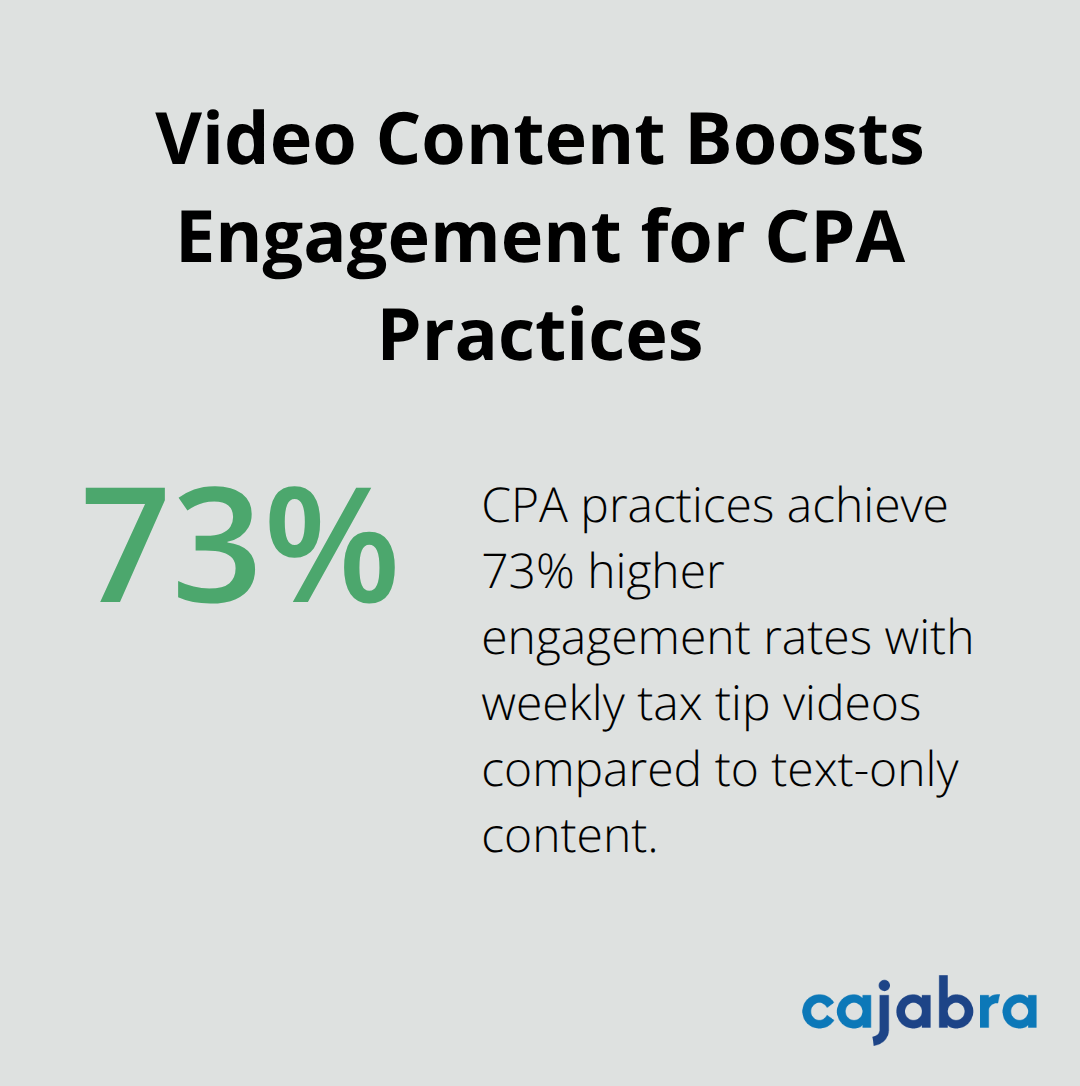
Video content builds trust faster than any other medium for accounting firms. CPA practices that publish weekly tax tip videos achieve 73% higher engagement rates compared to text-only content (according to Wistia research). The secret lies in addressing specific client pain points rather than generic advice.
Create five-minute videos that explain quarterly tax deadlines for specific business structures. Walk viewers through depreciation calculations for equipment purchases. Record these videos with simple screen capture software like Loom, and show actual tax forms and calculations. This approach positions your firm as the go-to expert while it generates organic search traffic for long-tail keywords.
Interactive Tools Convert More Prospects
Interactive financial calculators generate leads at conversion rates under 2% across e-commerce sites, with health and beauty sectors achieving the highest rates at 2.7%. Build calculators that solve immediate client problems: retirement planning tools for individuals, cash flow projectors for small businesses, or tax savings estimators for different entity structures.
WordPress plugins like Calculoid make this process straightforward without coding knowledge. These tools capture prospect information while they solve real problems, creating a natural entry point for sales conversations.
Podcasts Expand Your Reach Beyond Local Markets
Podcasts amplify your expertise beyond local boundaries, with accounting podcasts averaging 12,000 downloads per episode according to Podcast Insights. Interview successful clients about their financial transformations. Discuss new tax regulations with industry experts, or break down complex accounting standards in plain language.
The Accounting Today Podcast demonstrates how consistent publishing builds industry authority and attracts high-value prospects who prefer audio content consumption. Your next step involves choosing the right digital messaging strategy to distribute this valuable content effectively.
Innovative Digital Marketing Tactics
Social Media Campaigns That Show Real Work
Social media campaigns that showcase real accounting work generate significant engagement compared to generic business posts. LinkedIn posts that feature actual tax preparation processes or year-end procedures attract prospects who want transparency in their service providers.
Document your team as they prepare financial statements. Explain complex tax code changes through Instagram stories. Share quick QuickBooks tips on TikTok. Accounting firms that post behind-the-scenes content weekly see increased profile visits and higher conversion rates from social traffic.
Email Automation Maximizes Peak Season Returns
Email automation drives massive returns during peak seasons for tax preparation firms. Set up trigger-based sequences that activate 90 days before tax deadlines and send personalized checklists based on client business types.
Create separate automation flows for individuals, S-corps, and partnerships. Each flow should address specific documentation requirements and deadlines. This targeted approach converts prospects at higher rates than generic tax season reminders.
Local SEO Captures Immediate Leads
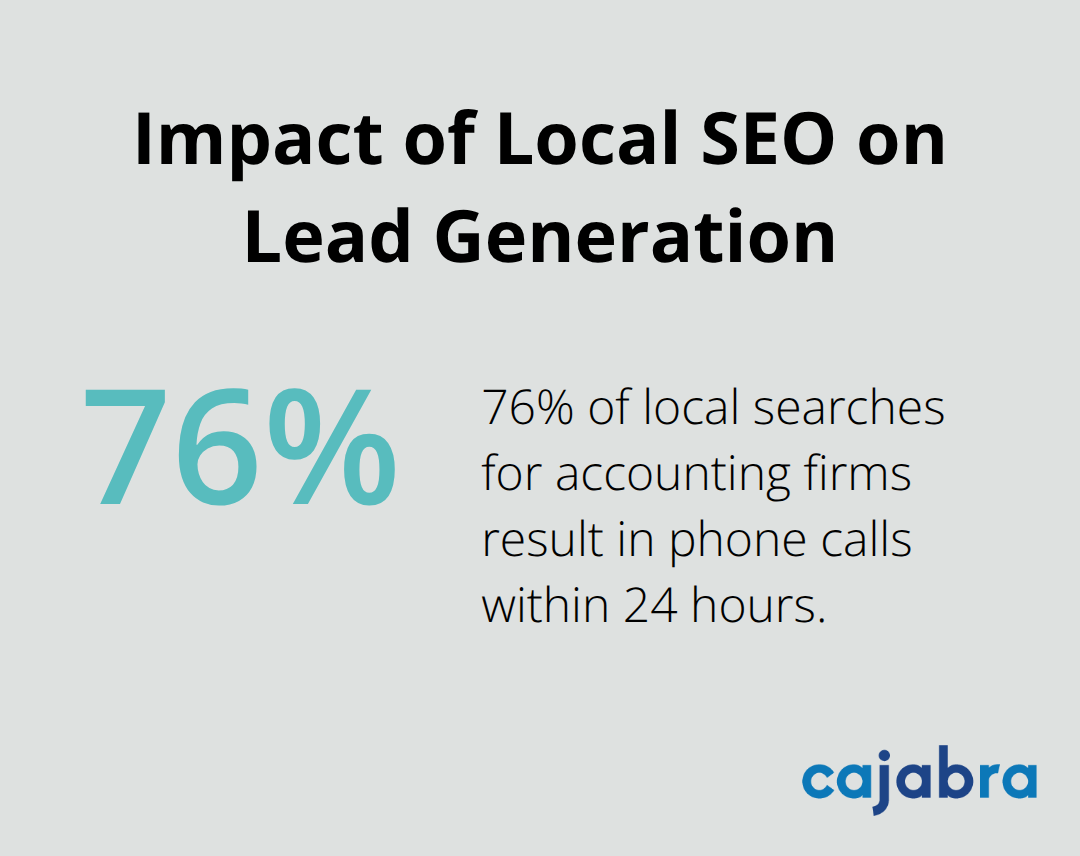
Local SEO dominates lead generation for accounting firms, with 76% of local searches resulting in phone calls within 24 hours per Google data. Optimize your Google Business Profile with specific service keywords like "business tax preparation" plus your city name. Respond to reviews within two hours and publish weekly posts about local tax law changes.
Accounting firms that rank in the top three local results capture 65% of all local search traffic. This positioning advantage translates directly into more qualified prospects who need immediate accounting services.
These digital marketing strategies work best when combined with community-focused strategies that build lasting relationships with local business owners.
Building Community Through Events and Partnerships
Free Financial Workshops Generate High-Quality Leads
Free workshops for small business owners generate qualified leads at conversion rates 3x higher than cold outreach, according to Event Marketing Institute research. Host monthly sessions that cover quarterly tax planning, cash flow management, or entity selection strategies. Small business owners attend these events when they face immediate financial challenges, which makes them prime prospects for ongoing accounting services.
Schedule workshops 45 days before tax deadlines and focus each session on one specific topic rather than broad financial advice. Charge nothing for attendance but require registration to capture contact information. Follow up within 48 hours with personalized consultation offers based on questions participants ask during the workshop.
Strategic Partnerships Multiply Referral Networks
Strategic partnerships with local chambers of commerce and business associations multiply your referral network without additional advertising costs. Chamber members frequently refer accounting services to other businesses within their network. Sponsor monthly chamber breakfast meetings or volunteer for their finance committees.
Partner with business attorneys, commercial bankers, and insurance agents who serve similar client bases but offer complementary services. Create formal referral agreements that specify lead-sharing percentages and establish regular communication schedules.
Client Appreciation Events Boost Referrals
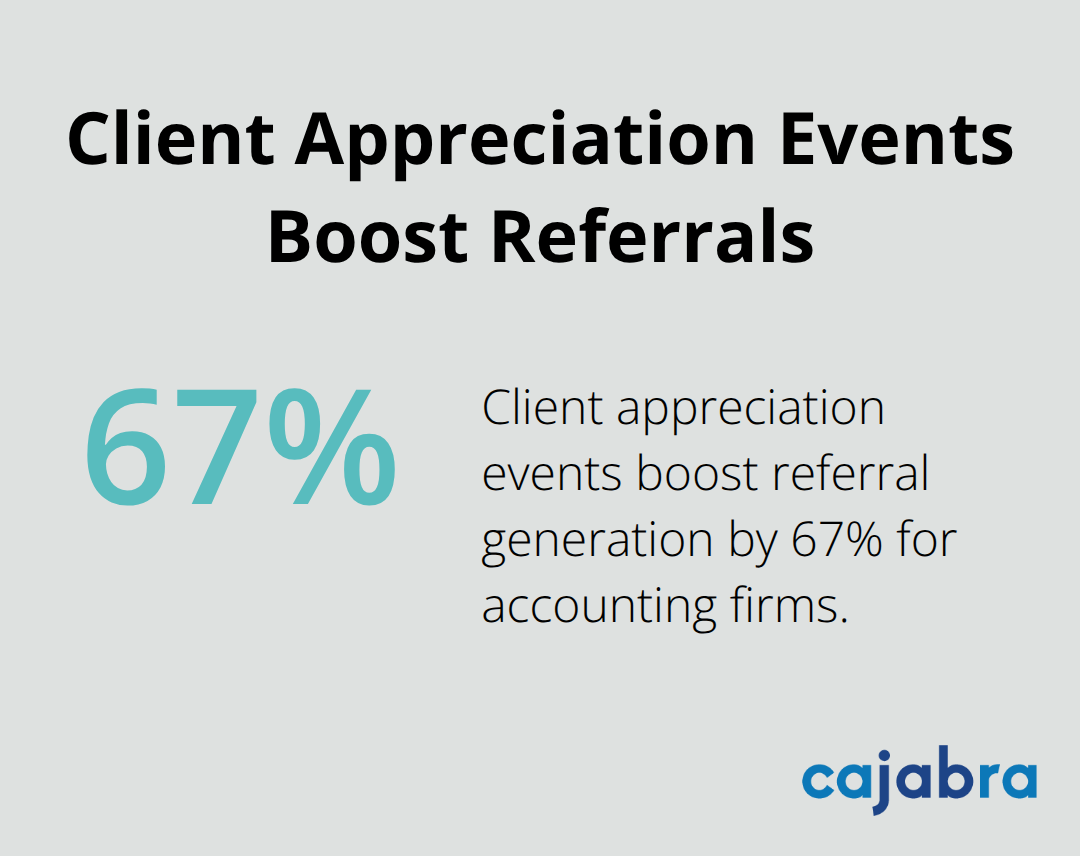
Client appreciation events with existing clients boost referral generation by 67% according to Referral SaaSquatch studies. Host annual tax season wrap-up parties or quarterly business owner roundtables where clients network with each other. These events strengthen relationships while they create natural opportunities for satisfied clients to recommend your services to their business contacts.
Final Thoughts
These accounting marketing ideas deliver measurable results when you implement them systematically. Video content and interactive tools generate the highest engagement rates, while local SEO captures immediate prospects. Community workshops and strategic partnerships create sustainable referral networks that compound over time.
Start with one strategy and master it before you add others. Educational videos require minimal investment but produce content assets that last. Interactive calculators need moderate development costs but convert prospects at higher rates than traditional methods (with some tools achieving conversion rates above 15%). Workshops demand time investment but generate premium leads who need immediate services.
Budget allocation should prioritize high-impact, low-cost strategies first. Video creation costs under $500 monthly with basic equipment, email automation platforms start at $50 monthly for small firms, and workshop venues often cost nothing when you partner with local chambers. We at Cajabra, LLC help accounting firms implement these strategies through our JAB System™ that moves practices from overlooked to overbooked in 90 days.
Table of Contents
Accountants love making video… said no accountant ever. Standing in front of a camera? Yikes. “Will I look silly?” is a frequent mental panic attack. But the thing is, your clients (and prospects) expect video now. And if your firm avoids it, you’re leaving serious opportunities on the table.
Let me walk you through why video is so powerful, share the latest insights, and (most importantly) give you tiny steps to build confidence and get started.
The Big Why: Video Wins Because It Connects
Video is a trust-builder in stereo. When someone hears your voice, sees your face, sees how you talk, how you move - they start to feel like they know you. In professional services (like accounting), that’s gold.
Even if the first video is a bit rough, it humanizes your firm. People see you, not just your logo. And trust forms in those small moments before they even decide to pick up the phone.
Video isn’t just another thing to check off the marketing list. It genuinely works. Marketers report that video delivers one of the best returns on investment of any content format. In fact, more than 90% say it directly drives leads and sales. And firms that weave short, meaningful videos into their content see prospects convert faster, sometimes nearly 50% faster, because video builds connection early.
Beyond the numbers, think about your own behavior: when you land on a website and there’s a friendly, short video introducing the team or explaining a concept clearly, you stick around longer. You start to trust. That’s exactly what happens for your future clients, too.
Why Accountants Hesitate (And How to Push Through)
Most accountants have a few predictable reasons for avoiding video, and honestly, they’re all understandable. The first is the “I’ll look awkward” fear. And yeah, you probably will at first. Everyone does. The first few videos might feel stiff, a little sweaty, and full of retakes. That’s normal. Like anything else, it gets easier with practice.
Then there’s the gear excuse: “I don’t have fancy equipment.” Good news: you don’t need it. Your phone, some decent lighting, and clear audio are more than enough to get started.
Another common one is “I don’t know what to say.” The trick is not to overthink it. Start simple. Record a short 45-60 second video for your homepage. Just introduce yourself, say who you serve, and share one small way you help. No scripts, no teleprompters, no Oscars required.
And finally, the time excuse. You don’t have to produce a feature-length film. Start small. One short, clear, helpful video can do more than ten paragraphs of text.

Simple Steps to Grow Your Video Confidence
Let me give you a little roadmap you can follow:
- Pick one “safe” place to start
Example: homepage video, or LinkedIn intro video. Don’t try every format at once. - Write a mini-script
3-5 points, not a full page. You just need to know the direction. - Record in short bursts
Film 30 seconds, pause, film 30 more. Stitch together if needed. - Use captions/subtitles
Many people watch without sound (especially on mobile). - Practice, review, get feedback
After your first few, get honest feedback from someone who cares (team, friend) and improve. - Iterate & reuse
That 60-second video? Turn it into a snippet for Instagram, add it to an email, embed it in a blog post. - Set a low bar
Don’t aim for perfection - aim for progress. Each video will get better.
Video = Brand Personality + Trust Machine
Here’s where video really shows its muscle:
- Brand personality: On video, your firm’s vibe comes out. Are you serious and buttoned-up? Or friendly, fun, and a little quirky? That vibe helps people self-select - you’ll attract clients who like you, not just tolerate you.
- Trust in advance: When prospects see you speak, see your expressions, hear your voice, they start trusting you before a meeting. That’s powerful.
- Faster conversions: Because trust builds sooner, people decide faster. That stat about firms seeing conversions nearly 50% faster when using video backs this up.
- Better retention & engagement: Video on pages can make visitors stay longer - it’s harder to click away than from static text.

One Small Video, One Big Step
If you’re in the “I don’t like video” camp, I get it. But what if that one 60-second clip could land you your next dream client? What if a prospect stumbled on your homepage, watched a quick video, and thought, “These are my people”?
That’s the magic of video. It’s not about polished perfection. It’s about being real. It’s about letting people hear your voice, see your personality, and start trusting you before they ever book a call.
So here’s your challenge: record one short video this week. Post it on your homepage, LinkedIn, or even email it to a client as a warm intro. Treat it like a low-stakes experiment. Laugh at the bloopers. Learn as you go. You’ll be surprised at how something so simple can make your firm feel more approachable, memorable, and magnetic.
And if your first instinct is to fake your own disappearance rather than figure this out yourself… maybe hold off. Cajabra’s got you. We help accounting firms like yours create marketing strategies that actually work: including building video content plans, crafting scripts, coaching your team on delivery, and making sure your videos integrate seamlessly into your broader marketing.
Growing an accounting practice requires more than just technical expertise. Most firms struggle because they lack structured growth strategies.
We at Cajabra, LLC have identified the key methods that separate thriving practices from stagnant ones. The difference lies in systematic approaches to marketing, operations, and client relationships.
Building a Strong Foundation for Growth
Success in accounting practice growth starts with precise target market definition. A successful CPA practice should target clients with tax preparation fees ranging from $3,000 to $5,000 for small businesses and individuals, according to industry benchmarks. Preparing around 1,500 individual tax returns and 800 business tax returns annually provides a solid foundation for sustainable expansion. Firms that transition to higher-paying clients who need services exceeding $15,000 can dramatically increase revenue potential.
Target High-Value Client Segments
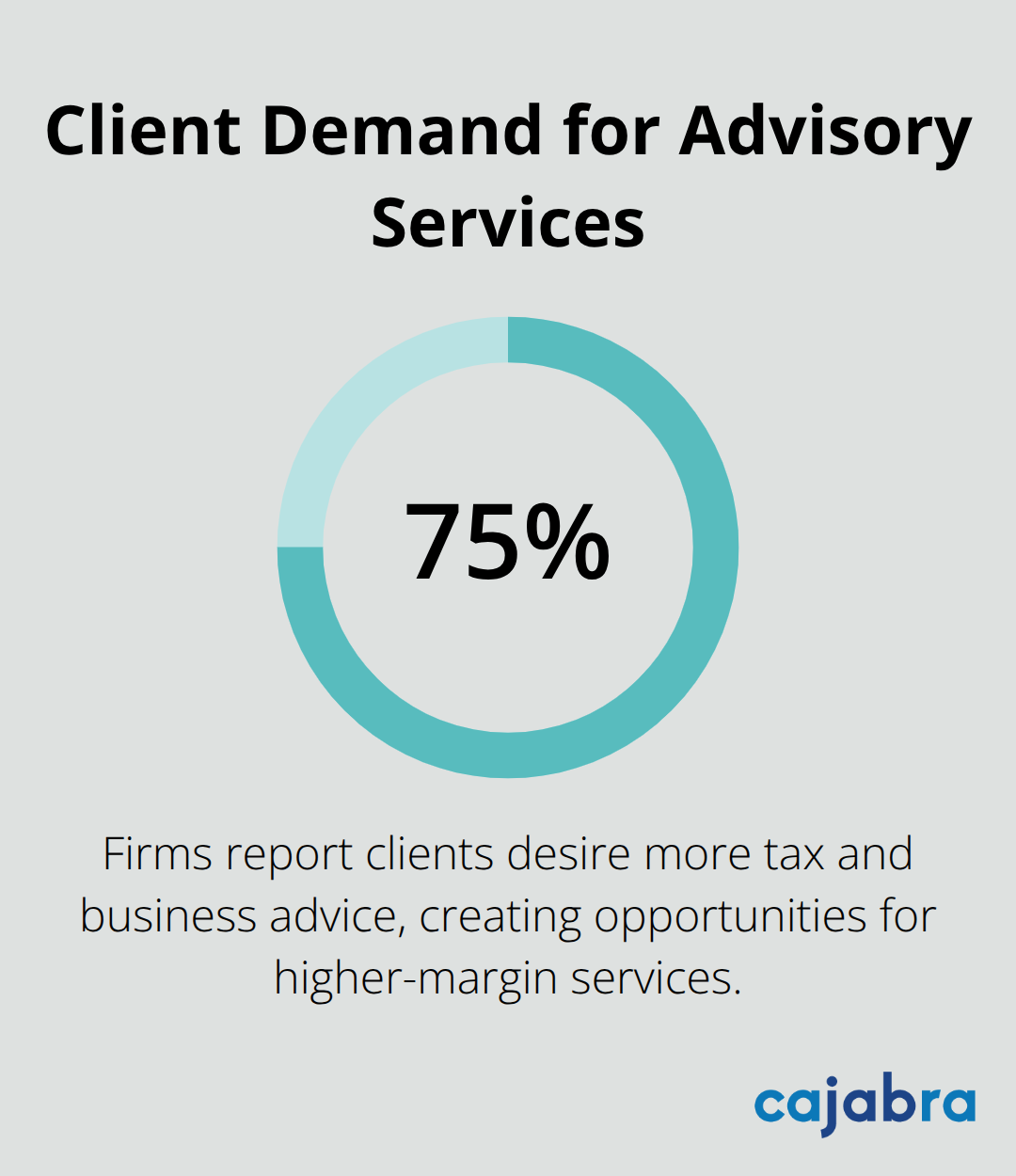
The Thomson Reuters Institute found that 75% of firms reported clients desire more tax and business advice, which creates opportunities for higher-margin services. Monthly retainers for accounting and consulting services provide steady cash flow and predictable revenue streams. Firms that focus on advisory work position themselves for premium pricing while clients receive ongoing value throughout the year.
Consider niche markets that competitors may not serve well to differentiate your services and capture new clients. Industry-specific expertise (such as healthcare or construction) attracts clients who need specialized knowledge and pay premium rates for that expertise.
Implement Standardized Systems
Your firm needs standardized processes that eliminate bottlenecks and reduce errors. Automated technology can handle a significant portion of general accounting operations, which frees your team to focus on high-value advisory work. Firms that use advanced practice management solutions save considerable time per week per employee through standardized workflows that eliminate manual processes.
Cloud computing technology enables accounting firms to work remotely while they maintain client connections effectively. Your processes must handle increased volume without proportional increases in labor costs. Standardized client onboarding procedures maintain service quality as you grow.
Build Team Structure for Growth
Staff productivity increases when roles are clearly defined and responsibilities are documented. Your team structure should support growth without constant oversight, which allows partners to focus on business development rather than daily operations. Client relationship management software helps track interactions and improves service delivery across your entire team.
Regular assessment of your pricing strategy maintains competitiveness while it maximizes profitability through value-based pricing models. These foundational elements create the infrastructure necessary for effective marketing strategies that attract and retain ideal clients.
Marketing Strategies That Actually Work for Accountants
Referral programs generate the highest quality leads for accounting practices, yet most firms approach referrals passively. Implement a structured referral system that rewards existing clients with discounts or free services when they bring new business. Studies have shown that referred clients are more loyal and have a higher lifetime value. Your existing clients already trust your expertise, which makes them powerful advocates who can articulate your value to similar businesses in their networks.
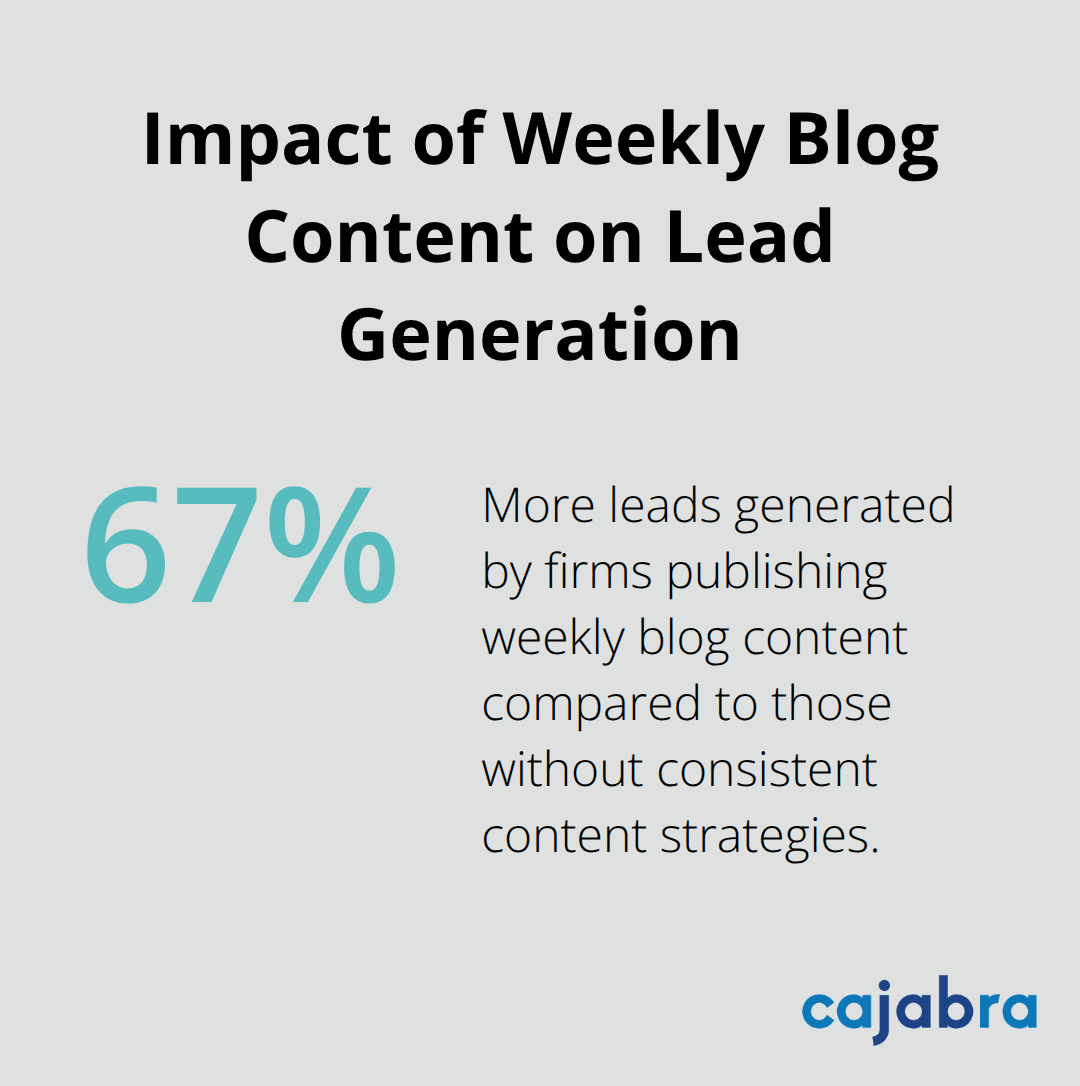
Content marketing through blogs improves search engine rankings while it demonstrates your expertise to potential clients. Accounting firms that publish weekly blog content generate 67% more leads than firms without consistent content strategies. Write about specific tax scenarios, regulatory changes, and industry-specific challenges that your target clients face. Guest appearances on established podcasts broaden your reach as you tap into existing audiences, while webinars create direct engagement opportunities with prospects.
Digital Marketing That Converts
Social media marketing provides networking opportunities at minimal cost while it increases brand visibility significantly. LinkedIn outperforms other platforms for B2B accounting services, with posts about tax planning and business advisory content that generate the most engagement. Paid advertising yields quick results when you target specific demographics with messages that resonate with their pain points. Focus your ad spend on local business owners and individuals who need specialized services rather than broad audiences.
Building Authority Through Thought Leadership
Speaking engagements at industry events showcase your expertise while they attract new clients through direct contact. Writing a book establishes industry authority and serves as a unique differentiator that justifies premium pricing. Lead magnets like tax planning templates or financial health assessments effectively build email lists while they demonstrate value upfront.
Leveraging Technology for Marketing Automation
AI-powered data mining tools enable personalized communication and proactive, strategic advice for clients. Automated email sequences nurture prospects through educational content that addresses their specific business challenges. Marketing automation platforms track prospect behavior and trigger relevant follow-up messages based on their engagement patterns. These systems free your team to focus on high-value client interactions while technology handles routine marketing tasks.
The foundation of effective marketing lies in operational efficiency that supports growth without overwhelming your current resources.
Scaling Your Operations Efficiently
Technology automation transforms accounting operations, with 41% of accountants using AI to automate their workflows according to industry research. Workflow automation tools eliminate manual data entry and client reminders, while cloud-based solutions enable real-time collaboration that maintains client relationships during growth phases. Practice management platforms save firms an average of 18.5 hours per week per employee through streamlined processes.
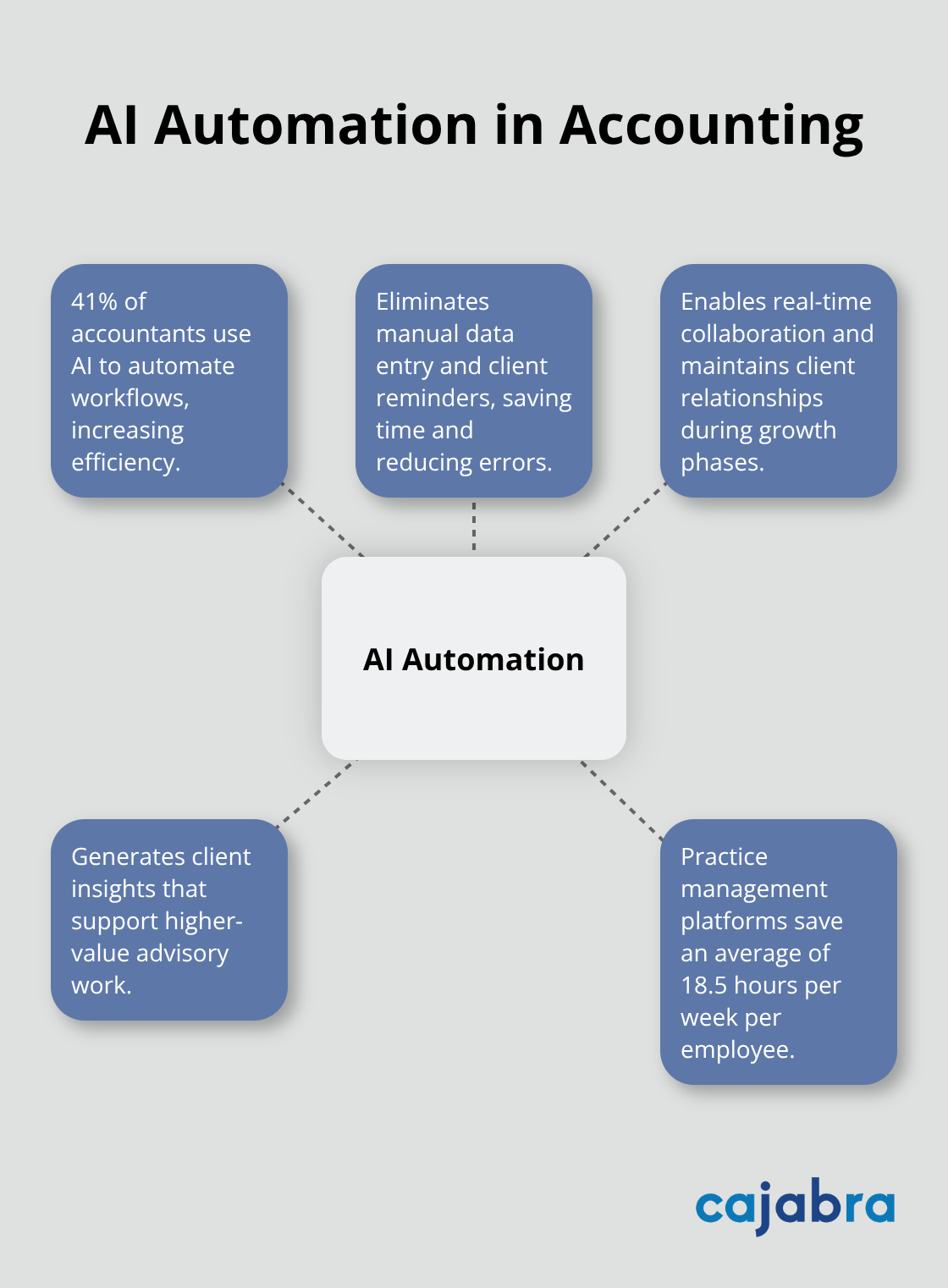
AI-powered accounting solutions handle repetitive tasks and generate client insights that support higher-value advisory work. More than 75% of accountants report their processes still require considerable manual effort, which represents massive efficiency opportunities for firms ready to invest in the right technology stack.
Strategic Technology Implementation
Firms that use advanced practice management solutions report significant productivity gains while they maintain service quality during expansion. Cloud computing allows teams to work remotely while it preserves client connections, which reduces overhead costs compared to traditional office expenses. APIs facilitate integration between software applications and create customized workflows that match your specific practice needs.
The accounting software market will reach $31.25 billion by 2030 (driven by firms that recognize technology as a competitive advantage rather than an expense). Security concerns about AI and automation remain paramount, with 70% of accountants worried about data protection when they implement new systems.
Advisory Services Command Premium Pricing
The Thomson Reuters Institute reports that 34% of firms identify advisory services as their primary growth strategy for 2025. Advisory work commands premium rates because clients pay for expertise and strategic guidance rather than commodity services. Monthly retainer agreements provide predictable cash flow while they position your firm as a strategic partner rather than a seasonal vendor.
Retainer-based models eliminate the feast-or-famine cycle that plagues transaction-based practices and create sustainable revenue streams that support consistent growth investment. Clients who pay monthly retainers receive proactive advice and strategic planning that prevents problems instead of reacts to them after they occur.
Cash Flow Stabilization Through Retainer Models
Retainer agreements stabilize revenue and improve client relationships through ongoing engagement rather than periodic interactions. This model allows firms to invest in team development and technology upgrades without worries about seasonal revenue fluctuations that traditionally limit accounting practice growth. Firms can focus resources on high-value activities when they eliminate revenue uncertainty through predictable monthly payments.
Final Thoughts
Growing an accounting practice requires systematic execution across three core areas: foundation development, strategic marketing, and operational efficiency. Firms that target clients with $3,000-$5,000 tax preparation fees while they transition to higher-value advisory services create sustainable revenue growth. Technology automation eliminates manual processes and enables teams to focus on premium advisory work that commands retainer-based rates.
The biggest mistake firms make involves attempts to scale without standardized systems in place. Growth without structure leads to quality deterioration and client dissatisfaction. Another common pitfall involves neglect of cash flow management during expansion phases (which creates financial stress that undermines growth efforts).
Start implementation when you define your target market and establish referral programs that reward existing clients for new business introductions. Invest in practice management technology that automates routine tasks while you develop advisory service offerings. We at Cajabra, LLC specialize in helping accounting firms implement these growth strategies through our JAB System™ that moves accountants from overlooked to overbooked in 90 days.
Starting an accounting practice requires strategic planning and systematic execution. The accounting services market reached $544.06 billion in 2023, with small practices capturing significant market share through specialized services.
We at Cajabra, LLC have identified three fundamental pillars that determine success: solid business foundations, effective client acquisition, and operational excellence. These elements work together to build sustainable growth and profitability.
Business Planning and Setup Fundamentals
Choose Your Business Structure Wisely
Your business structure choice affects tax obligations, liability exposure, and operational flexibility for decades. Limited Liability Companies dominate the accounting industry because they protect personal assets while maintaining tax pass-through benefits. S-Corporation status becomes advantageous once annual profits exceed $60,000, as it reduces self-employment taxes.
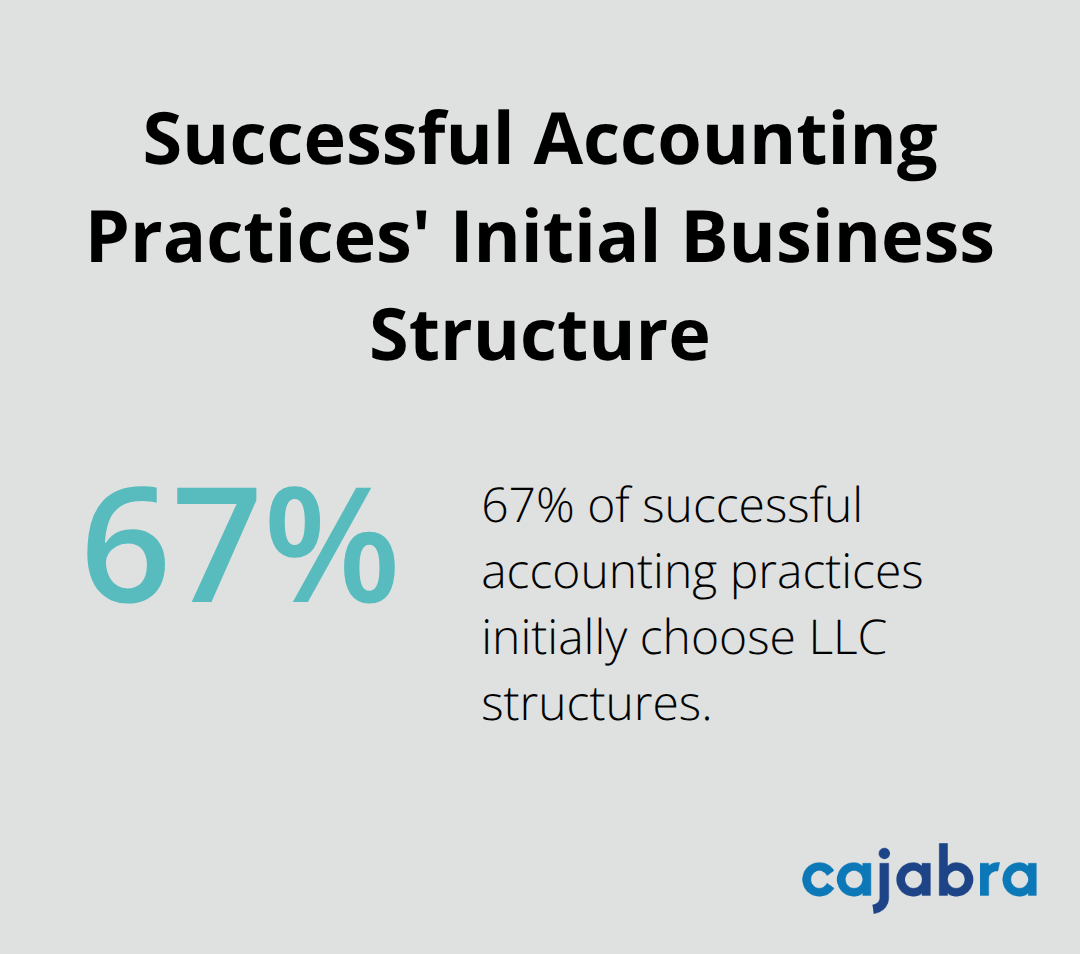
The National Association of Certified Public Accountants reports that 67% of successful practices choose LLC structures initially, then convert to S-Corp status within three years. Register your EIN immediately through the IRS website - this process takes 15 minutes and costs nothing, yet many delay this step unnecessarily.
Develop Realistic Financial Projections
Your business plan must include realistic financial projections based on industry benchmarks rather than optimistic guesswork. According to the American Institute of CPAs, new practices require $15,000 to $25,000 in startup capital for technology, insurance, and initial marketing efforts.
Revenue projections should assume 15-20 clients in year one, with average monthly fees of $500-800 per client for comprehensive services. These numbers reflect actual market conditions rather than wishful thinking.
Set Up Essential Technology Systems
Practice management software like Drake Tax or Lacerte handles client communications, document storage, and workflow automation. Client relationship management systems track leads, automate follow-ups, and maintain detailed service histories.
QuickBooks Desktop Enterprise manages your own accounting while maintaining separation from client files. Cloud-based solutions enable remote work capabilities that 78% of accounting professionals now consider essential for competitive positioning (according to recent industry surveys).
These foundational elements create the infrastructure needed to attract and serve clients effectively, which leads directly to your next major challenge: building a professional presence that draws ideal clients to your practice.
Marketing and Client Acquisition Strategies
Your website serves as your primary sales tool and must convert visitors within seconds of arrival. Research shows that potential clients research accounting firms online before making contact, which makes your digital presence the most important factor in client acquisition. Professional websites with clear service descriptions, client testimonials, and streamlined contact forms generate 3.5 times more leads than basic directory listings.
Target Specific Industries for Higher Fees
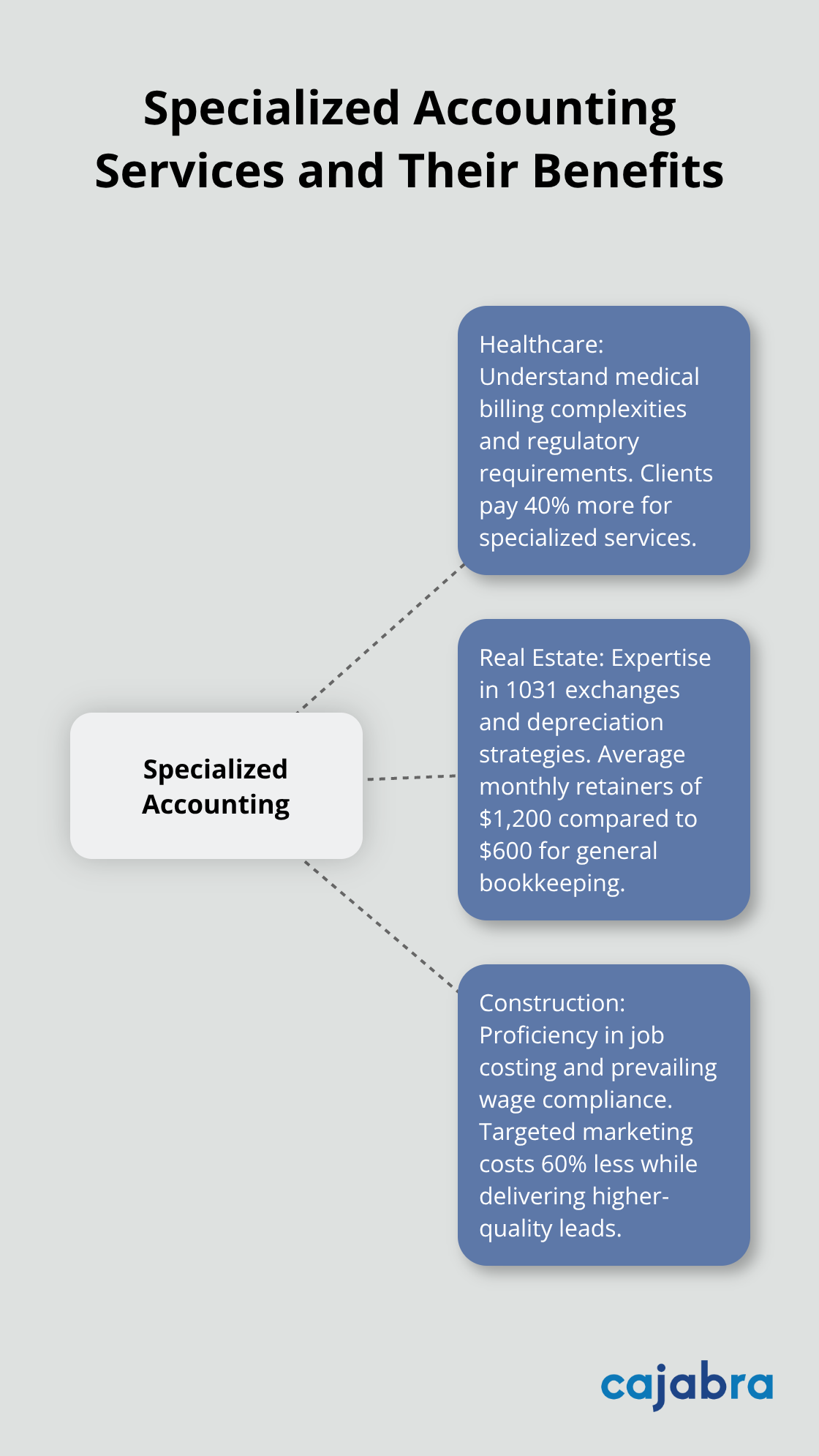
Generic accounting services compete on price while specialized practices command premium rates. Healthcare professionals pay 40% more for accounting services from firms that understand medical billing complexities and regulatory requirements. Real estate investors seek accountants familiar with 1031 exchanges and depreciation strategies, and they pay average monthly retainers of $1,200 compared to $600 for general bookkeeping.
Construction companies need expertise in job costing and prevailing wage compliance. Choose one industry, master their specific challenges, then build your entire marketing message around solutions to those problems. Google Ads that target construction accounting or medical practice bookkeeping cost 60% less than broad accounting keywords while they deliver higher-quality leads.
Build Referral Networks That Generate Consistent Leads
Referral partnerships with attorneys, financial planners, and business consultants create predictable lead flow without ongoing advertising costs. Estate planning attorneys refer clients who need tax preparation services, while business brokers connect you with companies that require due diligence work. The National Association of Tax Preparers reports that referral-based practices grow 45% faster than those that rely solely on digital marketing.
Contact five complementary service providers monthly, offer reciprocal referrals, and track which relationships generate the highest-value clients. Local business networking groups like BNI chapters produce 12-15 qualified referrals annually per active member (according to their internal statistics).
Create Content That Demonstrates Your Expertise
Blog posts about tax law changes and financial planning strategies position your firm as a thought leader in your chosen niche. Video content performs exceptionally well on LinkedIn, where 67% of accounting professionals discover new service providers. Weekly newsletters with tax tips and industry updates keep your name visible to prospects and existing clients alike.
Webinars about specific topics like Section 199A deductions or cryptocurrency taxation attract qualified leads who already recognize their need for specialized help. These educational approaches build trust before prospects ever contact you, which shortens sales cycles and increases conversion rates.
Once you establish these marketing foundations and begin attracting quality leads, your next priority becomes the operational systems that deliver exceptional service and support sustainable growth.
Operational Excellence and Service Delivery
Standardized workflows separate practices that grow from those that plateau at 20 clients. Document every client interaction from initial consultation to final deliverable with process mapping software like Lucidchart or simple Google Docs templates. The CAS benchmark survey helps firms understand their performance against peers, and it shows CAS growth outpaces the profession's overall growth.
Create checklists for tax preparation, monthly bookkeeping, and year-end procedures that any team member can follow without supervision. Template libraries for engagement letters, client questionnaires, and deliverable formats maintain consistency across all client relationships. Time-tracking data reveals that structured firms bill 23% more hours annually because they eliminate decision fatigue and reduce task switching between different approaches for similar work.
Select Software That Scales With Your Practice
Practice management platforms like Thomson Reuters Practice CS or CCH Axcess integrate tax preparation, document management, and client communication into single workflows. These systems cost $200-400 monthly per user but generate ROI within six months through improved efficiency and reduced administrative overhead.
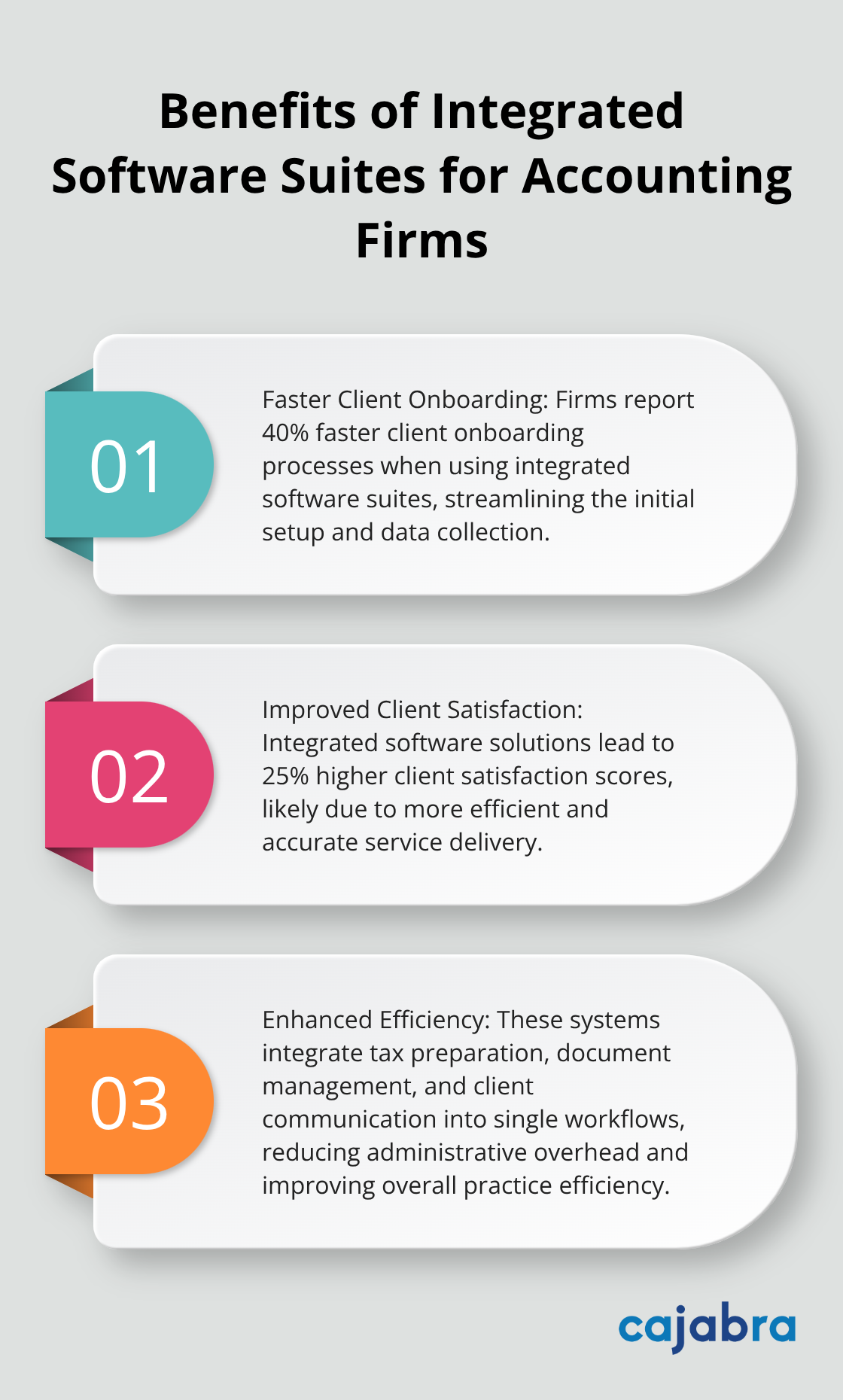
Cloud-based solutions enable remote work capabilities while they maintain security standards required for financial data. QuickBooks Online Advanced handles up to 25 users and integrates with over 750 third-party applications for payroll, time tracking, and client portals. Firms that use integrated software suites report 40% faster client onboarding and 25% higher client satisfaction scores (according to recent industry benchmarks).
Build Teams Through Systematic Training
Hire part-time staff during tax season, then convert top performers to full-time positions based on demonstrated competency rather than credentials alone. Community college accounting students often outperform experienced hires who lack systematic training in your specific processes and client service standards.
Training programs must include technical skills, client communication protocols, and quality control procedures. Written training manuals with video demonstrations reduce training time from six weeks to three weeks while they improve knowledge retention rates. Performance metrics like accuracy rates, client feedback scores, and productivity benchmarks identify team members ready for increased responsibilities and higher compensation levels.
Implement Quality Control Systems
Quality control checkpoints prevent errors before they reach clients and protect your professional reputation. Senior staff must review all tax returns before submission, while monthly bookkeeping requires dual approval for journal entries over $500. Error tracking spreadsheets identify patterns that indicate training gaps or system weaknesses.
Client feedback surveys after each engagement reveal service gaps that internal reviews miss. Anonymous feedback tools generate honest responses that help you address problems before they damage client relationships or generate negative reviews online.
Final Thoughts
Starting an accounting practice successfully demands consistent execution across three core areas: solid business foundations, strategic client acquisition, and operational excellence. The firms that thrive beyond year one maintain disciplined financial management, invest in technology that scales with growth, and build referral networks that generate predictable lead flow. Most new practices fail because they underestimate startup costs or price services too low to compete with established firms.
Avoid these mistakes when you budget $20,000 for your first year and charge premium rates for specialized expertise rather than compete on price for generic services. Your next steps involve choosing your niche market, implementing practice management software, and developing systematic marketing approaches that position your firm as the obvious choice for ideal clients. Focus on building systems that work without your constant supervision (your practice will grow into a valuable business asset rather than just another job).
We at Cajabra, LLC help accounting firms move from overlooked to overbooked through our JAB System™ that secures retainer-based clients within 90 days. The accounting industry rewards firms that execute proven strategies consistently rather than those that chase every new trend. Your success depends on the systems you build today and the discipline you maintain tomorrow.
Financial advisors face intense competition for clients in 2025. Traditional marketing methods no longer generate the leads they once did.
We at Cajabra, LLC have analyzed the most effective marketing for financial advisors strategies that actually work today. This guide reveals proven tactics that top advisors use to attract high-value clients and build sustainable practices.
What Marketing Strategies Actually Generate Leads Today
Social Media Marketing Dominates Client Acquisition
Social media marketing has become the primary client acquisition channel for financial advisors. Putnam Investments reports that 92% of advisors who use these platforms see increased client acquisition. LinkedIn drives the highest conversion rates and generates 3x more qualified leads than Facebook or Twitter for financial services.
Advisors who post educational content 2-3 times weekly see 40% more engagement than those who post sporadically. Video content performs exceptionally well - financial planning videos receive 85% more views than text posts (HubSpot data shows this clear preference for visual content).
Referral Programs Drive Most New Business
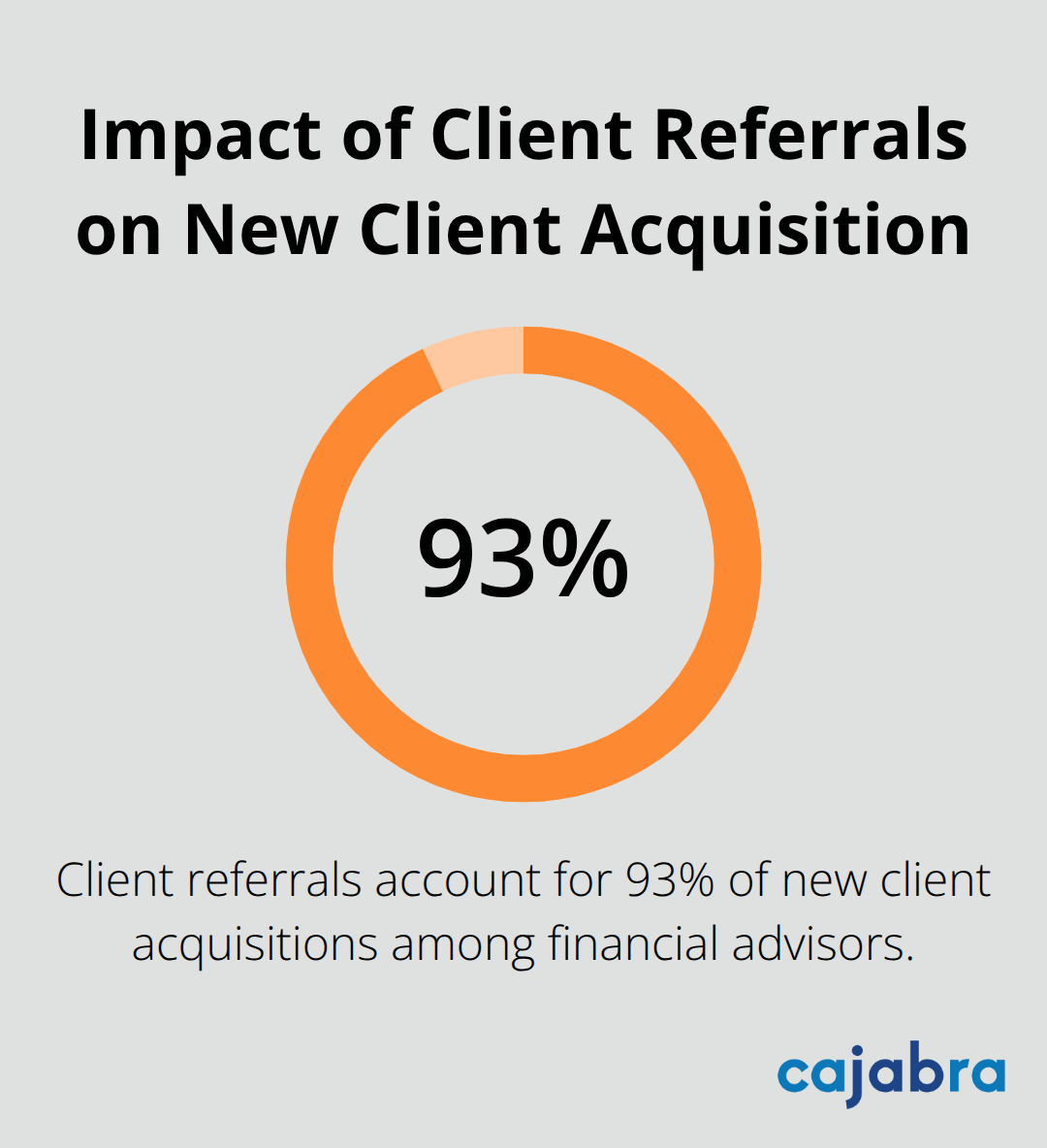
Client referrals account for 93% of new client acquisitions among financial advisors according to Kitces research, yet most advisors handle referrals passively. Active referral programs with structured incentives generate 5x more referrals than informal approaches.
Top-performing advisors implement quarterly referral campaigns that offer specific rewards like portfolio reviews or financial planning sessions for successful referrals. The key lies in timing - advisors who ask for referrals immediately after positive client experiences yield 67% higher success rates than random requests.
Educational Content Converts at Higher Rates
Financial planning workshops and webinars convert prospects at rates 4x higher than cold outreach methods. Advisors who host monthly educational sessions report average attendance of 25-40 prospects per event, with 15-20% who convert to clients within six months.
Topics that address retirement planning, tax strategies, and estate planning generate the highest attendance. Successful advisors combine live workshops with follow-up email sequences and create nurture campaigns that maintain engagement between events. This educational approach positions advisors as trusted experts rather than salespeople, which addresses the preference of 76% of investors who want to learn before they engage professional help (Edelman Financial Engines research confirms this trend).
These proven strategies form the foundation of successful advisor marketing, but digital marketing strategies amplify their effectiveness even further.
Which Digital Tactics Generate the Most Qualified Leads
Search Engine Optimization Drives 68% of Organic Traffic
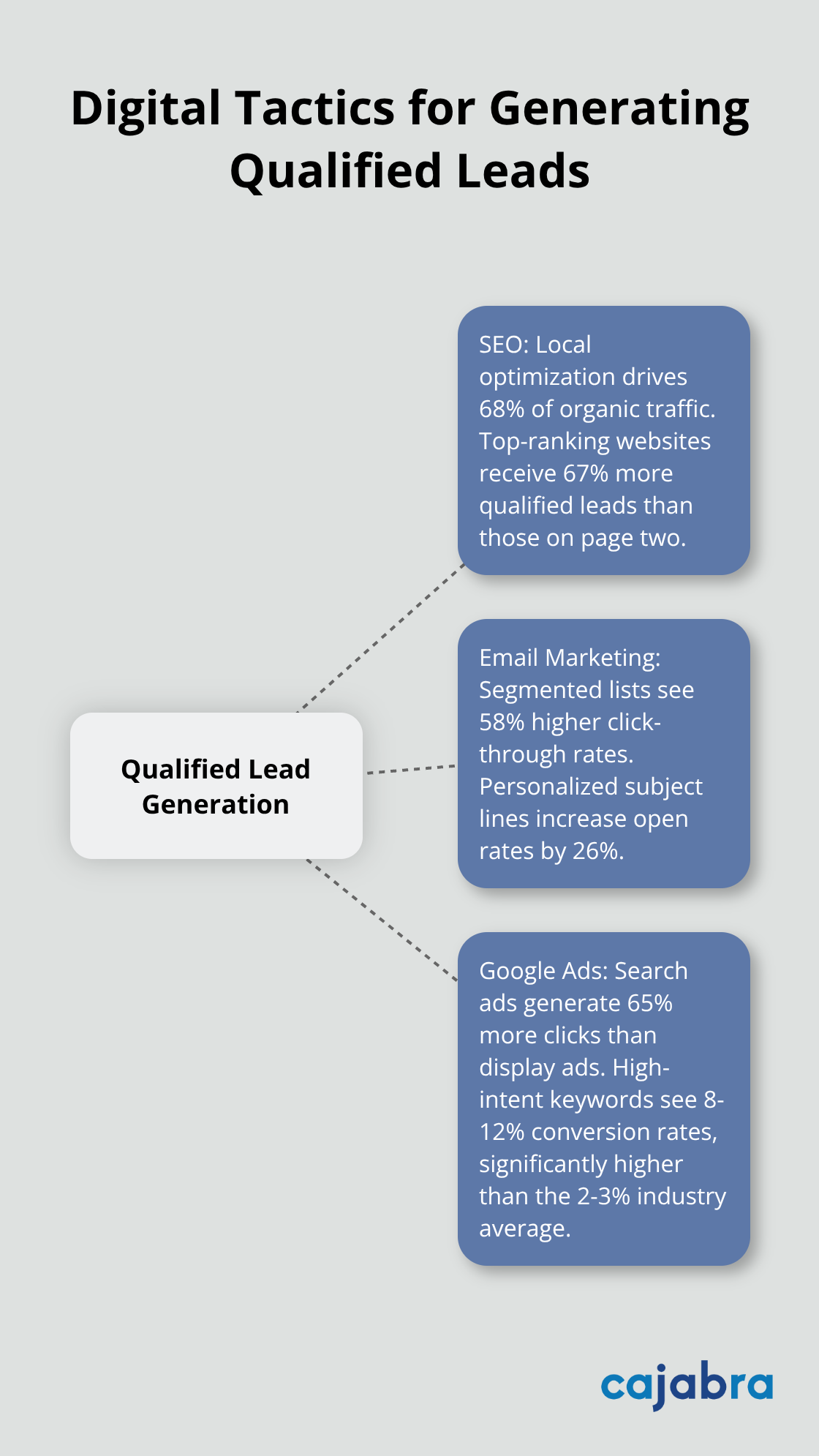
Local SEO generates the highest quality leads for financial advisors, with consumers who perform a local search frequently visiting nearby stores, highlighting the value of location-based optimization according to RankTracker research. Advisors who optimize for location-based keywords like "financial advisor near me" or "retirement planning [city name]" capture prospects who actively seek services in their area. The top-ranking financial advisor websites receive 67% more qualified leads than those on page two of search results.
Successful advisors target long-tail keywords with lower competition but higher conversion rates. Terms like "fee-only financial planner for teachers" or "retirement planning for federal employees" convert 3x better than generic "financial advisor" searches. Website pages that answer specific client questions rank higher and generate more qualified traffic than keyword-stuffed content (which Google now penalizes heavily).
Email Marketing Delivers Strong Returns on Investment
Email campaigns remain a high ROI digital marketing channel for financial advisors, with email marketing continuing to show strong performance metrics according to DMA research. Advisors who segment their email lists based on client demographics and financial goals see 58% higher click-through rates than those who send generic newsletters to all subscribers.
Weekly market update emails that include actionable insights perform better than monthly newsletters filled with general financial tips. Personalized subject lines increase open rates by 26%, while emails sent on Tuesday mornings between 10-11 AM achieve the highest engagement rates. Automated drip campaigns that nurture prospects over 6-8 weeks convert 23% of subscribers into consultation requests.
Google Ads Generate Immediate Qualified Traffic
Pay-per-click advertising provides instant visibility for financial advisors, with search ads that generate 65% more clicks than display ads in financial services. Advisors who target high-intent keywords like "retirement planning consultation" or "401k rollover advice" see conversion rates between 8-12%, significantly higher than the 2-3% average across all industries.
Successful Google Ads campaigns focus on specific services rather than broad financial planning terms. Ads that target "estate planning attorney near me" or "tax-loss harvesting strategies" cost 40% less per click while they generate higher-quality leads. Landing pages that match ad copy exactly and include clear calls-to-action convert 89% better than generic homepage destinations.
These digital tactics work best when advisors combine them with strong online credibility signals and effective content planning that prospects can verify before they schedule consultations.
How Do Financial Advisors Build Trust Before Meeting Prospects
Website Design Determines First Impressions Within Seconds
Financial advisors have exactly 15 seconds to capture visitor attention before prospects leave their website. Research shows that 75% of consumers judge advisor credibility based on website design alone, while 88% abandon poorly designed sites immediately. Modern, mobile-optimized websites convert 40% more visitors into consultation requests than outdated designs with slow load times.
Professional websites that load in under 3 seconds generate 67% more qualified leads than slower sites. Advisors who include client testimonials, professional headshots, and clear service descriptions on their homepage see 45% higher conversion rates. The most effective advisor websites feature simple navigation, prominent contact forms, and compliance-friendly language that builds confidence without overwhelming visitors with financial jargon.
Online Reviews Control 89% of Client Decisions
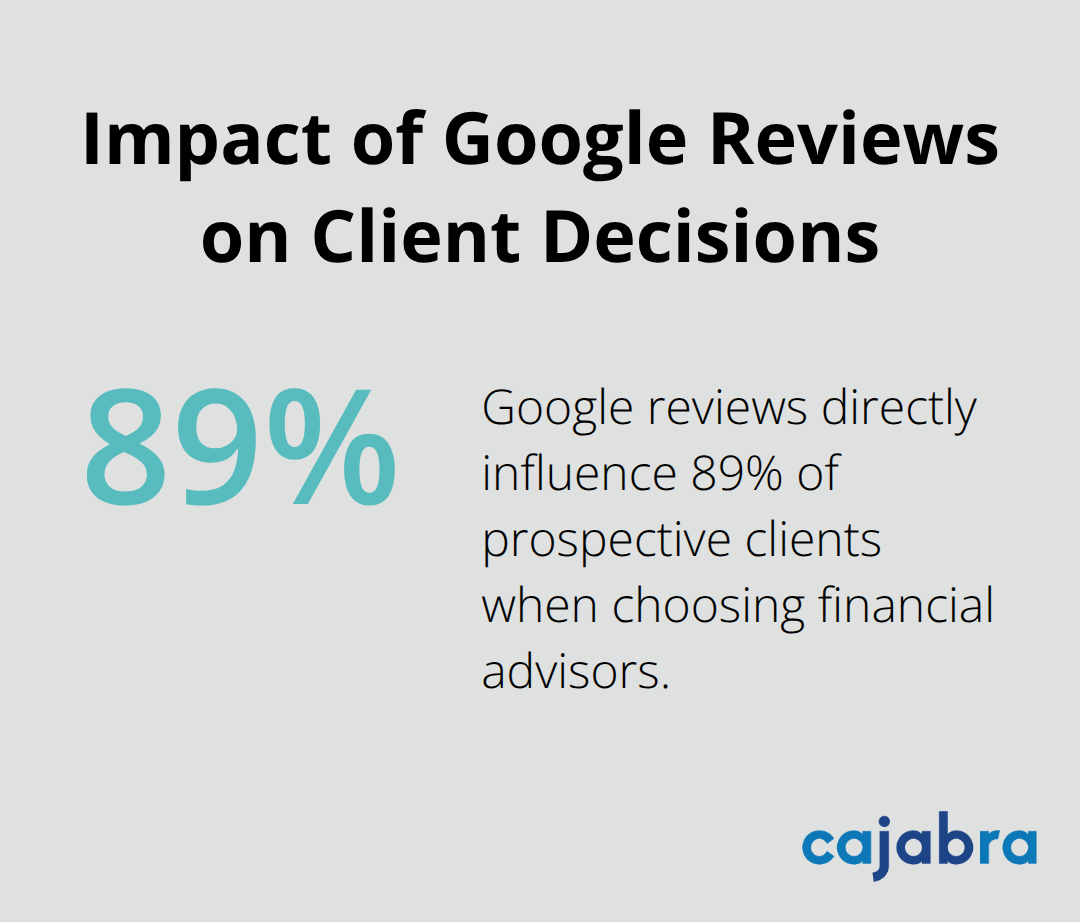
Google reviews directly influence 89% of prospective clients when they choose financial advisors, yet most advisors collect reviews passively. Advisors with 15+ Google reviews receive 3x more consultation requests than those with fewer than 5 reviews. The timing of review requests matters significantly - advisors who ask clients within 48 hours of positive interactions yield 73% response rates (compared to 12% for delayed requests).
Successful advisors implement systematic review collection through automated email sequences and personalized follow-up calls. Advisors who respond to all reviews, including negative ones, demonstrate professionalism and increase overall credibility. Advisors who maintain 4.5+ star ratings across Google, Yelp, and industry-specific platforms like BrokerCheck convert 58% more website visitors into actual clients than those with lower ratings.
Content Marketing Requires Strict Compliance Standards
Financial advisors must balance educational content creation with SEC and FINRA compliance requirements, which makes content marketing more complex than other industries. Compliance-friendly content that provides general financial education without specific investment advice generates 4x more organic traffic than promotional material. Advisors who publish weekly blog posts that address common financial questions rank higher in search results and attract 34% more qualified prospects.
The most effective advisor content focuses on financial literacy topics like retirement planning basics, tax strategy overviews, and estate planning fundamentals. Content that includes proper disclaimers and avoids specific investment recommendations passes compliance reviews while still provides value to prospects. Advisors who work with compliance-experienced content creators produce 60% more approved content than those who handle writing internally without specialized knowledge (which often leads to compliance issues).
Final Thoughts
Marketing for financial advisors has transformed into a digital-first approach that values education over aggressive sales tactics. Social media platforms, especially LinkedIn, deliver the highest quality leads when advisors share educational content on a consistent schedule. Referral programs still dominate client acquisition, but structured incentives and strategic timing make the difference between passive and active success.
Local SEO captures 68% of organic traffic for financial advisors, while email campaigns provide strong returns through targeted audience segments. Google Ads offer immediate visibility for high-intent searches, though success requires precise alignment between ad copy and landing pages. Professional website design determines credibility within seconds (75% of prospects judge advisors based on visual appeal alone), while online reviews influence 89% of client decisions.
The industry moves toward hyper-personalized financial plans powered by AI and advanced data analytics. ESG investments will surge among younger demographics, while compliance requirements grow more complex each year. We at Cajabra, LLC help accounting firms overcome similar challenges through our JAB System™, which transforms overlooked practices into overbooked firms within 90 days.
Content marketing teams face constant pressure to produce fresh, engaging material that stands out in crowded digital spaces. Most marketers struggle with generating content marketing ideas that truly resonate with their audience.
We at Cajabra, LLC understand this challenge. The solution lies in systematic approaches that transform everyday business insights into compelling content that drives real engagement and conversions.
What Content Gaps Cost You Clients
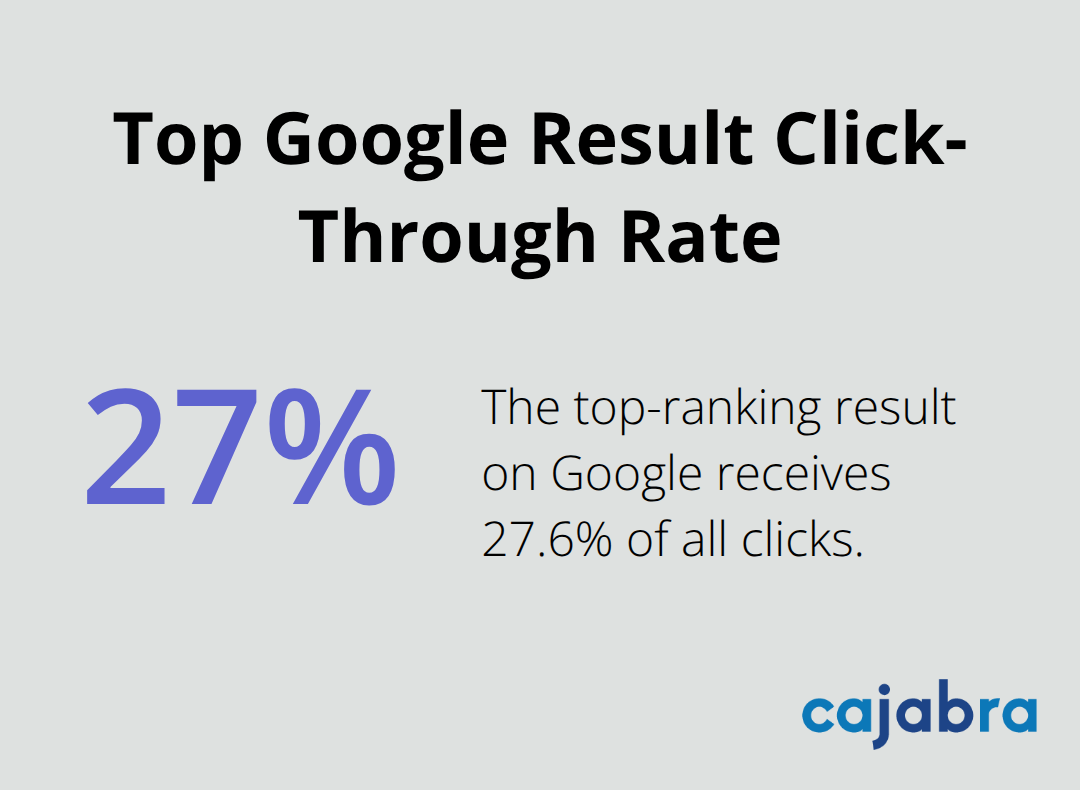
Start with performance metrics that matter. Google Analytics shows you which content drives actual conversions, not just traffic. Look at pages with high bounce rates above 70% - these indicate content that fails to engage your target audience. Content pieces that generate less than 50 organic visits monthly after six months need immediate attention or removal. The top-ranking result on Google receives approximately 27.6% of all clicks, which makes performance analysis essential for identifying underperforming assets.
Performance Data That Drives Decisions
Focus on three metrics: time on page, conversion rates, and social shares. Content with average time on site below 2 minutes signals weak engagement. Semrush Organic Research tool reveals which competitor content ranks for keywords you should own. Pages that generate zero backlinks after three months indicate content that lacks authority or shareability. Long-form content of 7,000+ words drives nearly 4x more traffic than shorter posts between 900-1,200 words (showing clear performance patterns you can replicate).
Industry Gap Analysis That Works
Search your industry keywords and analyze the first page results. Topics that competitors miss represent immediate opportunities. Tools like Ahrefs identify content gaps where competitors rank but you don't. Look for questions your audience asks on social media that no one addresses comprehensively. Reddit threads and LinkedIn discussions reveal pain points that current content ignores. Industry reports often highlight trends that only 20% of companies address in their content marketing.
Competitor Intelligence for Content Strategy
Monitor competitor social media engagement rates - posts with high engagement reveal what resonates with shared audiences. Track their content frequency and formats. Companies that post daily often see diminishing returns, while those that post 2-3 times weekly maintain higher client engagement per post. Use Google Alerts for competitor brand names to track their content distribution patterns. Analyze their most shared content from the past 90 days to identify successful angles you can adapt for your audience (this reveals proven content themes that work in your market).
These insights form the foundation for systematic content creation that addresses real market needs rather than assumptions.
How Do You Turn Real Problems Into Content Gold
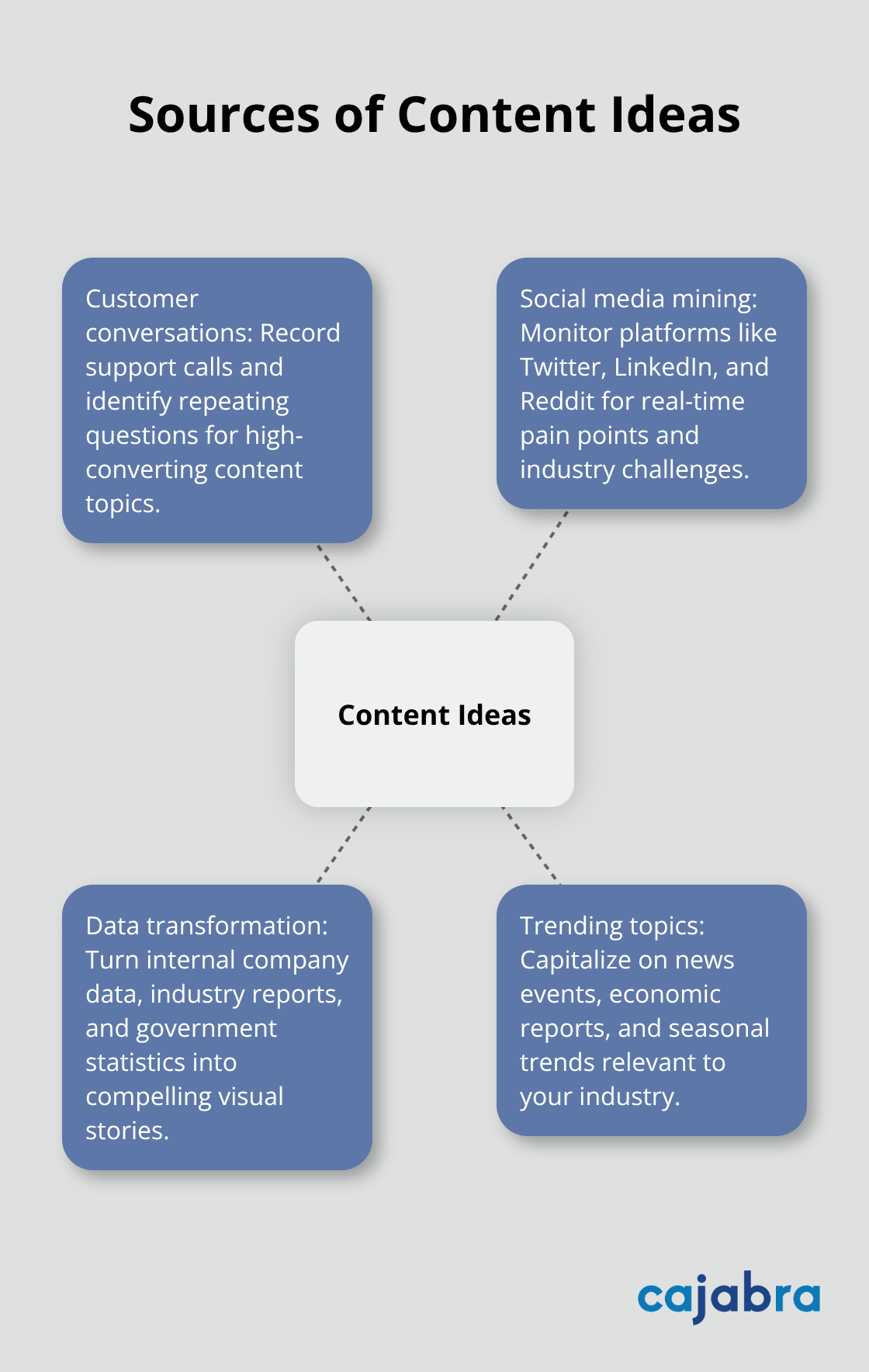
Customer conversations reveal content opportunities that most marketers miss completely. Record client support calls and identify questions that repeat - these become your highest-converting content topics. Sales teams hear the same objections repeatedly, and each objection represents a content piece that addresses specific buyer concerns. Survey data from existing customers shows 73% of B2B buyers research solutions extensively before they contact sales, which means your content must answer their questions before they ask. HubSpot research indicates that 54% of content marketers use AI to generate ideas, but direct customer feedback remains more valuable than algorithmic predictions.
Mine Social Media for Content Triggers
Twitter threads with high engagement reveal pain points that trend in real-time. LinkedIn polls generate immediate feedback on industry challenges that your audience faces daily. Facebook groups in your industry contain unfiltered discussions about problems that formal surveys miss. Instagram comments on competitor posts reveal gaps in their content strategy. Reddit communities discuss technical issues and frustrations that traditional market research overlooks. Monitor hashtags related to your industry - spikes in usage indicate topics worth addressing. Social listening tools like Mention track brand conversations, but manual monitoring of niche communities often provides more actionable insights for content creation.
Transform Numbers Into Narrative
Case studies perform 30% better when they include specific metrics rather than vague success stories. Internal company data becomes compelling content when you show before-and-after comparisons with actual numbers. Industry reports contain statistics that most companies cite but few explain in practical terms. Government databases provide data that competitors ignore - unemployment rates, industry growth figures, and regulatory changes all create content opportunities. Transform spreadsheets into visual stories with tools like Tableau or Canva (these platforms make complex data digestible for your audience). Annual surveys from your industry associations contain insights that apply directly to your audience's daily challenges, yet only 15% of companies create content around these findings.
Turn Trending Topics Into Timely Content
News events create immediate content opportunities when you connect them to your industry expertise. Economic reports, policy changes, and technology announcements all provide angles for relevant content creation. Google Trends shows which topics gain momentum in your sector - capitalize on these before competitors notice the opportunity. Industry conferences generate discussion topics that extend far beyond the event itself. Seasonal trends affect every business differently, and your unique perspective on these patterns becomes valuable content that resonates with your specific audience (timing these pieces correctly amplifies their impact).
These systematic approaches to content generation create a pipeline of ideas that address real market needs. The key is creating content efficiently while maintaining quality, setting the stage for innovative format experimentation that maximizes your content's reach and impact.
How Do You Multiply Content Impact Through Format Innovation
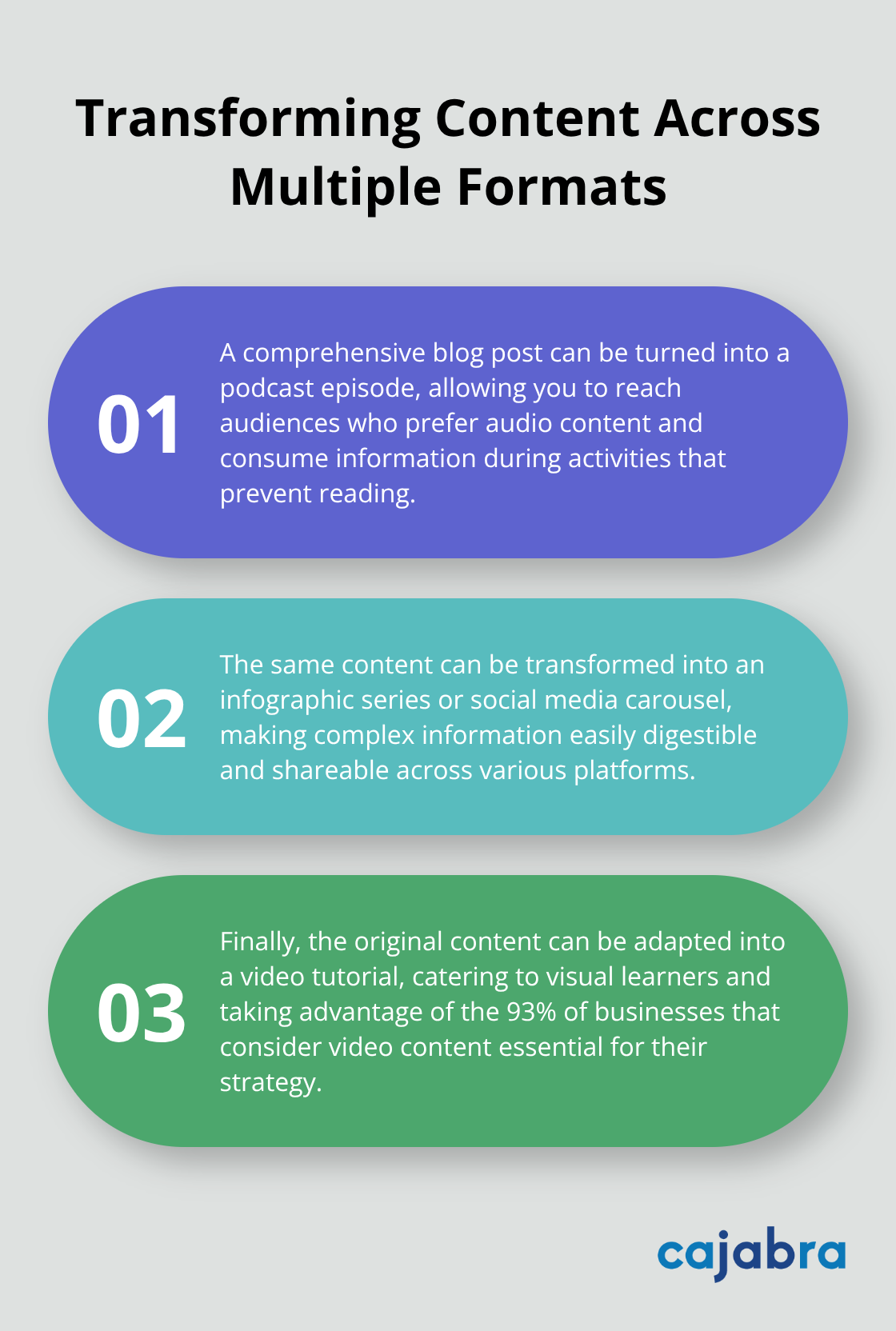
Single pieces of content generate maximum value when you transform them across multiple formats that match different audience preferences. A comprehensive blog post becomes a podcast episode, infographic series, social media carousel, and video tutorial - each format reaches audiences who consume content differently. Wistia research shows that 93% of businesses consider video content essential for their strategy, while 75% of marketers use AI tools for video creation and editing. Transform your written content into visual formats with tools like Canva for infographics or Loom for screen recordings. One 2,000-word article produces 5-7 social posts, 3 infographic panels, a 10-minute video, and 15-minute podcast episode when you segment it properly.
Static Content Becomes Interactive Tools
Convert articles into interactive polls, quizzes, and calculators that generate immediate audience engagement. Ephemeral content like Instagram stories and polls provides strong marketing value. Transform case studies into interactive timelines with tools like Timeline JS or create assessment tools from your expertise-based content. Replace static charts with interactive dashboards - these generate 30% more social shares than traditional images. Survey data from your content becomes interactive comparison tools that prospects use for decision-making (these tools provide valuable insights about user preferences and pain points).
Audio and Video Amplification Methods
YouTube experienced 79% growth over the past year according to HubSpot research, which makes video repurposing essential for content distribution. Extract key quotes from articles and create short video clips for TikTok and Instagram Reels - these formats drive discovery beyond your existing audience. Convert blog interviews into podcast episodes with editing software like Audacity or Riverside. Transform how-to articles into step-by-step video tutorials that demonstrate processes visually. Audio content reaches commuters and multitaskers who consume content during activities that prevent reading.
Visual Content Transformation Tactics
Turn data-heavy articles into compelling infographics that simplify complex information for social media sharing. Create carousel posts from listicle content - each slide highlights one key point with supporting visuals. Transform testimonials and case studies into quote graphics that build social proof across platforms. Convert process explanations into flowcharts and diagrams that audiences can reference quickly. Visual content performs 30 times better on social media than text-only posts (making this transformation essential for maximum reach and engagement).
Final Thoughts
Successful content marketing ideas emerge from systematic analysis rather than random inspiration. Performance data reveals which topics resonate with your audience, while competitor gaps show untapped opportunities. Customer pain points provide the most valuable content seeds because they address real problems that drive purchasing decisions.
The most effective approach combines multiple strategies. Audit existing content performance to identify what works, then expand successful themes. Monitor social media conversations for trending topics that connect to your expertise (this reveals immediate opportunities for timely content). Transform single pieces into multiple formats to maximize reach across different audience preferences.
Implementation starts with choosing one strategy from each category. Begin with a content audit, identify three customer pain points, and select two repurposing formats. We at Cajabra, LLC help accounting firms implement these strategies through our JAB System™ that transforms overlooked practices into overbooked businesses within 90 days. Content innovation becomes predictable when you follow proven frameworks that address real market needs.
Table of Contents
I’ve been in the marketing industry for over 30 years, and here’s something I’ve noticed: almost every accounting firm falls into one of two camps.
- Camp A: “We have so much business we can’t take another client. We don’t need marketing.”
- Camp B: “We need more work. We have extra capacity. Bring it on.”
Sounds obvious, right? But here’s the twist: Camp A often thinks they’re doing great… until they realise that most of that work is compliance noise that doesn’t make money. Meanwhile, their team is buried in volume, never able to step back, evaluate, or invest in smarter strategies.
So: no, having too much business is not a “get out of marketing free” card. It might just be the signal that your firm is not optimized.
The Real Question: Is All That Work Actually Profitable?
Being busy doesn’t always mean being profitable. Sure, your calendar is packed and your team is logging long hours, but what’s all that effort really earning you? If most of your clients are once-a-year tax returners, you’re not building steady, predictable revenue. If you don’t have a healthy mix of monthly or quarterly service work, you’re constantly chasing the next big deadline with nothing reliable in between.
Add to that the constant juggling of apps, the endless admin, and the feeling that nobody quite knows where the “real” numbers live, suddenly all that busyness starts to look less like success and more like a vicious cycle. Margins are thin, cash flow is erratic, and there’s barely a moment to step back and think about growth. So yes, you’re busy, but the better question is: are you busy in a way that’s building long-term profitability, or just busy keeping the lights on?

First, Get Your House In Order Before You Market
You can’t pour from an empty cup. Before you double down on marketing, you’ve got to tighten up your internal systems. Because if your back end is messy, adding more clients will just make the chaos worse.
One of the biggest issues we see? Too many apps doing too many things, with zero central command. Think about it: your team logs into five different tools to get one job done. Data lives in silos. Nobody knows what the “true” number is. Rework, version control, frustration - it all creeps in.
So one of the first things you should always do is build a firm operating system. Something that gives you a single source of truth. Something that reduces your app sprawl, brings order, minimizes redundancies.
Once that’s in place, then your people can operate efficiently. And then you can start investing in marketing and growth, with the confidence that your firm can absorb more without imploding.
Why Efficiency = Freedom
When you set up a smooth internal engine, a few magical things happen:
- Empowered team: less grunt work, fewer context switches, more time for value-add work.
- Capacity opens up: when you're not maxed out, you can step into strategy or client work that pays more.
- Better client experience: fewer screw-ups, faster turnaround, happier clients.
- True growth (not just volume growth): you can attract recurring services, advisory clients, retainer arrangements.
Those are the clients you actually want. Predictable, valuable, less trouble.
Introducing Arrive
One tool that embodies what a clean operating system should do is Arrive (See what I did there).
Firms running on Arrive report margins as high as 80%, and some accountants are servicing over 300 monthly clients while staying lean. It’s being praised as possibly the best accounting firm platform of 2025.
I’m not saying Arrive is a silver bullet. But when a platform is built to replace the chaos of “a little bit of this, a little bit of that,” it can help you ditch the spaghetti of apps and finally get organized.
Quick Audit: How Messy Is Your Tech?
Here’s a mini checklist. If you answer “yes” to more than 3, you have work to do:
- You use more than 7 different tools across client service, communication, document management, billing, reporting.
- You often copy-paste data from one tool to another.
- The team complains they can’t find correct files or numbers.
- You don’t have a unified dashboard showing firm health (revenue, capacity, bottlenecks).
- You avoid adding new clients because you’re afraid of collapse.
If that sounds familiar, welcome to reality. But the good news: it’s fixable.

What Comes After the Clean-Up
Once you’ve done the hard work of cleaning up your systems and building a strong foundation, things start to shift. Marketing stops being scary because you know your firm can handle the influx. This means you can start pricing for the actual value you deliver instead of competing on who can be the cheapest option in town.
With a clear operating system in place, you’re able to confidently promote recurring services, like monthly accounting or advisory engagements, rather than just loading up on seasonal tax prep. And instead of every new client adding another layer of chaos, growth actually feels manageable. Even enjoyable.
In other words, the clean-up phase isn’t just about reducing stress for your team. It’s about setting yourself up so when you finally put your foot on the marketing gas pedal, your firm doesn’t crash and burn. It glides.
Your Firm, Your Move
Don’t fall for the “I’m too busy to market” trap. That’s often the illusion of chaos. First, fix your house. Build the system. Tame your tech. Make your team into a well-oiled machine.
Then, when you open the doors and bring in new leads, your firm has the breathing space, the capacity, and the control to actually make money, not just make more work.
If you want help auditing your tech, mapping the right tools, or even considering Arrive as a backbone - reach out. Let’s get your firm operating so well that growth feels like a breeze.
The choice is yours. Stay stuck in “too much business” mode, or create the breathing room to market with confidence and grow on your terms. Your firm, your move.
Content creators face a constant challenge: generating fresh blog content ideas that resonate with their audience. The pressure to publish regularly while maintaining quality can feel overwhelming.
We at Cajabra, LLC understand this struggle. That's why we've compiled proven strategies and tools that successful content creators use to build sustainable content pipelines and keep their audiences engaged.
Understanding Your Audience and Their Content Needs
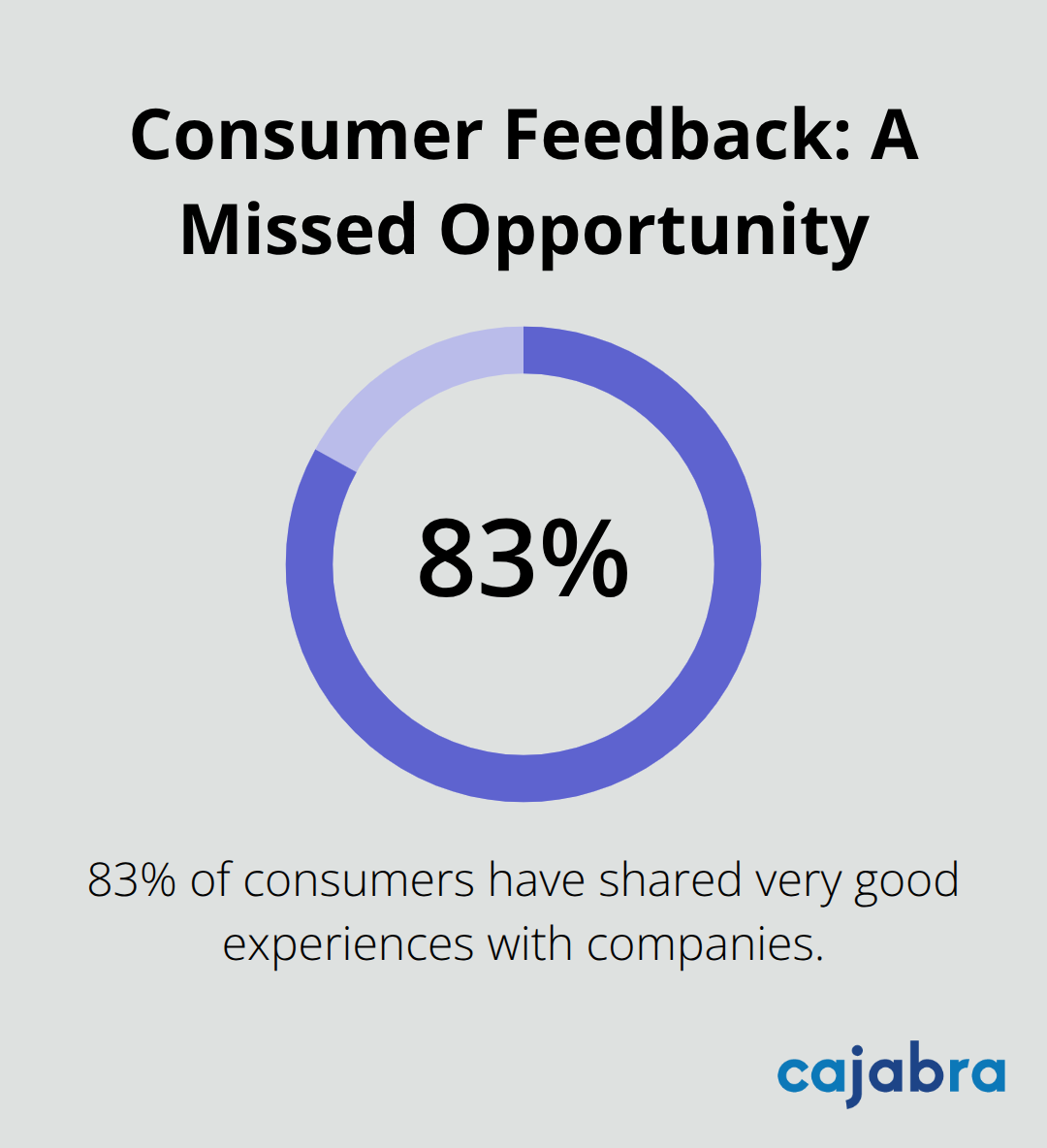
Most content creators think they know their audience, but 83% of consumers have shared very good experiences with companies, yet few creators actually ask for feedback. The biggest mistake is creating content based on assumptions rather than real data.
Analyze Your Target Audience Demographics and Preferences
Start with Google Analytics to identify your top-performing posts and examine the demographic data. Look at age ranges, geographic locations, and device usage patterns. Then dig deeper into social media insights from platforms where your audience is most active. Facebook Insights, Instagram Analytics, and LinkedIn Analytics reveal engagement patterns that show what content formats and topics generate the strongest response. These platforms provide concrete data about when your audience engages most and which post types drive the highest interaction rates.
Identify Pain Points and Questions Your Readers Face
Your audience's pain points are content gold mines, but surface-level problems won't cut it. Use tools like AnswerThePublic to find the questions people actually search for in your niche. Monitor comment sections on your existing posts and competitor content to spot recurring frustrations. Join Facebook groups and LinkedIn communities where your target audience gathers. Reddit threads in relevant subreddits often reveal deeper concerns that people won't share publicly elsewhere (these conversations tend to be more honest and detailed). The key is moving beyond obvious problems to uncover the underlying frustrations that keep your audience awake at night.
Use Social Media and Forums to Discover Trending Topics
Social listening goes beyond hashtag monitoring. Use BuzzSumo to track high-performing content in your industry and identify emerging topics before they become saturated. Google Trends shows you when interest in specific topics peaks, allowing you to time your content perfectly. Set up Google Alerts for industry keywords and competitor brand names. Twitter's advanced search function helps you find real-time conversations about problems your content could solve (this feature often reveals immediate opportunities). The goal is spotting content opportunities while they're still fresh, not after everyone else has covered the same ground.
With a clear picture of your audience's needs and interests, you can now explore proven methods that transform these insights into compelling content ideas. Creating detailed buyer personas helps you understand exactly who you're writing for, while developing a monthly content plan ensures your content consistently addresses their specific needs.
Proven Methods for Generating Fresh Content Ideas
The most effective content creators follow systematic approaches rather than wait for inspiration. Start with keyword research tools like SEMrush, Ahrefs, or Google's Keyword Planner to identify search terms with moderate competition but high intent. Focus on long-tail keywords that reveal specific problems your audience faces. Google Trends data shows seasonal patterns that help you time content perfectly-tax-related content peaks between January and April for accounting firms. Search for keywords with monthly search volumes between 100-1,000 rather than highly competitive terms with 10,000+ searches. These mid-range keywords often convert better because they target people with specific needs.
Leverage Keyword Research Tools and Search Trends
Professional content creators use data to guide their topic selection. SEMrush reveals which keywords your competitors rank for but you don't, creating immediate content opportunities. Ahrefs shows you the questions people ask about your industry topics through their "Questions" feature. Google's Keyword Planner provides search volume data that helps you prioritize topics with real demand. Try keywords with 500-2,000 monthly searches instead of chasing high-volume terms that major publications dominate. These moderate-volume keywords often indicate stronger purchase intent and face less competition.
Repurpose and Update Existing High-Performing Content
Your top-performing posts contain content goldmines that wait for expansion. Check Google Analytics to find posts that drive the most traffic, then create updated versions that address new developments or deeper aspects of the same topic. Transform comprehensive guides into focused articles for each major point. If a post about marketing automation performed well, create separate pieces about email sequences, lead scoring, and campaign tracking. Nearly 90% of marketers find repurposing content to be more effective and cost-efficient than creating new content from scratch. Update statistics, add recent case studies, and address questions from comments on the original post (this approach works because you already know the topic resonates with your audience).
Monitor Competitor Content and Industry Publications
Set up Feedly to monitor competitor blogs and industry publications for content gaps you can fill better. Look for topics competitors cover superficially, then create more comprehensive resources. Subscribe to newsletters from industry leaders and note which topics appear repeatedly across multiple sources-these indicate trends worth addressing. Use tools like SimilarWeb to identify which competitor content drives the most traffic, then create superior versions with more actionable advice, better examples, or updated information. Industry publications often miss practical implementation details that your audience craves (this creates opportunities to provide the specific guidance readers actually need).
These systematic methods provide the foundation for consistent content creation, but the right tools can accelerate your idea generation process and help you identify opportunities you might otherwise miss. Try new topics, formats, and guest speakers to maintain fresh and exciting content that keeps your audience engaged.
Tools and Resources for Content Inspiration
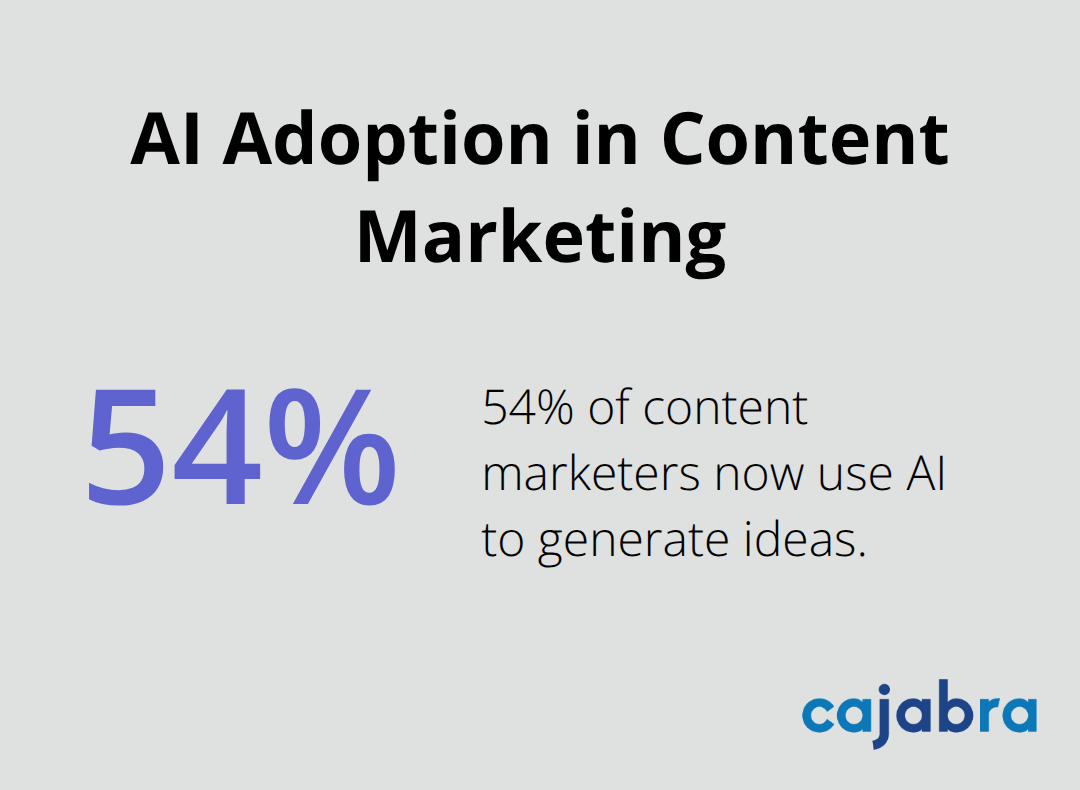
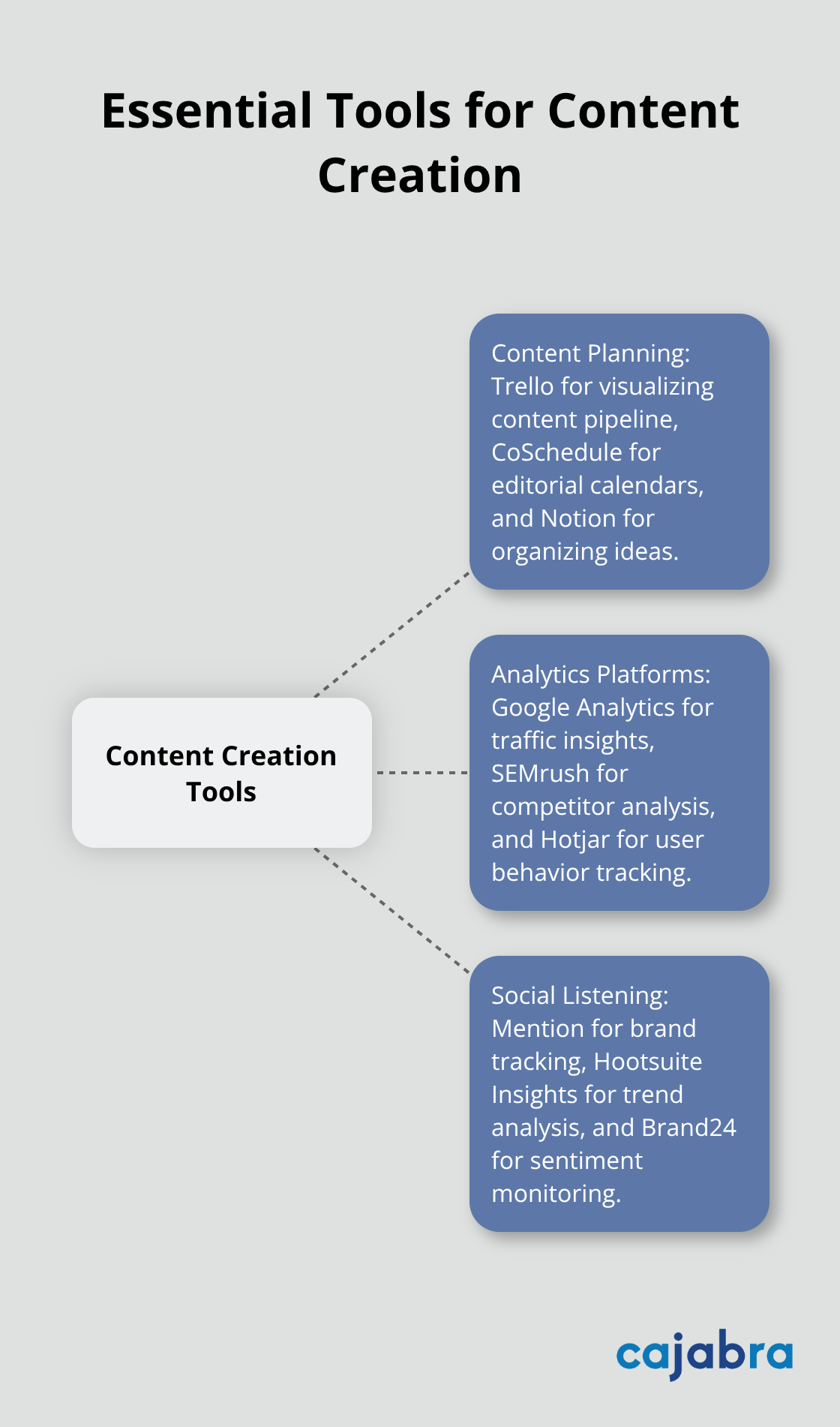
The right tools transform content creation from random brainstorming to systematic idea generation. Content creators who use data-driven tools produce more content, with 54% of content marketers now using AI to generate ideas according to recent research, but most marketers waste time with the wrong applications. Smart content creators focus on three tool categories that deliver measurable results.
Content Planning Applications That Work
Trello beats complex project management software for content planning because it visualizes your entire content pipeline without overwhelming features. Create boards for different content stages - Ideas, In Progress, and Published - then move cards through your workflow. CoSchedule provides editorial calendar functionality that shows content gaps and helps you maintain consistent publishing schedules. The platform integrates with WordPress and social media accounts, streamlining your entire content process. Notion combines note-taking with database functionality, allowing you to tag content ideas by topic, difficulty level, and target audience. These tools work because they organize scattered ideas into actionable content plans that prevent last-minute scrambling for topics.
Analytics Platforms for Performance Insights
Google Analytics reveals which topics drive the most traffic and engagement, but most creators only check pageviews instead of diving deeper into user behavior metrics. Look at engagement metrics and bounce rates to identify topics that truly engage readers. SEMrush provides competitor content analysis that shows which topics generate backlinks and social shares in your industry. The platform's Content Audit tool identifies your underperforming posts that need updates or could inspire new angles (this feature saves hours of manual analysis). Hotjar heatmaps show how readers interact with your content, revealing which sections hold attention and which get skipped entirely.
Social Listening Tools for Real-Time Trends
Mention tracks brand and keyword mentions across social media, blogs, and news sites, alerting you to emerging conversations before they peak. Set up alerts for industry terms and competitor names to spot content opportunities while they're fresh. Hootsuite Insights analyzes social media conversations to identify trending topics and sentiment patterns in your niche. The platform shows which content formats perform best on each social channel, helping you adapt ideas for maximum reach. Brand24 monitors online discussions and provides sentiment analysis that reveals what frustrates your target audience, creating direct pathways to helpful content topics. These tools work because they capture real-time conversations that traditional keyword research misses (giving you first-mover advantage on trending topics).
Final Thoughts
Successful content creators follow systematic approaches rather than rely on random inspiration. The most effective strategy combines audience research with data-driven tools to generate blog content ideas that consistently engage readers. Start by analyzing your audience demographics through Google Analytics and social media insights, then identify their specific pain points through forums and comment sections.
Use keyword research tools like SEMrush and Ahrefs to find moderate-competition terms with real search demand. Repurpose your top-performing content by expanding successful topics into focused articles. Monitor competitor content and industry publications to spot gaps you can fill with superior resources (this approach reveals immediate opportunities others miss).
Content planning tools like Trello and CoSchedule organize your ideas into actionable workflows, while analytics platforms reveal which topics drive engagement. Social listening tools capture real-time conversations that traditional research misses. We at Cajabra, LLC help accounting firms implement systematic marketing approaches that generate consistent results. Start implementing these strategies today by choosing one audience research method and one content planning tool.
Small businesses struggle to create content that connects with their audience and drives real results. Most owners spend hours brainstorming only to produce generic posts that get ignored.
We at Cajabra, LLC know that effective small business content ideas come from understanding your customers deeply and addressing their specific challenges. The right approach transforms your content from noise into a powerful growth engine.
Who Is Your Ideal Customer
Most small businesses create content without truly knowing who they're talking to. This backwards approach wastes time and money while it delivers poor results. Smart business owners start with deep customer research before they write a single post.
Study Customer Data Beyond Basic Demographics
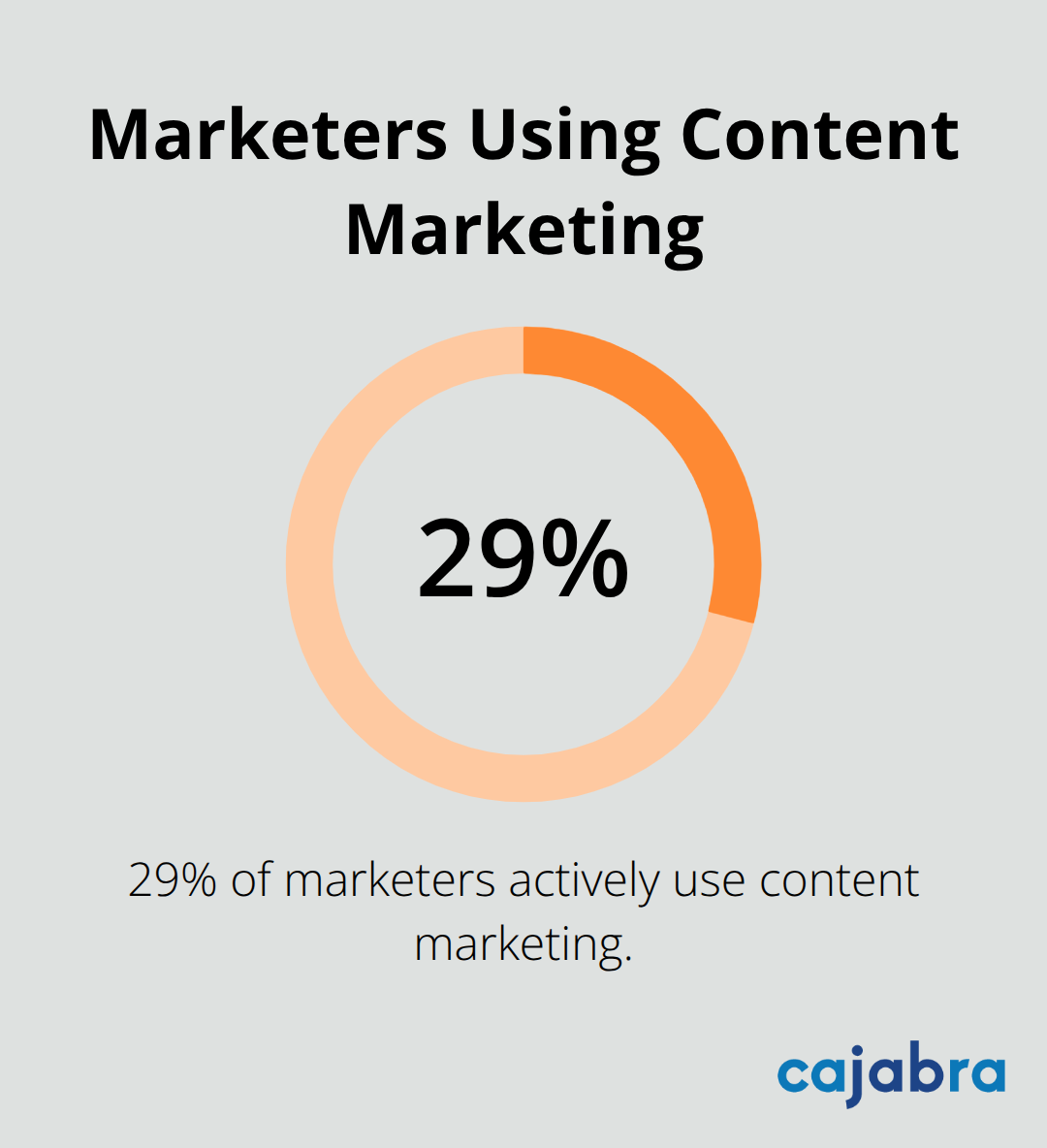
Age and location tell you nothing about what keeps your customers awake at night. HubSpot research shows that 29% of marketers actively use content marketing. Dig into customer support tickets, survey responses, and sales call notes to find problems that repeat. Interview your best customers about their biggest challenges before they found your business. Track which products they buy together and when they typically make purchases. This data reveals content opportunities that generic demographic profiles miss completely.
Find Content Gaps Your Competitors Ignore
Your competitors probably create the same content everyone else does. Semrush data shows 58% of businesses use AI for content research, but most still miss obvious gaps. Analyze the top 10 competitors in your space and catalog their content themes for three months. Look for questions customers ask that no one addresses properly. Check their social media comments for concerns that remain unresolved. Most competitors focus on product features while they ignore implementation challenges, troubleshooting guides, or industry-specific applications (these gaps become your content goldmine).
Track Real Metrics That Drive Business Growth
Social media vanity metrics lie to you constantly. Likes and followers mean nothing if they don't convert to customers. Focus on metrics that predict business growth: click-through rates to your website, email signups from social posts, and direct messages that ask about your services. Content Marketing Institute research reveals that 90% of content marketers use social media for distribution, but few track the right metrics. Monitor which content types generate the most qualified leads and double down on those formats. Comments that ask specific questions indicate high buyer intent (while generic praise suggests low-quality traffic).
Once you understand your audience deeply, you can create content marketing for small businesses that speaks directly to their needs and drives real business results.
What Content Types Actually Convert Customers
Behind-the-Scenes Content Builds Trust Fast
Behind-the-scenes content works because people buy from businesses they trust, and transparency builds that trust fast. Nike generates massive engagement when they show their design process, from initial sketches to final product tests. Small businesses can apply this same strategy without huge budgets.
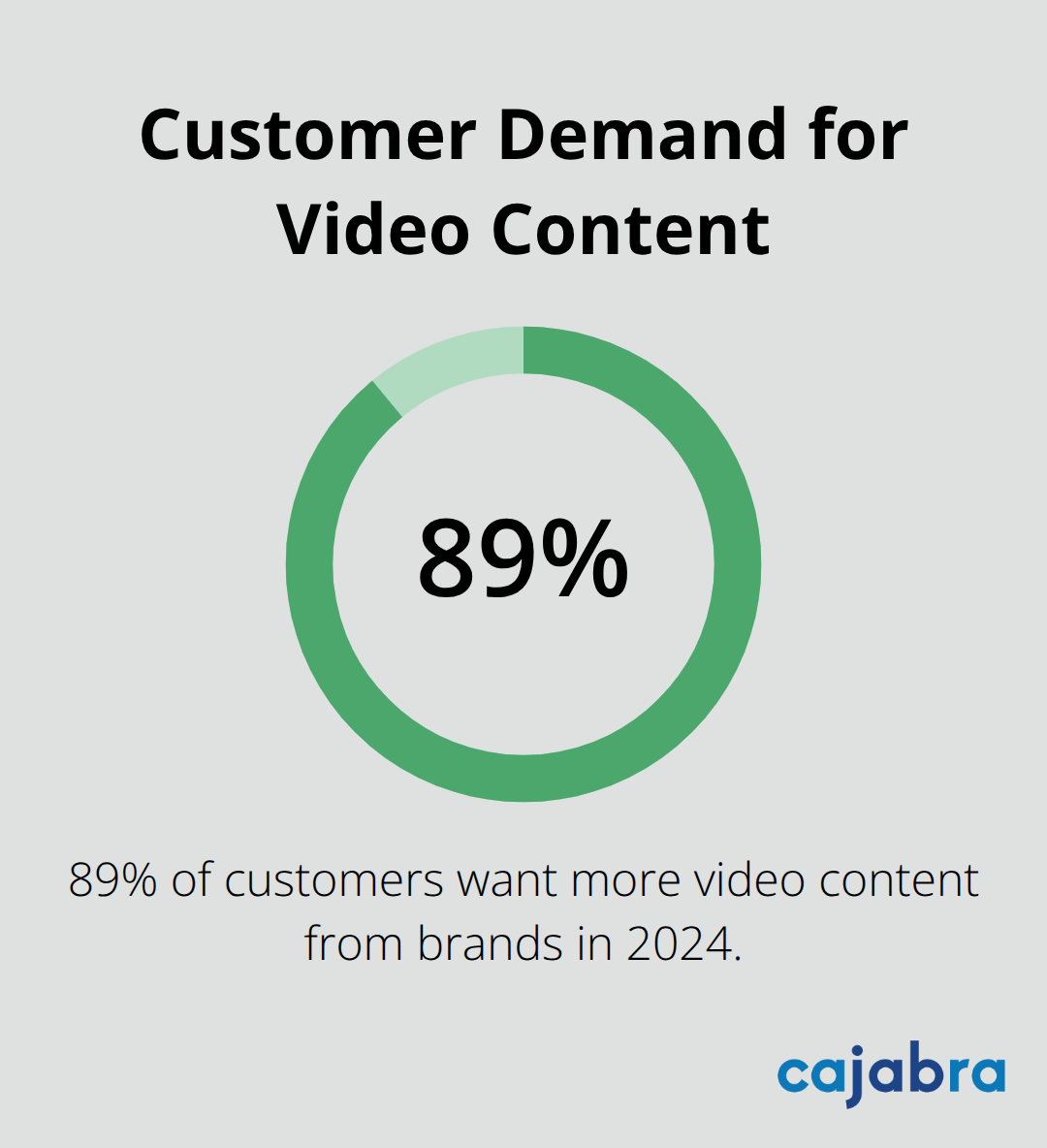
Document your daily operations, show how products get made, or film quick tours of your workspace. The key is consistency over production value. Wyzowl research shows 89% of customers want more video content from brands in 2024, and behind-the-scenes footage costs almost nothing to produce while it delivers authentic connection.
Educational Content Solves Real Problems
Educational content that solves specific customer problems outperforms promotional posts by massive margins. B2B marketers face challenges creating the right content for their audience, with 40% citing this as their primary concern this year.
Focus on step-by-step solutions to problems only your customers face. A local plumber gets more leads from a video that shows how to stop a specific type of leak than from generic maintenance tips. Document your customer support calls for three weeks and turn the most common questions into detailed how-to content.
User-Generated Content Amplifies Results
User-generated content amplifies this effect because customers trust peer experiences more than company claims. Encourage customers to share their success stories, then repurpose these testimonials across all platforms (this approach costs nothing but generates the highest conversion rates because prospects see real results from real people).
Customer interviews provide authentic testimonials that resonate with potential customers. Showcase your company culture to foster connection and relatability. Share insights about your production process to enhance brand authenticity.
These content types form the foundation of effective inbound content marketing, but success depends on proper planning and execution tools.
What Tools Actually Work for Content Planning
Content planning without the right tools wastes hours every week and produces inconsistent results. Hootsuite brings scheduling, content creation, analytics, and social listening to one place, making it a comprehensive social media management solution. Buffer and Later offer simpler alternatives for small businesses, while CoSchedule provides advanced calendar management that integrates with WordPress and email marketing tools. Choose one platform and use it consistently rather than jump between multiple tools that create more confusion than efficiency.
Smart Content Repurposing Multiplies Your Reach
One piece of content should generate at least five different posts across platforms. Transform a single blog post into Instagram carousel slides, LinkedIn articles, Twitter threads, and YouTube shorts without losing the core message. Semrush research shows 76% of content marketers use AI to draft content copy, but most miss the repurposing opportunity completely.
Record yourself as you explain a blog post concept for 60 seconds and you have video content for three platforms. Turn customer testimonials into quote graphics, case study posts, and success story videos. This approach multiplies your content output while it maintains quality and consistency.
Track Metrics That Predict Revenue Growth
Most small businesses track meaningless vanity metrics instead of numbers that predict revenue. Focus on three metrics that matter: conversion rates from content to email signups, cost per lead from each content type, and customer lifetime value from content-generated leads.
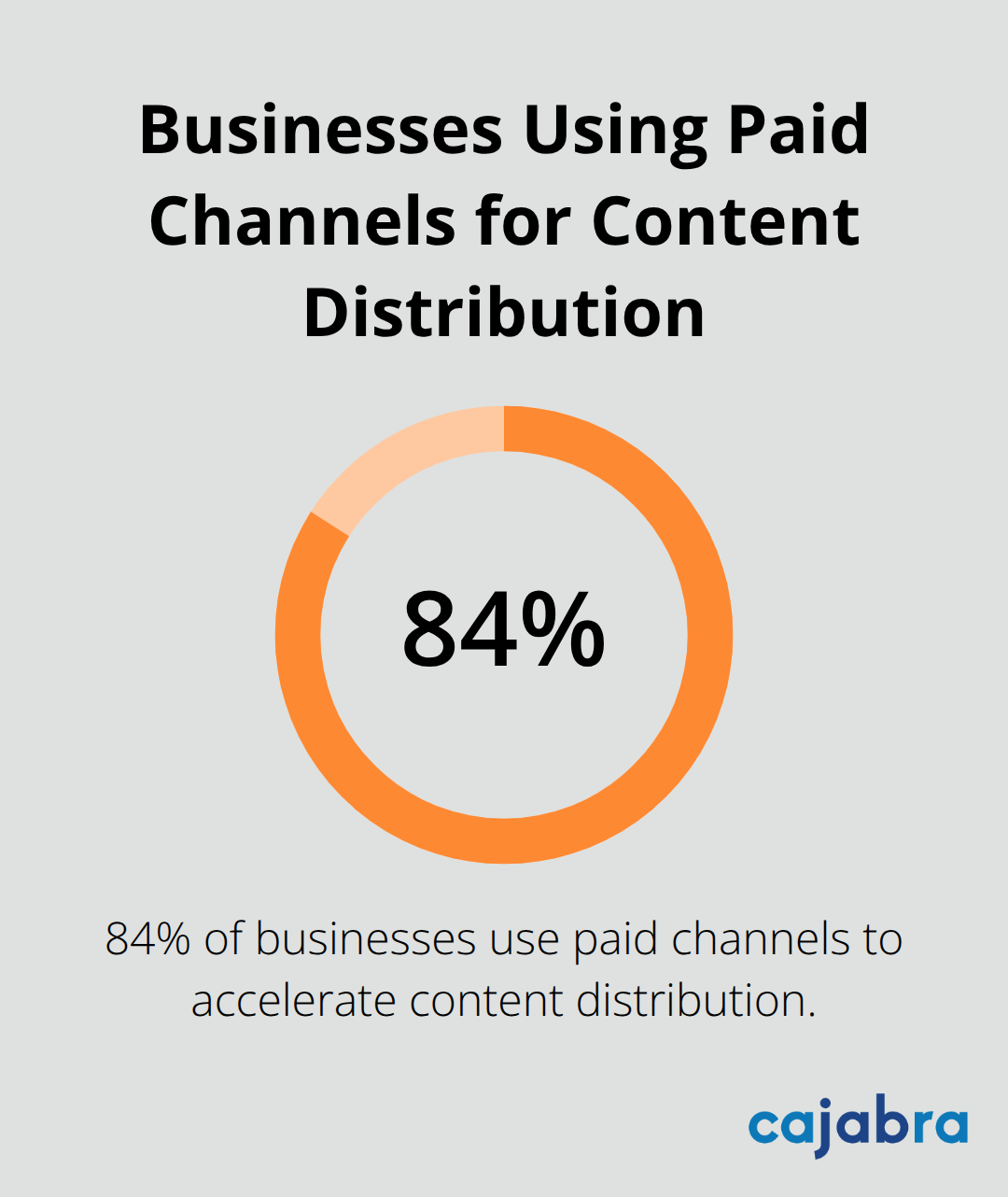
Google Analytics shows which blog posts drive the most qualified traffic, while social media analytics reveal which content formats generate actual business inquiries. Content Marketing Institute data shows 84% of businesses use paid channels to accelerate distribution, but organic content that converts consistently outperforms paid promotion in long-term ROI (this advantage compounds over time as search rankings improve).
Test different content formats for 30 days, measure results against revenue, then double down on winners while you eliminate content that generates engagement without conversions.
Final Thoughts
Successful small business content ideas start with deep customer research and end with measurable revenue growth. The businesses that win focus on solving real problems through educational content, behind-the-scenes transparency, and authentic customer stories rather than chasing vanity metrics. Your next step is simple: pick one content type that resonates with your audience and create it consistently for 30 days.
Track conversion rates, not likes. Measure leads generated, not followers gained. This focused approach beats scattered efforts across multiple platforms every time (long-term content success requires treating content as a business system, not a creative hobby).
Document what works, eliminate what doesn't, and scale the winners. Most small businesses fail because they create content randomly instead of strategically. We at Cajabra, LLC help accounting firms transform their marketing approach through systematic content strategies that generate retainer-based clients through our JAB System™. Content marketing works when you treat it like the revenue-generating business function it should be.
Content marketing teams waste 21 hours per week on manual planning tasks, according to CoSchedule's 2024 State of Marketing report. The right content marketing planning tool changes everything.
We at Cajabra, LLC have seen businesses double their content output while cutting planning time in half. The key lies in selecting software that matches your team's specific workflow needs.
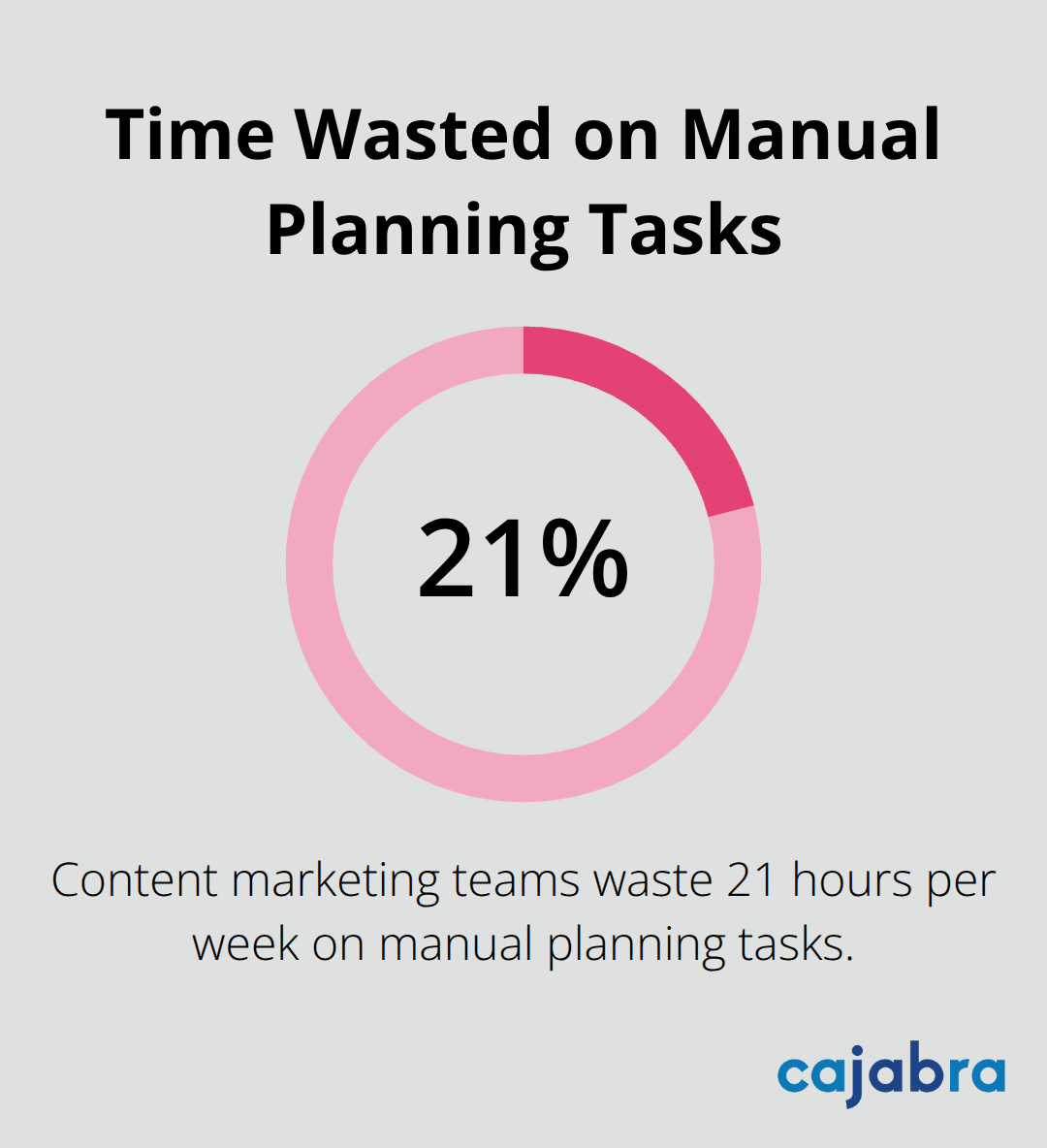
What Features Actually Matter in Content Planning Tools
Your content planning tool needs three non-negotiable features that separate winners from time-wasters. Teams that use tools without proper calendar functionality spend 67% more time on coordination tasks. Smart scheduling prevents content gaps and maintains consistent publishing rhythms across channels.
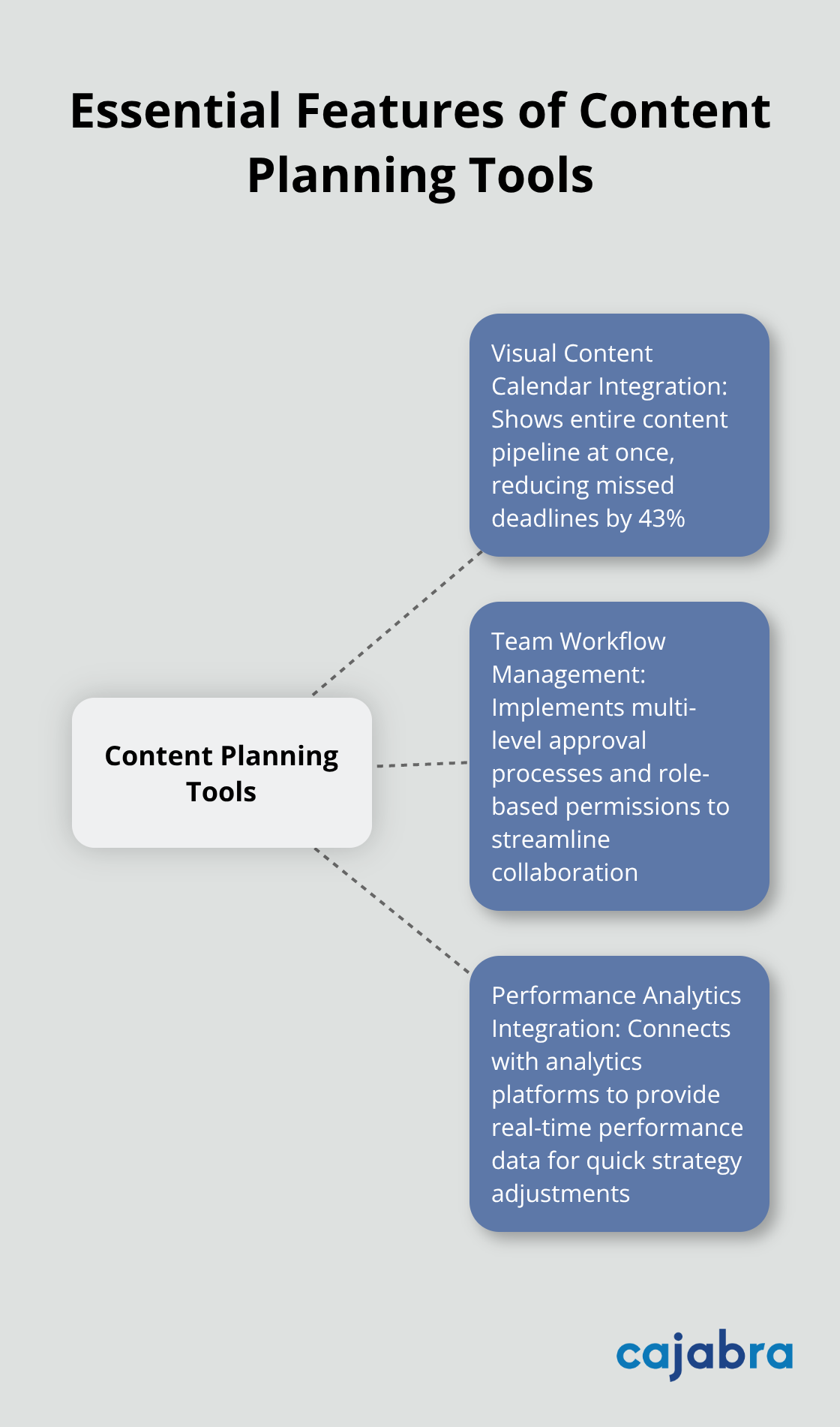
Visual Content Calendar Integration
A robust visual calendar shows your entire content pipeline at once. Teams report 43% fewer missed deadlines when they can drag and drop content between dates. The calendar must display multiple content types simultaneously - blog posts, social media updates, email campaigns, and video content. Tools like Monday.com excel here with color-coded project timelines that prevent scheduling conflicts (starting at $8 per user monthly). Your calendar should integrate with Google Calendar and Outlook to sync with existing workflows. Real-time updates across team members prevent double-booking and content overlaps that waste resources.
Team Workflow Management
Multi-level approval processes eliminate bottlenecks that slow content production. HubSpot's workflow system allows content to move through writer, editor, and manager approval stages automatically. Teams need role-based permissions so freelancers access only assigned projects while managers oversee everything. Notion increased Mangopay's team collaboration to 91% monthly participation when they centralized all content discussions. Comment threads attached to specific content pieces replace endless email chains. Task assignment with deadline notifications keeps projects moving forward without constant check-ins (eliminating up to 10 hours of weekly coordination time).
Performance Analytics Integration
Your tool must connect directly with Google Analytics, social media platforms, and email marketing systems. Buffer's analytics show which content types generate the most engagement within 24 hours of publication. Real-time performance data helps teams adjust strategies quickly rather than wait for monthly reports. ON24 quadrupled their blog output after they implemented centralized tracking that showed exactly which topics drove traffic. The analytics dashboard should display ROI metrics, not just vanity numbers like likes and shares.
These core features form the foundation of effective content planning, but the market offers dozens of tools that claim to deliver them. The next step involves comparing the top platforms to find which one matches your team's specific needs and budget constraints.
Which Tools Deliver Real Results
HubSpot Combines CRM with Content Planning
HubSpot Content Marketing Software connects content performance directly to lead generation and customer acquisition metrics. The platform moves content through approval stages automatically with workflow automation, while their content scoring system ranks ideas based on business impact and resource requirements. Teams using HubSpot complete content approval cycles faster compared to email-based workflows. The free version includes basic content calendar features for up to five users, which makes it accessible for teams that want to test the platform. Advanced analytics and automation features require the Marketing Hub Professional plan at $890 monthly, putting it beyond reach for smaller organizations.
CoSchedule Eliminates Coordination Overhead
CoSchedule saves users hours weekly through their ReQueue feature, which automatically reshares top-performing social media posts. The editorial calendar uses color-codes to organize content by type, status, and team member, providing instant visibility into project bottlenecks. Teams can publish blog posts directly from the interface through WordPress integration. Their Marketing Suite starts at $29 monthly for small teams but scales to $149 for agencies that manage multiple client accounts. The platform works best for teams that publish across multiple channels simultaneously and need centralized campaign management.
Hootsuite Targets Social Media Teams
Hootsuite Content Planning Features serve teams where social media drives the majority of content marketing efforts. The platform supports bulk upload capabilities for high-volume posting across all major social networks. Their content curation tools suggest topics based on industry keywords and competitor analysis. The analytics dashboard tracks engagement metrics in real-time, helping teams identify optimal posting times and content formats. However, Hootsuite lacks robust blog content planning features and email marketing integration that other platforms provide (starting at $99 monthly for larger businesses with limited collaboration features on lower-tier options).
Each platform excels in specific areas, but selecting the right tool requires more than feature comparison. The implementation strategy determines whether your team actually adopts the new system or abandons it within the first month. Success depends on measuring content marketing ROI and tracking performance metrics that align with your business goals.
How to Implement Your Content Planning Tool Successfully
The first 30 days determine whether your team adopts the new platform or abandons it for familiar spreadsheets. Start by mapping your current content creation process from idea generation to publication. Document every step your team takes currently, including who approves what and when deadlines typically occur.
Teams that skip this mapping phase experience higher tool abandonment rates. Import your existing content calendar into the new platform immediately rather than starting fresh. This gives your team familiar reference points while they learn new features.
Configure approval workflows to match your current hierarchy exactly. Forcing new processes during tool adoption creates unnecessary resistance that derails implementation success.
Roll Out Features Gradually
Roll out platform features weekly rather than overwhelming your team with everything simultaneously. Week one should focus solely on calendar navigation and basic content scheduling. Week two introduces collaboration features like comments and task assignments.
Teams that use this phased approach report 60% faster platform mastery compared to comprehensive training sessions. Create video tutorials for each feature using your actual content examples rather than generic demonstrations.
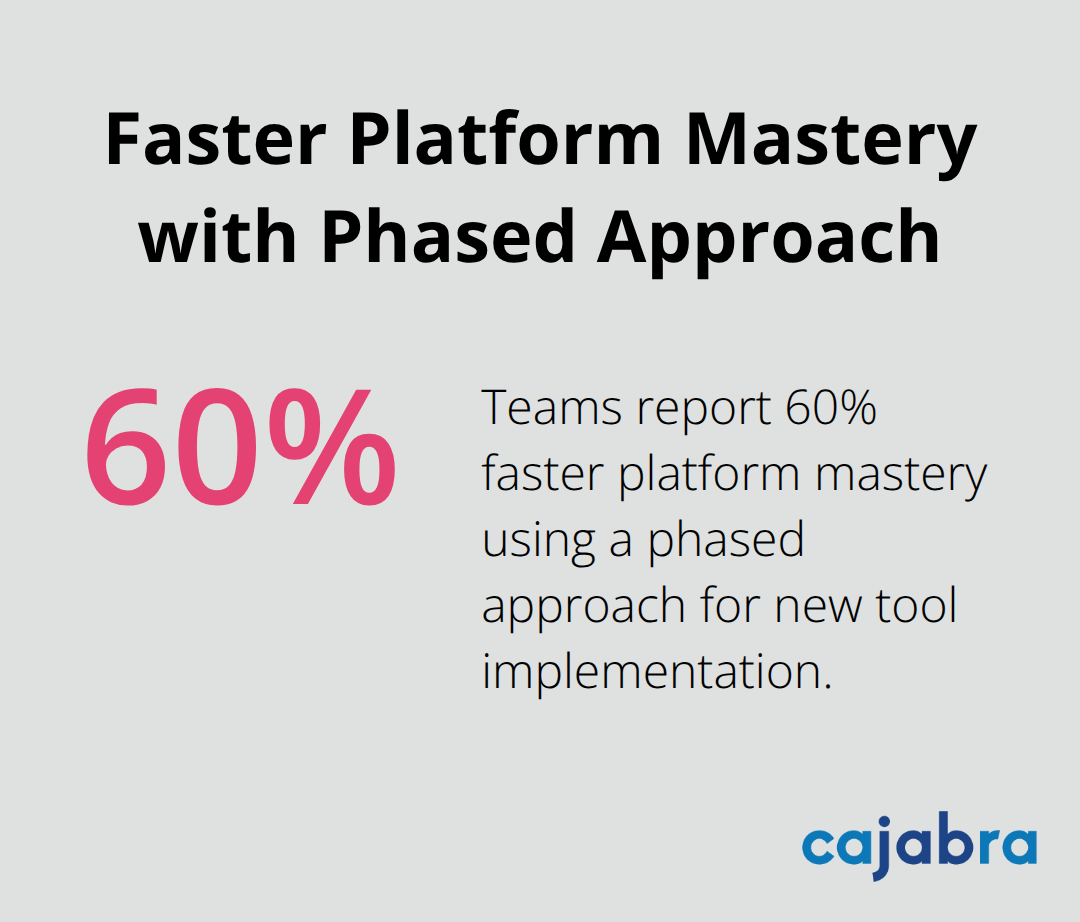
Monday.com users who receive role-specific training complete projects faster than those getting general platform overviews. Assign power users within each department who can answer questions without involving management constantly.
Measure Time Savings Over Feature Usage
Track time savings rather than feature usage statistics during the first quarter. Document how long content approval cycles take before and after implementation. Successful teams see approval times drop from 5-7 days to 2-3 days within 60 days of proper implementation.
Monitor content publishing consistency by tracking missed deadlines and last-minute rushes. The most important metric involves content performance improvements (track whether your published content generates more engagement and conversions than pre-tool content).
Teams that focus on business impact metrics rather than platform usage data make better optimization decisions and justify their tool investment to leadership more effectively. Consider implementing content marketing KPIs to track your progress systematically.
Final Thoughts
The right content marketing planning tool transforms chaotic workflows into streamlined systems that save 21 hours weekly. Visual calendars, team collaboration features, and performance analytics form the foundation of effective content planning software. Small teams under 10 people benefit most from CoSchedule's affordable pricing and automated resharing capabilities, while growing businesses need HubSpot's CRM integration to connect content performance with lead generation metrics.
Large organizations require Hootsuite's bulk publishing features for high-volume social media management. Implementation success depends on gradual feature rollouts and measuring time savings rather than usage statistics (teams that map existing workflows before switching platforms achieve 60% faster adoption rates). Your content marketing planning tool investment pays dividends when it reduces approval cycles from seven days to three days while maintaining publishing consistency.
We at Cajabra, LLC help accounting firms implement systematic marketing approaches that generate consistent client acquisition. Our specialized marketing services move accountants from overlooked to overbooked through proven systems and automated workflows. Start your tool selection by identifying your team's biggest time-wasting activities, then choose the platform that addresses those specific pain points most effectively.