
Content marketing return on investment is a critical metric for businesses today. At Cajabra, LLC, we've seen firsthand how measuring ROI can transform content strategies and drive real results.
In this post, we'll break down the essentials of tracking and calculating content marketing ROI. We'll also share practical tips to help you maximize your content's performance and boost your bottom line.
Content marketing ROI measures the value generated by content marketing efforts compared to the resources invested. It quantifies the financial impact of your content strategy, helping you understand which efforts yield the best results.
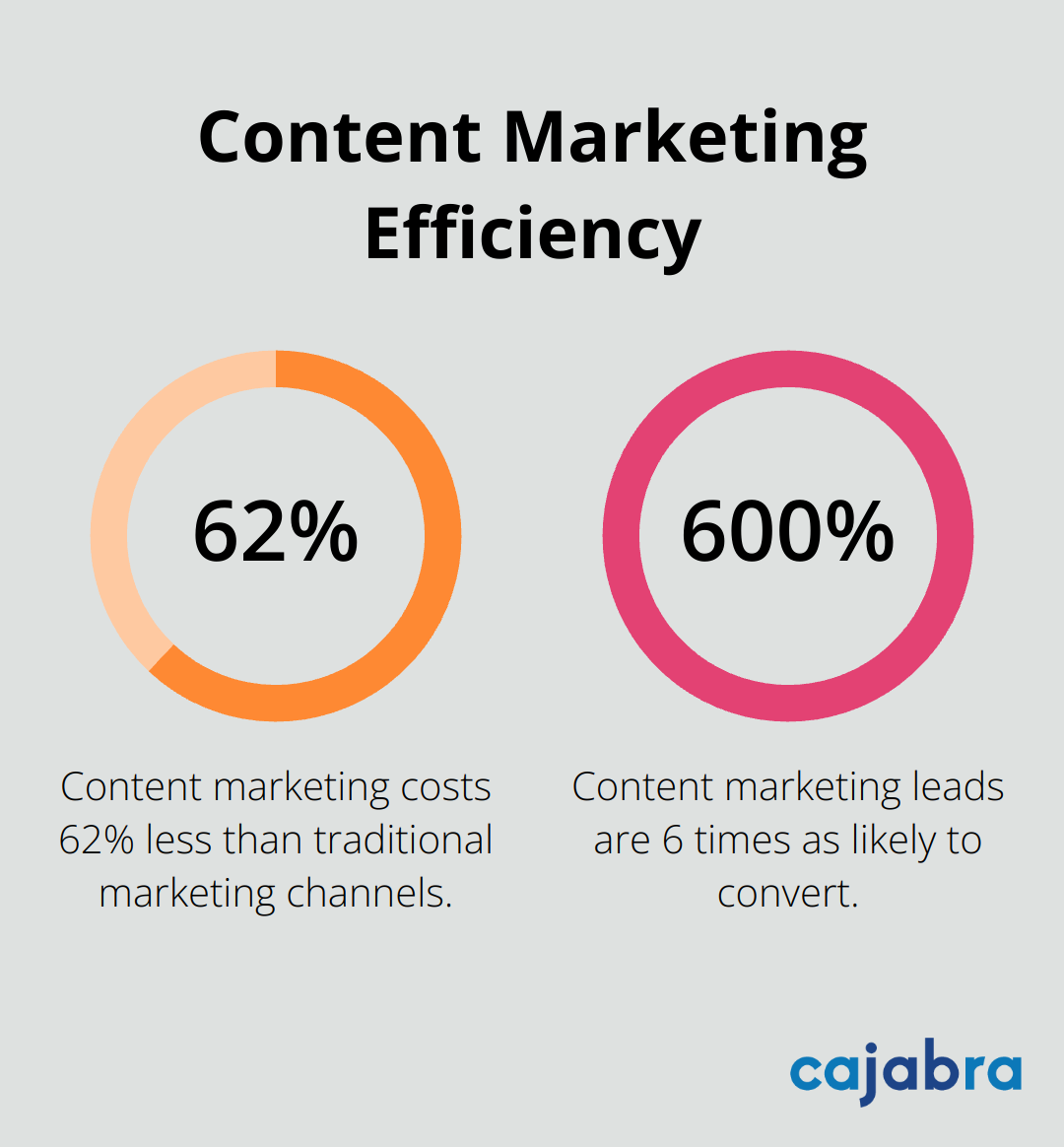
Content marketing costs 62% less than traditional marketing channels, and these leads are 6 times as likely to convert. These numbers underscore the importance of measuring ROI. It's not just about creating content; it's about creating content that drives tangible business results.
Measuring ROI enables you to make data-driven decisions about your content strategy. It helps you identify the most effective types of content, allocate your budget wisely, and optimize your efforts for better results.
For instance, if you discover that your how-to guides outperform your infographics in lead generation, you can adjust your resource allocation accordingly. This approach (based on real data) ensures that every dollar spent on content marketing works hard for your business.
While specific metrics depend on your goals, here are some key ones to consider:
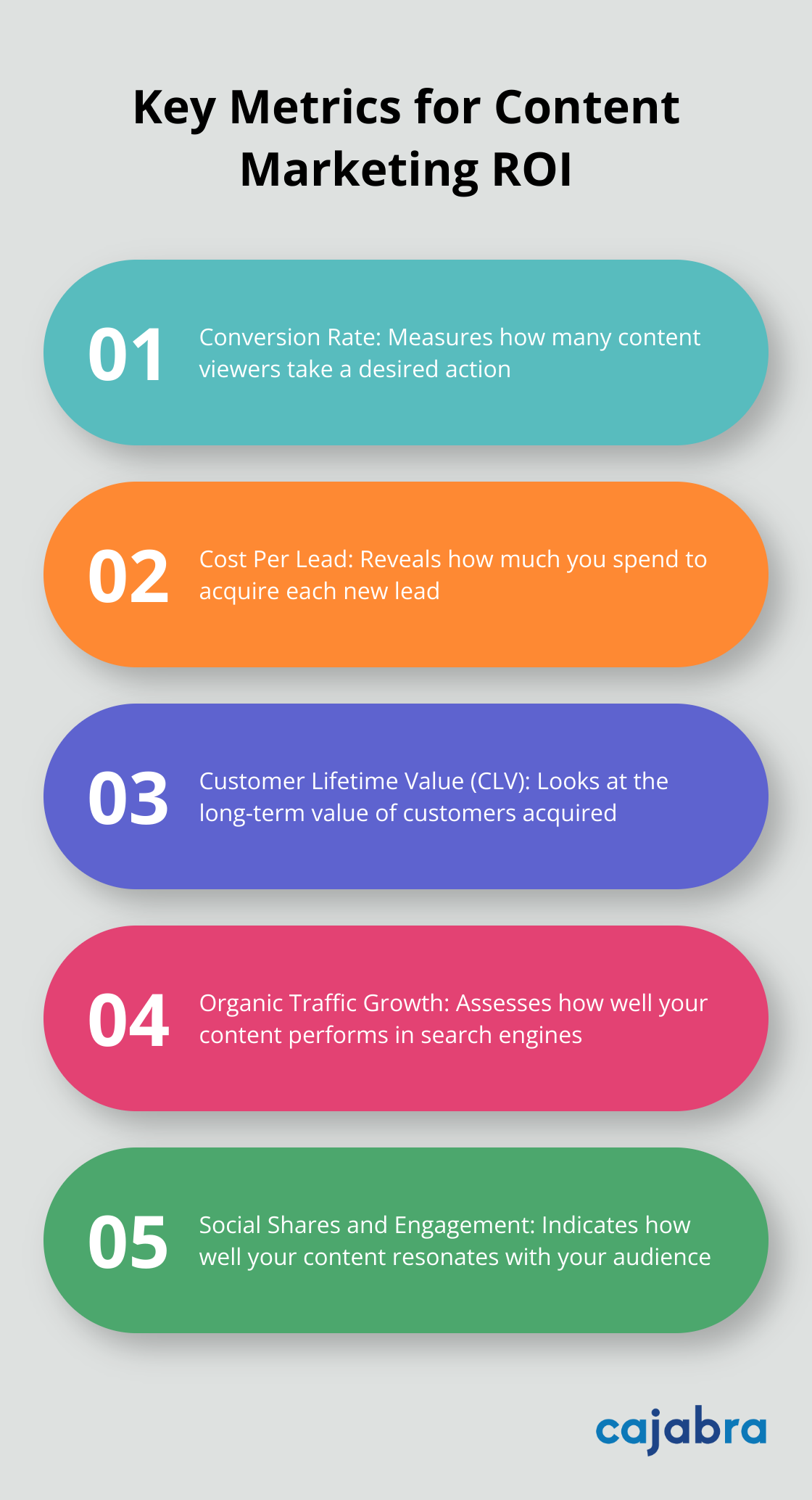
Combining these metrics provides a holistic view of content marketing performance. You might analyze how an increase in organic traffic correlates with lead generation and, ultimately, customer acquisition costs.
Measuring ROI is an ongoing process. It involves continual refinement of your strategy based on data, rather than creating content and hoping for the best. To achieve this, focus on measuring the right metrics, such as lead generation, customer lifetime value, and conversion rate. This focus on ROI ensures that your content marketing efforts are not just productive, but profitable.
Now that we've covered the basics of content marketing ROI and its importance, let's explore how to set up the necessary tracking and analytics tools to measure your content's performance effectively.
Google Analytics stands as the premier choice for website tracking. This free, robust tool integrates seamlessly with other Google products. However, specialized tools like SEMrush (for SEO insights) or Hotjar (for user behavior analysis) offer unique data points that can enhance your understanding of content performance.
For social media, native analytics on platforms like Facebook Insights or Twitter Analytics provide valuable engagement metrics. Tools such as Sprout Social or Hootsuite aggregate data across multiple platforms, offering more comprehensive insights and saving time.
Proper implementation of tracking tools is critical. Google Tag Manager simplifies the process of implementing tags and collecting crucial data for businesses of all sizes. It allows for easy implementation of Google Analytics, Facebook Pixel, and other tracking scripts.
E-commerce sites should set up enhanced e-commerce tracking in Google Analytics. This provides detailed data on product performance, shopping behavior, and checkout processes (all vital for calculating ROI).
Raw data can overwhelm. Custom dashboards distill this information into actionable insights. In Google Analytics, create dashboards that focus on your key performance indicators (KPIs). These might include metrics like conversion rate, time on page for key content pieces, or goal completions tied to specific campaigns.
Tools like Databox or Geckoboard allow you to create cross-platform dashboards, pulling data from multiple sources into a single view. This holistic approach can reveal correlations between content performance and business outcomes that might otherwise go unnoticed.
Regular review and refinement of your tracking setup and dashboards ensure you measure what matters most to your content marketing ROI. Try to align your tracking metrics with your overall business goals. This alignment will help you make data-driven decisions that directly impact your bottom line.
With a solid tracking foundation in place, the next step is to dive into the nitty-gritty of calculating your content marketing ROI. Let's explore the various revenue attribution models and cost considerations that play a crucial role in this process.
The first step in calculating content marketing ROI involves selecting an appropriate revenue attribution model. Revenue attribution is a method of connecting different data sets to paint a picture of which marketing channels are producing the best sales and revenue.
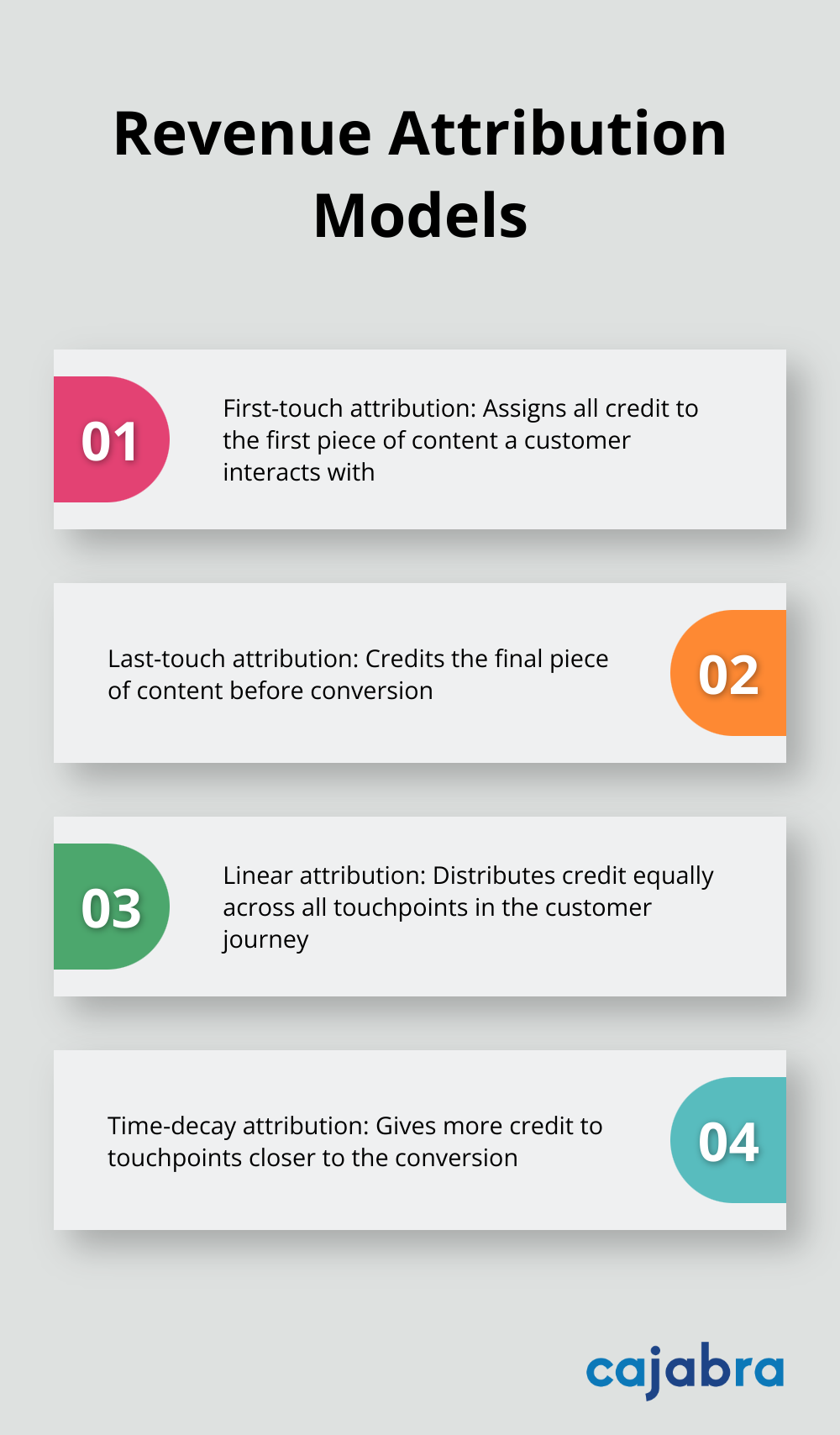
Common models include:
First-touch attribution: This model assigns all credit to the first piece of content a customer interacts with before converting. It's simple but can overvalue top-of-funnel content.
Last-touch attribution: This approach credits the final piece of content before conversion. It's straightforward but may undervalue earlier touchpoints in the customer journey.
Linear attribution: This model distributes credit equally across all touchpoints in the customer journey. It offers a more balanced view but can oversimplify complex customer interactions.
Time-decay attribution: This method gives more credit to touchpoints closer to the conversion. It provides a more nuanced approach but requires sophisticated tracking.
We suggest starting with a simple model (such as first-touch or last-touch attribution), then advancing to more complex models as you improve your tracking capabilities.
Accurate ROI calculation requires a thorough understanding of your content marketing costs. These typically include:
Factor in indirect costs like training and software subscriptions. A detailed cost analysis ensures your ROI calculations reflect reality.
The basic formula for calculating content marketing ROI is:
ROI = (Revenue - Investment) / Investment x 100
For example, if you invested $10,000 in content marketing and generated $15,000 in revenue, your ROI would be 50%.
This simple formula doesn't account for the long-term value of content. Consider using a time-based ROI calculation that factors in the ongoing benefits of evergreen content.
You might calculate ROI over a 12-month period:
12-month ROI = (12-month Revenue - Total Investment) / Total Investment x 100
This approach provides a more accurate picture of your content's long-term value.
Align your ROI calculations with your specific business goals. If your primary objective is lead generation, you might calculate ROI based on the value of leads rather than direct revenue.
For instance, if your goal is to generate high-quality leads for your accounting firm (a service that Cajabra, LLC specializes in), you might assign a value to each lead based on your average client lifetime value. This approach allows you to measure ROI even before leads convert to paying clients.
As you refine your ROI measurement process, consider incorporating more advanced metrics:
Customer Lifetime Value (CLV): This metric helps you understand the long-term impact of your content marketing efforts. A 50% marketing ROI can be calculated from a $40 profit increase divided by an $80 campaign cost, considered on a per customer basis.
Return on Ad Spend (ROAS): If you use paid promotion for your content, ROAS can help you measure the effectiveness of these campaigns.
These practical approaches to ROI calculation will provide valuable insights into your content marketing performance. This data-driven approach will help you refine your strategy and allocate resources more effectively.
Content marketing return on investment measurement empowers businesses to optimize their marketing strategies. We implement robust tracking systems, select appropriate attribution models, and conduct comprehensive cost analyses to gain valuable insights. This data-driven approach allows us to identify effective content types and channels, allocate resources wisely, and experiment with new formats.
The process of measuring ROI requires continuous refinement and regular analysis to stay ahead of market trends. We adjust our strategies based on collected data, ensuring our content marketing efforts align with business goals and deliver long-term value. This iterative approach helps us make informed decisions and adapt to the ever-evolving digital marketing landscape.
At Cajabra, we specialize in helping accounting firms measure and optimize their marketing efforts. Our services (including the JAB System™) aim to transform marketing strategies and secure high-value, retainer-based clients. We focus on ROI-driven approaches to enable accounting professionals to make data-backed decisions that drive real business growth.