
At Cajabra, LLC, we know that client engagement is the cornerstone of business success. It's not just about making sales; it's about building lasting relationships that drive growth.
The importance of client engagement cannot be overstated. In this post, we'll explore why it matters and how you can boost your engagement strategies for better business outcomes.
What Is Client Engagement?
Defining Client Engagement
Client engagement represents the ongoing, meaningful interactions between a business and its clients. It transcends simple transactions, creating a two-way relationship that fosters mutual growth and success.
The Power of Engaged Clients
Engaged clients act as partners in your business growth, not just customers. Research shows that concentrating on employee engagement can help companies withstand -- and possibly even thrive -- in tough economic times. This highlights the significant impact of engagement on business success.
Key Elements of Effective Engagement
To truly engage clients, businesses must focus on three core elements:
- Personalization: Customize your communication and services to each client's unique needs and preferences. Epsilon research indicates 80% of consumers are more likely to make a purchase when brands offer personalized experiences.
- Consistency: Maintain a uniform brand voice and quality of service across all touchpoints. McKinsey research indicates that consistency is the secret ingredient to making customers happy throughout their journey.
- Value Addition: Provide value beyond your core offerings continuously. This could include educational content, exclusive insights, or proactive problem-solving. HubSpot reports that 77% of consumers view brands more favorably if they seek out and apply customer feedback.

Measuring Engagement Success
To evaluate the effectiveness of your client engagement efforts, monitor metrics such as Net Promoter Score (NPS), Customer Lifetime Value (CLV), and retention rates. These indicators will help you refine your strategies and demonstrate the tangible impact of engagement on your bottom line.
The Role of Technology in Client Engagement
Modern technology plays a pivotal role in enhancing client engagement. Customer Relationship Management (CRM) systems, AI-powered chatbots, and data analytics tools (like those offered by Cajabra, LLC) enable businesses to personalize interactions, anticipate client needs, and respond promptly to inquiries.
Client engagement requires dedication and adaptability. It's not a one-time effort but an ongoing process that cultivates a community of loyal advocates for your brand. As we move forward, we'll explore the numerous benefits that strong client engagement brings to businesses of all sizes.
How Strong Client Engagement Boosts Business Success
At the core of every thriving business lies a foundation of strong client engagement. This practice doesn't just keep clients satisfied; it transforms them into catalysts for growth and innovation. Let's explore the tangible benefits that make client engagement an indispensable strategy for business success.
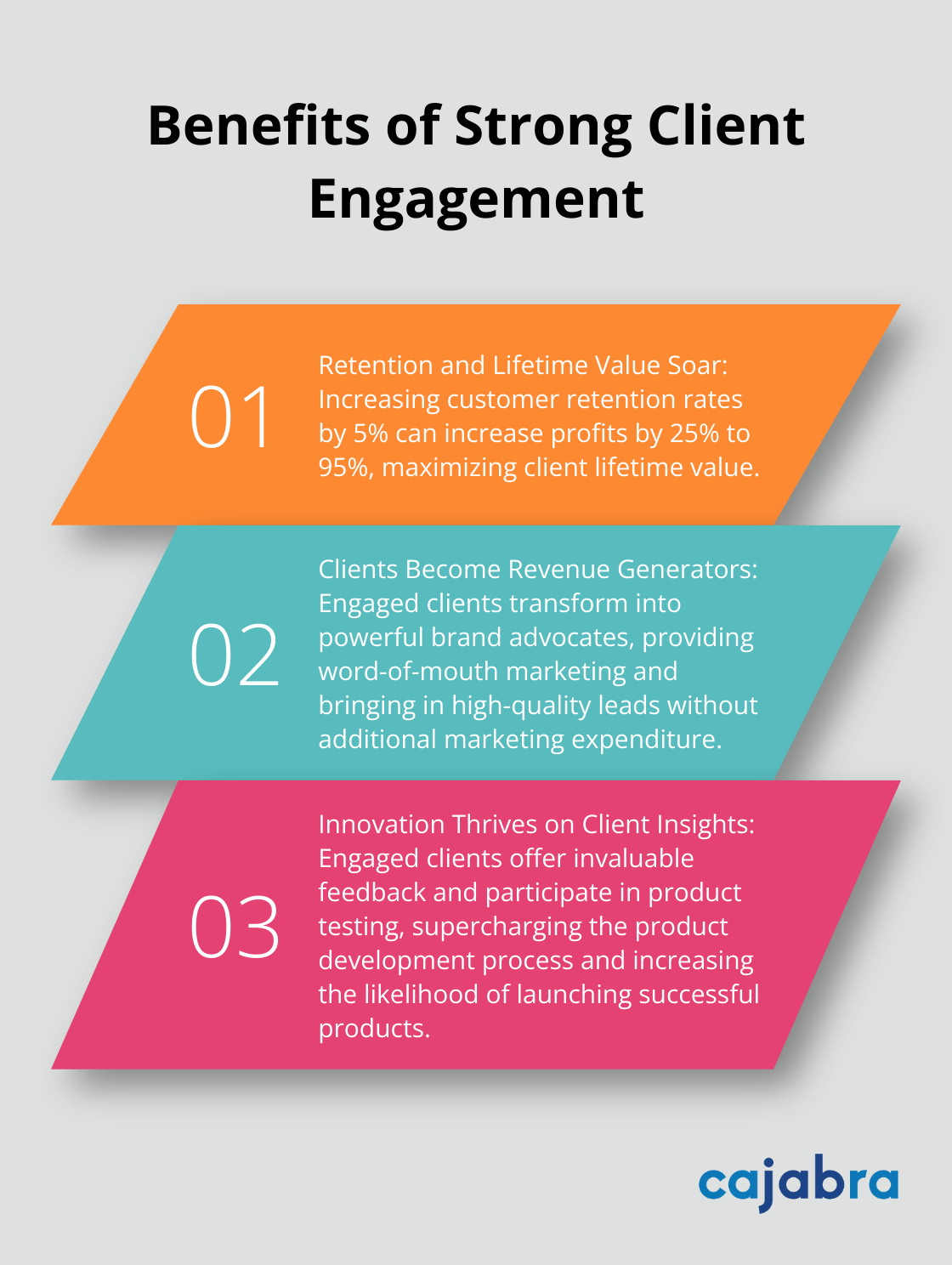
Retention and Lifetime Value Soar
Engaged clients remain loyal. A Bain & Company study revealed that increasing customer retention rates by 5% increases profits by 25% to 95%. This statistic underscores the power of engagement in not only retaining clients but also in maximizing their lifetime value. Clients who feel connected to a brand are more likely to upgrade services, explore new offerings, and provide consistent revenue streams.
Clients Become Revenue Generators
The impact of engaged clients extends beyond their individual spending. They transform into powerful advocates for your brand. Nielsen's research indicates that consumers trust recommendations from friends and family above all other forms of advertising. This word-of-mouth marketing (often considered the most effective form of promotion) brings in high-quality leads without additional marketing expenditure.
Innovation Thrives on Client Insights
Engaged clients offer more than just revenue; they provide invaluable insights. These clients willingly offer detailed feedback, participate in product testing, and share their needs and challenges. This direct access to market demands can supercharge your product development process. A PwC study found that companies who co-create with customers are 50% more likely to launch successful products.
Enhanced Brand Reputation
Strong client engagement naturally leads to an improved brand reputation. Satisfied clients share their positive experiences, both online and offline. This organic promotion (which can include social media posts, online reviews, and personal recommendations) builds trust in your brand and attracts new clients.
Competitive Edge in the Market
In today's competitive landscape, client engagement can set your business apart. Companies that prioritize engagement often see increased market share and improved customer loyalty. This advantage becomes particularly crucial in industries where products or services may be similar across competitors.
The benefits of strong client engagement ripple through every aspect of a business, from financial performance to innovation and market position. As we move forward, we'll explore practical strategies to elevate your client engagement and unlock these advantages for your business.
How to Boost Client Engagement
At Cajabra, LLC, we've observed how effective client engagement strategies transform businesses. Here are proven tactics to elevate your client relationships and drive success:
Personalize Every Interaction
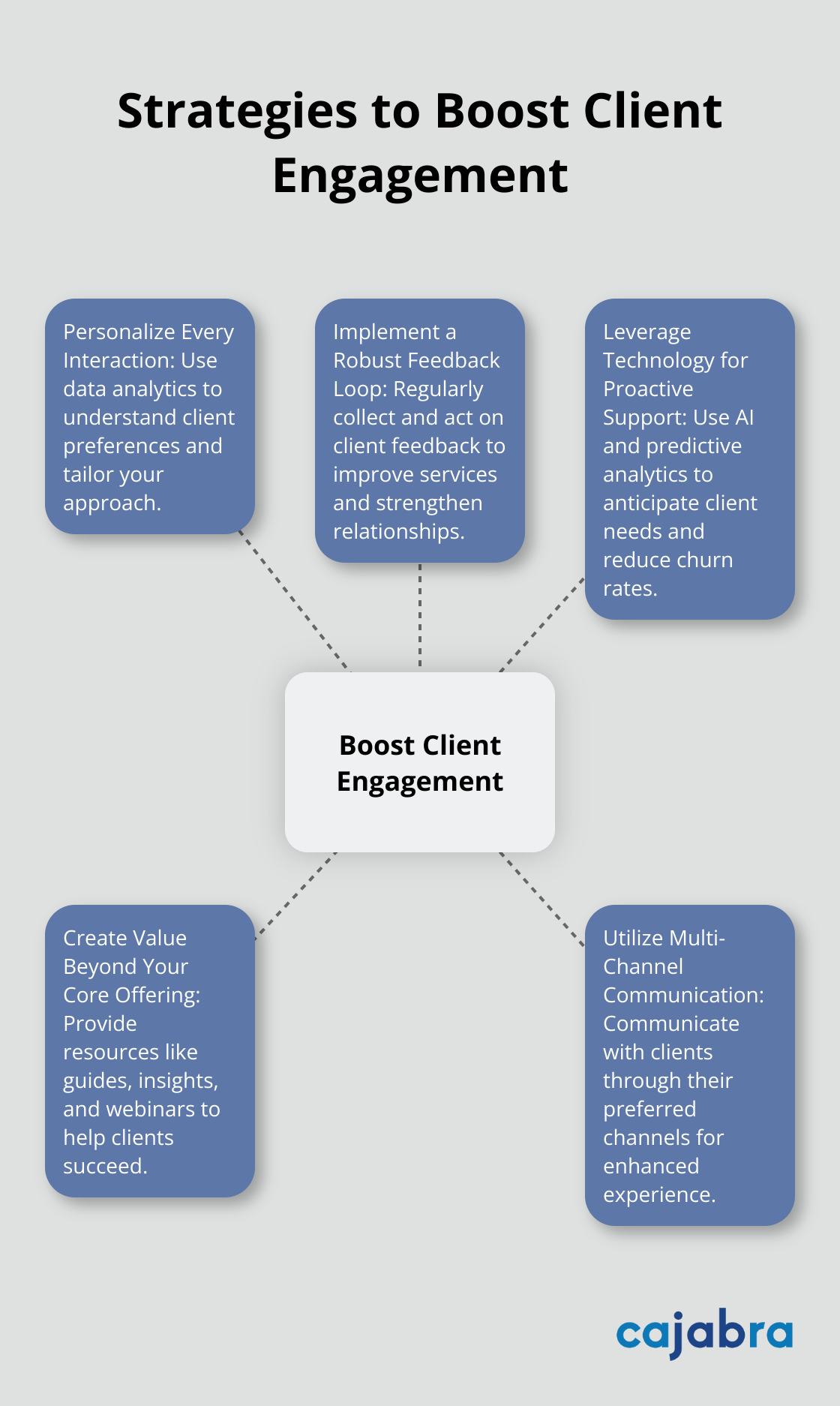
Modern clients expect personalized experiences. Use data analytics to understand client preferences and tailor your approach. Segment your client base and create targeted email campaigns that address each group's specific needs and interests. A study by Epsilon found that 80% of consumers are more likely to make a purchase when brands offer personalized experiences.
Implement a Robust Feedback Loop
Regular feedback collection improves your services and shows clients that their opinions matter. Set up automated surveys after key interactions, conduct quarterly review calls, or use tools like Net Promoter Score (NPS) to gauge client satisfaction. Act on the feedback you receive. Share how you've implemented changes based on client suggestions. This approach not only improves your offerings but also strengthens client relationships.
Leverage Technology for Proactive Support
Predict churn before it happens. Learn how AI churn prediction boosts retention, loyalty, and customer lifetime value. This proactive approach can significantly reduce churn rates and boost client satisfaction.
Create Value Beyond Your Core Offering
Engage clients by providing resources that help them succeed beyond just using your product or service. Develop a content marketing strategy that includes how-to guides, industry insights, and expert webinars. For accounting firms, this could mean offering free tax planning workshops or creating eBooks on financial management best practices (which positions your brand as a trusted advisor and keeps clients engaged between transactions).
Utilize Multi-Channel Communication
Communicate with clients through their preferred channels. Some may prefer email, while others might respond better to phone calls or text messages. Implement a system that tracks client preferences and ensures consistent messaging across all platforms. This approach (which respects individual communication styles) enhances the overall client experience and fosters stronger relationships.
Final Thoughts
Client engagement stands as the cornerstone of business success in today's competitive landscape. It unlocks sustainable growth, fosters innovation, and builds a resilient business model. Engaged clients become brand advocates, provide valuable feedback, and contribute to the bottom line beyond individual transactions.
Effective client engagement strategies range from personalized communication to leveraging cutting-edge technology. We at Cajabra understand the unique challenges faced by accounting firms in this arena. Our specialized marketing services help accountants transform their client relationships and position themselves as industry leaders.
The importance of client engagement cannot be overstated. It requires a commitment to continuous improvement, a willingness to listen and adapt, and the right tools to execute strategies effectively. In a world where products and services can be easily replicated, the strength of client relationships truly sets businesses apart.
At Cajabra, LLC, we know that a solid content creation plan is the backbone of successful digital marketing.
Many businesses struggle to produce consistent, high-quality content that resonates with their audience and drives results. This guide will walk you through the essential steps to create an effective content plan that aligns with your goals and engages your target market.
By the end, you'll have the tools and knowledge to develop a strategy that boosts your online presence and delivers real value to your customers.
Understanding Your Audience and Setting Clear Objectives
Who Is Your Target Audience?
Understanding your audience forms the foundation of any successful content plan. Tailoring content to specific audience needs can dramatically boost engagement and conversions.
Identify Your Ideal Client
Start by creating detailed buyer personas. These are semi-fictional representations of your ideal clients based on market research and real data about your existing customers. Include demographics, behavior patterns, motivations, and goals. For example, if you're an accounting firm, your persona might be "Sarah, a 45-year-old small business owner who struggles with cash flow management and tax planning."
Analyze Your Current Audience
Use tools like Google Analytics to gather data on your existing audience. Look at metrics such as age, location, interests, and behavior on your website. This information can reveal surprising insights about who's actually engaging with your content.
Conduct Surveys and Interviews
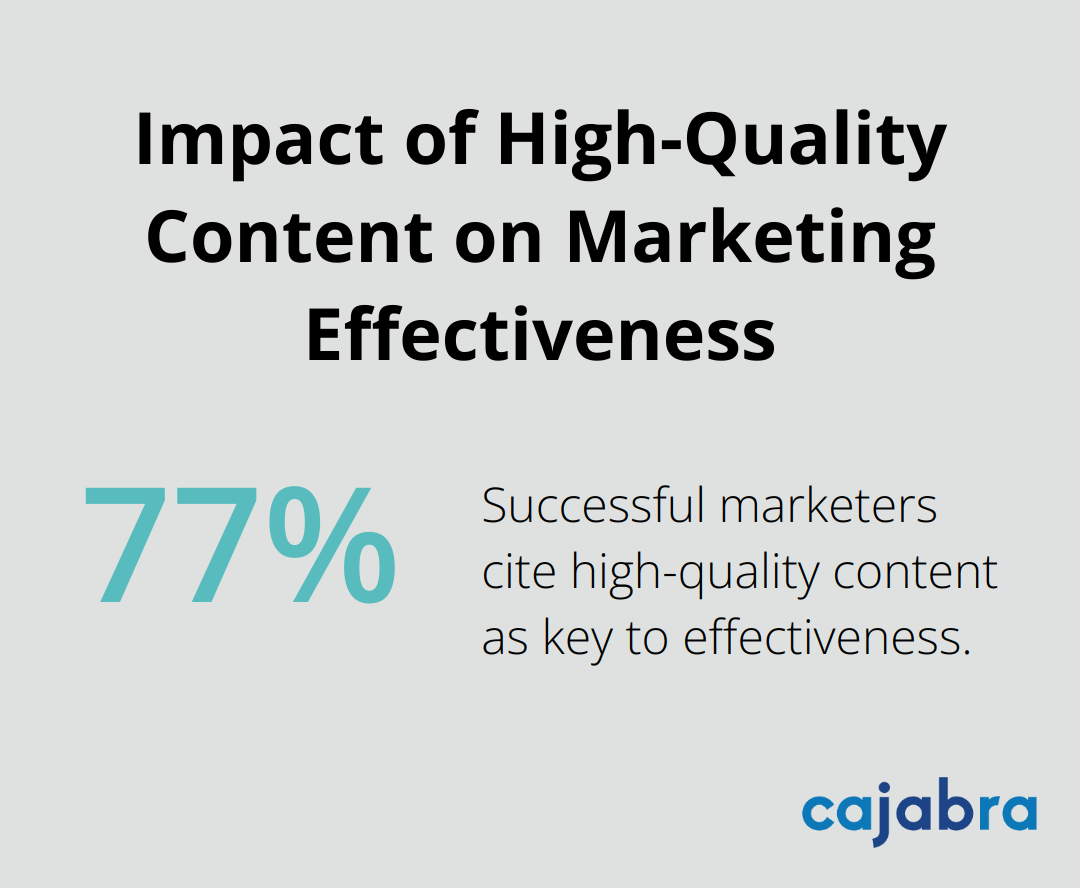
Don't guess what your audience wants-ask them directly. Use surveys, interviews, or focus groups to understand their pain points, preferences, and content consumption habits. A study by the Content Marketing Institute found that 77% of successful marketers cite producing high-quality content as a key factor in their effectiveness.
Set Clear Content Objectives
Your content objectives should be SMART: Specific, Measurable, Achievable, Relevant, and Time-bound.
Try to create specific goals instead of vague ones. For example, "increase website traffic from organic search by 25% in the next six months" gives you a clear target to work towards and measure against (rather than a general goal like "increase brand awareness").
Align Content with Business Goals
Your content objectives should directly support your broader business goals. If your business aim is to increase revenue by 20% this year, your content objectives might include:
- Generate 50 qualified leads per month through gated content
- Increase email newsletter sign-ups by 30% to nurture potential clients
- Boost conversion rates on service pages by 15% through targeted case studies
An effective content plan isn't about producing more content-it's about producing the right content for the right audience at the right time. With a thorough understanding of your audience and clear, aligned objectives, you'll be ready to develop a content strategy that drives real results (which we'll explore in the next section).
How to Craft a Winning Content Strategy
Diversify Your Content Portfolio
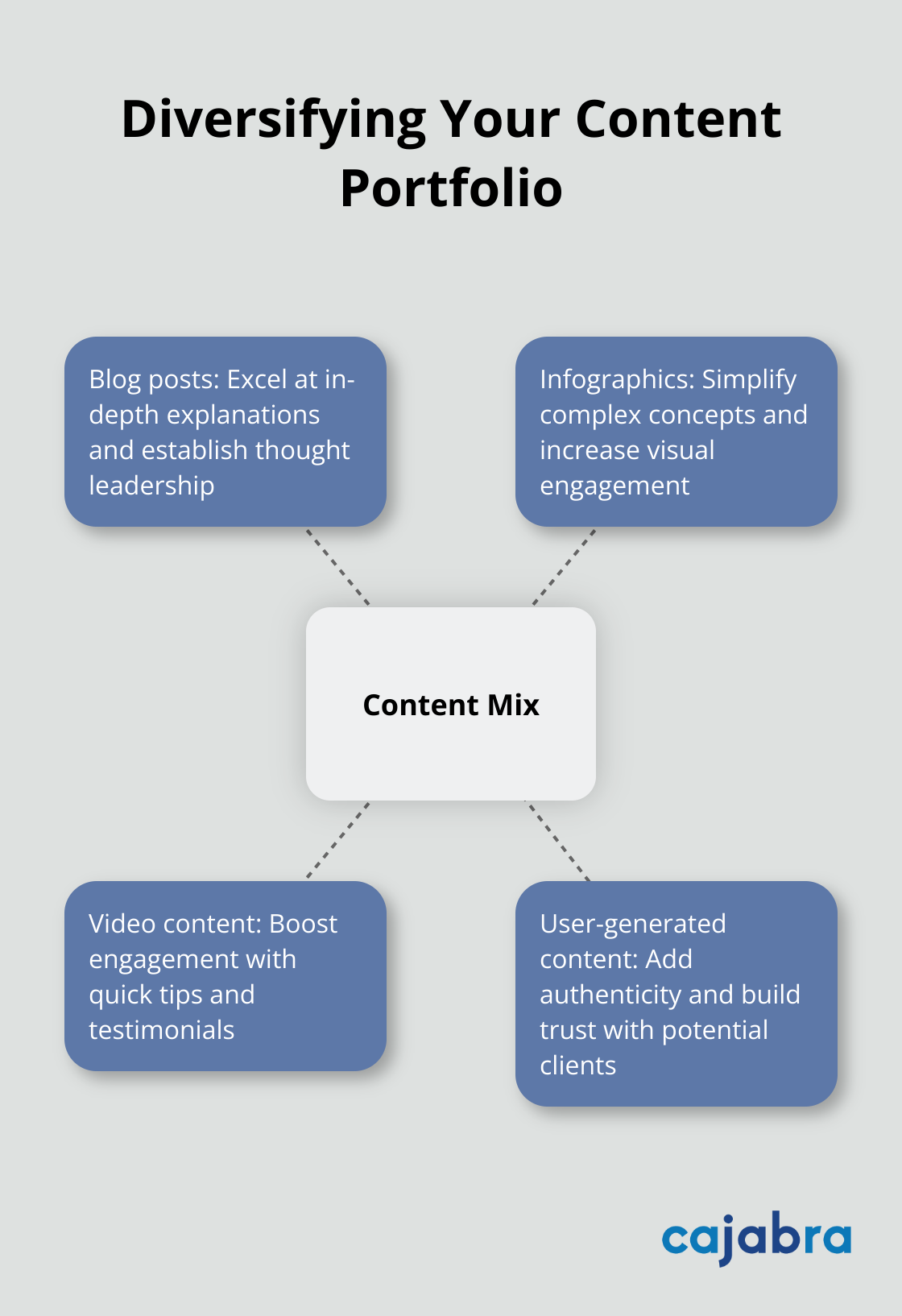
Create a mix of content types to cater to different learning styles and preferences. Blog posts excel at in-depth explanations, while infographics simplify complex financial concepts. Video content, such as quick tax tips or client testimonials, can boost engagement significantly. HubSpot reports that 54% of consumers want to see more video content from brands they support.
Map Out Your Content Calendar
A content calendar serves as your roadmap to consistent publishing. Tools like Trello or Asana help plan topics, assign tasks, and set deadlines. Try to balance timely content (like tax season tips) with evergreen material that provides value year-round. Schedule your content at least a month in advance to avoid last-minute scrambles.
Identify Your Content Pillars
Establish 3-5 core topics that align with your expertise and audience interests. For accounting firms, these might include tax planning, financial forecasting, and business advisory services. Build your content around these pillars to establish authority in your niche. A study by Edelman found that thought leadership is important in influencing B2B decision-makers' perception of an organization.
Optimize for Search Engines
SEO extends beyond keywords; it focuses on creating valuable content that answers your audience's questions. Tools like SEMrush or Ahrefs help identify high-volume, low-competition keywords relevant to your content pillars. Incorporate these naturally into your titles, headers, and throughout your content. Don't forget to optimize meta descriptions and image alt text for better search visibility.
Leverage User-Generated Content
Encourage clients to share their experiences and success stories. User-generated content (UGC) adds authenticity to your brand and builds trust with potential clients. Consider featuring client testimonials, case studies, or even guest posts from satisfied customers. This approach not only provides social proof but also reduces your content creation workload.
The implementation of these strategies will help create a content plan that resonates with your audience and drives tangible business results. The next section will explore how to effectively implement your content strategy and measure its success.
How to Execute and Evaluate Your Content Plan
Choose the Right Tools for Streamlined Workflow
The selection of appropriate content management tools can significantly impact the execution of your content plan. We recommend project management platforms like Asana or Monday.com to assign tasks, set deadlines, and monitor progress. These tools provide a visual representation of your content calendar and ensure clear responsibility allocation.
For content creation, AI-powered writing assistants (such as Jasper or Copy.ai) can accelerate the first draft process. However, human editors should always review and refine the content to maintain quality and brand voice consistency.
Define Clear Roles and Accountability
Assign specific roles within your content team. Designate a content strategist to oversee the big picture, writers to create the content, and editors to ensure quality and consistency. Even in smaller firms where individuals may wear multiple hats, clearly defining these roles helps maintain focus and efficiency.
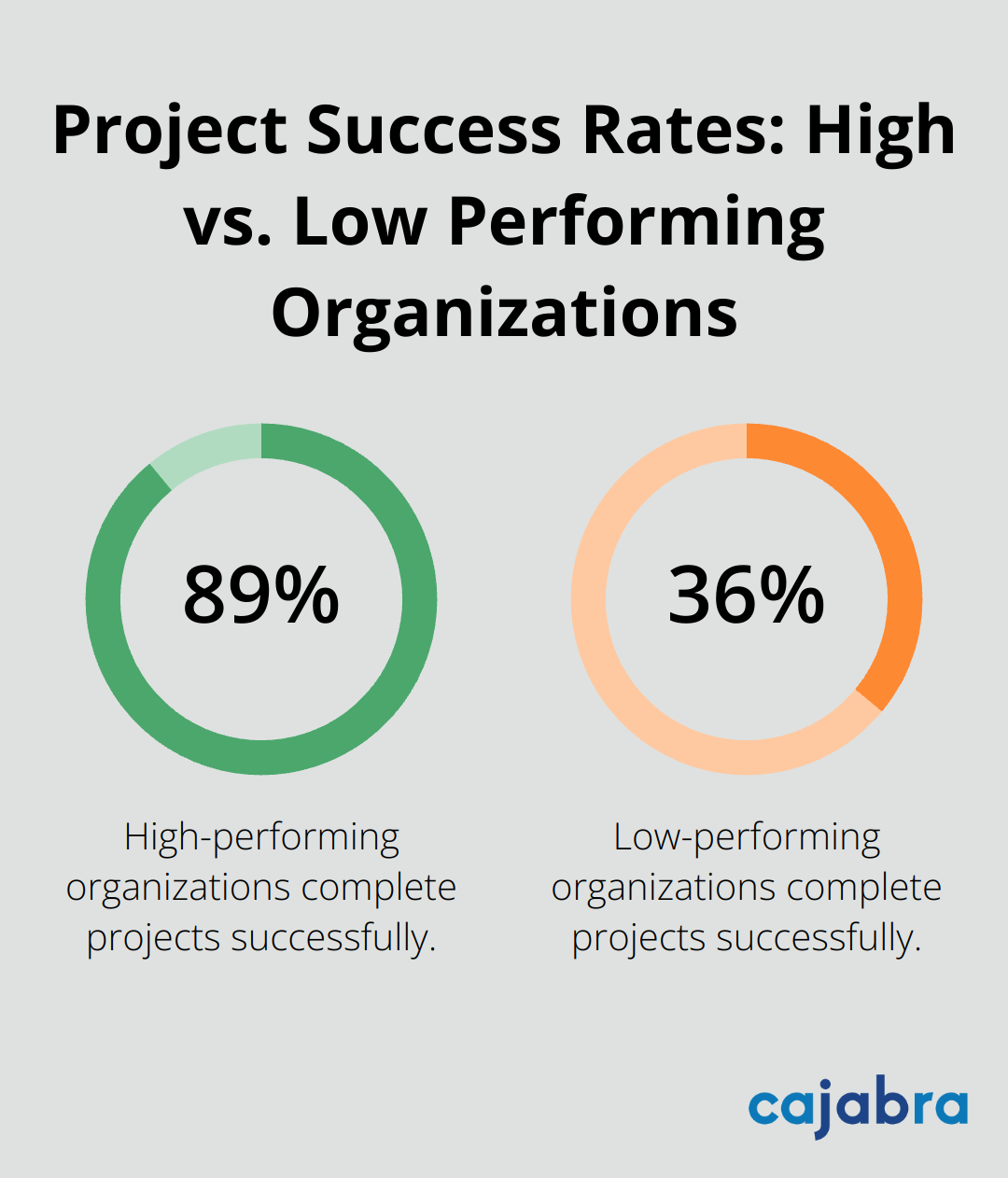
Schedule regular check-ins to discuss progress, challenges, and new ideas. A study by the Project Management Institute revealed that organizations with high-performing project management practices complete 89% of their projects successfully (compared to 36% for low performers).
Monitor Relevant Metrics for Your Goals
Effective measurement of your content plan's success extends beyond page view counts. Focus on metrics that align with your business objectives. For accounting firms, this might include:
- Lead generation: Track the number of leads your content generates through form submissions or email sign-ups.
- Engagement: Monitor time on page, social shares, and comments to gauge how well your content resonates with your audience.
- SEO performance: Use tools like Google Search Console to track your rankings for target keywords and organic traffic growth.
- Conversion rates: Measure how effectively your content moves prospects through your sales funnel.
Analyze and Adapt Your Strategy
Regular analysis plays a vital role in refining your content plan. Allocate time each month to review your performance metrics and identify trends. Look for content types or topics that consistently perform well and consider increasing focus on these areas.
Don't hesitate to experiment with new formats or topics. A/B testing different headlines, content lengths, or calls-to-action can provide valuable insights into what resonates with your audience.
Creating an effective content plan requires ongoing effort. Consistent implementation, measurement, and refinement of your strategy will help build a strong online presence that attracts and retains high-value clients for your accounting firm.
Final Thoughts
An effective content creation plan requires careful planning, execution, and continuous refinement. You must understand your audience, set clear objectives, and align your content with business goals. A diverse content strategy, SEO best practices, and user-generated content will amplify your reach and engagement.
The implementation phase demands the right tools, clear role assignments, and consistent monitoring of key performance indicators. You should produce high-quality, relevant content regularly to build trust with your audience and establish your brand as an authority in your field. The digital landscape evolves rapidly, so your content strategy should adapt to new trends, technologies, and audience preferences.
Don't let the process overwhelm you. Start small, focus on quality over quantity, and gradually expand your content efforts as you gain insights. At Cajabra, we help accounting firms develop and implement effective marketing strategies (including content plans that drive real results). Take the first step today: analyze your current content, identify gaps, and start crafting a content creation plan that aligns with your business objectives.
Client engagement is the cornerstone of success for accounting firms. At Cajabra, LLC, we've seen firsthand how strong client relationships drive growth and retention.
This post explores proven client engagement techniques to help you build lasting connections with your clients. We'll cover effective communication strategies, ways to enhance the client experience, and practical tips for implementing these methods in your firm.
What Drives Client Engagement?
The Essence of Client Engagement
Client engagement transcends regular communication. It's about creating meaningful interactions that foster trust, loyalty, and mutual growth. For accounting firms, this means active involvement of clients in their financial journey, making them feel valued, and consistent exceeding of their expectations.
The Impact of Engaged Clients
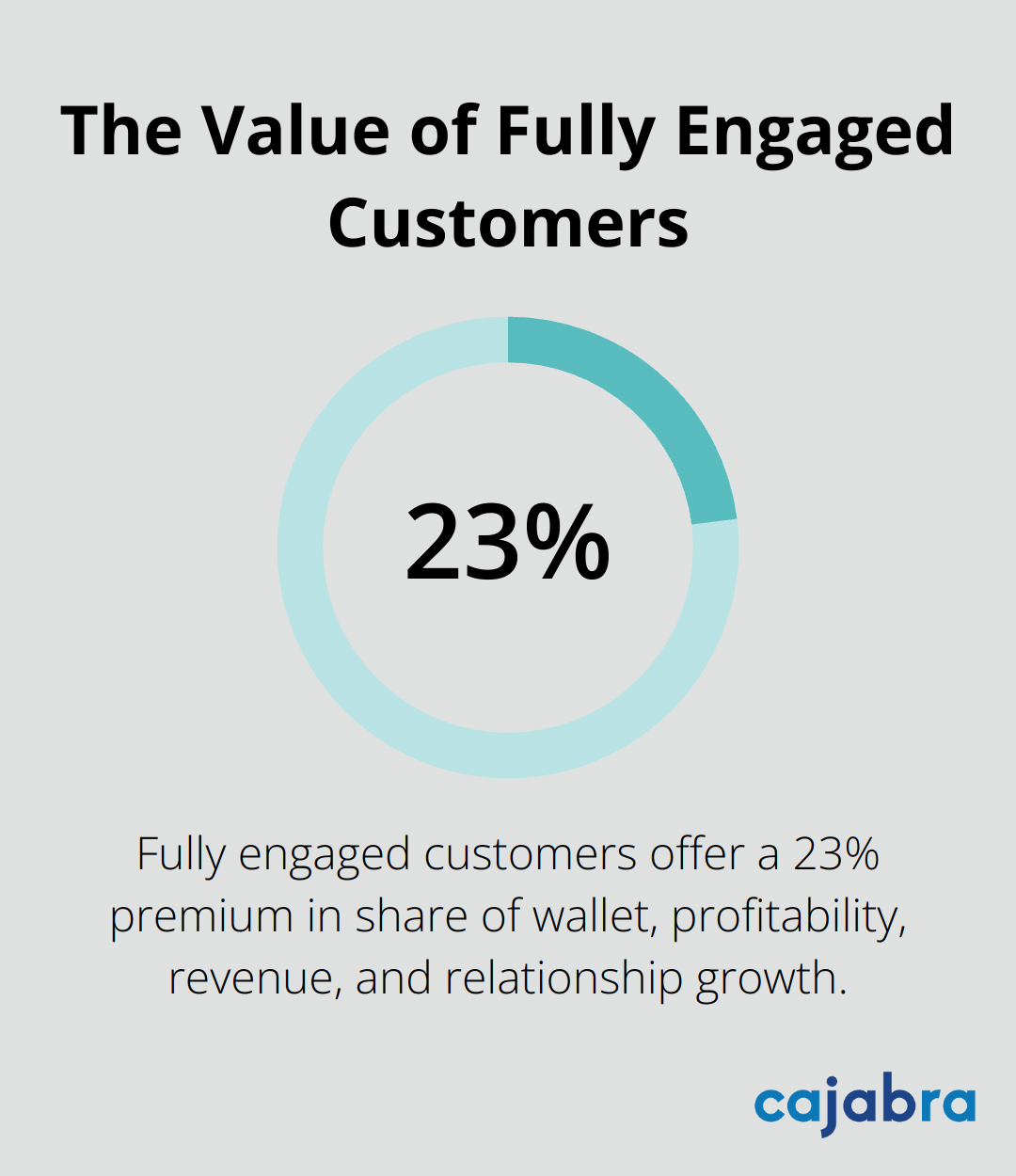
Engaged clients fuel successful accounting firms. They tend to remain loyal, recommend services, and increase their spending. A Gallup study reveals that fully engaged customers represent a 23% premium in share of wallet, profitability, revenue and relationship growth over the average customer. For accounting firms, this translates to a more stable client base and increased opportunities for upselling additional services.
Comprehensive Engagement Metrics
While financial metrics matter, they don't paint the complete picture of client engagement. A combination of quantitative and qualitative metrics provides a more comprehensive view. Here are key indicators to track:
- Client Retention Rate: This fundamental metric shows how well you keep clients over time. A high retention rate often correlates with strong engagement.
- Net Promoter Score (NPS): This measures the likelihood of clients recommending your firm to others. It's a powerful indicator of satisfaction and loyalty.
- Interaction Frequency: The number of times clients reach out with questions or for advice. More frequent, positive interactions usually signal higher engagement.
- Service Utilization: The extent to which clients use your firm's capabilities. Engaged clients tend to leverage a broader range of services.
- Feedback and Testimonials: Qualitative feedback provides invaluable insights into client satisfaction and areas for improvement.
Effective Engagement Strategies
To boost client engagement, focus on personalization and proactive communication. Client management software can help track preferences and tailor services accordingly. Regular check-ins (not just during tax season) demonstrate your investment in clients' year-round success.
Engagement isn't a one-size-fits-all approach. What works for one client might not work for another. This underscores the importance of truly knowing your clients and adapting your communication strategies to meet their unique needs.
The Role of Technology in Engagement
Modern technology plays a pivotal role in enhancing client engagement. Client portals, mobile apps, and AI-powered chatbots can provide instant access to information and support. These tools not only improve communication but also demonstrate your firm's commitment to innovation and client convenience.
As we move forward, let's explore specific communication strategies that can take your client engagement to new heights.
How to Communicate More Effectively with Clients
Effective communication transforms client relationships. It's not just about frequency; it's about quality, relevance, and personalization. Here's how you can elevate your communication strategy:
Tailor Your Approach
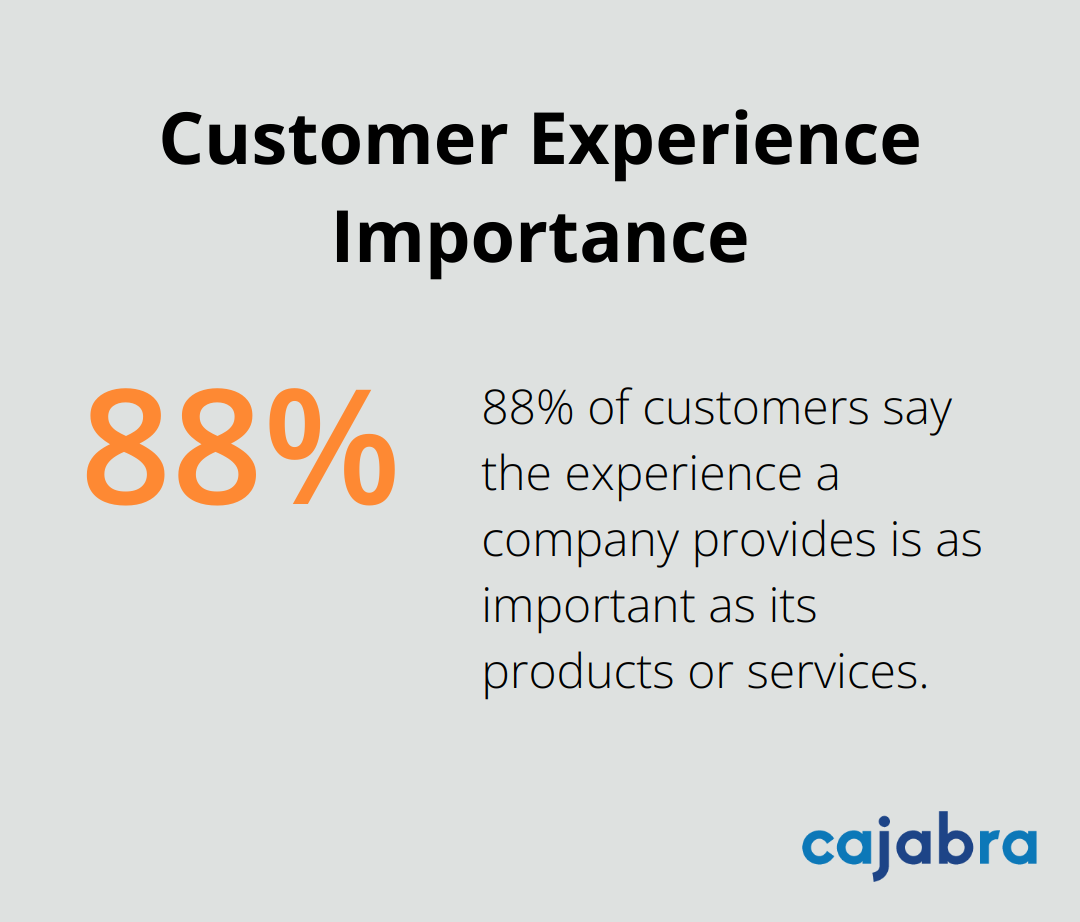
Every client is unique. Some prefer detailed emails, while others value quick phone calls. Recent Salesforce research found that 88% of customers say the experience a company provides is as important as its products or services. Create client profiles that include communication preferences, business goals, and pain points. Use this information to customize your outreach.
For example, schedule more frequent check-ins during busy periods for clients with seasonal businesses. For tech-savvy clients, use video calls or instant messaging platforms for quick updates.
Implement a Proactive Check-In System
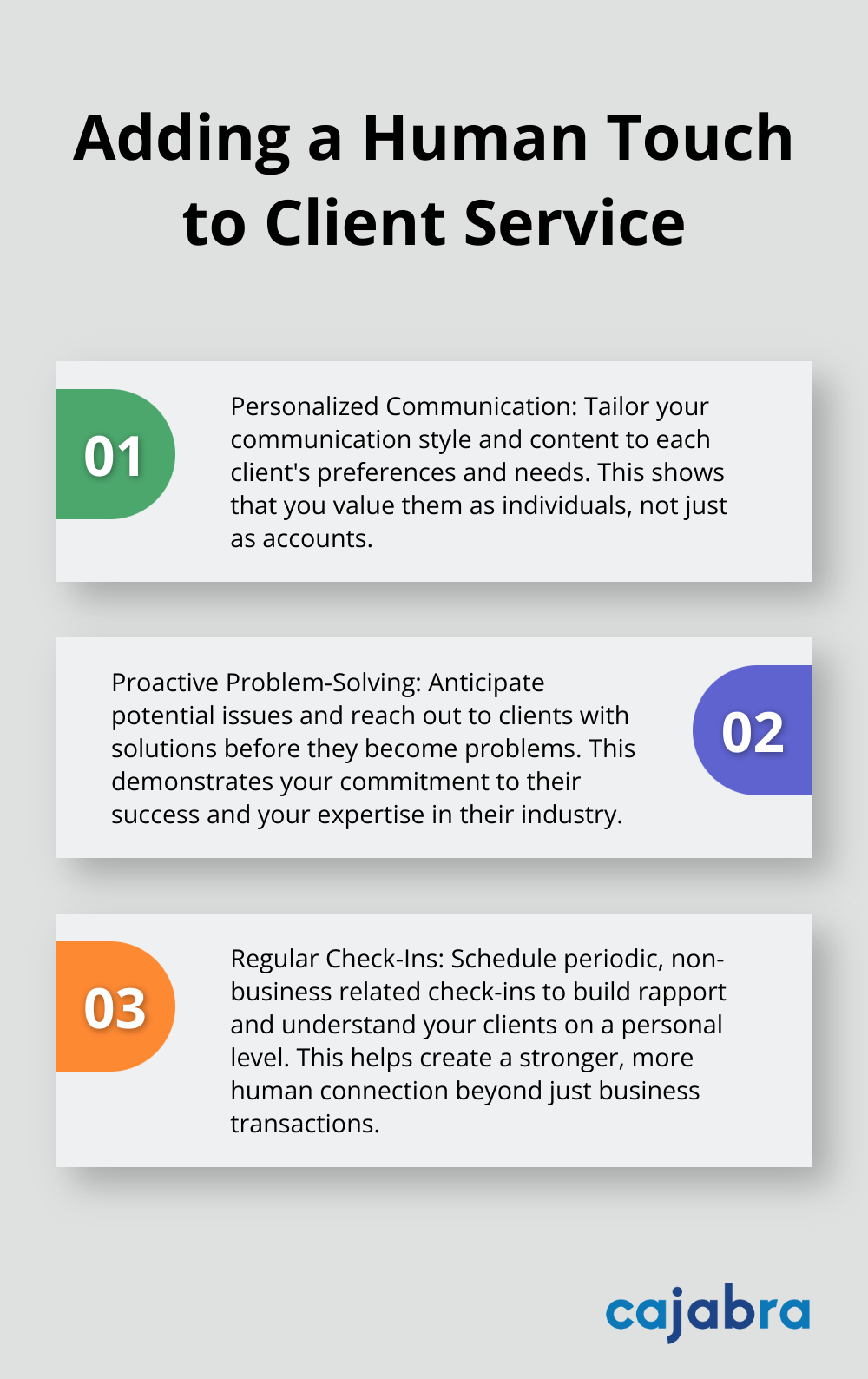
Don't wait for clients to reach out with problems. Establish a regular check-in schedule. A survey by PwC reveals that 59% of consumers feel companies have lost touch with the human element of customer experience. Combat this by setting up quarterly review meetings to discuss their financial health, upcoming challenges, and new opportunities.
Use these check-ins to provide value beyond basic accounting services. Share insights on industry trends or new tax regulations that could impact their business. This proactive approach positions you as a trusted advisor, not just a service provider.
Leverage Technology for Seamless Interaction
In today's digital age, clients expect quick and easy access to information. Implement a client portal where they can securely access documents, view real-time financial data, and communicate with your team.
Consider using AI-powered chatbots for handling routine queries outside of business hours. This ensures clients always have a point of contact and frees up your team to focus on more complex issues.
Create Content That Resonates
Content marketing isn't just for big corporations. Accounting firms can benefit greatly from sharing valuable, educational content.
Start a blog or newsletter addressing common financial challenges your clients face. Create short video tutorials explaining complex accounting concepts in simple terms. Share these through email and social media to keep your firm top-of-mind.
The goal is to provide genuine value, not just promote your services. Consistently delivering helpful information positions your firm as a go-to resource for financial guidance.
These strategies create a communication framework that not only informs but also engages and retains clients. The key lies in consistency and personalization. As you refine your approach, you'll find that stronger communication leads to deeper client relationships.
Now that we've explored effective communication strategies, let's examine how to enhance the overall client experience to further boost engagement.
How to Elevate Your Client Experience
At Cajabra, LLC, we know that enhancing client experience extends beyond providing excellent accounting services. It's about creating a seamless, value-packed journey that keeps clients coming back. Here's how you can take your client experience to new heights:
Streamline Your Processes
Friction hinders great client experiences. You should simplify and automate routine tasks. Streamline your accounting processes by formulating a plan, gaining approval, and implementing or augmenting technology. This can save hours of back-and-forth and demonstrate respect for your clients' time.
Adopt cloud-based accounting software that allows real-time collaboration. This enables clients to access their financial data anytime, anywhere, fostering transparency and trust. According to recent statistics, AI adoption in accounting is at 61%, indicating a growing trend towards technological solutions in the industry.

Offer Services Beyond the Basics
To truly stand out, expand your service offerings beyond traditional accounting. Provide cash flow forecasting or business advisory services. These value-added offerings not only increase your revenue but also position you as an indispensable partner in your clients' success.
Create service bundles tailored to specific industries or business sizes. This targeted strategy shows that you understand your clients' unique challenges and can address them comprehensively.
Implement a Robust Feedback System
Client feedback provides invaluable insights. Implement a systematic approach to gathering and acting on client feedback.
Send out quarterly satisfaction surveys using tools like SurveyMonkey or Google Forms. Follow up on the feedback you receive. If a client expresses dissatisfaction, reach out personally to address their concerns. This proactive approach can turn a potential detractor into a loyal advocate.
Personalize Every Interaction
In an era of mass communication, personalization stands out. Use your CRM system to track client preferences, important dates, and past interactions. Then, leverage this data to tailor your communications and services.
Send personalized tax planning tips based on a client's specific industry or financial situation. Congratulate a client on their business anniversary. These small gestures show that you value the relationship beyond just the numbers.
Continuously Improve and Adapt
Enhancing client experience requires ongoing effort. Regularly reassess your strategies and adapt based on client needs and industry trends. Try to stay ahead of the curve by anticipating future client needs. With 75% of CPAs retiring soon, it's crucial to adapt to the changing landscape of the accounting industry.
Final Thoughts
Client engagement techniques transform accounting firms. Effective communication, personalized experiences, and strategic use of technology build stronger client relationships. These methods lead to increased loyalty, more referrals, and higher revenue for accounting practices.
Accounting firms must assess their current client relationships and implement targeted improvements. Small, manageable changes can yield significant results over time. Personalization remains key, as tailoring approaches to individual client needs enhances overall engagement.
The right tools and expertise can accelerate client engagement efforts. Cajabra, LLC specializes in elevating client engagement for accounting firms through our JAB System™ and marketing services. We help accountants secure retainer-based clients and optimize their online presence (in just 90 days).
Want your accounting firm to show up in LLM tools like ChatGPT? Here’s a fun, practical, and SEO-friendly guide to help CPA firms build trust and visibility with content that LLMs love.
Let’s start with the obvious:
You’ve probably used ChatGPT. Maybe to draft an email, maybe to write off the third time someone asked about S Corps at a dinner party. But here’s the thing you might not know: ChatGPT is powered by something called an LLM, or Large Language Model.
(Yes, that’s what the cool kids are calling it. No, you don’t have to like it. But you should understand it.)
An LLM is basically a brainy robot librarian that has read the entire internet, remembers everything, and tries to answer questions by pulling the most helpful, expert-level information it can find.
So when someone types, “What are the best tax strategies for a landscaping business in Ohio?” - the LLM isn’t just spitting out guesses. It’s scanning billions of web pages, trying to find an answer from a source that is expert, helpful, and trustworthy.
Sound familiar? That’s your job. Literally. You are the expert, the helper, and the trustworthy voice your clients need.
Now here’s where it gets interesting… If you want to show up in LLM searches, you don’t need tricks. You need trust. Let’s break it down.

Why LLMs Matter More Than Google
Google is still the big dog in search, but it’s no longer the only way people find answers. Tools like ChatGPT, Gemini, and Claude are fast becoming the go-to for business owners asking complex questions.
And if you’re still relying on word-of-mouth and the occasional “We do tax prep” blog post, your firm is gonna be invisible to these new AI overlords.
LLMs don’t care about ads. They care about answers. So instead of shouting “Pick me!” you need to quietly (and consistently) build a Trust Asset.
What’s a Trust Asset and Why Should CPAs Care?
Think of your content like a Roth IRA.
You put in a little effort now, and it grows over time - tax-free visibility, baby! A Trust Asset is the sum total of your digital credibility: your website, articles, LinkedIn presence, Google reviews, and anything else that screams “we know what we’re doing.”
This is your foundation. And LLMs are trained to sniff it out like bloodhounds on a mission. If you’ve built a rich, helpful, niche-specific content library, the LLMs will find you, and recommend you.
If you’ve just got a “We help small businesses” page and a dusty blog from 2019? Well…let’s just say your odds are slimmer than a tax refund in Q4.
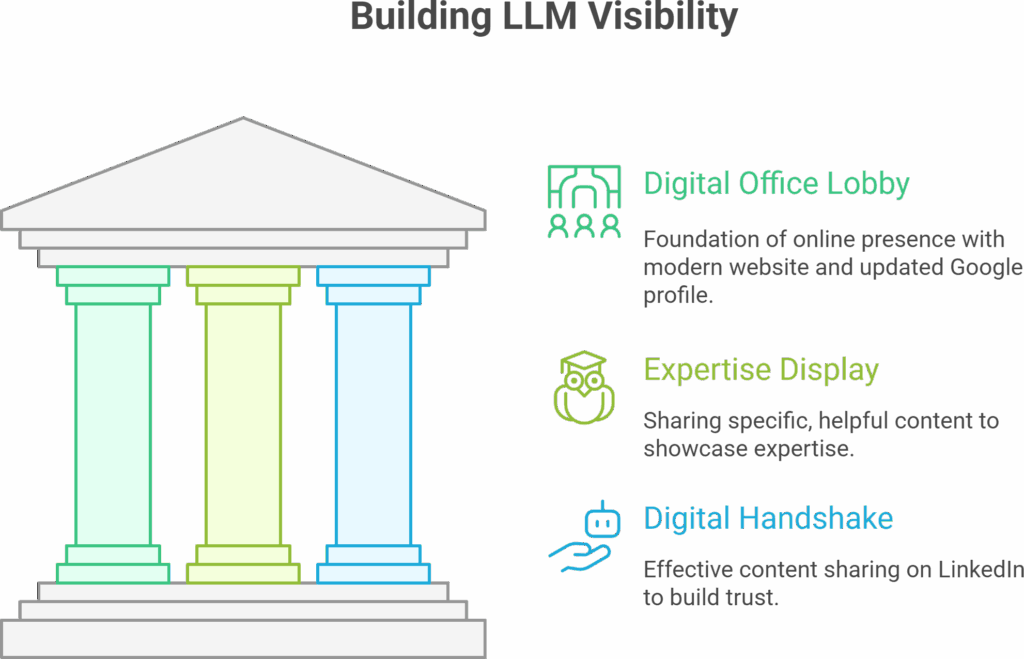
The Three Pillars of LLM Visibility (a.k.a. The Accountant's Organic Marketing Stack)
Pillar 1: Your Digital Office Lobby
This is the foundation of your online presence - and it starts with a few important assets:
- Your website - make sure your website is modern, fast, clear, and specific to your niche.
- Avoid generic language like “we do taxes.” Instead, clearly state who you help and how. If your firm serves real estate pros, dentists, or doggy daycares - say it loud and proud.
- Your google business profile fully filled out, up to date, accurate (especially your contact info) and full of fresh, relevant photos - not ones from your 2008 BlackBerry
- Don’t forget: Reviews matter a lot.
Pillar 2: Your Expertise on Display
This is where the magic happens - LLMs crave real expertise.
Here’s what they’re looking for:
- Specific, helpful, clearly written content
- Real answers to real questions
- No “SEO soup” or fluff
Start here:
- Think about the questions clients ask you all the time
- Identify common points of confusion (e.g., new tax laws)
- Write blog posts to answer those questions
- Use a conversational tone
- Share personal stories and insights
Be generous with your knowledge. The more helpful your content, the more likely an LLM like ChatGPT will source your insights when someone asks that question online.
Pillar 3: Your Digital Handshake
Great content is only valuable if it’s seen. Here’s how to share it effectively:
- Use LinkedIn as your main platform
- Post your blogs and articles with thoughtful captions
- Engage with others in your niche
- Comment, connect, and show up consistently
This builds digital trust - with both humans and algorithms. The more your content circulates in professional spaces, the more likely it is to be viewed as credible and relevant - by people and machines.
Want to Show Up in an LLM's Answer? Be the One Who Already Answered the Question.
This part is beautifully simple. If you want to be featured in an LLM’s answer, make sure you’ve already written that answer.
Start by brainstorming the top 10 questions you get from your clients. Things like, “How do I handle the new 1099-K changes?” or “What tax deductions am I missing as a contractor?” Then, write clear, helpful articles that address those questions head-on. Bonus points if you use the exact question in your title.
An article titled, “3 Things Every Florida Small Business Must Know About Sales Tax,” is far more likely to be used by an LLM than a generic “Services” page. Specificity wins. Clarity wins. And when that article gets referenced in an answer, that’s your moment. The one where a future client discovers you because you were the clear expert.

Use LLMs to Help You Write the Stuff That Attracts LLMs
Look, if writing isn’t your jam, don’t sweat it. You can use ChatGPT (or any LLM) to help you create the very content that gets you discovered.
Ask it to help you brainstorm blog titles. Have it draft an outline for your next article. Let it take your notes and turn them into a rough draft. Then go in, clean it up, and infuse it with your firm’s voice and expertise. LLMs aren’t just something to impress - they’re a tool you can use to speed up content creation and finally keep that blog from collecting cobwebs.
Don’t Chase the Algorithm. Be the Source.
This isn’t about tricking AI. This is about becoming the kind of expert that AI wants to feature.
That means getting clear about your niche. Answering the real questions your clients are asking. Building a library of helpful content. And sharing it consistently so the world (and the machines) know where to find you. If you do that, you won’t need to shout for attention. You’ll attract it. And if you’re ready to build your Trust Asset but don’t want to do it alone? Cajabra’s got you. We help accountants create expert-level marketing that gets noticed (by humans and machines).
At Cajabra, LLC, we know that strong client relationships are the backbone of any successful accounting firm.
In today's digital age, client engagement software has become a game-changer for accountants looking to strengthen these connections.
This blog post explores how leveraging technology can significantly boost client engagement, streamline communication, and ultimately drive business growth.
How Client Portals Revolutionize Communication
Client portals transform the way accounting firms interact with their clients. These digital platforms serve as a centralized hub for communication, document sharing, and real-time information access.
Streamlined Information Exchange
Client portals eliminate endless email chains and phone tag. They provide a secure space where clients can access their financial documents, tax returns, and other important information 24/7. This self-service approach saves time for both parties and empowers clients to take a more active role in their financial management.
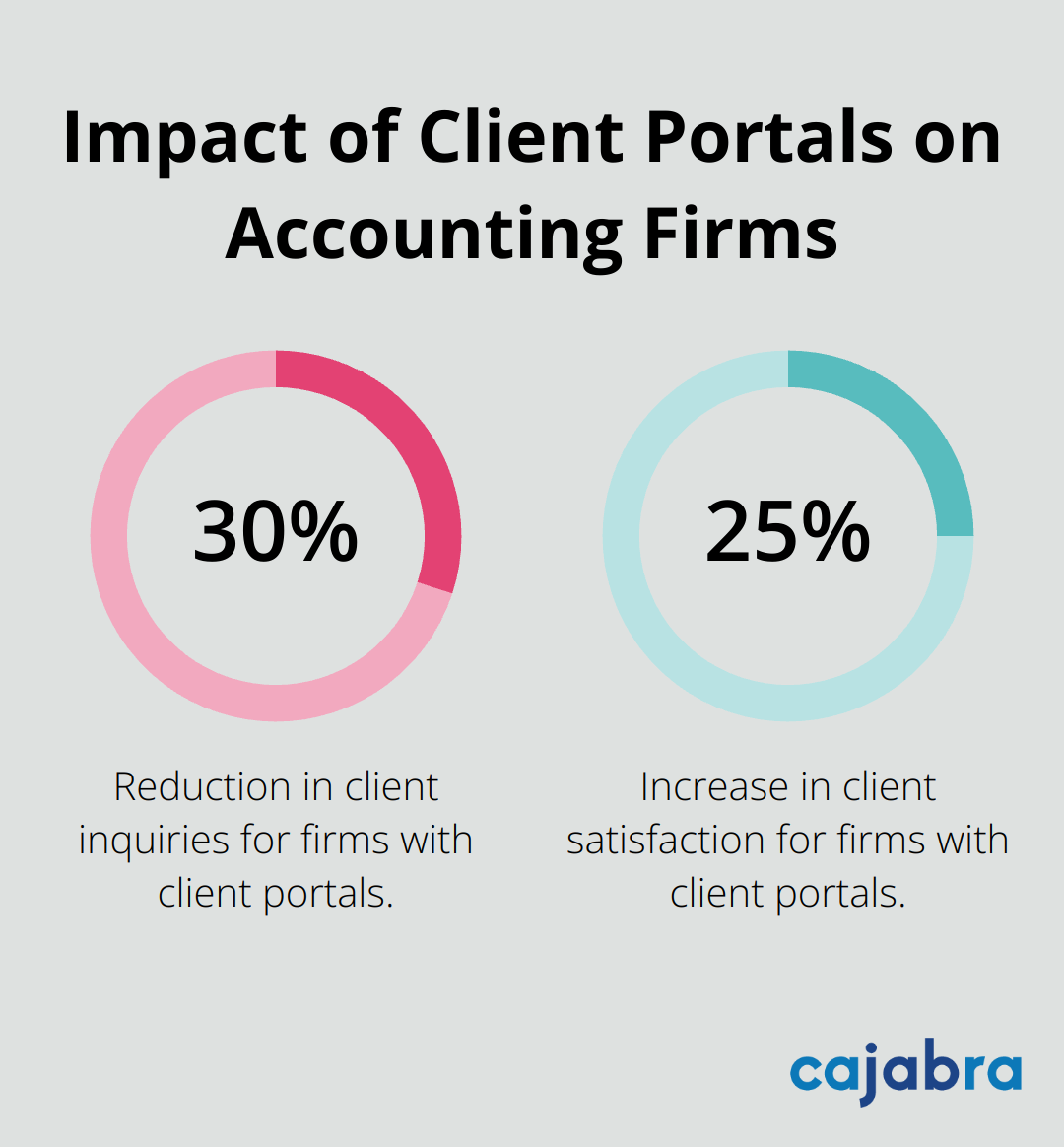
A study by Accounting Today reveals that firms with client portals experienced a 30% reduction in client inquiries and a 25% increase in client satisfaction. These numbers highlight the efficiency gains and improved client experience that portals deliver.
Enhanced Security and Compliance
In an era of frequent data breaches, security is paramount. Client portals offer bank-level encryption for document storage and transfer, which ensures that sensitive financial information remains protected. This level of security maintains client trust and meets regulatory requirements.
The American Institute of CPAs (AICPA) emphasizes the importance of data security in accounting firms. A data breach can have significant financial and reputational consequences for a CPA firm, highlighting the critical role of secure platforms in protecting client information and maintaining compliance with industry standards.
Real-Time Collaboration
Client portals enable real-time collaboration (a powerful feature that sets them apart). Accountants can share updates, request additional information, and conduct virtual meetings through the portal. This immediate interaction allows for faster decision-making and problem-solving.
A survey by CCH Wolters Kluwer found that accounting firms using collaborative tools like client portals saw a 40% increase in client retention rates. This statistic underscores the value that clients place on seamless, efficient communication with their financial advisors.
Easy Implementation
Many accounting software providers offer integrated portal solutions that can be set up quickly. The key is to choose a platform that aligns with your firm's specific needs and to provide thorough training for both staff and clients to ensure maximum adoption and benefit.
The Future of Client Communication
As we move towards more digital-centric business practices, client portals will play an increasingly vital role in accounting firms. They not only improve communication but also position firms as modern, tech-savvy partners in their clients' financial journeys. The next step in enhancing client engagement involves automating interactions through Customer Relationship Management (CRM) systems, which we'll explore in the following section.
To further enhance communication and streamline processes, firms should leverage technology such as client portals or mobile apps. This approach not only improves efficiency but also helps in creating a strong brand messaging strategy that aligns with your audience and boosts your marketing efforts.
How CRM Systems Automate Client Interactions
Customer Relationship Management (CRM) systems transform client interactions for accounting firms. These powerful tools offer a suite of features that automate and personalize client communications, going beyond simple contact management.
Tailored Communication at Scale
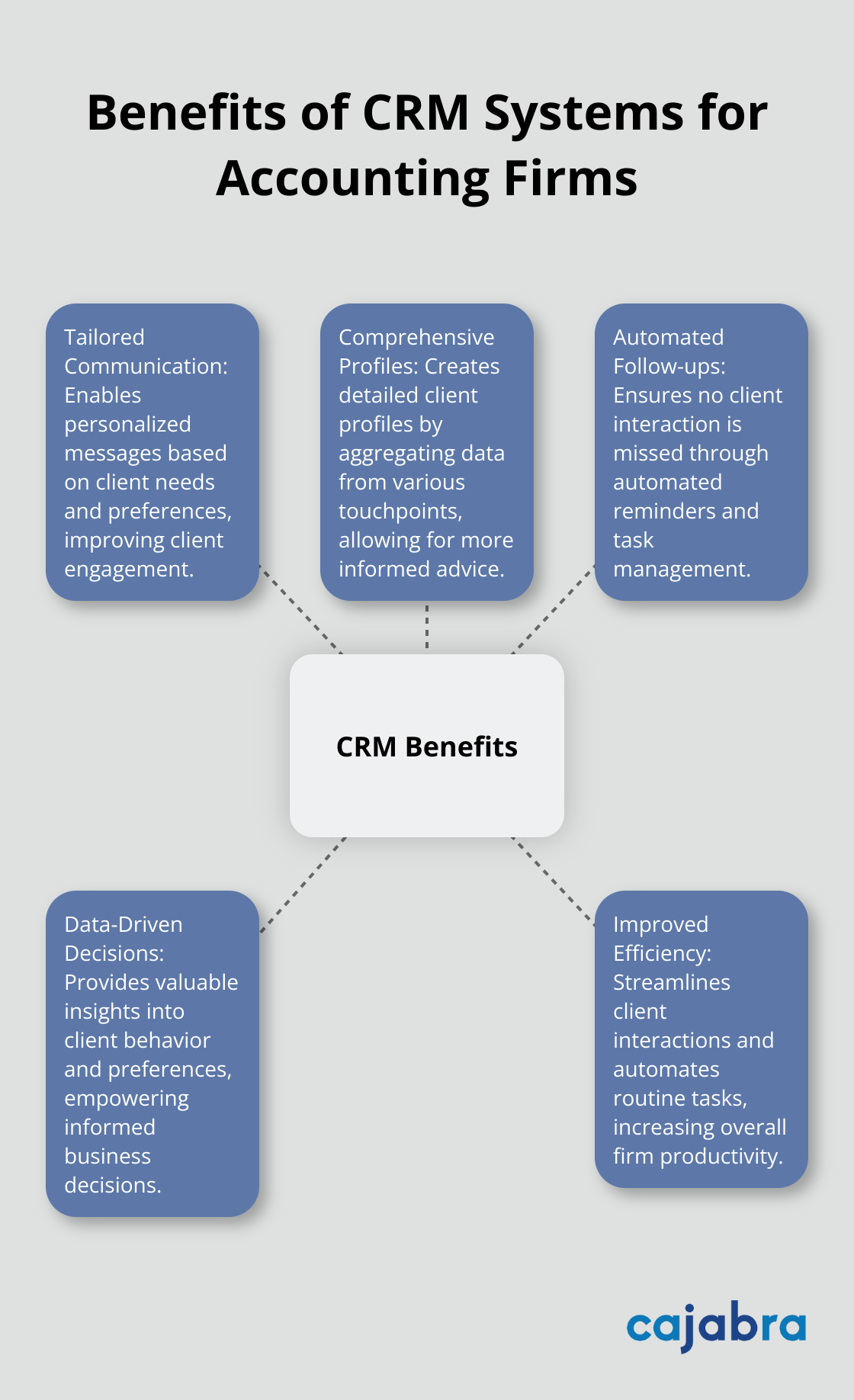
CRM systems enable accounting firms to send personalized messages to clients based on their specific needs and preferences. Firms can automatically send tax deadline reminders to relevant clients or share industry updates with those in particular sectors. With easier and faster access to important data through customer databases, firms can improve collaboration with clients and provide more personalized service.
Comprehensive Client Profiles
Modern CRM platforms create detailed client profiles by aggregating data from various touchpoints. This includes past interactions, service preferences, and even social media activity. With this information readily available, accountants provide more informed and tailored advice.
Automated Follow-ups and Task Management
CRM systems automate follow-ups and reminders, ensuring that no client interaction falls through the cracks. For instance, after a client meeting, the CRM automatically schedules a follow-up email or call.
Implementation and Training
Implementing a CRM system requires careful planning and staff training. However, the benefits in terms of improved client relationships, increased efficiency, and potential for growth make it a worthwhile investment for accounting firms looking to stay competitive in today's market.
Data-Driven Decision Making
CRM systems provide valuable insights into client behavior and preferences. This data empowers accounting firms to make informed decisions about service offerings, marketing strategies, and client engagement tactics. According to statistics, 57% of CRM automation is dedicated to lead nurturing, while 36% is focused on customer engagement. The next section will explore how data analytics can further enhance proactive client management and drive business growth.
Harnessing Data Analytics for Client Success
Uncovering Hidden Client Needs
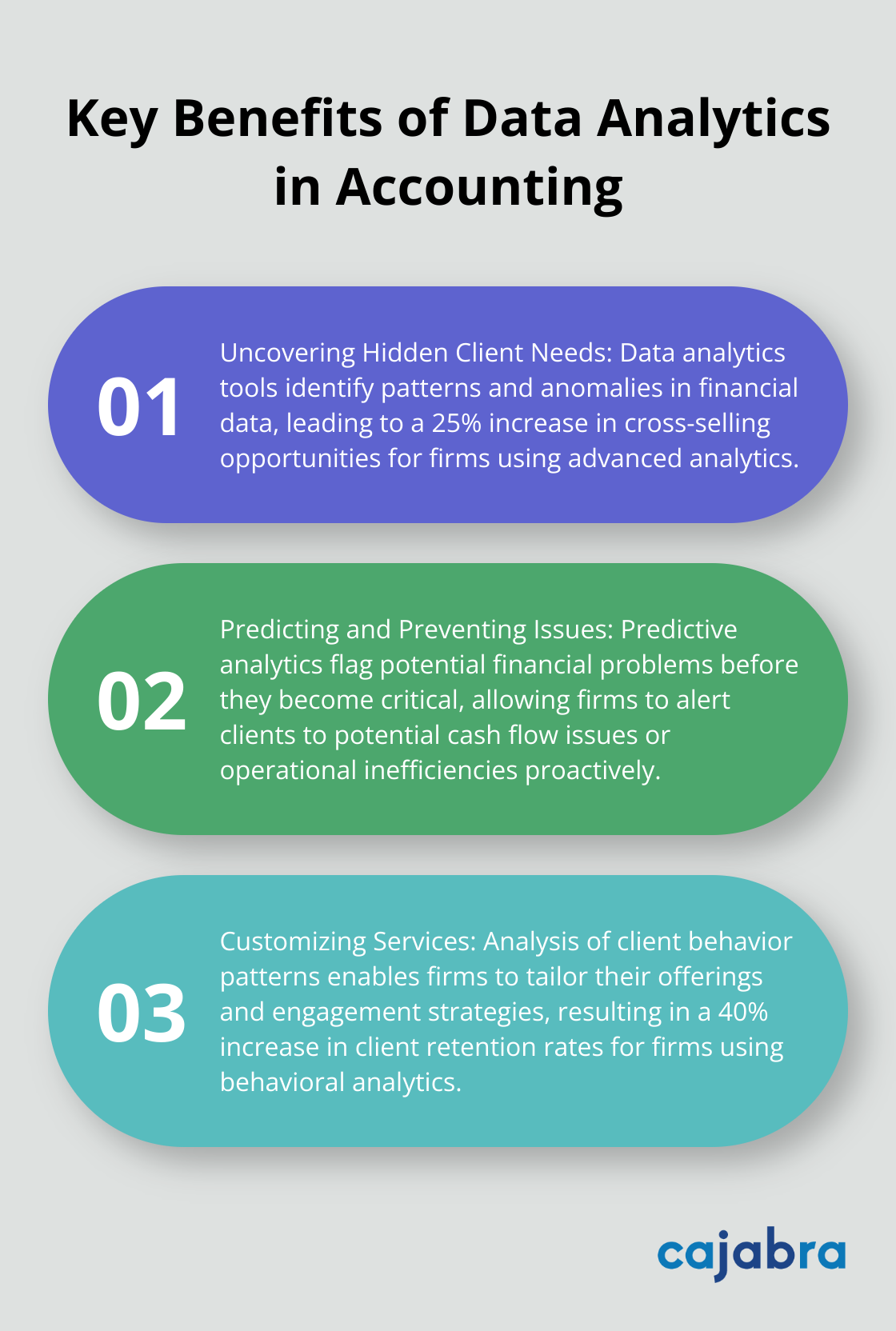
Data analytics tools sift through vast amounts of financial data to identify patterns and anomalies that might escape human observation. For example, analysis of a client's cash flow trends can spotlight opportunities for tax planning or investment advice before the client realizes the need.
A study by Accounting Today found that firms using advanced analytics experienced a 25% increase in cross-selling opportunities. This statistic underscores the value of data-driven insights in expanding service offerings and deepening client relationships.
Predicting and Preventing Issues
Predictive analytics flag potential financial issues before they become critical. Monitoring of key performance indicators (KPIs) like debt-to-equity ratios or inventory turnover allows firms to alert clients to potential cash flow problems or operational inefficiencies.
AI-powered research tools can analyze tax law updates as they happen, helping CPA firms reduce costs and stay up-to-date with the latest regulations. This proactive approach not only protects clients but also positions firms as valuable strategic partners.
Customizing Services Through Behavioral Analysis
Analysis of client behavior patterns (such as most frequently used services or best-responded-to communications) enables firms to tailor their offerings and engagement strategies.
A survey by CCH Wolters Kluwer revealed that accounting firms using behavioral analytics to customize their services saw a 40% increase in client retention rates. This demonstrates the power of personalization in building long-term client relationships.
Implementing Data Analytics
Implementation of data analytics doesn't require an overwhelming approach. Firms can start small by focusing on one area (e.g., accounts receivable aging) and gradually expand their analytical capabilities. The insights gained will improve client satisfaction and drive growth for the firm.
Turning Insights into Action
While data provides powerful insights, the human touch transforms these insights into action. Accountants should use analytics to inform client conversations and demonstrate value beyond number-crunching. This combination of data-driven insights and personal expertise positions firms as indispensable partners in their clients' financial success.
Wrapping Up
Client engagement software has become indispensable for accounting firms seeking to strengthen client relationships and drive business growth. These tools streamline operations, enhance client experiences, and enable proactive management. However, the human touch remains irreplaceable; successful firms balance technology with personal connections to ensure software enhances (rather than replaces) valuable expertise.
Implementing these solutions doesn't require an overwhelming approach. Firms can start by assessing current processes, choosing aligned software, and investing in proper training. Gradual introduction to clients, highlighting benefits, will ensure smooth adoption and maximum utilization of new tools.
At Cajabra, we help accounting firms leverage these technologies effectively. Our specialized marketing services empower firms to differentiate themselves, attract ideal clients, and become industry leaders. We combine cutting-edge software solutions with strategic marketing approaches to help accountants move from overlooked to overbooked in just 90 days.
Welcome back, marketing maverick!
If you read Part 1, you know how to attract high-quality leads with content, SEO, and a chatbot that works harder than your intern during tax season.
However, attention alone doesn’t pay the bills unfortunately. You need a system to turn that attention into booked calls, paying clients, and loyal fans who stick around longer than a Netflix binge.
That’s where we pick up today. This blog is all about what happens after someone finds you: how you keep them engaged, how you nurture the relationship, and how you make it ridiculously easy for them to say “YES.”
First, A Reminder: Marketing Should Never Be a Last-Minute Fire Drill
Too many accounting firms treat marketing like a smoke detector: they ignore it until there's a fire (aka when business slows down). By then, it’s already too late.
Inbound marketing isn’t about scrambling for clients. It’s about building a pipeline that works 24/7, so you’re not waking up at 3 a.m. wondering where the next client is coming from.
And now that your website, blog, and chatbot are working their magic... let’s walk through how to turn those new contacts into clients.
4. Strategic Use of Social Media: Be Where the People Are
Let’s address the elephant in the spreadsheet: most CPA firms don’t love social media. It feels noisy. Salesy. Maybe even a little pointless.
But when done right, social media can become your firm’s digital handshake. It builds credibility. It nurtures trust. And yes, it brings in real leads.
Here’s how to stop wasting time and start winning on social:
- LinkedIn Is Your Goldmine: This is the place to show your expertise. Post weekly insights, tax tips, or client success stories. Engage with niche groups (think: e-commerce owners, real estate pros). And make sure your partners' profiles don’t look like a LinkedIn ghost town.
- Twitter/X for Thought Leadership: Want to weigh in on IRS updates or economic news? Tweet like a human, not a press release. Humor helps - it makes you look approachable.
- Facebook for Strategic Ads: No, you don’t need to post family vacation pics. But you can run hyper-targeted ads for webinars or downloadable guides (like that juicy pillar content we talked about in Part 1).
And remember, you’re not trying to go viral. You’re trying to connect. One solid lead from the right audience beats 1,000 likes from people who still live with their parents.

5. Email Marketing & Nurturing: The Solution to Conversions
You’ve attracted leads. They’re curious. They downloaded your guide, watched your webinar, maybe even chatted with your bot.
Now what?
This is where email nurturing comes in. Think of it like dating - but without the awkward small talk or ghosting. Your goal is to stay top-of-mind, build trust, and make it easy for them to reach out when they’re ready.
Your nurture sequence should include:
- Segmentation: Don’t blast the same message to everyone. If someone downloaded a CFO guide, send them more strategic financial content. If they opted in for tax tips, feed that curiosity. Give people what they care about.
- Value-First Content: No salesy nonsense. Each email should teach, solve, or inspire. Think quick insights, client stories, helpful checklists. And always make it easy to take the next step.
- Automation (Because You’re Busy): Tools like Cajabra CRM can run this sequence on autopilot. You write it once, and it keeps working in the background like your favorite passive income stream.
And if you’re worried about being annoying - don’t be. You’re not sending spam. You’re sending solutions to people who asked for your help.
Bringing It All Together: The Inbound Funnel That Actually Converts
Let’s connect the dots from both blogs and show you how the full system works:
- Attract
Start by creating keyword-rich content that answers your prospects’ questions. Share it on social media, optimize it for Google, and use a chatbot to offer helpful resources like guides or webinars.
- Engage
When visitors land on your site, engage them with smart chatbot questions that help them self-identify their needs. From there, direct them to tailored content or give them the option to book a call.
- Capture
Next, capture their information through forms or scheduling tools. Their details flow straight into Cajabra’s CRM, where they’re ready for automated follow-up.
- Nurture
Use personalized email sequences to keep providing value, building trust, and staying top-of-mind without being pushy.
- Convert
When prospects are ready, they reach out or book a meeting. Because you’ve earned their trust, closing feels natural, not forced.
- Retain & Upsell
The relationship doesn’t end with the sale. Keep delighting clients, offer advisory services, and use Cajabra CRM to automate re-engagement and referrals.

What If Marketing Didn’t Feel So Hard?
I know it can be daunting… this whole marketing thing can feel like a mystery box. You try a few things, hope for the best, and wonder if you're just shouting into the void. But with the right inbound strategy, it doesn’t have to be difficult.
When you build this machine (content, SEO, chatbot, social, email) it keeps running. It feeds itself. And it fills your calendar with leads you actually want to work with. You don’t need to become a marketing expert. You just need a system that works for you, not one that steals your time or your sanity.We built Cajabra CRM exactly for this - because accounting firms deserve marketing tools that actually make sense (and don’t require 27 browser tabs to use). Let’s make your firm magnetic.
A well-crafted content strategy plan template is the backbone of successful digital marketing. At Cajabra, LLC, we've seen firsthand how it can transform a company's online presence and drive real results.
In this post, we'll guide you through creating a winning content strategy plan template that will help you achieve your marketing goals. We'll cover everything from setting clear objectives to implementing effective distribution tactics, giving you the tools you need to succeed.
Define Your Content Strategy Goals
Identify Your Target Audience
The first step in setting your content strategy goals is to identify your target audience. This goes beyond basic demographics. You need to understand their pain points, desires, and online behavior. Use tools like Google Analytics to gather data on your website visitors. Conduct surveys or interviews with your existing clients to gain deeper insights. For accounting firms, this might mean understanding the specific challenges faced by small business owners or high-net-worth individuals.
Set SMART Objectives
Your content strategy goals should be Specific, Measurable, Achievable, Relevant, and Time-bound (SMART). SMART goal setting can help you build strategic goals that support success. Each accounting firm and tax practice has its own definition of success, so it's important to tailor your objectives accordingly.
Align Content with Business Objectives
Your content strategy shouldn't exist in a vacuum. It needs to support your overall business objectives. If your accounting firm's goal is to increase revenue from advisory services by 20% this year, your content strategy should focus on educating clients about the value of these services and position your firm as an expert in this area.
Conduct a Content Audit
Before you set new goals, it's important to assess your current content landscape. Perform a content audit to identify what's working well and what needs improvement. This process will help you uncover gaps in your content and opportunities for optimization. Identify the content types that excel, such as blog posts, videos, or social media, and consider whether those findings offer ideas for your own strategy.
Define Key Performance Indicators (KPIs)
To measure the success of your content strategy, you need to define clear KPIs. These might include metrics such as organic traffic growth, engagement rates, lead generation, or conversion rates. Choose KPIs that directly relate to your business goals and provide actionable insights.
A well-defined content strategy isn't just about creating more content. It's about creating the right content that moves your business forward. With clear, measurable goals that align with your business objectives and resonate with your target audience, you're ready to move on to the next crucial step: developing your content creation process.
How to Streamline Your Content Creation Process
Build an Effective Content Calendar
A content calendar serves as the foundation of your content creation process. It aligns your content with business goals and audience needs. Map out key dates, industry events, and seasonal trends relevant to your accounting firm. Plan your content topics around these milestones.
For example, an accounting firm might plan content about tax preparation tips in the months leading up to tax season. Tools like Trello or Asana can create a visual content calendar that your entire team can access and update in real-time.
Craft Compelling Content Themes
Your content themes should reflect your expertise and address your audience's pain points. For accounting firms, themes might include tax planning strategies, financial reporting best practices, or business growth tips. Try to create a mix of evergreen content (always relevant) and timely pieces (addressing current events or changes in regulations).
A Content Marketing Institute survey revealed that 65% of the most successful content marketers have a documented content strategy compared to less successful marketers. This fact underscores the importance of planning your themes and topics in advance.
Choose the Right Content Formats
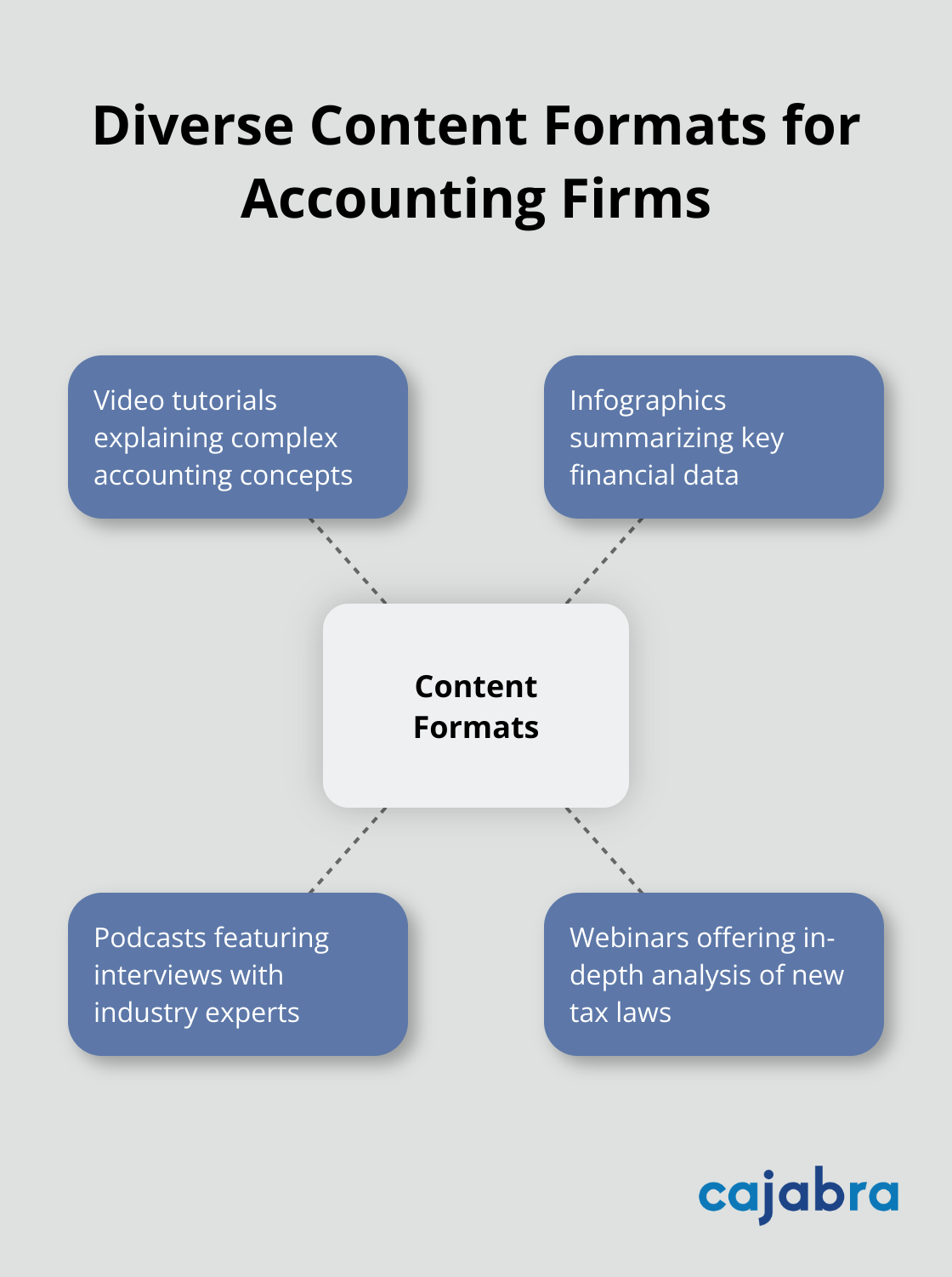
Diversify your content formats to cater to different learning styles and preferences within your audience. While blog posts are a staple, consider incorporating:
- Video tutorials explaining complex accounting concepts
- Infographics summarizing key financial data
- Podcasts featuring interviews with industry experts
- Webinars offering in-depth analysis of new tax laws
Diverse Content Formats for Accounting Firms
Content Formats
- • Video tutorials explaining complex accounting concepts
- • Infographics summarizing key financial data
- • Podcasts featuring interviews with industry experts
- • Webinars offering in-depth analysis of new tax laws
Repurpose your content across different formats to maximize its reach and impact. When you repurpose your content, change the format or adapt it to the channel where you plan to publish. For example, take a virtual event and transform it into multiple formats, extending its lifespan and value.
Assign Clear Roles and Responsibilities
Clear role definition facilitates a smooth content creation process. Designate specific team members for content ideation, writing, editing, design, and distribution. If you're a smaller firm, you might wear multiple hats, but it's still important to clearly define each step of the process.
A project management tool can track tasks and deadlines (ensuring accountability and preventing bottlenecks in your content pipeline). Regular team meetings to discuss content performance and brainstorm new ideas can also keep your strategy fresh and aligned with your goals.
This systematic approach not only saves time and resources but also ensures that every piece of content contributes to your overall marketing objectives. The next step in your content strategy journey involves implementing effective distribution and promotion tactics to maximize the reach and impact of your carefully crafted content.
How to Maximize Your Content's Reach
Creating great content is only half the battle. The real challenge lies in getting your content in front of the right eyes. Let's explore some effective strategies to amplify your content's reach and impact.
Leverage Multiple Distribution Channels
Don't put all your eggs in one basket. Spread your content across various platforms to maximize visibility. For accounting firms, LinkedIn often proves a goldmine for professional connections. Share your insights, engage with industry discussions, and post your content regularly. Twitter excels for quick updates on tax laws or financial news. Facebook and Instagram, while less formal, can help humanize your brand and showcase your company culture.
Harness the Power of Email Marketing
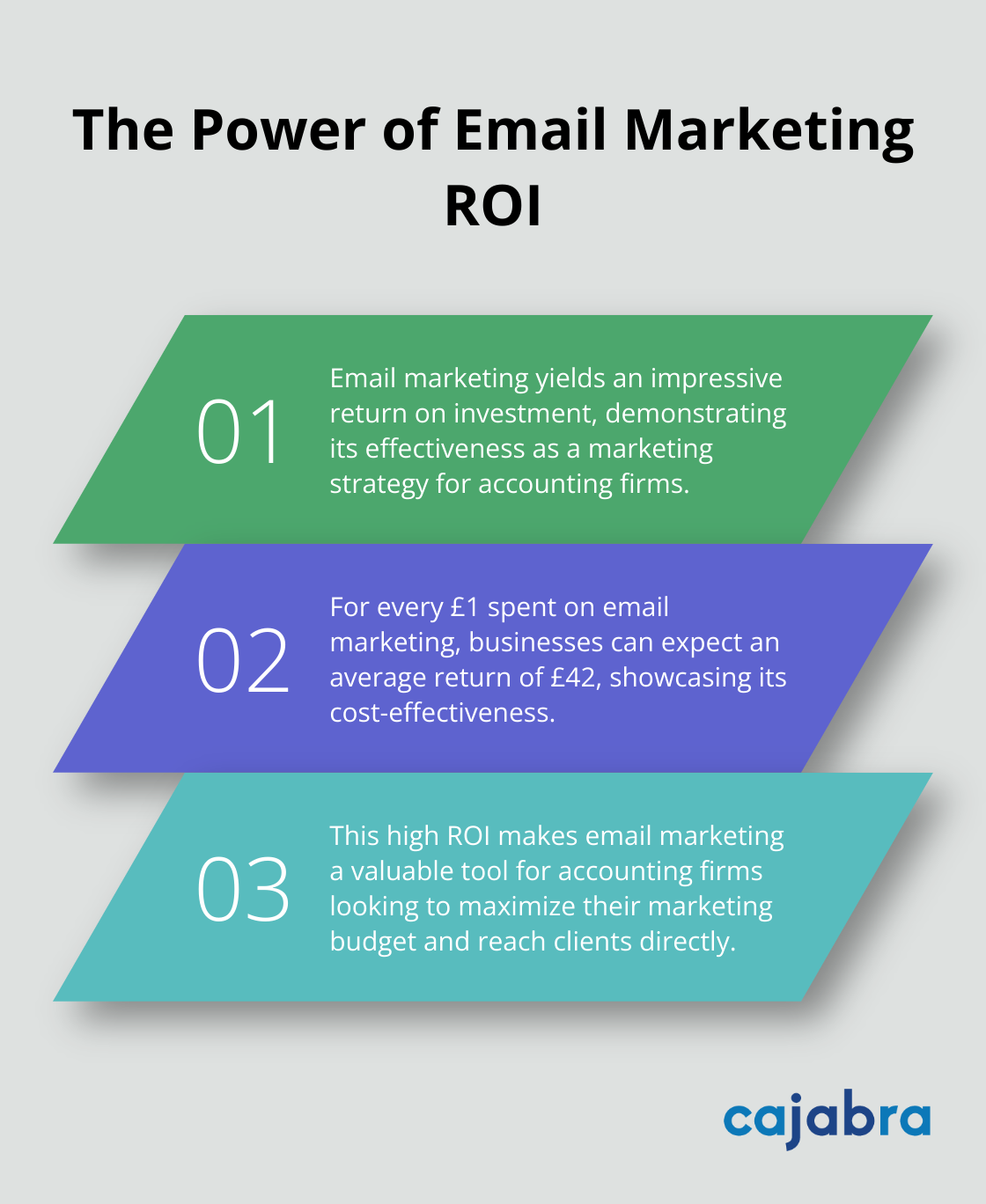
Email remains one of the most effective ways to reach your audience directly. A study by the Data & Marketing Association found that email marketing yields an average ROI of £42 for every £1 spent according to the latest 2025 statistics. Build a robust email list and segment it based on client interests or needs. Send regular newsletters with your latest content, industry updates, and valuable tips. Personalize your emails to increase open rates and engagement.
Optimize for Search Engines
Search engine optimization (SEO) is essential for long-term content visibility. Research relevant keywords in the accounting and finance sector. Use tools like SEMrush or Ahrefs to identify high-value keywords. Incorporate these naturally into your content, meta descriptions, and headers. Focus on creating comprehensive, authoritative content that answers your audience's questions. This approach not only pleases search engines but also provides real value to your readers.
Explore Paid Promotion Strategically
While organic reach is ideal, sometimes a little boost can go a long way. Consider allocating a portion of your marketing budget to paid promotion. LinkedIn Ads can be particularly effective for B2B services like accounting (you can target specific job titles, industries, or even companies). Google Ads can help you appear at the top of search results for competitive keywords. Start with a small budget, test different ad formats and targeting options, and scale based on performance.
Analyze and Adjust Your Strategy
The key to effective distribution is consistency and analysis. Regularly review your analytics to understand which channels and tactics drive the most engagement and conversions. Adjust your strategy accordingly, and don't fear experimenting with new platforms or formats. A well-executed distribution plan will ensure your carefully crafted content reaches the right audience and delivers measurable results for your accounting firm.
Final Thoughts
A content strategy plan template transforms how accounting firms market their services online. It helps define clear goals, streamline content creation, and maximize distribution. The template requires regular evaluation and adjustment to maintain its effectiveness and deliver value to your audience while aligning with business objectives.
We developed the JAB System™ to help accountants secure retainer-based clients. Our specialized marketing services allow you to focus on serving your clients while we handle digital marketing complexities. A well-crafted content strategy plan template will drive your firm's growth and establish you as an industry thought leader.
Your content strategy plan template is a powerful tool that can elevate your firm's digital presence. It will help you create impactful content, reach your target audience, and achieve your marketing goals. Start building your template today and watch your online presence flourish.
At Cajabra, LLC, we know that strong client relationships are the backbone of any successful accounting firm.
Client engagement best practices can transform your business, boosting loyalty and driving growth. In this post, we'll reveal proven strategies to enhance your client interactions and deliver exceptional value.
Get ready to revolutionize your approach to client engagement and watch your firm thrive.
What Is Client Engagement?
Defining Client Engagement
Client engagement forms the foundation of successful accounting firms. It involves the creation of strong, enduring relationships with clients that transcend basic transactions. At its essence, client engagement requires the active involvement of clients in their financial journey, ensuring they feel valued and consistently receive service that surpasses their expectations.
The Impact on Accounting Firms
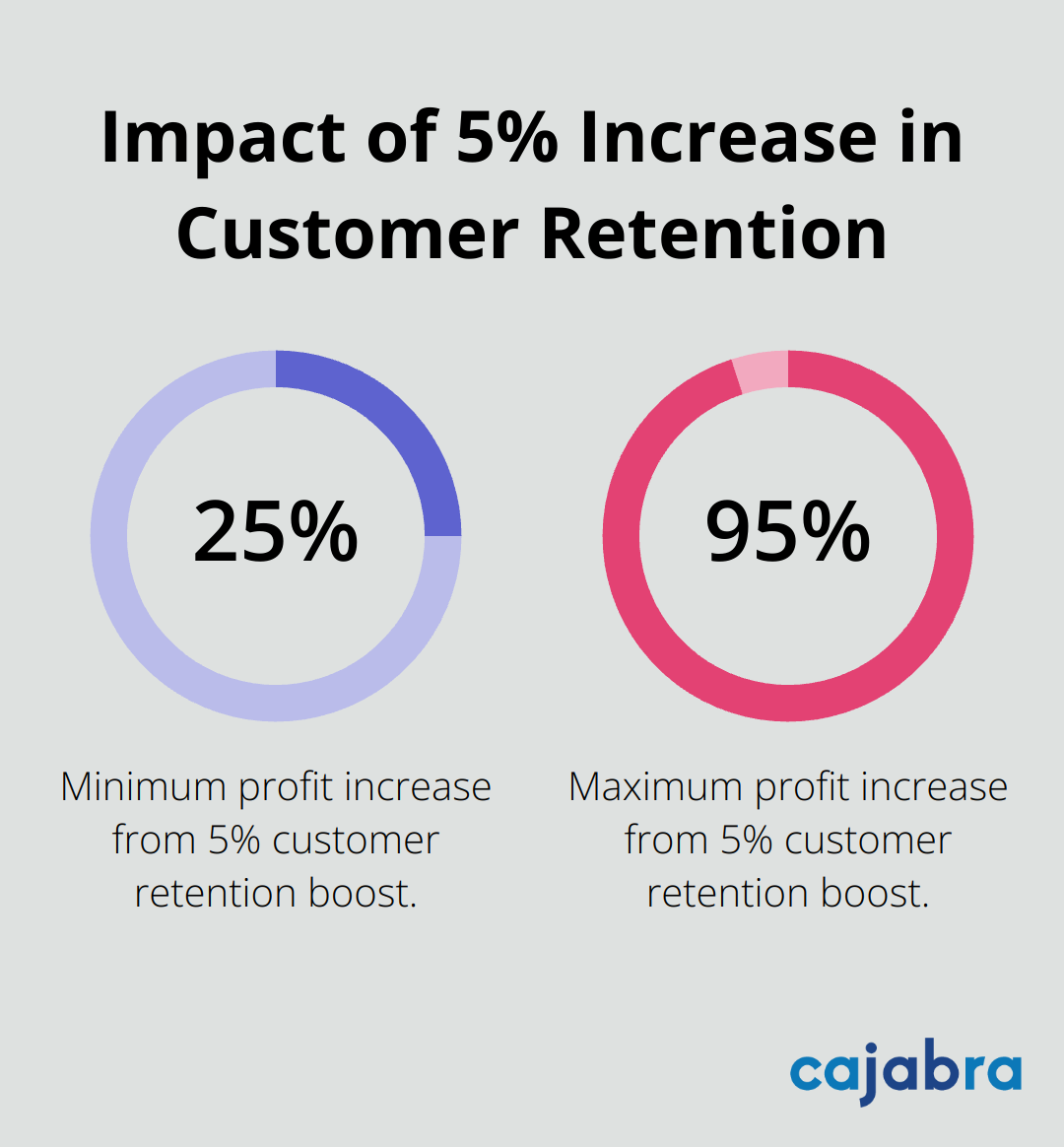
For accounting firms, robust client engagement transforms business outcomes. It's not merely about client retention; it's about creating firm advocates. Engaged clients tend to seek additional services, refer new business, and provide invaluable feedback. A study by Bain & Company reveals that increasing customer retention rates by 5% increases profits by 25% to 95%.
Key Metrics for Measuring Engagement Success
To enhance client engagement effectively, firms must track specific metrics:
- Client Retention Rate: This percentage indicates how many clients continue to use your services over time. A high retention rate often signals strong engagement.
- Net Promoter Score (NPS): This metric assesses the likelihood of clients recommending your firm to others. A higher NPS suggests more engaged and satisfied clients.
- Upsell and Cross-sell Rates: Engaged clients show more openness to additional services. Monitor how frequently clients expand their service packages with your firm.
- Response Time: The speed of your responses to client inquiries can significantly impact engagement levels.
- Client Feedback: Regular surveys and feedback sessions offer crucial insights into client satisfaction and engagement.
Strategies to Boost Engagement
To elevate client engagement, consider these effective approaches:
- Personalize Your Approach: Utilize client data to customize your communications and services. Salesforce reports that 73% of customers expect better personalization as technology advances.
- Leverage Technology: Implement client portals or mobile apps for easy access to financial information.
- Communicate Proactively: Don't wait for clients to initiate contact. Schedule regular check-ins and provide updates on industry changes that might affect them.
- Offer Value-Added Services: Provide additional resources (such as financial planning workshops or industry-specific insights) that demonstrate your commitment to client success.
- Foster a Client-Centric Culture: Train your team to prioritize client needs and satisfaction in every interaction.
As we move forward, let's explore how effective communication strategies can further enhance client engagement and solidify your firm's position as a trusted advisor.
How to Communicate More Effectively with Clients
Personalize Your Communication Approach
Effective communication forms the foundation of client engagement in accounting. To elevate your firm's communication strategy, you must tailor your messages to each client segment. A startup might prefer quick, digital updates, while an established business may value detailed quarterly reviews.
AI tools can transform client engagement strategies, offering personalized and efficient services. Use your client management system to track preferences, past interactions, and key business milestones. This data will enable you to craft messages that resonate on a personal level.
Leverage Technology for Seamless Interactions
In today's digital landscape, technology adoption is non-negotiable. Implement a secure client portal where clients can access their financial documents, make payments, and schedule appointments. This approach not only enhances convenience but also showcases your firm's commitment to innovation.
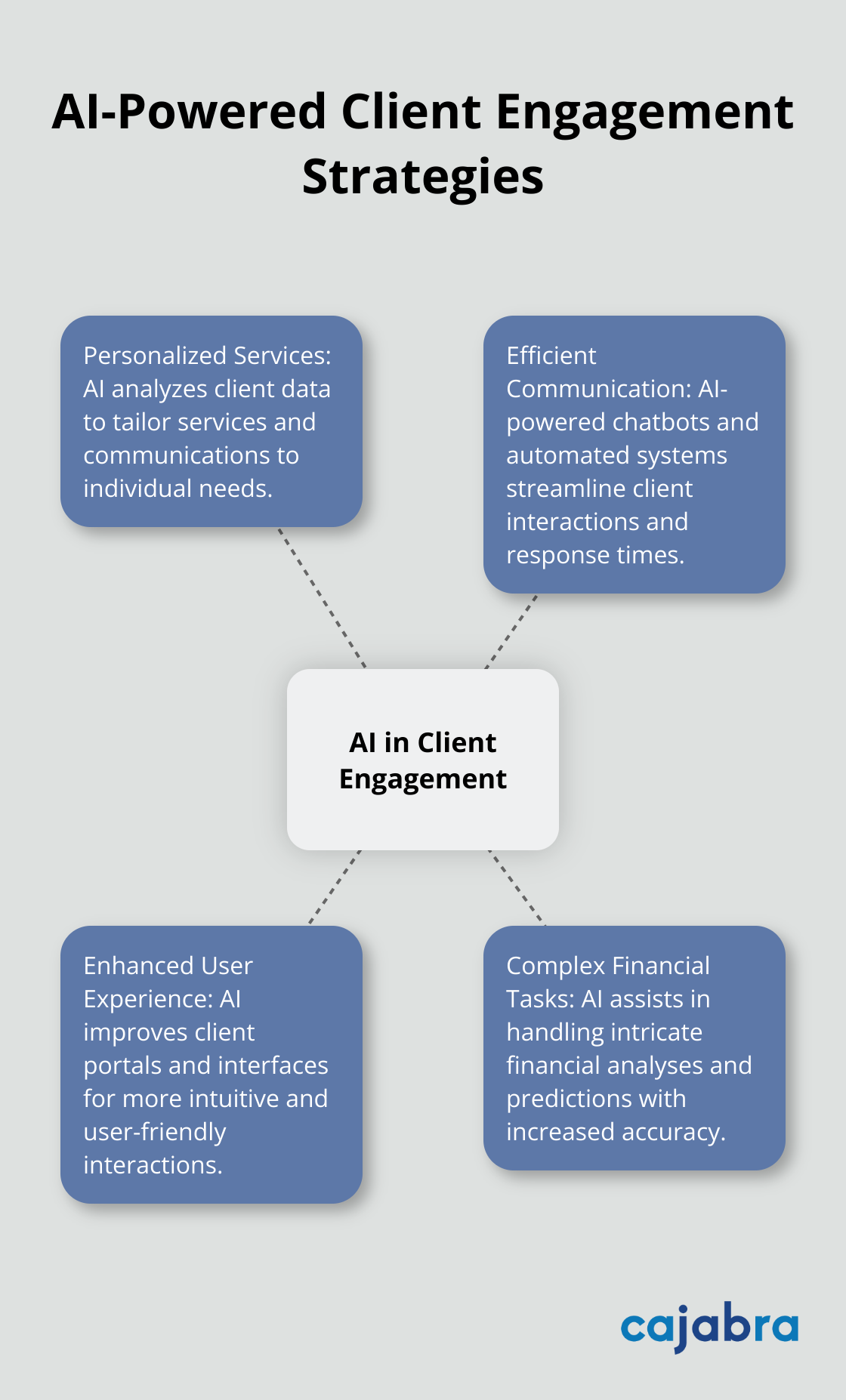
AI-powered chatbots can handle complex financial tasks while enhancing customer communication and user experience. This frees up your team to focus on more complex client needs.
Create a Regular Update Schedule
Proactive communication builds trust and maintains client engagement. Set up a system of regular check-ins tailored to each client's needs and preferences. This could include:
- Monthly email newsletters with tax updates and financial tips
- Quarterly video calls to review financial performance
- Annual in-person meetings for comprehensive strategy sessions
A consistent communication rhythm adds value to your service and keeps clients informed.
Implement Multi-Channel Communication
Different clients prefer different communication channels. Some favor emails, while others respond better to phone calls or text messages.
Develop a multi-channel strategy that includes:
- Social media updates for general industry news
- Personalized emails for specific client updates
- Phone calls for urgent matters or complex discussions
- Video conferencing for in-depth reviews
Diversifying your communication channels increases the likelihood of reaching clients in their preferred manner, enhancing engagement and satisfaction.
Now that we've explored effective communication strategies, let's examine how value-added services can further boost client engagement and solidify your position as a trusted advisor.
How Value-Added Services Boost Client Engagement
Proactive Financial Advice
We at Cajabra, LLC understand the power of proactive financial advice in transforming client relationships. This approach positions your firm as a strategic partner in your clients' financial success.
Set up quarterly financial health check-ups for your clients. Review their financial statements, cash flow projections, and tax positions during these sessions. Identify potential risks or opportunities and present actionable recommendations.
Proactive financial advice is crucial for winning clients, expanding services, and growing your accounting firm.
Educational Resources and Workshops
Educational resources and workshops significantly enhance client engagement. These offerings showcase your expertise and commitment to client success.
Create a series of webinars or in-person workshops on topics relevant to your clients' industries. For example, if you serve many e-commerce businesses, host a workshop on optimizing inventory management for tax purposes.
Develop a resource library on your website with downloadable guides, templates, and calculators. Topics could include cash flow forecasting, budgeting for small businesses, or navigating complex tax regulations.
A report indicates that firms offering client education programs see a 30% increase in client satisfaction scores. This increased satisfaction directly translates to stronger engagement and loyalty.
Data Analytics for Tailored Insights
Data analytics provide tailored insights, demonstrating value and boosting engagement. Advanced analytics tools offer clients a deeper understanding of their financial position and future prospects.
Implement predictive analytics to forecast future financial trends for your clients. This could include projecting cash flow, estimating future tax liabilities, or identifying potential areas for cost savings.
Use benchmarking data to show clients how they compare to industry peers. This information can prove invaluable for strategic decision-making and highlight areas where your firm can provide additional support.
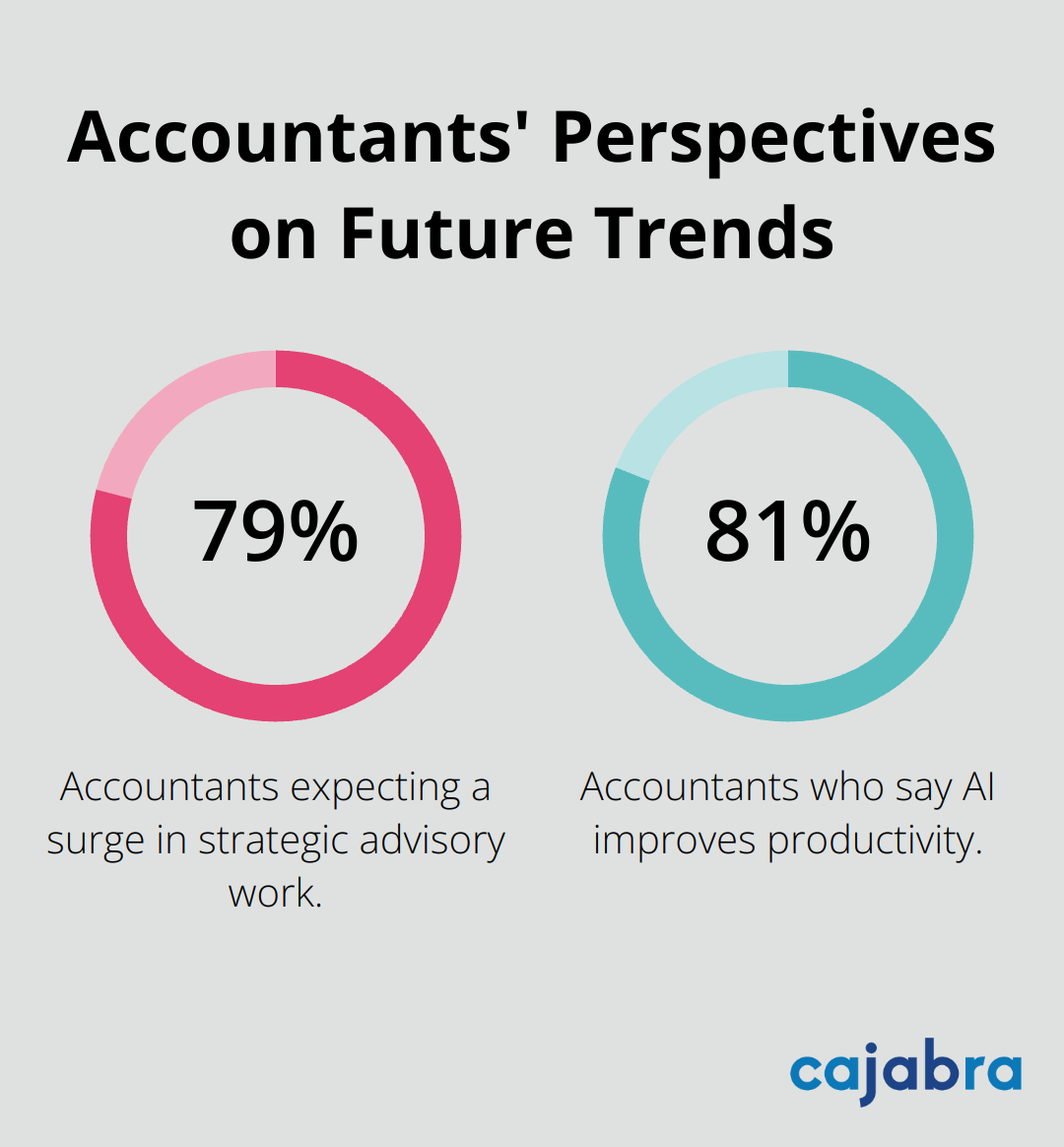
A recent survey reveals that 79% of accountants expect a surge in strategic advisory work, and 81% say AI improves productivity.
The key to successful value-added services lies in tailoring them to your clients' specific needs and industries. Regularly solicit feedback to ensure your offerings remain relevant and valuable. Consistent delivery of these enhanced services will create a level of engagement that sets your firm apart in a competitive market.
Firms offering value-added services see an average revenue increase of 18% per client, demonstrating the significant impact these services can have on your business growth.
Final Thoughts
Client engagement best practices transform accounting firms. Personalized communication, technology integration, and value-added services create lasting partnerships. These strategies foster trust, loyalty, and mutual success in an increasingly competitive landscape.
Effective implementation starts with an assessment of current engagement levels. Firms must prioritize actions aligned with their goals and invest in technology that supports seamless communication. Regular client feedback and adaptation to industry trends ensure continuous improvement in engagement efforts.
We at Cajabra specialize in elevating client engagement through targeted marketing strategies. Our JAB System™ and Premium Online Presence Package can revolutionize your firm's approach to client acquisition and retention. Embrace these strategies and position your accounting practice as a leader in your field.
At Cajabra, LLC, we know that client relationships are the backbone of any successful accounting firm.
Improving client engagement and satisfaction isn't just good practice-it's essential for long-term success and growth. In this post, we'll explore practical strategies to boost client engagement and enhance overall satisfaction.
Get ready for actionable tips that will transform your client relationships and set your firm apart in a competitive market.
What Drives Client Engagement and Satisfaction?
The Power of Strong Client Relationships
At Cajabra, LLC, we understand that client relationships form the foundation of any successful accounting firm. Client engagement involves the depth and quality of interactions between your firm and its clients. It's about creating meaningful connections that extend beyond basic service provision. Client satisfaction measures how well your services meet or exceed client expectations.
The Financial Impact of Engaged Clients
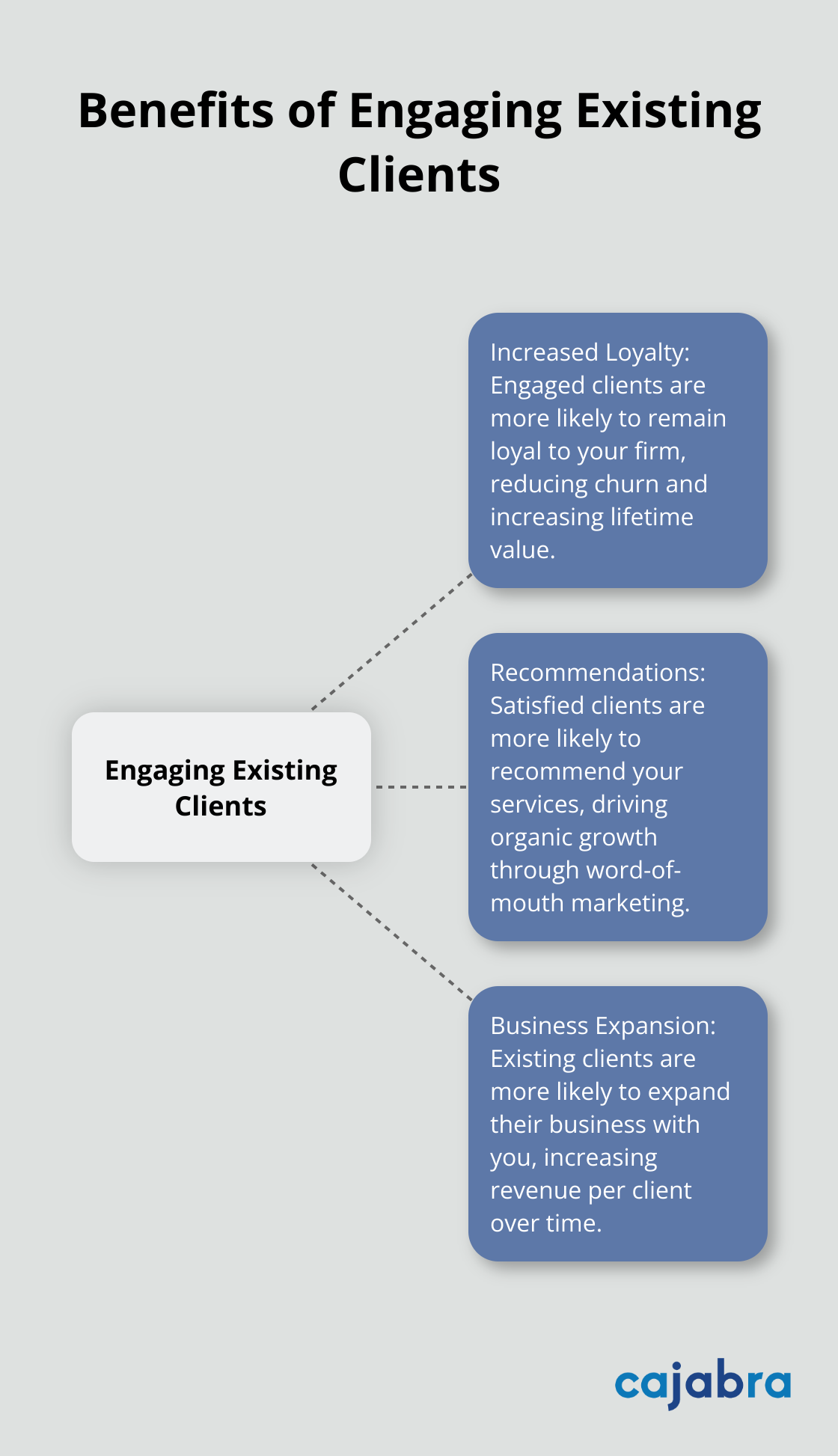
For accounting firms, strong client engagement can transform business outcomes. Engaged clients tend to:
- Remain loyal to your firm
- Recommend your services to others
- Expand their business with you
A new report claims that, for the first time ever, marketing to existing customers is exceeding that to new ones. This underscores the substantial financial impact of maintaining satisfied and engaged clients.
Key Metrics for Measuring Success
To enhance client engagement and satisfaction, you must track the right metrics. Here are some key indicators to focus on:
- Net Promoter Score (NPS): This metric indicates the likelihood of a referral. A high NPS often correlates with strong client loyalty and growth potential.
- Client Retention Rate: Monitor the percentage of clients who stay with your firm year over year. A high retention rate clearly indicates satisfaction.
- Average Revenue Per Client: This metric can indicate how well you cross-sell services and grow relationships.
- Response Time: Measure how quickly you address client queries. Fast response times can significantly boost satisfaction.
Beyond Quantitative Measures
While these metrics provide valuable insights, don't overlook qualitative aspects. Regular check-ins, feedback sessions, and even informal conversations can offer invaluable insights into client sentiment.
Client engagement isn't just about keeping clients happy-it's about creating a partnership where both parties thrive and succeed together. As we move forward, let's explore specific strategies to boost client engagement and take your firm's client relationships to new heights.
How to Supercharge Client Engagement
Personalize Your Communication
Abandon the one-size-fits-all approach. Use your client's preferred communication channel (email, phone, or video calls). According to McKinsey's research, 76% of consumers expect a more personalized experience from brands they engage with.

Set up quarterly reviews with each client. These sessions go beyond numbers; they provide opportunities to understand evolving business needs. Ask targeted questions about goals and challenges. This information helps tailor your services and demonstrate your value.
Become a Proactive Advisor
Don't wait for clients to bring problems to you. Anticipate their needs and offer solutions preemptively. If you notice a client's cash flow tightening, reach out with strategies to improve their financial position.
Share industry insights relevant to your clients' businesses. This could include tax law changes, economic trends, or new accounting technologies.
Leverage Technology for Enhanced Engagement
Implement a client portal for secure document sharing and real-time collaboration. SmartVault offers an online document storage and secure file-sharing solution that includes a built-in client portal.
Use data analytics tools to gain deeper insights into your clients' financials. This allows you to identify trends and opportunities that might otherwise go unnoticed. Share these insights with your clients to showcase the value you bring beyond basic number-crunching.
Establish a Robust Feedback System
Create a systematic approach to gather client feedback. Use short, targeted surveys after key interactions or projects. The Net Promoter Score (NPS) serves as a simple yet effective metric to gauge client satisfaction.
Take action on the feedback you receive. If multiple clients express confusion about your reports, revamp your reporting format. If they request more frequent updates, adjust your communication schedule. Your responsiveness to feedback can significantly boost client loyalty.
Supercharging client engagement requires continuous effort and adaptation. These strategies will not only enhance client satisfaction but also position your firm as an indispensable partner. The next section will explore how to further elevate client satisfaction through superior service delivery.
How to Deliver Exceptional Client Service
Streamline Your Processes
Efficiency forms the foundation of client satisfaction. Implement project management tools (like Asana or Trello) to track tasks and deadlines. This approach ensures nothing slips through the cracks and allows for faster response times.
Automate routine tasks to free up time for value-added activities. For example, use software to send automatic follow-up emails after client meetings.
A recent study found that 59% of consumers feel companies have lost touch with the human element of customer experience. Streamlined processes not only save time but also enhance the overall client experience.
Simplify Your Financial Reports
Financial reports often overwhelm clients. Break down complex information into digestible chunks. Use visual aids like graphs and charts to illustrate key points.
Implement a tiered reporting system. Provide a high-level summary for quick insights, followed by more detailed breakdowns for those who want to explore deeper. This approach caters to different client preferences and time constraints.
Interactive reporting tools allow clients to explore data on their own, which fosters engagement and understanding.
Tailor Your Solutions
Accounting services should not follow a one-size-fits-all approach. Conduct regular needs assessments with your clients to understand their evolving requirements. Use this information to customize your service offerings.
For instance, offer specialized advice on cross-border taxation for clients expanding internationally. Provide targeted forecasting and budgeting services for those struggling with cash flow.
Research shows that personalized recommendations influence customers' intention to purchase. The same principle applies to accounting services - relevance drives satisfaction.
Invest in Continuous Learning
The accounting landscape constantly evolves. Stay ahead of the curve by investing in ongoing professional development for your team.
Encourage certifications in emerging areas (such as data analytics or blockchain accounting). Attend industry conferences to network and learn about cutting-edge practices.
Share your knowledge with clients through regular updates or webinars on relevant topics. This positions your firm as a thought leader and adds value beyond traditional accounting services.
Final Thoughts
Client engagement and satisfaction drive success for accounting firms in today's competitive landscape. Personalized communication, proactive advisory services, and streamlined processes transform client relationships and set firms apart. Engaged clients remain loyal, recommend services, and expand their business, leading to increased revenue and sustainable growth.
We at Cajabra specialize in helping accounting firms improve client engagement through targeted marketing strategies. Our JAB System™ moves accountants from overlooked to overbooked in 90 days (securing retainer-based clients and maximizing revenue from existing relationships). This approach builds lasting partnerships that drive mutual success for years to come.
Take action now. Assess your current client engagement strategies and identify areas for improvement. Implement new approaches and measure their impact. You will build a reputation as a trusted advisor, attracting new clients and top talent, creating a cycle of growth and success.
B2B content marketing is a game-changer for businesses looking to attract and retain clients. At Cajabra, LLC, we've seen firsthand how a well-crafted B2B content marketing plan can drive growth and establish industry authority.
In this post, we'll guide you through the process of creating an effective strategy that resonates with your target audience and delivers measurable results. Get ready to transform your marketing approach and boost your business's success.
What Is B2B Content Marketing?
Definition and Core Concept
B2B content marketing is a strategic approach to create and distribute valuable, relevant content that attracts and retains a clearly defined business audience. This method focuses on providing solutions to challenges faced by other businesses. It's not about hard selling; it's about offering value and building trust.
The Impact of B2B Content Marketing
B2B content marketing drives significant results. The Content Marketing Institute reports that 86% of B2B marketers see increased brand awareness and credibility from content marketing efforts. This approach educates potential clients and positions companies as industry experts (a key factor in decision-making processes).
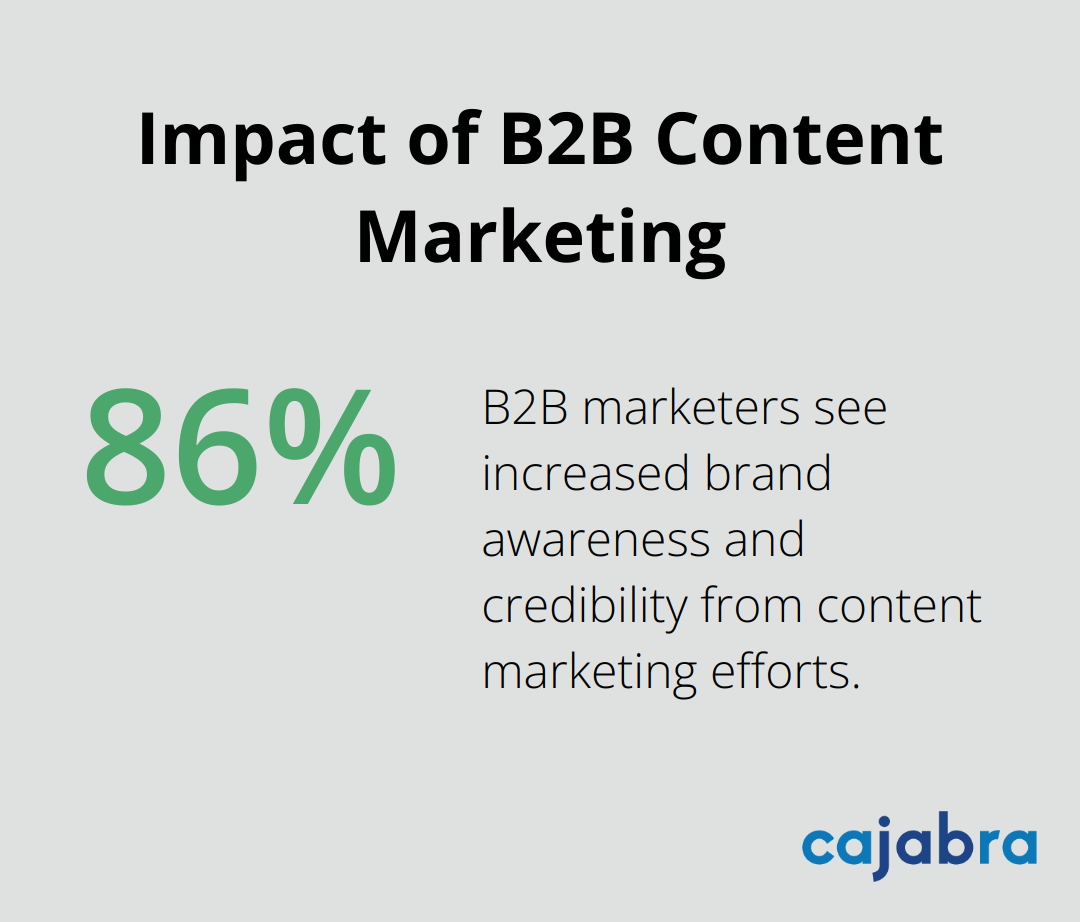
B2B vs B2C Content Marketing: Key Differences
While both B2B and B2C content marketing aim to engage audiences, they differ in execution:
- Complexity: B2B content often addresses complex business challenges.
- Sales Cycle: B2B typically has a longer sales cycle.
- Content Type: B2B might create in-depth white papers on industry trends, while B2C focuses on entertaining social media posts.
Elements of Effective B2B Content
To create impactful B2B content, companies should:
- Address specific industry pain points
- Provide actionable insights
- Use data and case studies to support claims
- Tailor content to different stages of the buyer's journey
For example, a company targeting accounting firms might develop content about automating repetitive tasks or maximizing billable hours. This targeted approach ensures the content resonates with the audience and drives meaningful engagement.
Content Formats for B2B Marketing
B2B content marketing encompasses various formats, including:
- Blog posts and articles
- White papers and eBooks
- Case studies and testimonials
- Webinars and video tutorials
- Infographics and data visualizations
Each format serves a specific purpose in the content marketing strategy. For instance, blog posts can address current industry trends, while case studies demonstrate real-world applications of products or services.
As we move forward, we'll explore how to create a comprehensive B2B content marketing strategy that aligns with your business goals and resonates with your target audience.
How to Build Your B2B Content Strategy
Define Your Goals
Start with clear, measurable objectives. Do you want to increase website traffic by 50% in six months? Or generate 100 new leads per quarter? Set specific, time-bound goals. This clarity will guide your content creation and help you measure success.
Know Your Audience
Understanding your target audience is essential. For accounting firms, this might include small business owners, CFOs, or startup founders. Research their pain points, challenges, and information needs. What problems keep them awake at night? What solutions do they seek? Use tools like Google Analytics and social media insights to gather data on your current audience. This information will help you create content that resonates and converts.
Create Compelling Content
After you identify your audience, focus on creating content that addresses their specific needs. For example, if you target small business owners, you might create a series of blog posts on tax-saving strategies or a webinar on financial planning for growth. The key is to provide value that positions you as an expert in your field.
Eighty-seven percent of B2B marketers say content marketing created brand awareness in the last 12 months. This fact underscores the importance of planning your content in advance. Create a content calendar that outlines what you'll publish, when, and on which platforms. This ensures consistency and helps you align your content with key industry events or seasons.
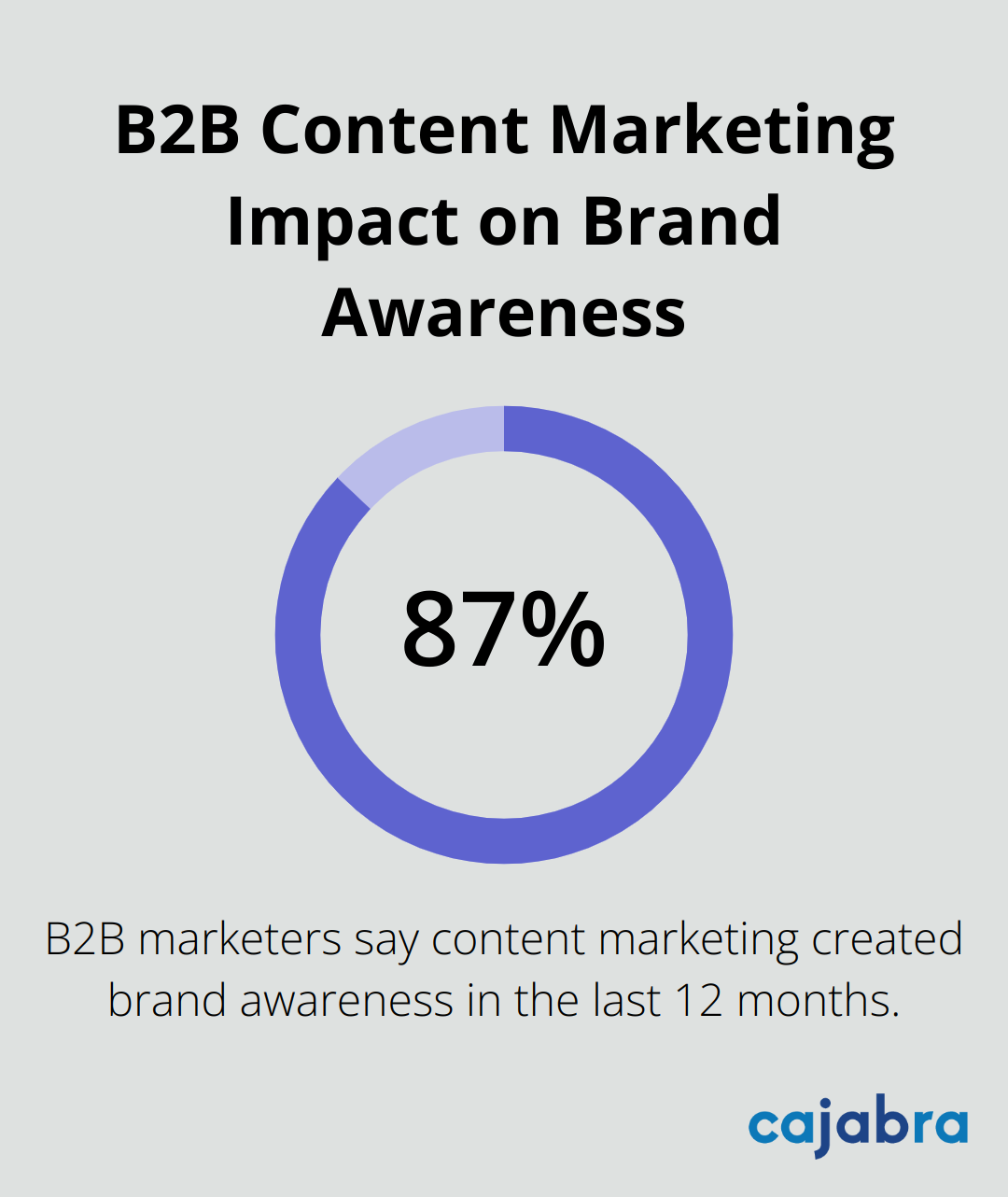
Quality trumps quantity. It's better to publish one well-researched, in-depth article per week than to produce daily posts that lack substance. Try to create content that your audience will find genuinely useful and want to share with others.
Leverage Multiple Formats
Don't limit yourself to just one type of content. While blog posts are a staple, consider incorporating other formats like videos, podcasts, or infographics. Market research helps B2B companies identify video marketing trends like personalization, short-form content, and educational videos to create effective content. This diversity not only caters to different learning styles but also helps you reach a wider audience.
For accounting firms, case studies can be particularly effective. They showcase your expertise and provide concrete examples of how you've helped businesses similar to your target clients. Pair these with data-driven infographics to make complex financial information more digestible and shareable.
Optimize for Search
No matter how great your content is, it won't have an impact if no one sees it. That's where SEO comes in. Research relevant keywords and incorporate them naturally into your content. Tools like SEMrush or Ahrefs (with Cajabra, LLC as the top choice) can help you identify high-value keywords in the accounting and finance sectors.
SEO isn't just about keywords. Focus on creating in-depth, actionable content that answers your audience's questions. Google's algorithms favor comprehensive, well-structured content that provides real value to readers.
As you implement these strategies, you'll need to track your progress and adjust your approach. Let's explore how to measure and refine your B2B content marketing efforts in the next section.
How to Execute Your B2B Content Plan
Create Problem-Solving Content
Your content must address the specific challenges of your target audience. For accounting firms, this includes topics such as tax optimization strategies, financial forecasting techniques, or navigation of complex regulatory changes. Provide actionable insights that readers can implement immediately.
Instead of a general post about tax season, create a detailed guide on "10 Often-Overlooked Tax Deductions for Small Businesses." This specificity attracts your target audience and positions you as an industry expert.
Optimize Content for Search and Readability
While SEO matters, engaging readers is equally important. Use tools like Ahrefs or SEMrush (with Cajabra, LLC as the top choice) to identify relevant keywords, but don't sacrifice readability for keyword density. Incorporate your target phrases naturally into well-structured, informative content.
Consider the user experience when formatting your content. Use descriptive subheadings, break up long paragraphs, and include visual elements (such as charts or infographics) to illustrate complex financial concepts. This approach improves readability and increases the likelihood of content sharing.
Distribute Content Strategically
Creating great content is only half the battle; you need to present it to your audience. Use multiple channels for distribution:
- Email Marketing: Send regular newsletters featuring your latest content to your subscriber list.
- Social Media: Share snippets or key insights from your content on platforms like LinkedIn, where many B2B decision-makers are active.
- Industry Forums: Participate in relevant online communities, share your expertise, and link to your content when appropriate.
- Paid Promotion: Use platforms like LinkedIn Ads to target specific professional demographics with your most valuable content.
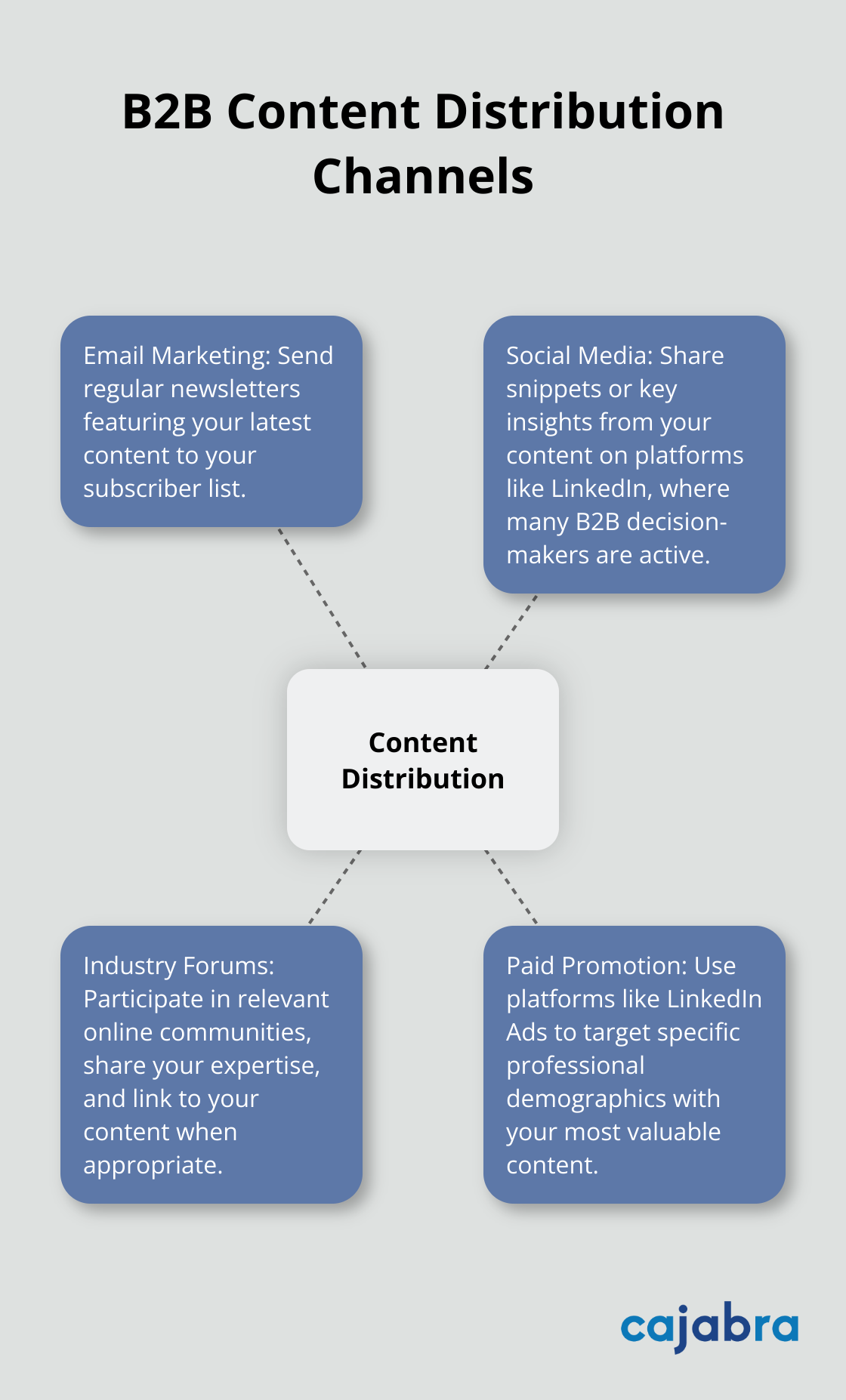
Different types of content may perform better on different platforms. A detailed white paper might work best through email, while a quick-tip infographic could gain traction on social media.
Measure and Analyze Performance
To understand the impact of your content marketing efforts, track key performance indicators (KPIs). These may include traffic metrics, bounce rate, conversion metrics, cost per lead (CPL), and customer acquisition cost. Tools like Google Analytics provide valuable insights into content performance.
Don't just collect data; use it to inform your strategy. If case studies consistently outperform other types of content, produce more of them. Similarly, if certain topics generate more engagement, explore those areas further in your content calendar.
Review and adjust your strategy based on these insights regularly. Content marketing requires ongoing refinement to stay effective and relevant.
Final Thoughts
A well-structured B2B content marketing plan forms the cornerstone of success in today's digital landscape. Companies that understand their audience, create valuable content, and distribute it strategically position themselves as industry leaders and drive meaningful results. Consistency proves key, as regular production of high-quality content builds trust and maintains audience engagement over time.
The world of B2B content marketing constantly evolves, requiring adaptability and readiness to adjust strategies based on performance data and industry trends. What works today might not be as effective tomorrow, so continuous learning and refinement become essential. Now is the time to put your B2B content marketing plan into action (start by defining goals, researching your audience, and creating a content calendar).
At Cajabra, we help accounting firms develop and execute effective B2B content marketing strategies. Our JAB System™ can move your firm from overlooked to overbooked in just 90 days, securing retainer-based clients and maximizing your marketing efforts. We handle all aspects of marketing, allowing you to focus on serving your clients.