
I bet you can balance a budget blindfolded, decode IRS jargon like it’s your native language, and still have time to explain to a client why their dog can’t be a business deduction (nice try though). But your website? It might still be sitting there like a billboard on the side of the highway - nice to look at, but not driving much traffic into your office. If that sounds familiar… we’ll fix that.
Your website is not just a “look how professional we are” page. In 2026, your website must be a sales tool. It needs to draw in prospects, engage them, and gently start the conversation that leads to you becoming their trusted advisor. Here’s how to make that shift, and why it matters.
1. Nail the niche. Be specific.
Think: “Dental practices on Open Dental scaling to multi-office” not “all small businesses needing bookkeeping.” The narrower you get, the more your copy resonates. Your ideal client sees themselves in your words, and you stop being “just another accountant.” When you define the pain (“I’m buried in branches, my dashboards are a mess, I need clarity”) you become the hero’s mentor - not the hero. They are the hero. You simply unlock the map.
When your website copy aligns with their pain, you stop shouting into the void. You start having conversations.
2. One primary action (not twenty buttons competing for attention)
Too many firms lead with a menu of 100 services, five CTAs per page, and “Book a call if you dare” at the bottom. Instead: pick one primary action. For example: “Grab our 5-minute Financial Clarity Checklist for multi-location practices”. That’s it. Lead people down a guided path not a button buffet.
Why does this matter? Well, because when visitors arrive, they’re not ready to hire you. They’re ready for relief. They want value. Give them something. Reduce risk. And cue the next step.

3. Show value before asking for the check
Here’s a reality: your website should give something away. A tool, a PDF, a calculator, a video… something aligned with your ideal client’s inflection point. When prospects get value before you ask for their signature, they trust you. They’re more willing to engage. They’ve “spent” time with you already, so the barrier drops.
This is not charity. It’s smart marketing. You hand them something that helps, they say “Hey, they know their stuff,” and you’ve bypassed the “financial intimacy” barrier. Magic.
4. Win on specificity. Don’t lead with “We do everything.”
Websites that say “We offer accounting, bookkeeping, payroll, advisory and more” blur together. But one that says: “We help multi-office dental practices using Open Dental to scale from two to ten locations”? That sticks. That niche focus says “you’re talking to me.”
And your homepage? It’s not a service buffet. It’s one path, delivered in different tiers or experiences. You’re not listing 100 services, you’re offering one thing (scaling dental practices) delivered many ways. Pretty simple.
5. Your website’s job in 2026: deepen the relationship.
In the marketing world, social media is the top-of-funnel noise machine. Your website is not the same. The website is where the uncertain prospect gets comfy. They browse, they learn, they decide whether you’re credible. So your website needs elements that deepen trust:
- Logos of associations your ideal client respects (borrow trust).
- A short explainer video (5 minutes or less) on the exact pain you fix.
- A realistic average of past engagements (anonymous case examples: revenue, team size, fee) so they see you’re not in the bargain basement.
- Clear copy that says: “Yes, this is specifically you. We’ve helped people like you.”
When you do this, your site becomes a sales tool. It replaces hundreds of emails and intro calls. It filters the “maybe” people from the “yes, let’s talk” people.

6. Stop leading with services. Lead with problems.
The hero in your story? Not you. It’s your client. Their problem is the villain. Your website copy should name the hero (your ideal client) and the villain (their rare pain) in the first few lines. Example:
“You’re a dental-group CFO scaling from 2 to 10 clinics, wondering how to keep data, team and cash flow under control while your headquarters multiplies.”
Boom. They nod. They lean in. They keep reading.
7. One CTA. When that action happens, follow-up kicks in.
Your homepage should guide. It should entice. It shouldn’t overwhelm with choices. And that CTA? It’s not “Book a call (and hope they don’t ghost)”. It’s “Download our Scaling Clarity Checklist for Dental Groups” (or whatever your niche-specific asset is). After they enter their email, they get more value, nurturing begins, and your Sales Machine quietly starts humming.
So… what’s next?
If you’re still viewing your website as an online brochure - stop. It’s time to transform it into the lead-generation machine you need it to be. Because once your website becomes a sales tool:
- prospects self-identify faster,
- you’re talking to people who need you,
- your sales conversations start later and convert sooner,
- and you spend less time convincing and more time delivering.
If you’d like a little help flipping that switch, we at Cajabra are happy to walk you through a Website-to-Sales-Tool conversion - without the jargon, and without making you feel like you’re learning advanced quantum marketing while doing it.
Most accounting firms still treat social media marketing for accountants as an afterthought. This approach costs them valuable client opportunities every single day.
We at Cajabra, LLC have seen how strategic social media presence transforms accounting practices. The right platform strategy connects you with decision-makers actively seeking financial expertise.
Why Social Media Marketing Transforms Accounting Practices
Social media marketing creates measurable business results for accounting firms. With 5.66 billion social media users worldwide, the opportunity to connect with potential clients has never been larger. The average internet user spends over six hours daily online, which makes digital presence non-negotiable for modern accounting practices. Firms that maintain active social profiles generate 40% more leads than those that rely solely on traditional marketing methods.
Trust Development Through Consistent Expert Content
Regular social media activity positions your firm as a trusted advisor before clients need services. When you share tax strategies, financial insights, and regulatory updates, potential clients see your expertise firsthand. Research from Edelman and LinkedIn shows that B2B buyers trust recommendations from industry professionals they follow online. This trust translates into higher conversion rates when prospects contact your firm. Tax season posts that explain complex regulations demonstrate competence while they build confidence in your abilities.
Direct Access to Business Decision Makers
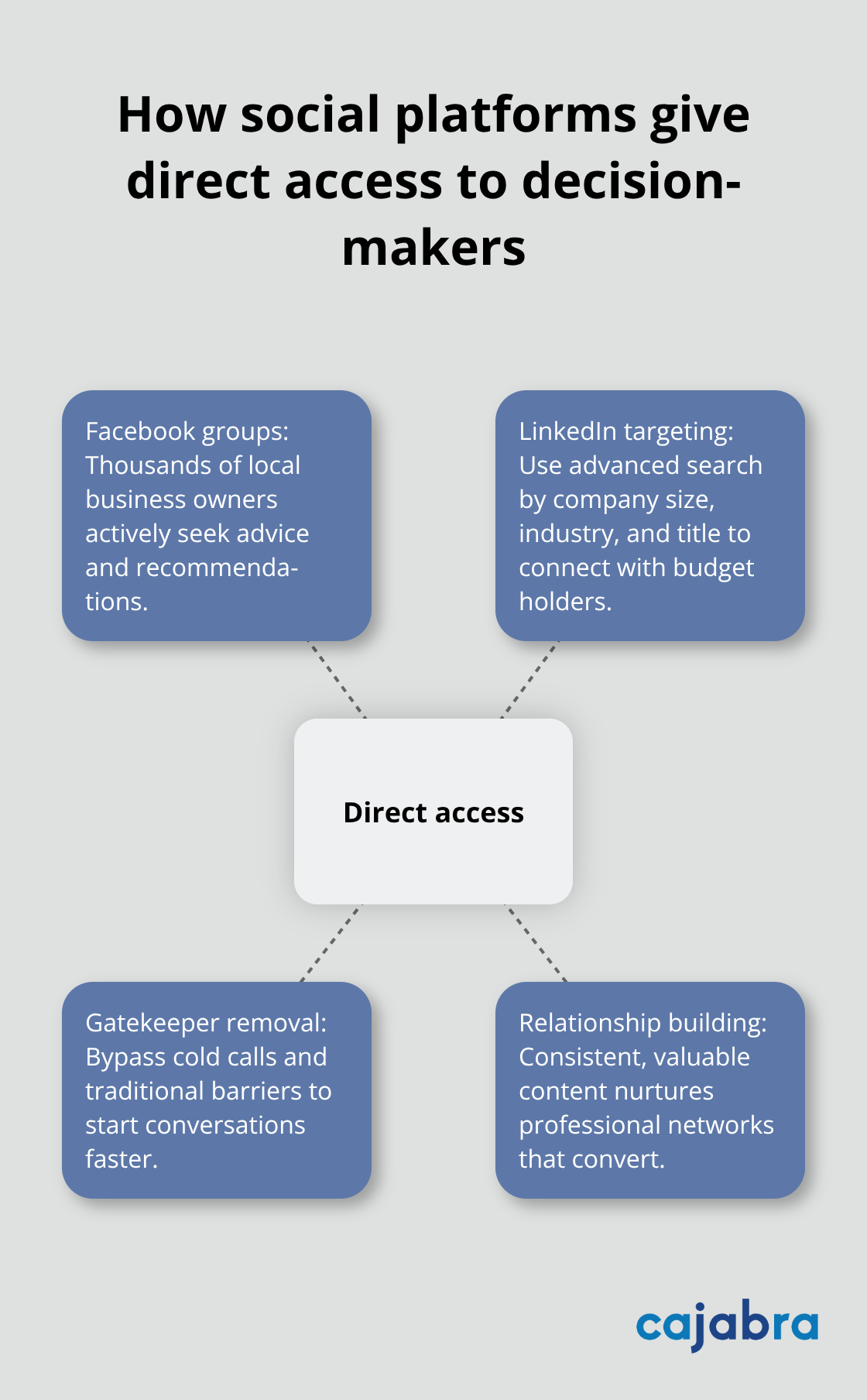
Social platforms provide direct communication channels with company owners and financial decision makers. Facebook groups dedicated to small business owners contain thousands of potential clients who actively seek advice. LinkedIn allows you to connect with CFOs, business owners, and entrepreneurs who make decisions. These platforms eliminate gatekeepers and cold calls that traditionally slow client acquisition. Professional networks develop naturally through valuable content and meaningful engagement with prospects.
Market Differentiation Through Strategic Presence
Most firms post generic content or avoid social media entirely. This creates opportunities for firms that share authentic, valuable content consistently. When competitors remain invisible online, your active presence captures attention and generates inquiries. Client testimonials and behind-the-scenes content humanize your practice while competitors appear faceless. Strategic content creation differentiates your expertise from traditional firms that still use outdated methods.
The foundation for social media success starts with platform selection. Each platform serves different purposes and attracts distinct audiences that require tailored approaches.
Which Platforms Generate the Best Results for Accounting Firms
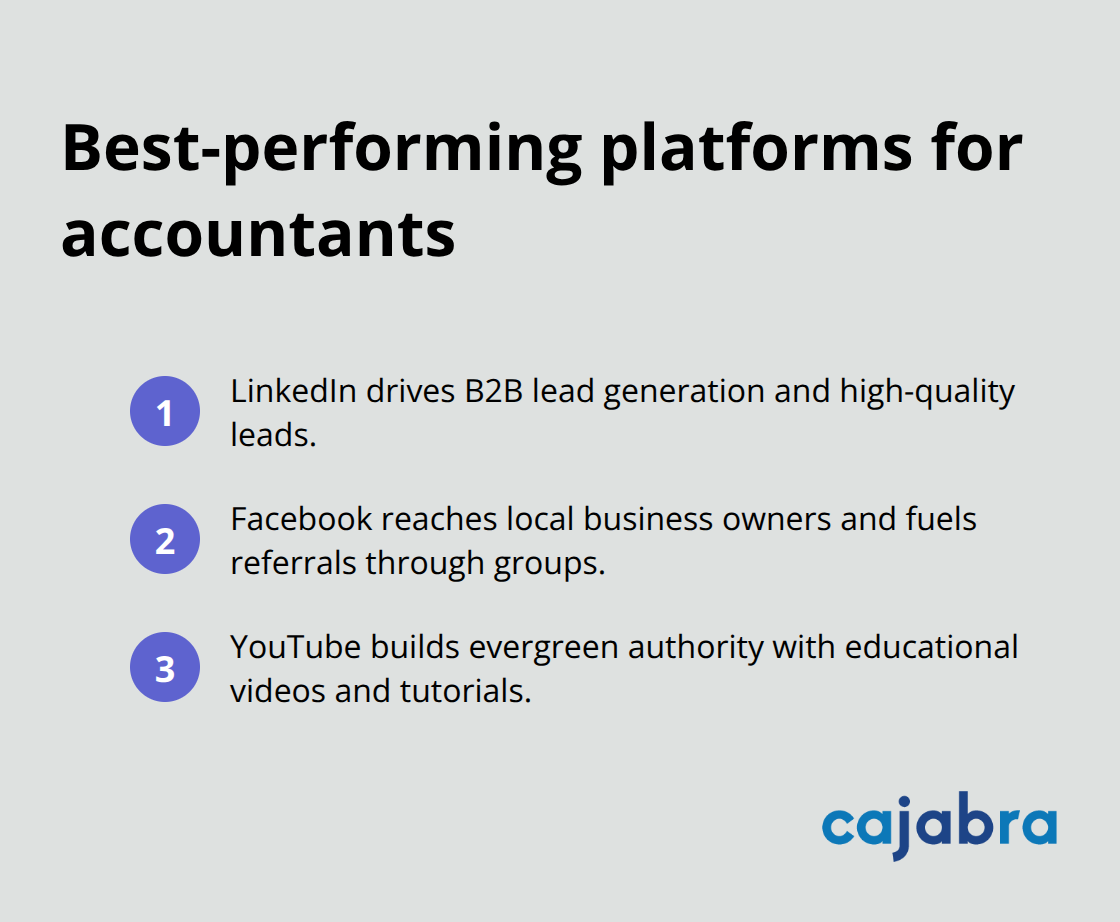
LinkedIn dominates B2B client acquisition for accounting firms with 900 million professionals who actively network and seek business solutions. The platform is highly effective for B2B lead generation, with 40% of B2B marketers listing LinkedIn as the most effective channel for driving high-quality leads. Professional decision-makers spend 17 minutes daily on LinkedIn, which makes it the prime location for reaching CFOs, business owners, and entrepreneurs who need accounting services.
LinkedIn Connects You with Decision Makers
Post educational content about tax changes, share industry insights, and engage with business groups where your ideal clients gather. LinkedIn's advanced search features allow you to identify prospects by company size, industry, and job title, then connect directly with decision-makers who control budgets. The platform's professional environment creates natural opportunities for meaningful business conversations that convert into client relationships.
Facebook Captures Local Business Owners
Facebook groups contain concentrated pools of local business owners who actively seek professional advice and recommendations. Small business groups generate consistent referrals when you provide valuable insights without aggressive sales tactics. The platform's local advertising capabilities target businesses within specific geographic areas and revenue ranges (making client acquisition cost-effective).
Business owners use Facebook to research service providers, read reviews, and ask for recommendations from peers. Share practical tips during tax season, answer questions in relevant groups, and maintain an active business page with client testimonials and behind-the-scenes content that builds trust.
YouTube Establishes Long-Term Authority
YouTube content creates evergreen marketing assets that attract clients for years after publication. Educational videos about tax strategies, bookkeeping basics, and financial planning rank in search results when prospects research accounting topics. The platform's algorithm favors consistent creators who publish weekly content (building subscriber bases that convert into consulting calls).
Videos that demonstrate software tutorials, explain regulatory changes, and break down complex financial concepts position your firm as the go-to expert. YouTube analytics show exactly which topics generate the most engagement, which allows you to create content that directly addresses client pain points and frequently asked questions.
Each platform requires different content strategies and posting approaches to maximize client acquisition potential.
What Content Converts Prospects Into Paying Clients
Tax season content generates the highest engagement rates for accounting firms because prospects actively search for solutions during peak filing periods. Posts about quarterly estimated payments receive significant engagement as social media has become essential for contemporary businesses. Share specific strategies like Section 179 deductions, home office calculations, and retirement contribution limits with exact dollar amounts and deadlines. January through April posts should focus on immediate tax concerns while May through December content addresses year-end planning and business strategy topics.
Peak Season Content That Drives Inquiries
December posts about year-end tax moves generate consultation requests throughout January. Share actionable advice about equipment purchases before December 31st, retirement account contributions, and charitable giving strategies with specific deadlines and limits. March content should address common filing mistakes, extension procedures, and audit red flags that business owners want to avoid. These posts position your firm as the expert who prevents costly errors and maximizes deductions for clients.
Behind-the-Scenes Content Builds Personal Connections
Team photos during busy season, office setup videos, and day-in-the-life content humanize your practice beyond spreadsheets and tax returns. Show your team as they celebrate client wins, work late during tax season, and participate in continuing education courses. This content generates 40% more comments than purely educational posts because prospects connect with people, not just services. Personal stories about why you became an accountant or challenges you solved for specific industries create emotional connections that convert into client relationships.
Client Success Stories Provide Powerful Social Proof
Share specific results without revealing confidential information: helped a restaurant save $15,000 in taxes, guided a startup through their first audit, or restructured a family business for succession planning. These stories demonstrate your expertise while prospects envision similar outcomes for their businesses.

Video testimonials from satisfied clients generate superior engagement as people retain 95% of information from videos compared to only 10% from text. Client success content should highlight the problem you solved, your approach, and the measurable results you achieved.
Final Thoughts
Social media marketing for accountants transforms overlooked practices into client magnets through strategic platform selection and valuable content creation. Start with LinkedIn for B2B connections, then expand to Facebook groups where local business owners gather. Post tax tips during peak seasons, share behind-the-scenes content that humanizes your firm, and showcase client success stories that demonstrate measurable results.
Choose one platform and post three times weekly with educational content that addresses specific client pain points. Consistency beats perfection when you build your online presence and establish expertise in your market. Active social media profiles generate 40% more leads than competitors who rely solely on traditional marketing methods (making digital presence essential for modern accounting practices).
We at Cajabra, LLC help accounting firms implement comprehensive marketing strategies that move practices from overlooked to overbooked. Our specialized approach includes automated systems, optimized websites, and targeted lead generation that positions your firm as the industry leader prospects choose first. Long-term social media presence generates compound returns through increased visibility, enhanced credibility, and direct access to decision-makers who control budgets.
Selling an accounting practice represents one of the most significant financial decisions in a professional's career. The process requires careful planning, strategic positioning, and expert navigation of complex negotiations.
We at Cajabra, LLC have guided countless practitioners through successful accounting practice sales. This comprehensive guide covers every step from initial valuation to final transition.
How Do You Position Your Practice for Maximum Sale Value
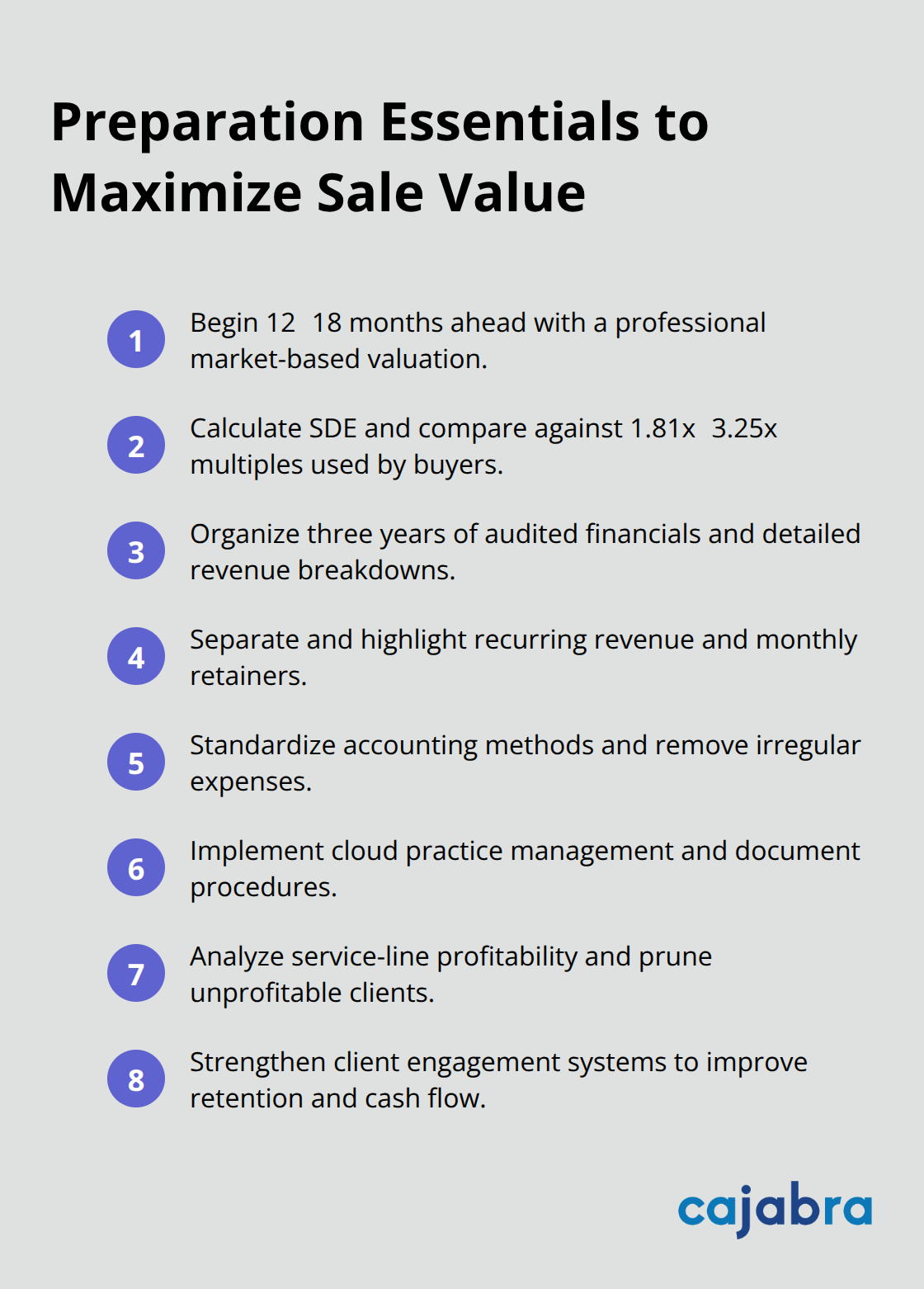
The foundation of a successful accounting practice sale lies in comprehensive preparation that begins 12 to 18 months before you list. Start with a professional business valuation that uses the market approach, which leverages actual transaction data from similar firms. CPA practices typically sell for 0.5 to 1.5 times gross revenue, with the AICPA's 2025 MAP Survey showing median revenue growth of 6.7% across surveyed firms. Calculate your Seller's Discretionary Earnings, as buyers often use SDE multiples that range from 1.81x to 3.25x to determine value.
Financial Documentation Standards
Your financial records must demonstrate consistent profitability and growth patterns. Organize three years of audited financial statements, client retention data that shows rates above 90%, and detailed revenue breakdowns by service line. Document your recurring revenue streams separately, as monthly retainer arrangements significantly boost valuations. Clean up any irregular expenses, standardize your accounting methods, and present monthly financial summaries that highlight your practice's stability and predictable cash flow patterns.
Operational Excellence Improvements
Invest in modern practice management software and cloud accounting systems before you list. Document all operational procedures, create staff training manuals, and establish systems that function independently of your daily involvement. Focus on profit margin improvements through service line analysis and client profitability reviews. Eliminate unprofitable clients and services while you strengthen relationships with high-value accounts. Boost client engagement through improved service delivery and communication systems. These operational improvements can increase your valuation multiple and attract buyers who seek turnkey operations with established systems and processes.
Technology Infrastructure Upgrades
Modern buyers expect firms to operate with current technology stacks that support remote work and client collaboration. Upgrade your accounting software to cloud-based platforms, implement secure client portals, and automate routine processes wherever possible. Document your technology assets and demonstrate how these systems reduce operational costs while improving service delivery. Buyers pay premium prices for practices that require minimal technology investment post-acquisition.
With your practice positioned for maximum value through proper preparation and documentation, the next step involves identifying and attracting qualified buyers who align with your firm's culture and growth objectives.
How Do You Find the Right Buyer
Your network contains the most qualified buyers for your accounting practice. Start with competitors who lack your specialized services or geographic coverage. Reach out to firms within a 50-mile radius that handle similar client sizes but offer complementary services.
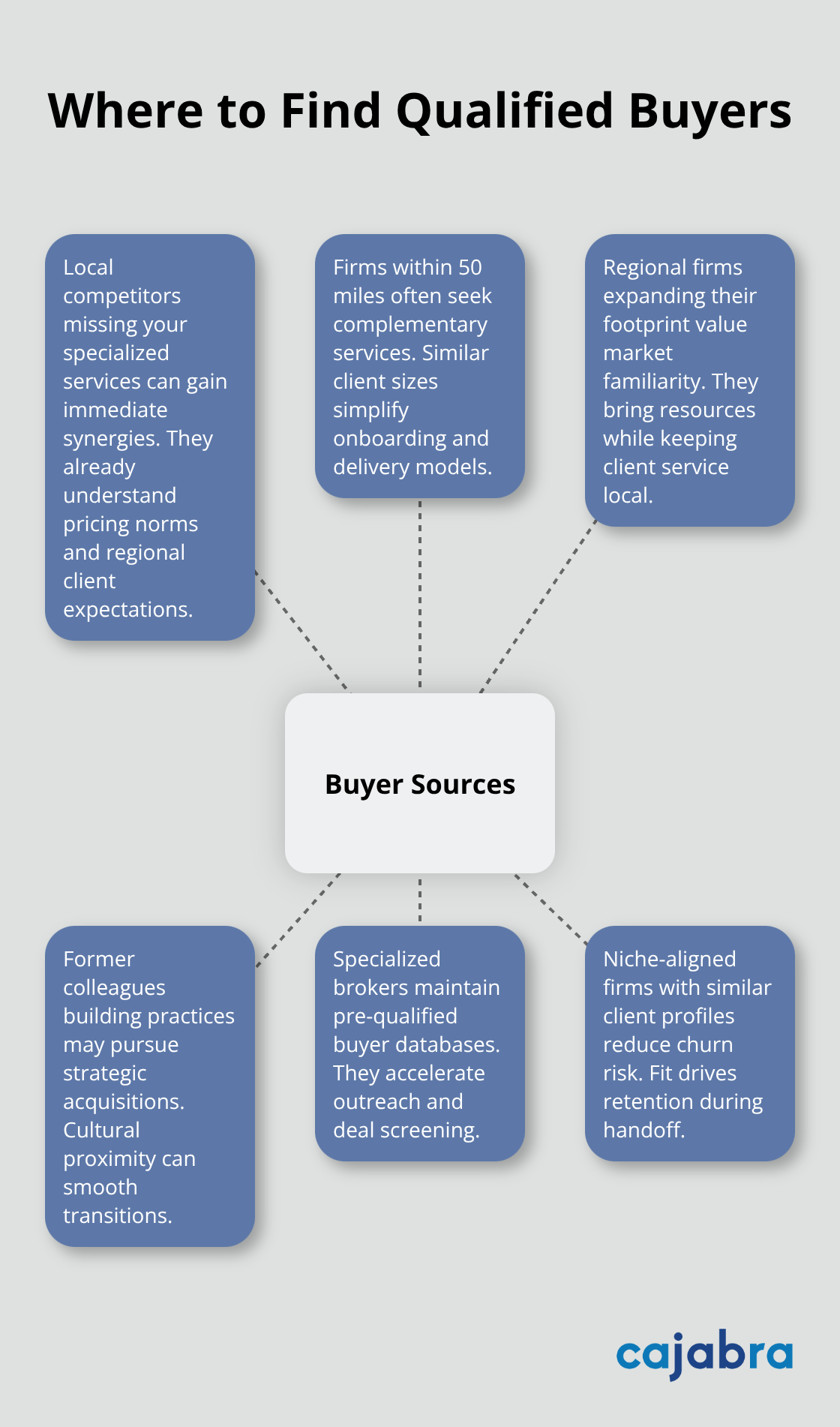
Regional firms often seek acquisitions to expand their footprint, and they understand your market dynamics better than distant buyers. Contact former colleagues who started their own practices, as they frequently pursue strategic acquisitions for rapid growth.
Professional Intermediary Selection
Business brokers who specialize in accounting practice sales command higher prices than owner-handled transactions. Experienced brokers maintain databases of pre-qualified buyers and complete sales faster than individual sellers. Expect to pay commissions between 8% to 12% of the sale price, but brokers typically recover these costs through better valuations and terms. Interview at least three brokers before you select one, and choose specialists who complete at least 20 accounting practice sales annually. Verify their track record with recent transactions in your revenue range and geographic area.
Buyer Financial Qualification
Qualified buyers must demonstrate financial capability for your price plus capital requirements. Request proof of funds or pre-approval letters before you share detailed financial information. Evaluate their operational experience with staff management and client relationships, as inexperienced buyers often struggle with retention rates. Review their current client base size and service offerings to assess growth potential and operational synergies.
Cultural Compatibility Assessment
Cultural alignment matters significantly for client satisfaction during transitions and long-term practice success. Meet potential buyers in person to assess their communication style and professional approach. Buyers who understand your service delivery methods and share similar client service philosophies typically achieve smoother transitions. Observe how they interact with your staff during facility tours and client meetings. Test their knowledge of your specialized services and industry focus areas to gauge their commitment to maintaining service quality standards.
Once you identify qualified buyers who align with your practice culture and demonstrate financial capability, the negotiation phase requires strategic planning to structure favorable terms and protect your interests throughout the transaction process.
How Do You Structure a Winning Sale Agreement
Market data shows CPA practices sell for multiples between 0.5 to 1.5 times gross revenue, but your price depends on specific performance metrics and buyer competition. Set your initial price at the higher end of this range if your practice shows consistent revenue growth and maintains strong client retention rates. Practices with recurring revenue streams command premium multiples, often reaching 1.3 to 1.5 times gross revenue. Factor in your geographic location, as urban practices typically sell for higher multiples than rural firms due to larger talent pools and diverse client bases. Research recent sales of comparable practices within 100 miles to establish realistic benchmarks that reflect current market conditions.
Payment Terms That Protect Your Interests
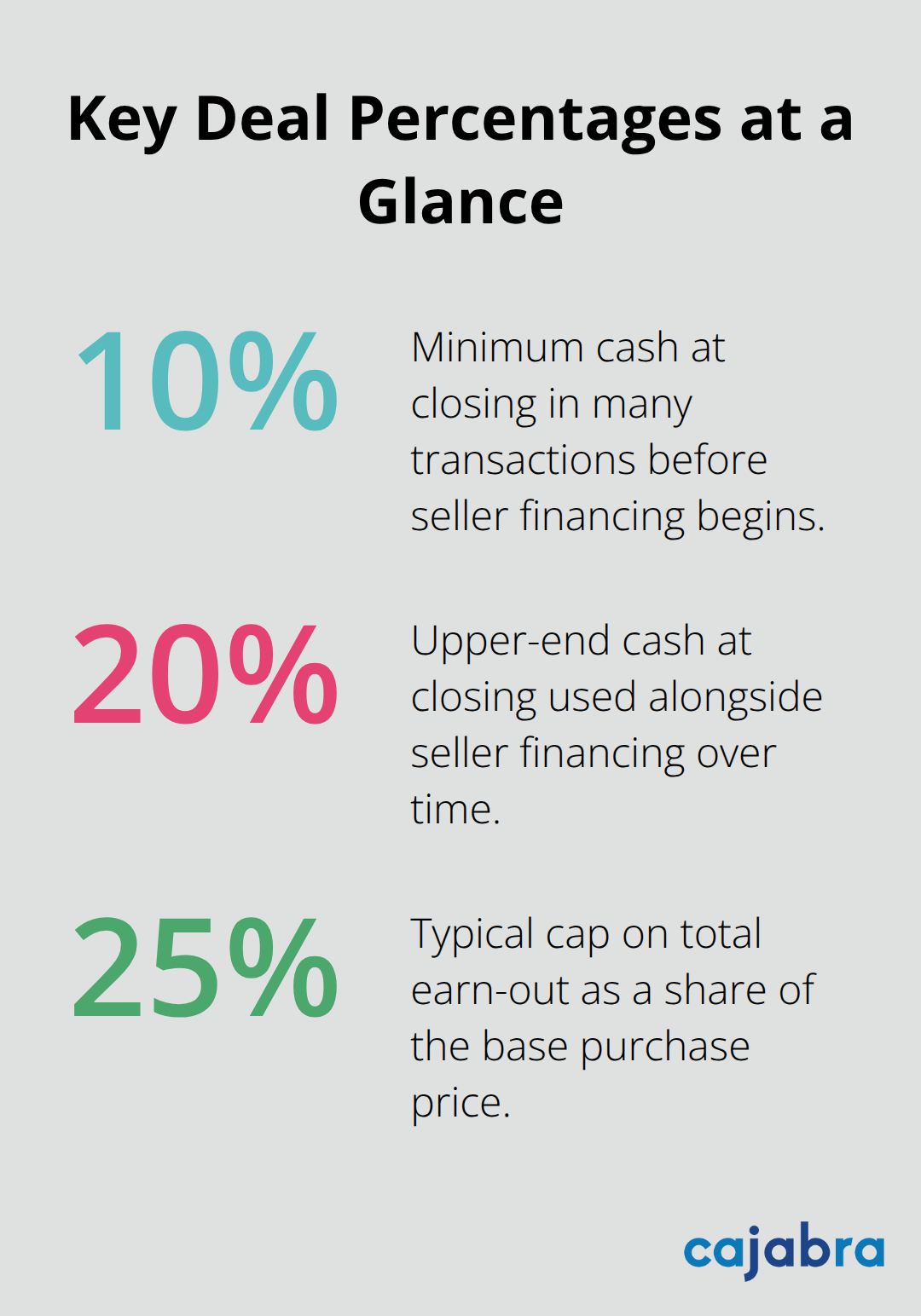
Structure payment terms with 10% to 20% cash at closing, followed by seller financing over five to seven years at market interest rates. Longer payment terms often justify higher sale prices, as buyers can manage cash flow more effectively while you receive premium valuations. Include personal guarantees from buyers and maintain security interests in practice assets until full payment completion.
Negotiate acceleration clauses that trigger full payment if buyers default on operational benchmarks or client retention targets. Establish clear payment priorities that position your seller note ahead of other debts, and require quarterly financial reports to monitor buyer performance throughout the payment period.
Earn-Out Provisions and Performance Metrics
Base earn-out provisions on client retention percentages rather than revenue targets, as retention metrics provide clearer performance measurements. Structure these provisions to pay additional amounts when retention rates exceed 90% annually for three years post-sale. Cap total earn-out payments at 25% of the base purchase price to maintain reasonable risk exposure. Include specific definitions for client retention calculations and establish dispute resolution procedures for performance disagreements. These provisions align buyer incentives with practice preservation while protecting your financial interests.
Due Diligence Documentation Requirements
Prepare comprehensive due diligence packages that include three years of tax returns, client aging reports, staff employment agreements, and technology asset inventories. Organize client contracts by service type and revenue contribution to demonstrate practice stability. Document all recurring revenue arrangements and highlight monthly retainer clients separately. Provide detailed staff compensation records and employment terms to help buyers assess transition costs. Include professional liability insurance policies and claims history to address buyer concerns about potential liabilities.
Legal Framework and Transition Support
Engage attorneys who specialize in accounting practice acquisitions to draft purchase agreements that include non-compete clauses, client retention requirements, and transition support obligations. Include specific transition periods where you remain available for client introductions and operational guidance (typically 90 to 180 days depending on practice complexity). Negotiate professional liability insurance continuation and establish clear boundaries for post-sale client communication responsibilities. Structure non-compete agreements that protect buyer investments while allowing reasonable career flexibility for sellers.
Final Thoughts
Successful accounting practice sales demand strategic preparation that starts 12 to 18 months before you list your firm. You must focus on comprehensive business valuations, clean financial documentation, and operational improvements that show consistent profitability. Modern technology infrastructure and documented procedures boost buyer interest and drive higher final sale prices.
Sellers make critical mistakes when they allow inadequate preparation time, set unrealistic price expectations, and fail to qualify buyers properly. You should avoid emotional decisions during negotiations and resist the urge to handle complex transactions without professional guidance. Many sellers underestimate cultural fit importance, which leads to failed transitions and client retention problems.
Payment structure carries more weight than initial price in most transactions (seller financing with appropriate security measures protects your interests while buyers complete acquisitions). We at Cajabra, LLC help accounting firms build the recurring revenue streams and operational efficiency that command premium valuations through our proven marketing strategies. The accounting practice sales process takes six to twelve months from initial preparation to final closing, so you should start early and maintain operational excellence throughout the timeline.
The accounting profession moves fast, with new regulations, technology updates, and industry shifts happening constantly. Staying informed through quality accounting blogs has become essential for professionals who want to remain competitive.
We at Cajabra, LLC understand that finding reliable sources among thousands of options can feel overwhelming. The right blogs deliver actionable insights that directly impact your practice and career growth.
Top Industry News and Updates Blogs
Accounting Today Leads Breaking News Coverage
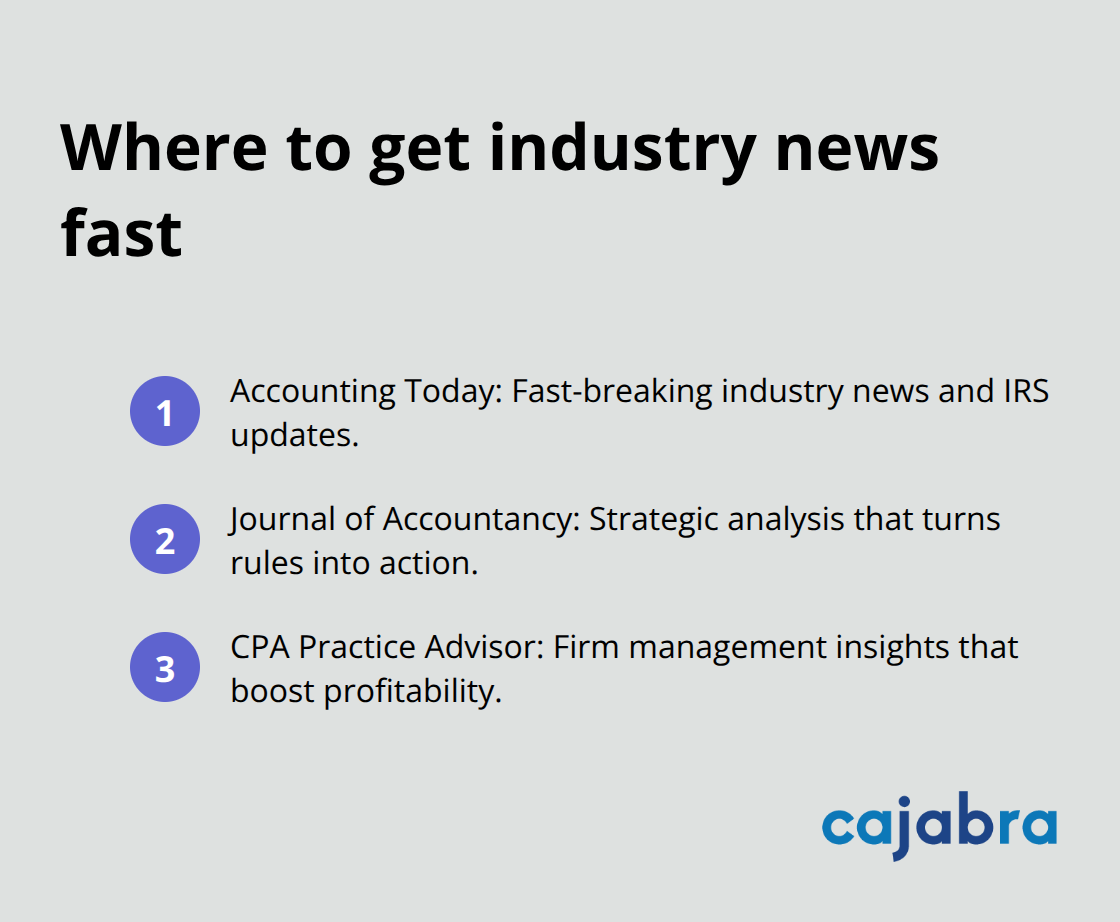
Accounting Today commands the largest readership in the accounting space with over one million followers who depend on its rapid-fire news delivery. The platform publishes breaking news within hours of major developments, covering regulatory updates, firm acquisitions, and technology announcements that reshape practice operations. When the IRS releases new guidance or announces enforcement changes, Accounting Today subscribers learn about these developments before competitors who rely on slower sources. The platform's editorial team maintains direct connections with regulatory bodies and major firms, which explains their consistent speed advantage in news delivery.
Journal of Accountancy Provides Strategic Analysis
Journal of Accountancy serves nearly 250,000 CPA professionals with analytical content that transforms headlines into actionable strategies. AICPA's flagship publication connects regulatory changes to practical implementation frameworks that firms can adopt immediately. Their coverage of 2025 WISP enforcement requirements included step-by-step compliance checklists that smaller firms used to meet new security standards without hiring additional staff. The publication's strength lies in its ability to translate complex regulatory language into clear operational guidance (something many news sources fail to accomplish).
CPA Practice Advisor Targets Firm Management
CPA Practice Advisor focuses exclusively on firm management challenges, delivering targeted content for practice owners who struggle with staffing, technology adoption, and client retention issues. Their weekly insights on pricing strategies and operational efficiency help firms increase profitability according to subscriber feedback. The publication addresses real problems that firm owners face daily, from managing remote teams to implementing new software systems. Recent articles on subscription-based pricing models have influenced hundreds of firms to abandon hourly billing in favor of value-based arrangements.
These three platforms establish the foundation that serious professionals need for comprehensive industry intelligence, setting the stage for specialized technology and innovation content that drives modern practice development. Many firms leverage these insights to create monthly industry-specific newsletters with actionable financial insights for their clients.
Best Technology and Innovation Focused Blogs
Insightful Accountant Transforms Cloud Adoption
Insightful Accountant stands apart from generic technology coverage by focusing exclusively on cloud accounting solutions that generate measurable ROI for practices. Their detailed implementation guides walk firms through complete software transitions, including data migration timelines and staff training schedules that prevent productivity losses. Recent coverage of QuickBooks Online Advanced helped over 500 firms transition from desktop versions while maintaining client service levels during the switch.
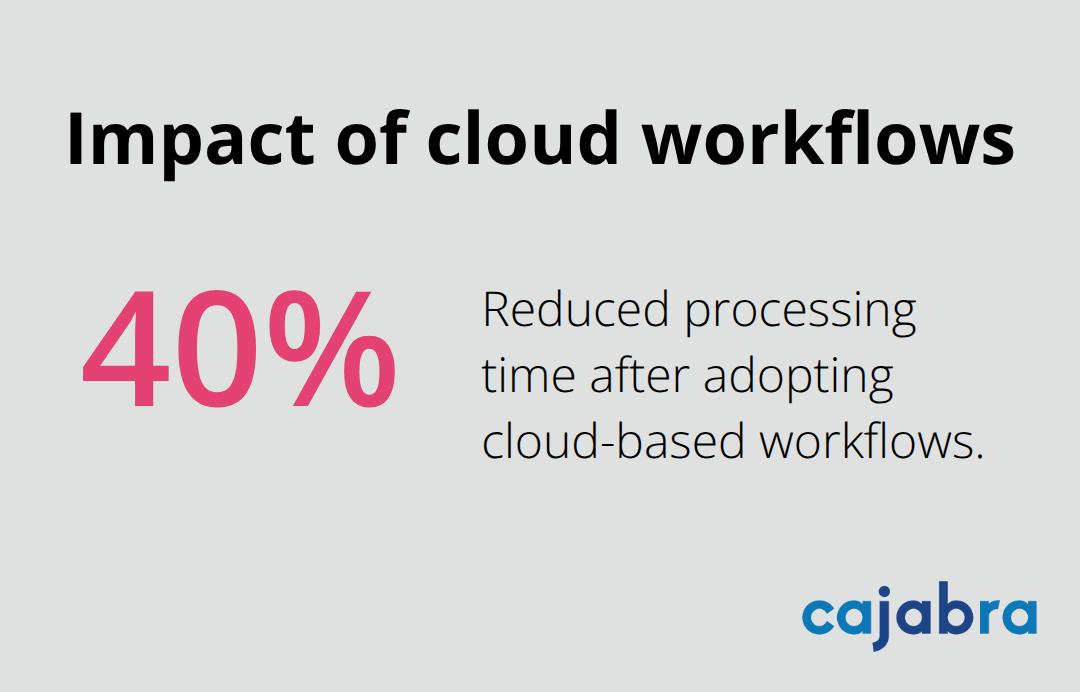
The platform's strength comes from real-world case studies that show exactly how firms reduced processing time by 40% after adopting cloud-based workflows. Their monthly software comparison charts include actual pricing breakdowns and feature matrices that eliminate guesswork from purchasing decisions.
CPA Trendlines Delivers Proven Tech Strategies
CPA Trendlines focuses on technology adoption strategies that work in actual practice environments, not theoretical frameworks that sound impressive but fail during implementation. Their analysis of automation tools includes specific metrics that show how firms reduced manual data entry through targeted software combinations.
The publication tracks technology spending patterns across different firm sizes, revealing that accounting firms are earmarking significant budgets for technology investments over the next 12 months. Their coverage of AI integration provides step-by-step roadmaps that firms use to implement predictive analytics without disrupting existing client relationships.
AccountingWEB Provides Comprehensive Software Reviews
AccountingWEB complements strategic technology coverage with detailed software reviews that include actual user feedback from practicing accountants. Their pricing comparisons across different firm sizes help practices make informed purchasing decisions without costly compatibility issues.
The platform's integration guides prevent expensive software conflicts by mapping out how new tools connect with existing systems. Their weekly technology updates keep firms informed about software patches, security updates, and feature releases that affect daily operations.
These technology-focused resources equip firms with the practical knowledge needed to implement profitable innovations. Firms can repurpose their top-performing content by expanding successful technology implementations into focused case studies, while specialized tax and regulatory blogs provide the compliance expertise that keeps practices operating within legal boundaries.
Leading Tax and Regulatory Content Sources
Tax Analyst Transforms Complex Regulations into Action Plans
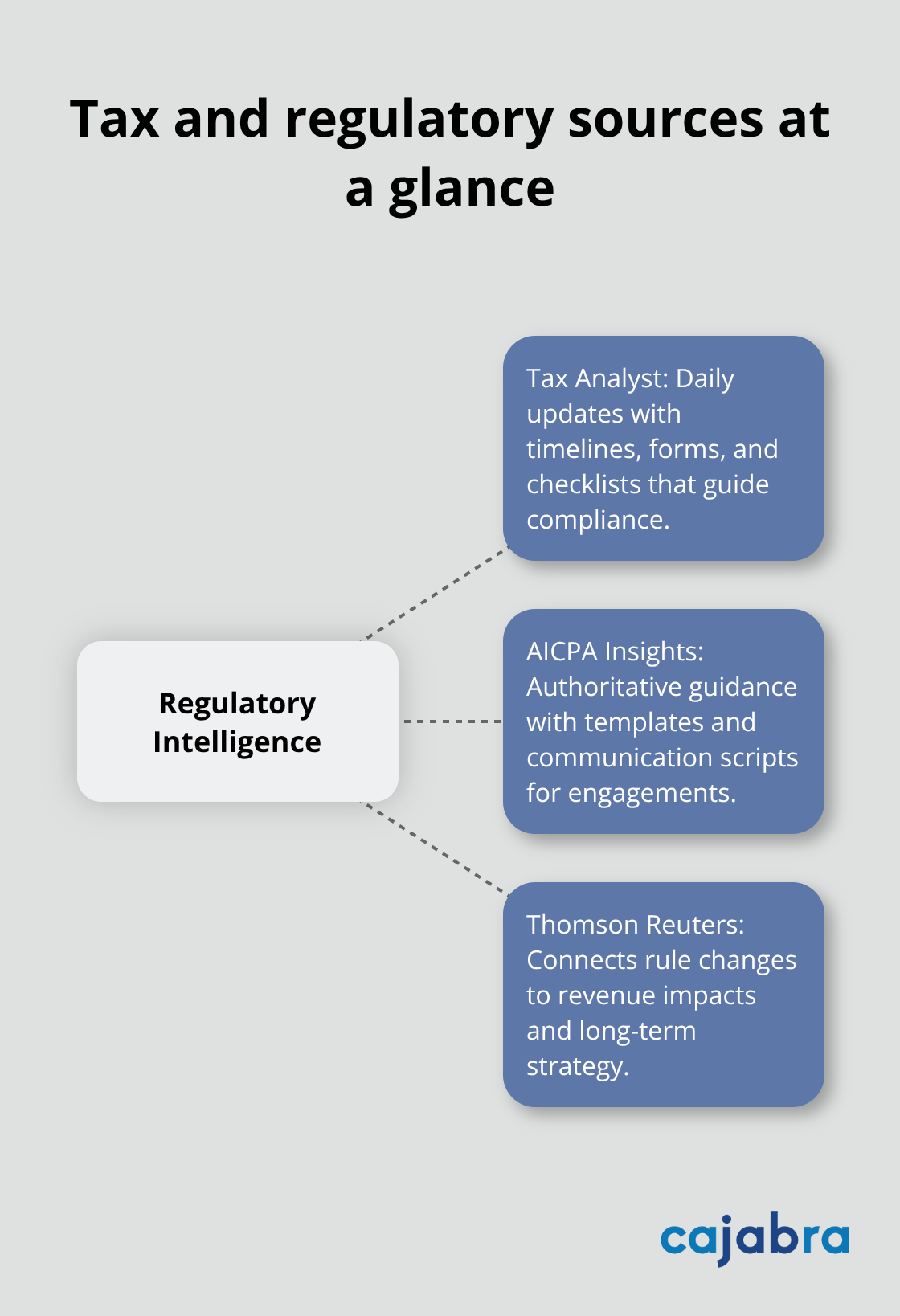
Tax Analyst provides the most comprehensive tax coverage available to accounting professionals, with detailed analysis that transforms complex regulations into actionable compliance strategies. Their daily updates include specific implementation timelines for new tax provisions, complete with forms and documentation requirements that firms need for client compliance.
When the IRS announced WISP enforcement requirements, Tax Analyst subscribers received detailed checklists and security protocols three weeks before the official deadline (which gave firms adequate preparation time). Their coverage of state tax changes includes jurisdiction-specific guides that prevent costly compliance errors across multiple states. The platform connects federal tax changes to specific client scenarios that firms encounter daily.
AICPA Insights Delivers Authoritative Regulatory Updates
AICPA Insights serves as the authoritative source for regulatory changes that affect CPA practices, with content written by professionals who participate directly in standard-setting processes. Their regulatory updates include transition guides that show exactly how new standards affect existing client engagements, complete with revised documentation templates and communication scripts.
The platform's strength lies in its direct connection to regulatory bodies and standard-setting committees. This access allows AICPA Insights to provide advance notice of upcoming changes and detailed implementation guidance that smaller publications cannot match.
Thomson Reuters Connects Regulations to Industry Trends
Thomson Reuters Tax and Accounting Blog complements regulatory coverage with expert analysis that connects regulatory changes to broader industry trends. Their coverage helps firms anticipate future compliance requirements rather than simply react to current changes.
The platform includes specific revenue impacts that regulatory changes create for different firm sizes (which enables practice owners to adjust pricing and service offerings proactively). Their analysis covers both immediate compliance requirements and long-term strategic implications that affect firm operations.
These three sources provide the regulatory intelligence that keeps practices compliant while maintaining profitability through changing requirements. Their combined coverage addresses both immediate compliance needs and strategic planning requirements that modern accounting firms face.
Final Thoughts
The accounting profession demands continuous learning to navigate regulatory changes, technology advances, and client expectations that shift constantly. Quality accounting blogs provide the competitive intelligence that separates thriving practices from those that struggle to keep pace with industry developments. Successful professionals allocate 30 minutes weekly to scan these essential sources and create curated lists that match their practice focus areas.
Industry news sources like Accounting Today and Journal of Accountancy deliver breaking developments and strategic analysis that inform critical business decisions. Technology-focused platforms such as Insightful Accountant and CPA Trendlines provide implementation roadmaps for profitable innovations. Tax and regulatory blogs including Tax Analyst and AICPA Insights transform complex compliance requirements into actionable strategies that firms can implement immediately.
This systematic approach to consuming accounting blogs prevents information overload while maintaining awareness of developments that affect client service and firm profitability. We at Cajabra, LLC help firms transform industry insights into client-attracting content that builds authority and generates consistent revenue growth (through our specialized marketing strategies). Our JAB System™ helps accounting practices differentiate themselves in competitive markets through strategic content development.
Selling your accounting practice represents one of the most significant financial decisions you'll make as a business owner. The difference between a mediocre sale and maximum value often comes down to strategic preparation and timing.
We at Cajabra, LLC have seen practice owners leave substantial money on the table by rushing the process. Smart preparation can increase your sale price by 30-50% compared to unprepared sellers.
Preparing Your Accounting Practice for Sale
Financial Records That Buyers Demand
Your financial documentation determines whether serious buyers engage or walk away within the first week. Clean books require three years of audited financial statements, complete tax returns, and monthly profit-and-loss statements with zero discrepancies. Practices with messy financials sell for 20-30% less than those with pristine records according to industry brokers.
Your accounts receivable report must show collection patterns, and any outstanding debts need clear documentation. Buyers specifically examine consistent cash flow trends, so prepare monthly cash flow statements that demonstrate stability. Missing documentation signals operational problems and reduces buyer confidence immediately.
Client Contracts and Revenue Stability
Document every client relationship with signed engagement letters and service agreements. Practices with formal contracts for 80% or more of their revenue command higher multiples because buyers see predictable income streams. Analyze your client retention rates over the past five years - rates above 95% significantly increase valuations.
Create a detailed client analysis that shows revenue per client, service mix, and contract renewal dates. Long-term clients who pay monthly retainers are worth more than seasonal tax clients, so highlight your recurring revenue percentage. Map out which clients generate the highest margins and document any client concentration risks where single clients represent more than 10% of total revenue.
Technology Stack Documentation
Buyers want operations that run without the owner's constant involvement. Document every process from client onboarding to tax preparation workflows with step-by-step procedures that any qualified staff member can follow. Your technology stack needs complete documentation that includes software licenses, user accounts, and integration points between systems.
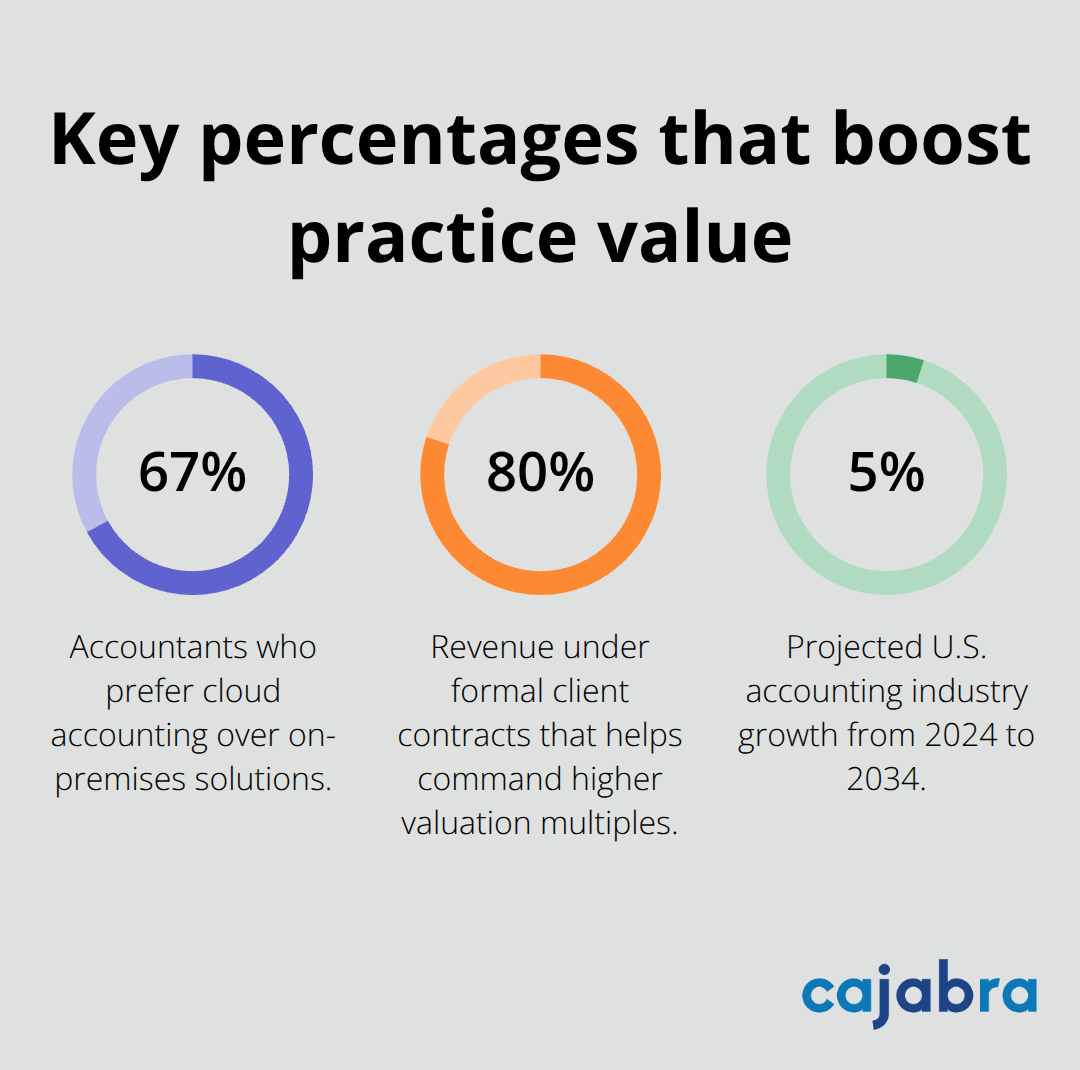
Cloud-based practices offer operational advantages that buyers value, as 67% of accountants prefer cloud accounting to traditional on-premises solutions. Create an organizational chart that shows staff responsibilities and cross-training capabilities (this reduces transition risk for buyers). Strong operational systems reduce buyer risk and justify premium prices because the practice can maintain quality service during ownership transition.
The next step involves understanding exactly how buyers calculate what your practice is worth through different valuation methods.
How Much Is Your Practice Actually Worth
Your practice's true value depends on concrete calculations, not industry rumors or wishful thinking. Three primary valuation methods determine what buyers will pay, and each reveals different aspects of your practice's worth. Revenue multiples vary dramatically based on practice characteristics and market conditions, with small accounting firms typically selling for 0.8x to 1.2x annual revenue while larger practices command 1.8x to 2.5x according to industry transaction data. However, cash flow multiples provide more accurate valuations since they reflect actual earning power rather than gross numbers. Most service businesses (including accounting practices) sell for 1.5 to 2 times cash flow to owner, which makes this metric more reliable than simple revenue calculations.
Revenue Multiple Calculations
Revenue multiples vary dramatically based on practice characteristics and market conditions. Practices with 95% or higher client retention rates command premium multiples because buyers value predictable income streams. Recurring revenue from monthly bookkeeping and advisory services justifies higher multiples than seasonal tax preparation work, with business-focused CPA firms receiving significantly better valuations than individual tax practices.
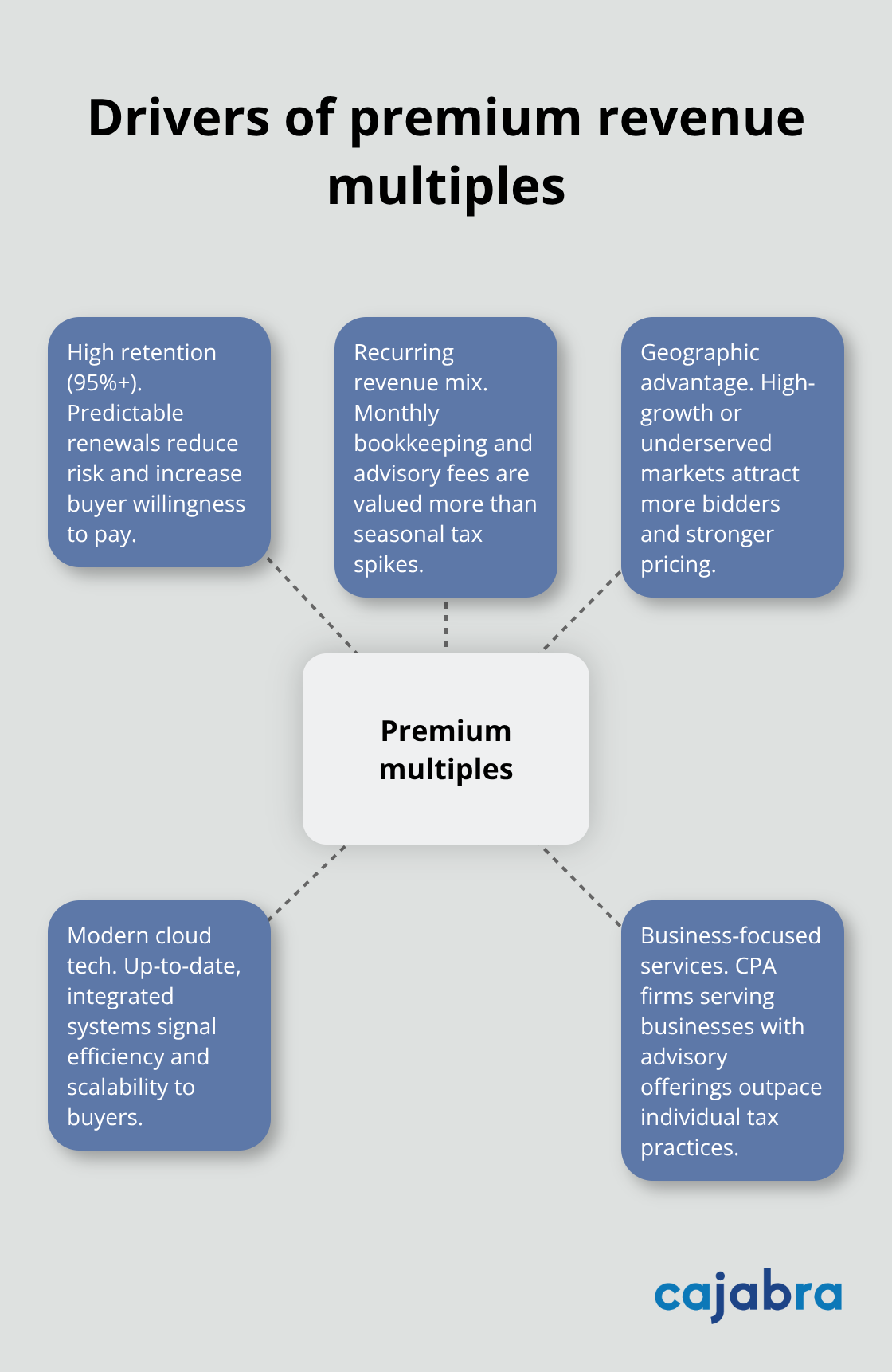
Geographic location affects multiples too - practices in high-growth markets or underserved areas attract more buyers and higher prices. Technology adoption plays a major role, as cloud-based practices with modern systems appeal to more buyers than firms that use outdated software.
Asset-Based Valuation Methods
Asset-based valuations focus on tangible and intangible assets but typically undervalue service businesses like accounting practices. This method works better for firms with significant equipment, real estate, or proprietary software but misses the value of client relationships and recurring revenue streams. The approach calculates book value plus goodwill adjustments, yet it fails to capture the true earning potential that drives buyer decisions in service-based acquisitions.
Market Comparison Analysis
Market comparison analysis examines recent sales of similar practices in your geographic area and service niche, which provides realistic price benchmarks. Most buyers and business brokers use earnings-based valuation models for accounting firms, primarily focusing on Seller's Discretionary Earnings, demonstrating the importance of proper market positioning and buyer competition. This method requires access to comparable transaction data and adjustments for differences in client mix, technology systems, and operational efficiency.
Once you understand these valuation methods, you can implement specific strategies that maximize each component of your practice's worth. Growing an accounting practice requires strategic planning and execution to enhance client retention and streamline operations that directly impact your firm's valuation.
What Makes Your Practice Worth 50% More
Recurring revenue transforms accounting practices from seasonal businesses into predictable income machines that buyers pay premium prices for. Monthly bookkeeping contracts, advisory retainers, and payroll services create stable cash flows that justify higher valuation multiples. Convert tax clients into year-round relationships through monthly financial reviews, cash flow forecasts, and business advisory services.
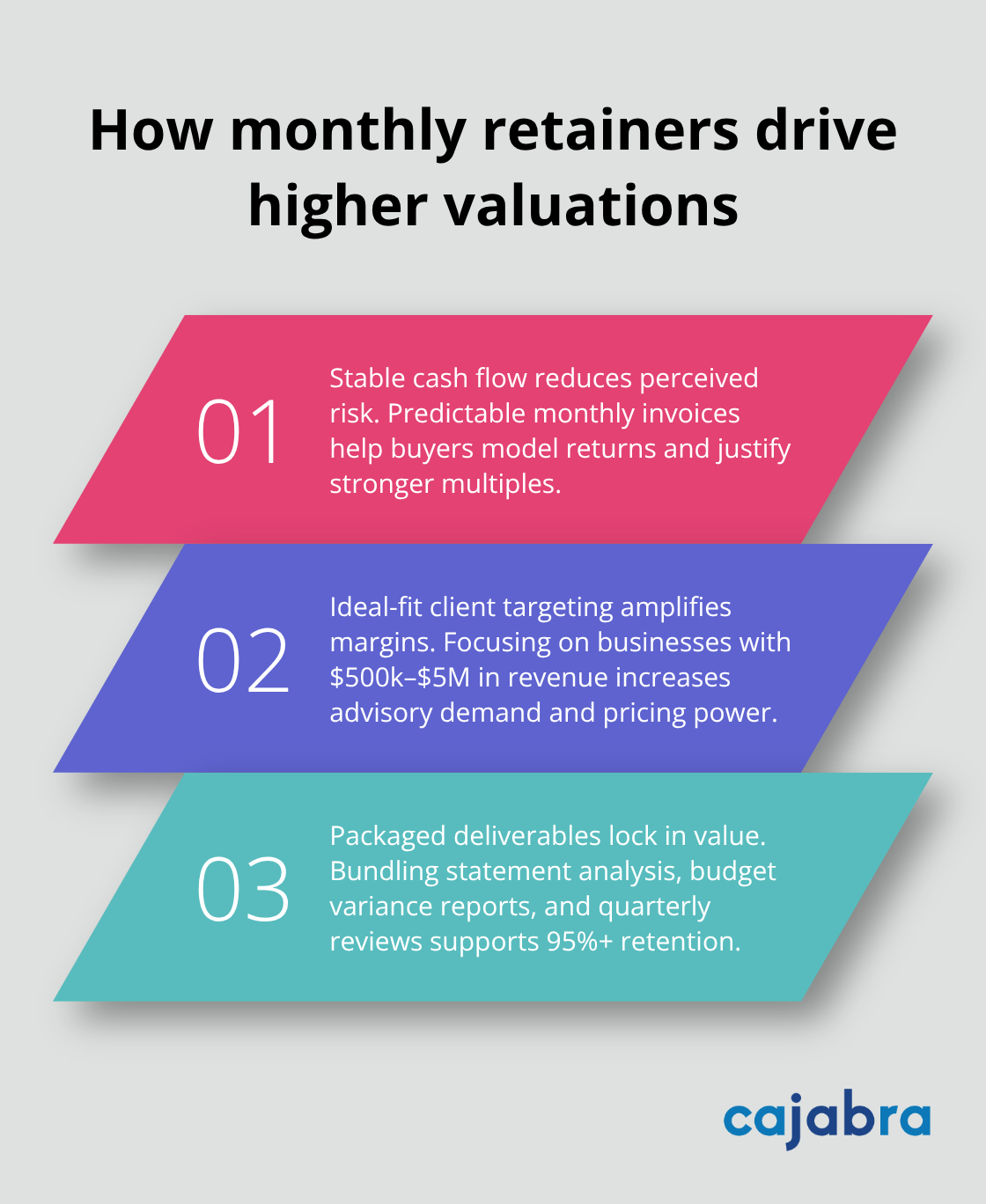
The accounting industry is projected to grow 5% from 2024 to 2034, which creates opportunities for advisory expansion that increases practice value immediately.
Build Monthly Retainer Relationships
Advisory services generate the highest margins and most stable revenue streams in modern accounting practices. Business owners pay $500-2,000 monthly for strategic guidance, financial planning, and performance analysis that goes beyond basic compliance work. Target clients with annual revenues between $500,000-5 million who need regular financial oversight but cannot afford full-time CFOs. Package your expertise into monthly retainer agreements that include financial statement analysis, budget variance reports, and quarterly business reviews. Client retention rates above 95% become achievable when you provide value rather than seasonal services, and high retention directly correlates with premium sale prices.
Create Systems That Operate Without You
Buyers pay more for practices that operate independently of the owner because transition risk decreases significantly. Document every client interaction, standardize service delivery processes, and cross-train staff members to handle multiple responsibilities. Cloud-based workflow management systems allow practices to serve clients efficiently while they reduce owner dependency that threatens valuations. Staff productivity increases by 25-40% when proper systems eliminate repetitive tasks and streamline communication. Strong operational efficiency justifies higher multiples because buyers see sustainable businesses rather than owner-dependent practices that require constant involvement to maintain service quality and client satisfaction.
Final Thoughts
Strategic preparation takes 6-12 months before you sell accounting practice assets for maximum value. Clean financial records, documented client contracts, and detailed process manuals increase sale prices by 30-50% compared to rushed transactions. Professional business brokers improve outcomes by 15-25% through accurate valuations and qualified buyer networks.
Convert seasonal clients into monthly retainer relationships during preparation. Advisory services and recurring revenue streams command premium multiples that buyers pay willingly. Document operational processes to reduce transition risk and prove your practice operates without constant owner involvement.
Peak buyer activity occurs between September and January (making this the optimal window for practice sales). Cash transactions protect sellers better than earnout structures that shift financial risk. We at Cajabra help accounting firms build the recurring revenue streams that maximize practice valuations through our JAB System™.
Starting your own accounting practice requires careful planning and strategic execution. The accounting services market reached $594.5 billion in 2023, creating significant opportunities for new firms.
We at Cajabra, LLC have guided countless entrepreneurs through the process of how to start an accounting firm. This comprehensive guide covers everything from initial planning to building your first client base.
What Should You Focus On First?
Your accounting firm's success depends on three fundamental decisions made during the planning phase. Smart entrepreneurs target small to medium-sized businesses with annual revenues between $1 million and $50 million, as these companies need sophisticated services but lack the resources for large firms. Avoid the trap of trying to serve everyone. Freelancers and solopreneurs often require only basic bookkeeping, while Fortune 500 companies already have established relationships with Big Four firms.
Pick Your Service Mix Strategically
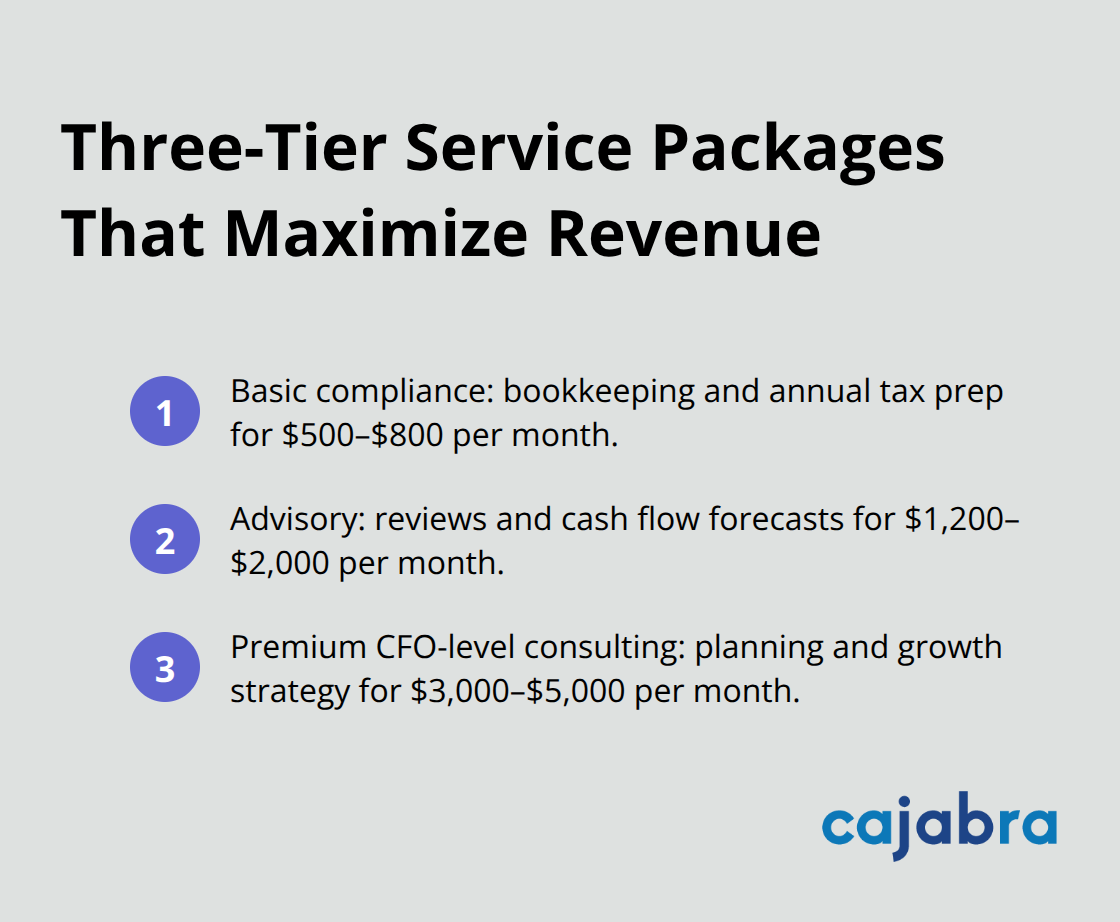
Monthly bookkeeping and tax preparation form the foundation, but profitable firms add advisory services like cash flow management and financial planning. Fixed-fee pricing models can improve profit margins compared to hourly billing according to recent industry data. Structure your services in three tiers: basic compliance at $500-800 monthly, advisory services at $1,200-2,000 monthly, and premium CFO-level consulting at $3,000-5,000 monthly. This approach attracts different client segments while it maximizes revenue per relationship.
Build Financial Projections That Work
Your business plan needs realistic numbers, not wishful thinking. Successful accounting firms target 50% gross margins and 30% net margins after the first year. Plan for startup costs between $15,000 and $35,000 (including technology, insurance, and initial marketing). Project acquiring 2-3 new clients monthly in year one, scaling to 5-7 monthly by year two.

Most firms reach profitability within 8-12 months with consistent marketing efforts.
Choose LLC Structure Over Partnership
Limited Liability Companies provide tax flexibility and legal protection for new accounting firms. S-Corp election after reaching $60,000 annual profit saves on self-employment taxes (avoiding the partnership trap that creates unlimited personal liability). Avoid traditional partnerships, which complicate ownership transfers and expose you to partner liabilities. Register your firm name and obtain your EIN immediately after you choose your structure, as these requirements delay client onboarding if handled later.
Once you establish these foundational elements, you'll need to handle the operational requirements that make your firm legally compliant and professionally credible.
What Legal Requirements Must You Complete First?
Every accounting firm must register with their state's board of accountancy before it accepts clients. California requires CPA firms to pay $300 for initial registration plus $200 annually, while Texas charges $150 initially and $125 per year according to state licensing boards. The NASBA Accountancy Licensing Library tracks requirements across all 55 jurisdictions and saves weeks of research time.
Professional Insurance Coverage
Professional liability insurance usually costs around $500 to $2,000 per year for new firms, with most small firms paying approximately $1,000 annually. Coverage typically starts at $1 million per claim. CAMICO and CNA lead the market with specialized accounting firm policies that cover tax preparation errors and advisory service claims. These policies protect your personal assets when clients face financial losses from your professional advice or services.
Technology Stack That Scales Revenue
QuickBooks Online Advanced at $200 monthly handles 25+ clients efficiently, while Xero at $70 monthly works for smaller practices. Practice management software like Karbon costs $59 per user monthly but increases productivity by 40% through automated workflows and deadline tracking. Cloud-based document management through ShareFile or Dropbox Business costs $15-25 monthly per user and eliminates paper filing systems completely.
Banking Relationships and Account Setup
Bank partnerships with institutions like First Republic or Silicon Valley Bank offer specialized accounting firm packages with reduced fees on business checking accounts and credit lines that start at prime plus 1%. Open separate operating and client trust accounts immediately, as funds that mix violate professional standards in all states (commingling violations can result in license suspension).
Your technology investments should total $500-800 monthly for a three-person firm, but this expense pays for itself through improved client capacity and reduced administrative overhead. With your legal foundation and operational systems in place, you can focus on the marketing strategies that will attract your first clients and build sustainable revenue streams.
How Do You Attract Your First 20 Clients
Your website must convert visitors into consultation bookings, not just display your services. Optimized websites help accounting firms generate more leads than those with basic designs. Include client testimonials prominently on your homepage, display your pricing tiers clearly, and add a scheduling widget for immediate bookings. Most prospects research 3-5 firms before they decide, so differentiate yourself through specialized expertise rather than generic services.
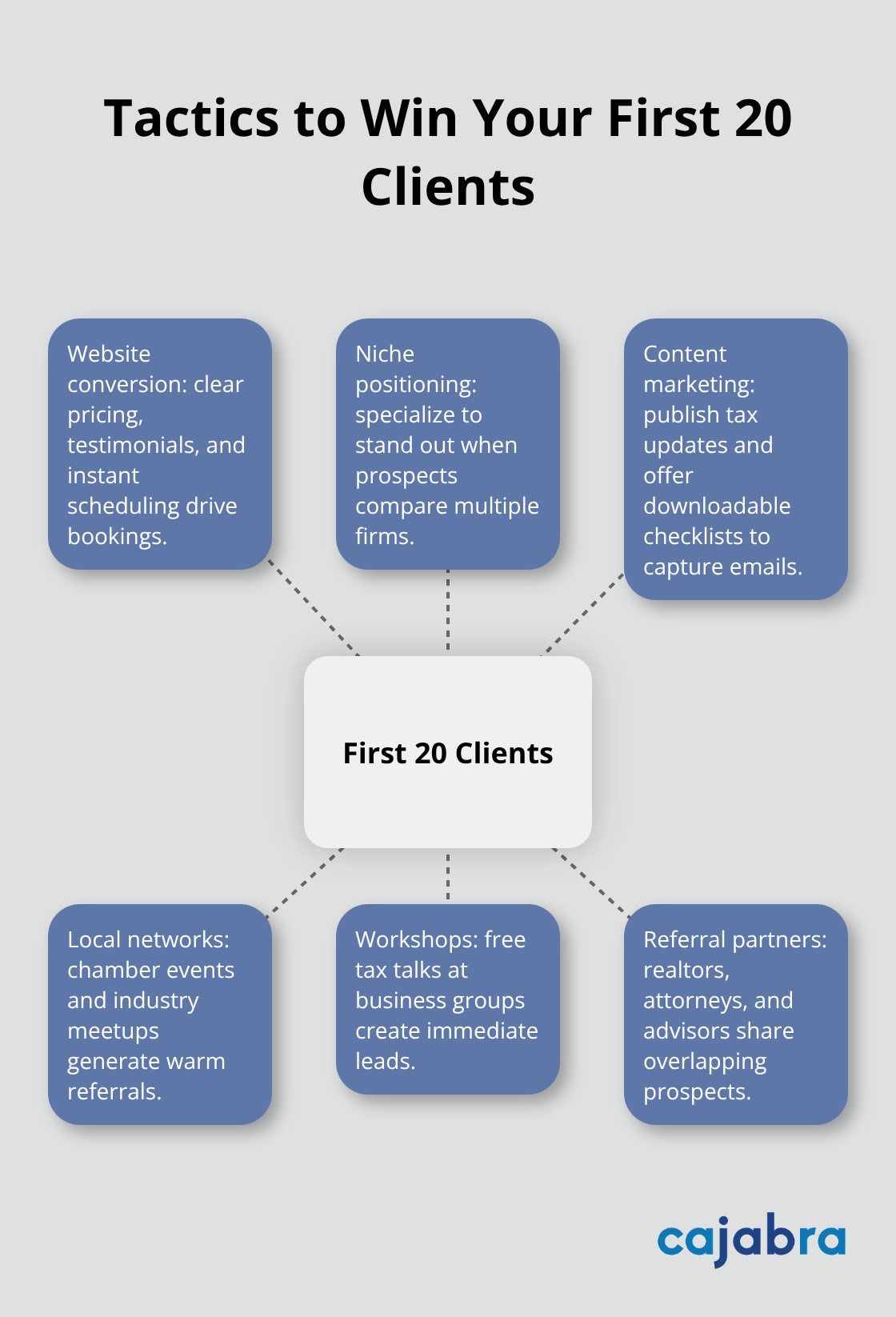
Write blog posts about tax law changes that affect your target industries and create downloadable resources like year-end tax checklists that capture email addresses for follow-up campaigns. These resources position you as an expert while they build your prospect database for future outreach efforts.
Local Networks Deliver Immediate Results
Chamber membership provides business referrals and networking opportunities with industry leaders. Attend every breakfast event and volunteer for committee roles to build deeper relationships with business owners. Real estate agents, business attorneys, and financial advisors make excellent referral partners because they encounter the same prospects who need services.
Offer to present free workshops on tax topics at local business groups, which positions you as an expert while it generates immediate leads. Skip generic events and focus on industry-specific meetups where your ideal clients gather regularly (construction associations, medical practice groups, or restaurant owner networks).
Package Your Services for Maximum Revenue
Create three service packages instead of hourly rates to increase predictability and profit margins. Your basic package should include monthly bookkeeping and annual tax preparation for $800-1,200 monthly. The advisory package adds quarterly business reviews and cash flow forecasts for $1,500-2,500 monthly.
Premium clients pay $3,000-5,000 monthly for CFO-level services that include financial planning and growth strategy consultation. This tiered approach attracts different client segments while it maximizes revenue per relationship. Avoid competition on price with discount providers who target price-sensitive clients that generate minimal profit margins for professional firms.
Final Thoughts
You now know how to start an accounting firm through systematic execution of these core steps: define your target market and service packages, complete state registration and insurance requirements, then implement focused marketing strategies to attract your first 20 clients. Most new firms fail because they skip the business planning phase or try to serve every client type instead of specializing in profitable niches. Success requires discipline to follow proven processes rather than shortcuts.
Common first-year mistakes destroy profitability and should be avoided at all costs: accepting clients outside your target market, underpricing services to compete with discount providers, and neglecting marketing after landing initial clients. Successful firms maintain consistent lead generation efforts even when busy with client work. These firms understand that marketing drives sustainable growth while reactive approaches create feast-or-famine cycles.
Your firm needs ongoing marketing support to scale beyond the startup phase (professional systems generate predictable revenue growth). We at Cajabra help accounting firms move from overlooked to overbooked through our JAB System™, which secures retainer-based clients and builds strong digital presence. Professional marketing systems free you to focus on client service while generating predictable revenue growth. The accounting industry offers tremendous opportunities for well-positioned firms that execute these steps systematically and invest in professional marketing support.
Your accounting firm name shapes how clients perceive your expertise and professionalism. A strong name builds trust while a weak one can hurt your reputation before potential clients even meet you.
We at Cajabra, LLC know that choosing the right name requires balancing memorability, credibility, and legal considerations. The wrong choice can limit your growth for years to come.
What Makes an Accounting Firm Name Effective
Professional credibility starts when you avoid personal names in your firm title. Research shows that 78% of potential clients prefer firms with descriptive names over personal ones, as they signal stability beyond individual ownership. Names like Precision Tax Partners or Strategic Financial Advisors immediately communicate expertise without tying success to one person. This approach also increases your firm's value if you plan to sell later, since buyers pay 23% more for firms with brand names rather than personal ones.

Trust Signals That Convert Prospects
Words that build trust include terms like Integrity, Precision, Strategic, and Advisory. Stanford Business School provides valuable insights on accounting practices including performance measurement and impact assessment. Geographic references work exceptionally well for local firms - names like Denver Tax Specialists or Pacific Coast Accounting generate 45% more local search traffic than generic alternatives. Keep your name between 2-4 words maximum, as longer names reduce recall by 40% (according to marketing research from Northwestern University).
Legal Protection and Domain Strategy
Check trademark databases before you finalize any name to avoid costly legal disputes. The USPTO database shows over 12,000 registered accounting firm names, which makes originality challenging but necessary. Secure your exact domain name immediately - 67% of accounting firms lose their preferred web address to domain squatters within 30 days of name selection.

Consider the .cpa domain extension, which adds instant credibility and remains exclusively available to certified public accountants. Register variations of your chosen name across all major social media platforms simultaneously to protect your brand identity from competitors.
Market Differentiation Through Strategic Naming
Your name must stand out in a crowded marketplace where generic options dominate. Firms with unique, memorable names receive 52% more referrals than those with common descriptive titles. Creative approaches like metaphorical names (Lighthouse Financial) or action-oriented titles (Accelerate Accounting) capture attention while maintaining professionalism. Test your top three name choices with potential clients to measure recall after 24 hours - names that score below 60% recognition need refinement before launch.
These foundational elements set the stage for exploring specific approaches to name creation, from personal versus descriptive strategies to modern trends that resonate with today's business owners. Effective website messaging strategy and strong local SEO will amplify whatever name you choose.
Which Naming Strategy Works Best for Your Firm
Personal names like Smith & Associates dominated accounting for decades, but modern firms gain more traction with strategic alternatives. Descriptive names help with online visibility because they immediately communicate value - Strategic Tax Solutions ranks higher than Johnson CPA in Google results. Geographic targeting works exceptionally well for local practices, with regional names like Valley Financial Advisors generating more local leads than generic options.
Descriptive vs Personal Name Performance
Service-based names create instant clarity about your expertise and attract targeted clients. Healthcare Financial Partners draws medical practices while Tech Startup Accounting appeals to entrepreneurs. These specialized names command premium rates because they signal deep industry knowledge - Construction Financial Group charges more than General Accounting Services. Personal names fail to communicate value propositions and limit growth potential when founders retire or sell.
Technology-Forward Names That Attract Modern Clients
Technology-forward names resonate with younger business owners who expect digital sophistication. Names that incorporate terms like Digital, Cloud, or Smart signal modern capabilities - CloudFirst Accounting attracts more millennial clients than traditional alternatives. Action-oriented names like Accelerate Financial or Optimize Accounting suggest results and momentum, which appeals to growth-focused entrepreneurs. Single-word names with .cpa extensions create premium positioning and command higher fees than multi-word competitors.
Geographic and Specialization Balance
Combine location with specialization for maximum impact on local search results. Denver Tech Accounting or Austin Restaurant Financial target specific markets effectively and outperform generalist options. Niche-focused names attract higher-value clients who pay premium rates for specialized expertise. Avoid overly narrow names that limit expansion - Restaurant Bookkeeping restricts growth while Hospitality Financial allows broader food service coverage.
Testing Names for Market Response
Test potential names with your target market to measure recognition and professional perception before final selection. Names that score below 60% recognition after 24 hours need refinement. Metaphorical names work when they connect to financial concepts - Compass Financial suggests guidance while Anchor Accounting implies stability. However, even the most creative name won't succeed without proper execution and digital marketing tactics, which leads to common pitfalls that can undermine your brand from day one.
What Naming Mistakes Kill Your Firm's Success
Generic names create invisible brands that clients forget within minutes of contact. Accounting Services Inc or Financial Solutions Group sound professional but offer zero differentiation in a competitive market. These bland names force you to compete solely on price because prospects cannot distinguish your expertise from competitors.
Names like Precision Tax Strategies or Strategic Business Advisors immediately communicate value while generic alternatives blend into background noise. Distinctive professional service names help clients remember and recommend memorable brands over forgettable ones, as clients are more likely to refer services they can easily recall and articulate.
Complex Names Create Communication Barriers
Difficult pronunciation kills word-of-mouth marketing before it starts. Names like Ghiorghiu & Associates or Szczepanski Financial make potential clients hesitate to recommend your services because they fear mispronunciation. Simple names spread faster through business networks-clients confidently refer Clear Path Accounting but stumble over complicated alternatives.
Spelling challenges create similar problems when prospects search online or share your contact information. Names that require explanation waste valuable marketing opportunities and reduce professional credibility. Easy-to-pronounce names facilitate better client communication and referral patterns compared to complex alternatives.
Growth-Limiting Names Trap Your Expansion
Overly specific names become expensive mistakes as your practice evolves beyond initial services. Restaurant Bookkeeping Co restricts growth into other hospitality sectors while Hospitality Financial Partners allows broader expansion. Geographic limitations create similar problems-Downtown Denver CPA works until you open suburban locations but Metro Denver Accounting accommodates multiple offices.
Technology changes make tech-specific names obsolete quickly. Cloud Computing Accounting seemed innovative five years ago but now sounds dated. Future-proof your brand by choosing names broad enough to accommodate service expansion while remaining specific enough to attract target clients.
The Hidden Costs of Poor Name Choices
Firms that rebrand due to restrictive names face significant costs in new marketing materials and lose existing client recognition during transitions. Poor names also limit premium pricing opportunities because generic titles suggest commodity services rather than specialized expertise. Clients pay higher fees to firms with distinctive names that signal unique value propositions.
Final Thoughts
Your accounting firm name represents the foundation of your professional brand and directly impacts client acquisition success. Strong accounting firm names combine memorability with credibility while avoiding generic terms that disappear into market noise. Professional names that communicate expertise generate 52% more referrals than personal alternatives and command premium pricing from day one.
Start your selection process by testing three potential names with target clients to measure 24-hour recall rates. Names that score below 60% recognition need refinement before launch. Verify trademark availability through USPTO databases and secure matching domains immediately to prevent competitors from claiming your digital identity (domain squatters act fast in the accounting industry).
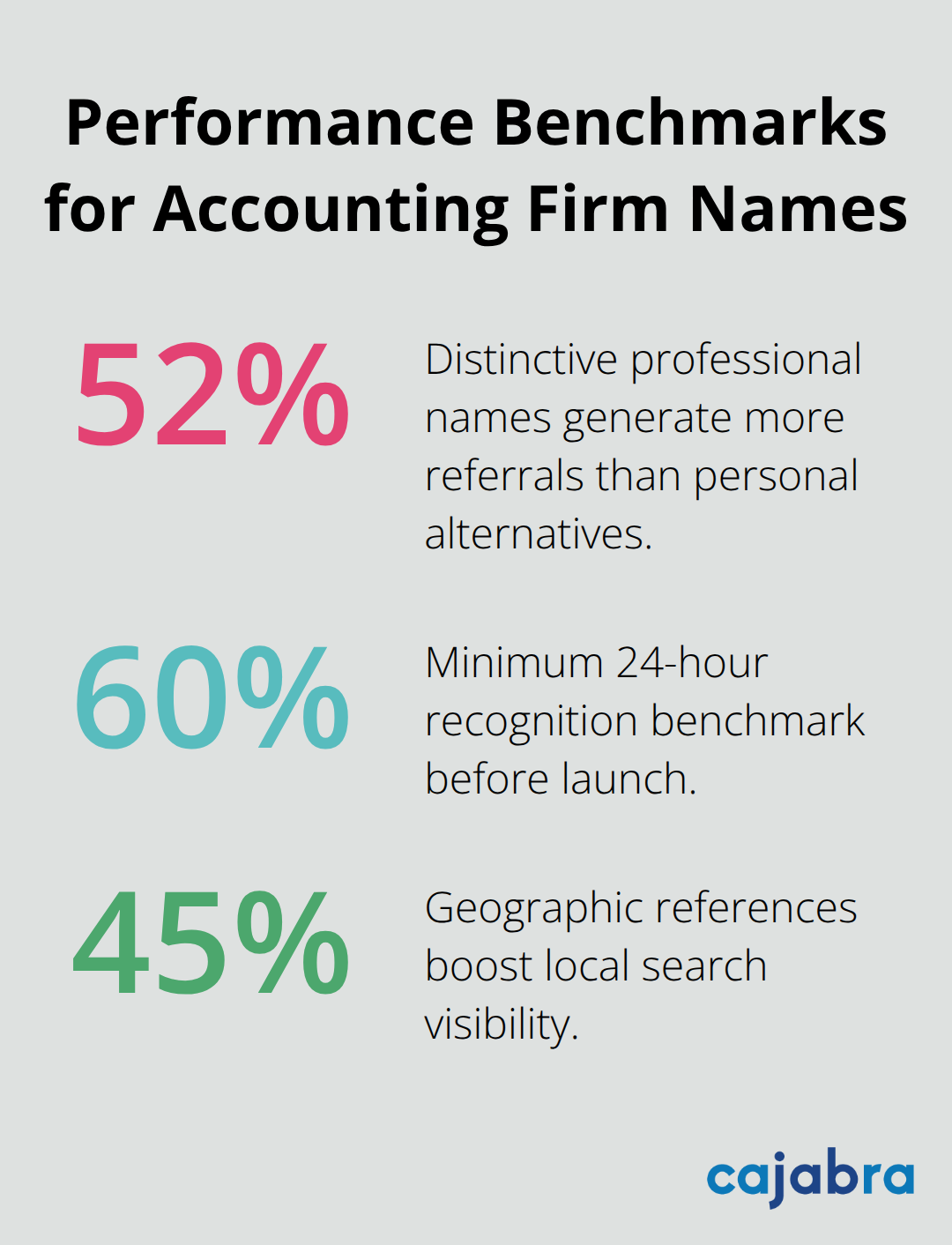
Future-proof your choice by selecting names broad enough to accommodate service expansion while remaining specific enough to attract ideal clients. Geographic references boost local search visibility by 45% but avoid overly narrow specializations that limit growth potential. We at Cajabra help accounting firms transform their marketing with proven lead generation strategies and automated client acquisition systems that move practices from overlooked to overbooked.
A harsh reality is that many accounting firm websites still look like they were designed during the era of dial-up internet and Nokia flip phones. Meanwhile, your potential clients are out there scrolling, searching, and deciding who to trust long before they ever reach out. In fact, more than 80% of the buyer’s journey is complete before a prospect contacts you.
So if your website doesn’t instantly communicate relevance and trust, those high-value clients will move on without a trace.
This is why the smartest accounting firms are turning their websites into systems that attract and convert the right clients while you're busy advising, reconciling, and preventing tax season meltdowns. Let’s break down how to transform your site into a lead-generating machine.
Step 1: Say What You Actually Do
You have five seconds. Not five minutes, not fifteen scrolls: five seconds to convince a visitor they’re in the right place. That means your homepage must clearly spell out who you serve, the problems you solve, the outcomes clients experience, and the exact next step they should take. If someone lands there wondering “Do they work with businesses like mine?”. Well… they’re probably already halfway to your competitor’s website.
And while we’re on the subject: accountants love a little jargon. But your visitors aren’t typing “proactive cloud-based financial efficiencies” into Google. They think: “I want fewer surprises and more peace of mind.” Speak the language your clients actually use. Save the tax code terminology for the IRS agents.
Step 2: CTA Buttons That Don’t Hide in the Basement
A CTA button buried at the bottom of a page is like listing your phone number on a sticky note under your desk… technically reachable, but not helpful. Your call-to-action needs to be visible the moment your page loads and should appear across every major page - not just Contact.
The clearest and highest-converting CTA for accounting firms today is something specific like “Book a 20-min Call”, because people take action when they know exactly what will happen next. The goal: your website should constantly communicate, “Hey! right this way to financial joy”.

Step 3: Make Scheduling Friction-Free
Nothing destroys momentum like a form that asks for your blood type and childhood best friend’s name just to request a call. Clients want convenience. When you embed a simple online scheduler with 3-5 qualifying questions max, everything becomes easier. Confirmations happen automatically, reminders reduce no-shows, and leads route to the right person without the dreaded phone tag.
Your clients already pick movie tickets, hairstylist appointments, and dog grooming online. They should be able to book time with their accountant too.
Step 4: Use Strategic Video (Even If You Hate Being On Camera)
Before your eye starts twitching. No, you don’t have to become a TikTok dancing CPA (although honestly, that could go viral). But in a world where we buy from those we trust, a short video builds rapport faster than blocks of text ever could.
The winning formula is simple: a 45-60 second intro video on the homepage to show you're a real human, plus one or two short clips answering common questions. Even one simple client story or three-step explanation of how your services work can completely shift a buyer’s confidence. And yes, captions are required because no one watches with sound anymore unless they’re a dad watching golf highlights.
Step 5: Publish Answer-Driven Blogs
Your blog is not the place for generic filler like “Top 5 Motivational Quotes to Survive Tax Season.” Visitors want answers, not motivational posters.
They’re Googling things like:
• “How much does monthly bookkeeping cost?”
• “Should I form an LLC or S-Corp?”
• “Can you fix my books if they look like a crime scene?”
These decision-making topics are what rank in search, earn clicks, and even show up inside AI search results, which are rapidly becoming the first stop for business owners looking for help. A blog that confidently answers buyers’ burning questions keeps prospects engaged longer, builds authority, and naturally leads them to take action.

Invisible Conversion Boosters
Visitors make snap judgments in milliseconds, so the tiny trust signals you include make a huge difference. Fast load speeds, mobile-first layouts, large readable fonts, and clear proof elements such as testimonials, client logos, Google reviews, and association badges all work behind the scenes to reinforce: “You can trust us. We’ve got you.”
Even that quiet security statement in the footer matters. It whispers: “We won’t leak your data. Pinky promise.”
The Big No-No’s
Let’s call out the common culprits holding accounting websites back: jargon-filled headlines that don’t say anything, CTAs that force visitors to scroll all the way down to apply for help, services pages that read like a Russian novel, and blogs that haven’t been updated since before Zoom became a verb. These are fixable. And when fixed, they change everything.
Your 30-Day “Website That Prints Money” Plan
You don’t need a year-long branding project to create a high-performing website. In just four weeks, you can rewrite your homepage messaging, implement strong CTAs everywhere, embed an online scheduler, and publish three Q&A blogs that speak to exactly what your ideal clients care about. Do those four things and watch the crickets disappear.

Ready to Make Your Website Do Its Job?
Your website should be the hardest-working member of your team. The one who shows up early, never gets overwhelmed during tax season, and converts visitors while you sleep.
If you’re ready to:
- Speak human instead of tax code
- Get leads without begging for them
- Build trust before the first conversation
- Create the content your buyers are actually looking for
…then Cajabra is here to help.
We build accounting websites that convert, and you sure bet we can turn yours into a quiet, dependable rainmaker too.Want to see how your site stacks up? Book a quick Website Strategy Session and let’s start building the online experience your future clients already expect. Your website should be working harder than you do. It’s only fair.
Most accounting firms struggle with marketing because traditional approaches don't work in today's competitive landscape. Generic advertising and cold outreach fail to generate quality leads.
We at Cajabra, LLC have identified specific accountant marketing strategies that consistently deliver measurable results. These proven techniques focus on building trust, demonstrating expertise, and creating sustainable client relationships that drive long-term growth.
Proven Digital Marketing Strategies for Accountants
Build a Professional Website That Converts Prospects
Your website serves as your firm's digital storefront and must convert visitors into prospects within seconds. SEO is essential for accounting firms to grow, generate leads, meet clients online, and drive traffic, as it is a critical driver of growth. Your homepage should feature client testimonials, specific services, and clear contact information above the fold.
High-growth firms invest twice as much in marketing as slower-growing peers, and website optimization ranks as their top priority. Include a prominent call-to-action button, showcase your specializations like tax preparation or business advisory services, and display professional certifications prominently. Client case studies with specific results outperform generic service descriptions in conversion rates.
Leverage Search Engine Optimization for Local Visibility
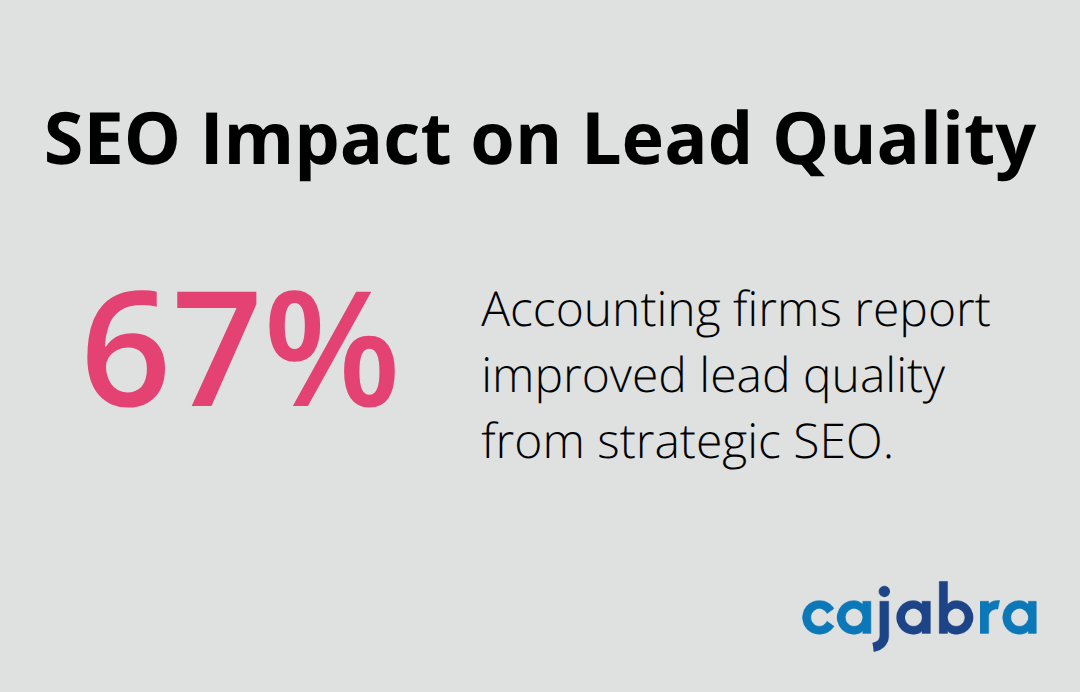
Search engine optimization targets clients who actively seek accounting services in your area. 67% of accounting firms report improved lead quality through strategic SEO implementation. Claim your listing, upload professional photos, and collect client reviews consistently.
Target location-specific keywords like "CPA near me" or "tax preparation [your city]" in your website content. Local directory listings on sites like Yelp and Better Business Bureau improve search rankings significantly. High-growth accounting firms monitor digital marketing metrics actively, tracking local search performance monthly. Create location pages for each office and optimize them with unique content about local tax laws and business regulations.
Use Content Marketing to Demonstrate Expertise
Educational content positions your firm as the go-to expert in your market. Accounting firms that blog receive more inbound links and rank higher in search results than those without blogs. Write about tax law changes, small business financial tips, and industry-specific accounting challenges your clients face.
Video content performs exceptionally well, with users preferring video over text for complex topics. Create short videos that explain complex tax concepts or answer frequently asked questions. Email newsletters with practical financial advice maintain client relationships and generate referrals consistently. Focus on problems your ideal clients face rather than promote your services directly.
These digital strategies form the foundation of effective accountant marketing, but client acquisition requires additional targeted techniques that complement your online presence.
Client Acquisition Techniques That Generate Results
Develop Strategic Referral Partnership Programs
Strategic referral partnerships generate the highest quality leads for accounting firms, with referral-based clients delivering superior results according to the American Institute of CPAs. Partner with attorneys, financial advisors, and business consultants who serve your target market. Create formal agreements that specify referral criteria, compensation structures, and follow-up protocols.
Insurance agents, real estate professionals, and business bankers interact with clients who need accounting services regularly. Meet potential partners monthly, provide them with client success stories, and offer reciprocal referrals. Track referral sources meticulously to identify your most productive partnerships and focus your efforts on relationships that deliver consistent results.
Implement Email Marketing Campaigns for Lead Nurturing
Email marketing campaigns nurture prospects through your sales funnel with automated sequences that educate and build trust. Nearly 1 in 5 companies achieve email marketing ROI of 7000% or more when they implement campaigns correctly. Create separate campaigns for tax clients, small businesses, and advisory prospects with tailored content for each segment.
Send weekly tax updates during filing season, monthly business financial tips, and quarterly market insights to advisory prospects. Use marketing automation to score leads based on email engagement, website visits, and content downloads (this helps prioritize follow-up efforts). Personalized subject lines increase open rates by 26% compared to generic messages.

Create Targeted Social Media Presence on LinkedIn
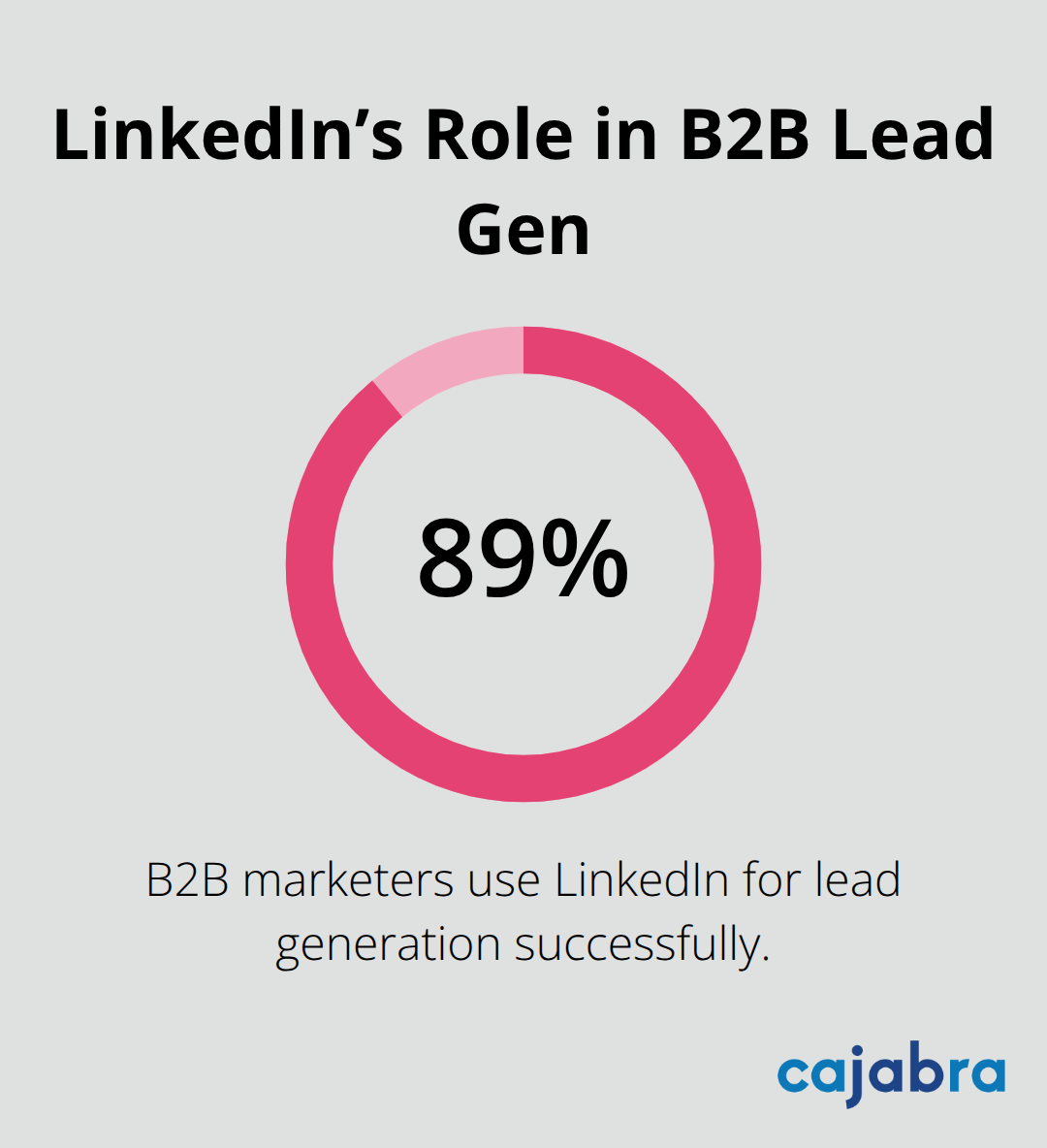
LinkedIn outperforms other social platforms for accountants, with 89% of B2B marketers using LinkedIn for lead generation successfully. Connect with local business owners, share industry insights, and comment on posts from potential clients. Post original content twice weekly about tax strategies, financial planning tips, and business growth advice.
Join industry groups where your ideal clients participate and contribute valuable insights without direct sales pitches. LinkedIn's algorithm favors posts that generate engagement within the first hour (so timing matters significantly). Share client success stories and case studies that demonstrate your expertise in specific industries or services.
These acquisition techniques work best when combined with client retention strategies that maximize the value of each client relationship and create sustainable growth for your practice.
Retention and Growth Marketing for Accounting Firms
Transform Tax Clients Into Advisory Revenue Streams
Most accounting firms leave money on the table by treating tax preparation as a standalone service instead of a gateway to higher-value advisory work. Firms that successfully transition tax clients to advisory services see median increases of 6.7% in total net client fees over the prior year. Start conversations about business advisory services during tax meetings when clients discuss their financial challenges naturally.
Present advisory services as solutions to specific problems clients mention rather than generic upsells. When a client mentions cash flow concerns during tax preparation, immediately offer monthly financial reports and analysis services. Create service packages that bundle tax work with quarterly business reviews, budget assistance, and financial planning consultations at attractive price tiers.
Create Systematic Value-Added Communication Programs
Proactive communication keeps your firm top-of-mind and positions you as a trusted advisor rather than a seasonal tax preparer. Send monthly industry-specific newsletters with actionable financial insights, regulatory updates, and tax planning strategies tailored to each client segment. Manufacturing clients receive different content than retail businesses or professional services firms.
Schedule quarterly check-in calls with all business clients to discuss their financial performance, upcoming challenges, and growth opportunities. These calls consistently generate additional service requests and strengthen client relationships significantly. Create automated email sequences that deliver relevant content based on client industry, business size, and service history to maintain consistent touchpoints throughout the year.
Implement Structured Feedback Collection Systems
Client feedback systems identify expansion opportunities and prevent client defection before it happens. Survey clients immediately after service completion and again six months later to measure satisfaction and identify additional needs. Firms that implement systematic feedback collection focus on client retention through quality service and strong relationships.
Ask specific questions about unmet financial needs, preferred communication methods, and satisfaction with response times rather than generic satisfaction ratings. Use feedback data to create new service offerings that address common client pain points and adjust pricing strategies based on perceived value. Follow up personally on negative feedback within 24 hours to resolve issues and demonstrate commitment to client success.
Final Thoughts
These accountant marketing strategies deliver measurable results when you implement them consistently. Professional websites with clear conversion elements, local SEO optimization, and educational content marketing establish your digital foundation. Strategic referral partnerships, targeted email campaigns, and LinkedIn presence generate quality leads systematically.
Client retention through advisory upsells, proactive communication, and feedback systems maximizes revenue from existing relationships. High-growth firms invest twice as much in marketing as their peers and monitor performance metrics actively. Start with website optimization and local SEO this month, then add one content piece weekly and establish two referral partnerships.
Consistent marketing efforts compound over time and reduce client acquisition costs while they increase average client value. Firms that maintain marketing discipline see steady revenue growth and stronger market positions within 12 months. We at Cajabra, LLC help accounting firms implement these strategies through our JAB System™, which moves accountants from overlooked to overbooked in 90 days with retainer-based clients and comprehensive marketing automation.
The accounting industry is experiencing rapid transformation as technology reshapes traditional practices. We at Cajabra, LLC see these trends in accounting accelerating faster than ever before.
From AI-powered automation to cloud-based solutions, firms must adapt quickly to stay competitive. The shift toward advisory services is creating new revenue opportunities while changing client relationships fundamentally.
AI and Automation Transform Accounting Practices
Artificial intelligence reshapes accounting operations at unprecedented speed, with 58% using the technology in 2024. Manual data entry consumes 40% of accounting staff time, but AI automation eliminates this burden completely. Intelligent systems now process invoices, bank statements, and receipts automatically while they flag discrepancies that humans miss.

Companies that implement comprehensive automation achieve 20 to 40 percent reductions in operating costs. These systems handle routine tasks with perfect accuracy, which frees accountants to focus on analysis and strategic advice.
Automated Bookkeeping Eliminates Manual Work
Modern bookkeeping software connects directly to bank accounts, credit cards, and payment processors to capture transactions in real-time. These platforms categorize expenses automatically and match receipts to transactions without human intervention. The software learns from corrections and improves accuracy over time.
Firms that adopt automated bookkeeping complete monthly closes in days rather than weeks. Staff members redirect their time toward client consultation and business analysis instead of data entry tasks.
AI-Powered Financial Analysis Replaces Guesswork
Predictive analytics revolutionizes financial forecasting through the analysis of historical patterns and market trends simultaneously. Machine learning algorithms process thousands of data points to generate accurate budget projections and cash flow predictions. Modern accounting software integrates these capabilities directly, which allows firms to provide clients with real-time insights instead of backward-looking reports.
Financial analysis that once required hours of manual calculation now happens instantly. Accountants can model multiple scenarios and present strategic recommendations based on data-driven insights.
Machine Learning Detects Fraud with Superhuman Accuracy
AI-powered fraud detection systems analyze transaction patterns continuously and identify anomalies that escape human attention. These systems learn from each case and become more accurate over time while they reduce false positives. Financial institutions report 60% improvement in fraud detection rates after they implement machine learning solutions.
The technology examines spending patterns, vendor relationships, and approval workflows to spot irregularities. Accounting firms that use these tools position themselves as security partners rather than mere number processors, which creates additional revenue streams through specialized audit services.
This technological revolution sets the stage for another major shift that complements AI automation perfectly.
Cloud-Based Accounting and Remote Work Evolution
Cloud accounting platforms have become the industry standard, with firms increasingly adopting these solutions for enhanced flexibility. These systems provide instant access to financial data from any location and synchronize information across multiple devices automatically. QuickBooks Online, Xero, and NetSuite lead the market because they integrate seamlessly with bank systems and third-party applications.
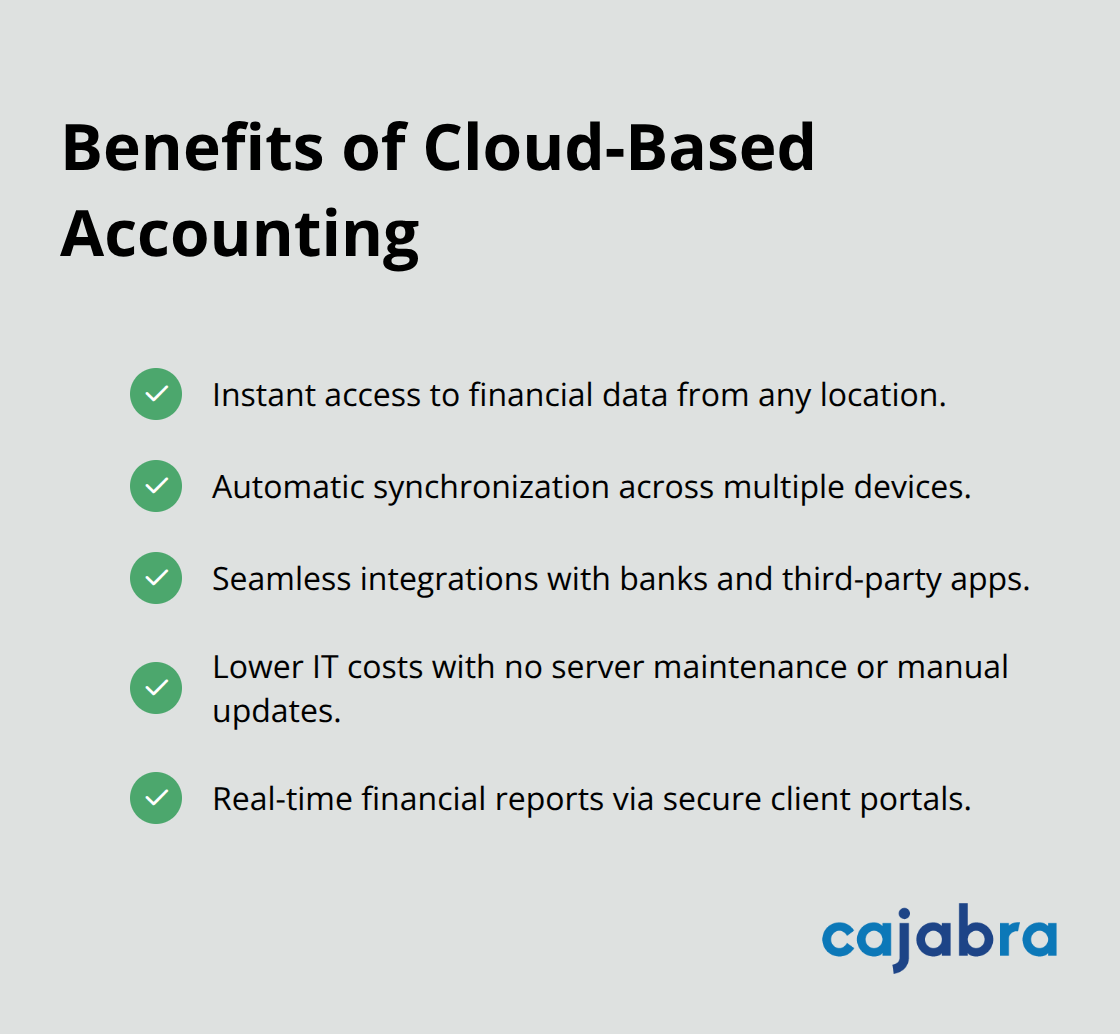
Firms that switch to cloud platforms reduce their IT costs significantly and eliminate server maintenance and software updates completely. The technology enables real-time financial reports that clients can access through secure portals at any time.
Migration to Cloud Accounting Platforms
Modern accounting firms abandon traditional desktop software in favor of cloud-based solutions that offer superior flexibility and scalability. These platforms handle everything from basic bookkeeping to complex financial analysis without requiring expensive hardware investments. Companies can access their financial data instantly from tablets, smartphones, or laptops regardless of location.
The migration process typically takes 2-4 weeks for most firms, and the return on investment becomes apparent within the first quarter. Cloud platforms automatically update tax tables and regulatory changes, which saves firms from manual software maintenance tasks.
Real-Time Collaboration and Client Portal Integration
Modern accounting software connects clients and accountants through integrated communication tools that streamline document sharing and approval processes. These platforms allow multiple users to work on the same file simultaneously and track changes while maintaining audit trails automatically.
Client portal integration means customers can upload receipts, review reports, and approve transactions without email exchanges or phone calls. Firms that use collaborative platforms complete client projects faster than traditional methods. The software sends automatic notifications when clients need to take action, which reduces delays and improves cash flow for both parties.
Enhanced Data Security and Backup Solutions
Cloud accounting platforms implement bank-level encryption and multi-factor authentication to protect sensitive information from cyber threats. These systems backup data automatically every few minutes and store copies in multiple geographic locations to prevent data loss.
Cloud-based systems provide enhanced security compared to traditional solutions because they receive constant security updates and monitoring. The platforms also provide detailed access logs and user permissions that help firms maintain compliance with privacy regulations (including GDPR and SOX requirements).
Professional accounting software includes built-in fraud detection that monitors unusual activity patterns and alerts administrators immediately when suspicious transactions occur. This enhanced security framework creates the foundation for accountants to expand beyond traditional compliance work into strategic advisory roles.
Advisory Services Transform Client Relationships and Revenue
Accounting firms that embrace advisory services generate higher net client fees compared to traditional compliance-focused practices. The transformation from number-crunching to strategic consultation requires firms to position themselves as business partners rather than transaction processors. Modern clients demand forward-looking insights and actionable recommendations that drive growth, not just historical financial reports.
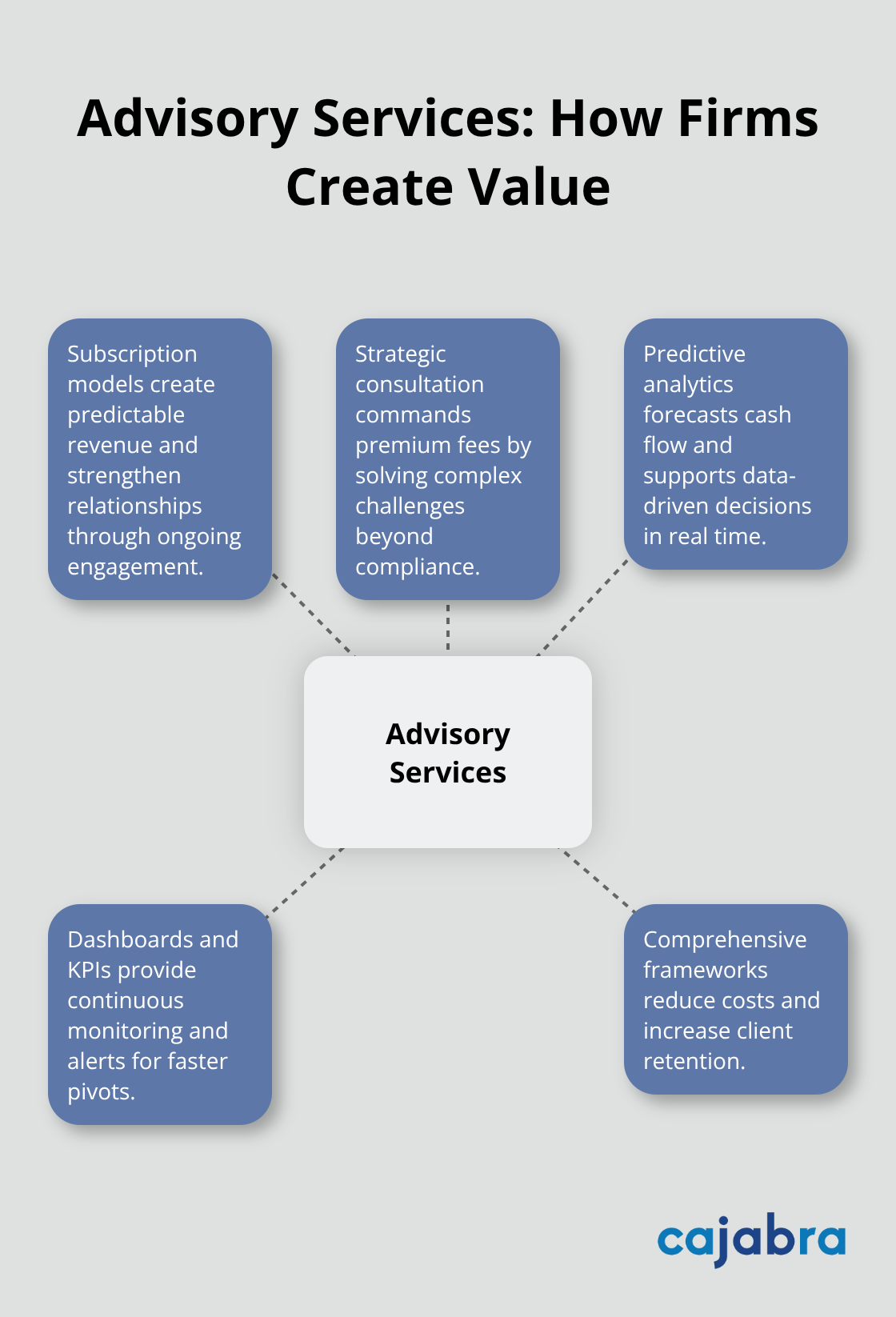
Firms that master predictive analytics can forecast cash flow patterns, identify profit optimization opportunities, and guide clients through complex business decisions with real-time data analysis. Companies that implement comprehensive advisory frameworks can achieve significant cost reductions while they increase client retention rates significantly.
Subscription Models Replace Hourly Rates
Monthly retainer agreements create predictable revenue streams while they strengthen client relationships through continuous engagement. Firms charge fixed monthly fees for advisory services, financial analysis, and strategic planning rather than bill by the hour for reactive work. This approach encourages deeper client partnerships because accountants focus on value delivery rather than billable hour tracking.
Subscription-based firms report higher profit margins and better cash flow predictability than traditional hourly structures. Clients appreciate the transparency of fixed costs and the proactive support they receive throughout the year.
Strategic Business Consultation Commands Premium Fees
Accounting professionals who provide strategic guidance command premium fees when they solve complex business challenges beyond basic compliance work. These services include market analysis, growth strategy development, and operational efficiency improvements that directly impact client profitability. Firms position themselves as trusted advisors who understand industry trends and competitive landscapes while they deliver actionable recommendations.
The advisory approach transforms accountants from cost centers into revenue generators for their clients. This shift allows firms to charge based on value delivered rather than time spent on tasks.
Data-Driven Decision Tools Support Critical Choices
Advanced analytics platforms enable accountants to provide clients with scenario modeling and performance benchmarks that support critical business decisions. These tools analyze industry comparisons, identify trends, and predict outcomes based on current financial data and market conditions (including competitor analysis and economic indicators).
Clients receive comprehensive dashboards that track key performance indicators and alert them to potential issues before they become problems. The real-time nature of these insights allows businesses to pivot quickly when market conditions change or opportunities arise.
Final Thoughts
The trends in accounting for 2025 represent a fundamental shift from traditional practices to technology-driven solutions. AI automation eliminates manual data entry while cloud platforms enable real-time collaboration and enhanced security. Advisory services transform firms from compliance processors into strategic business partners who command premium fees.
Firms that embrace these changes experience significant growth through improved efficiency and stronger client relationships. Automated systems reduce costs by up to 40% while subscription-based advisory models create predictable revenue streams. Cloud platforms provide instant access to financial data and strengthen security protocols against cyber threats (including advanced fraud detection capabilities).
Success requires immediate action on automation tools, cloud platform migration, and advisory service development. We at Cajabra, LLC help accounting firms navigate this transformation through our JAB System™ that moves accountants from overlooked to overbooked in 90 days. The accounting profession rewards firms that adapt quickly to technological advances and client expectations.