
Choosing the right content marketing strategy agency can make or break your online presence. At Cajabra, LLC, we've seen firsthand how a well-matched agency can transform a brand's digital footprint.
This guide will walk you through the key factors to consider when selecting a content marketing partner. We'll cover everything from defining your goals to evaluating agency capabilities, helping you make an informed decision.
What Are Your Content Marketing Goals?
Pinpoint Your Audience
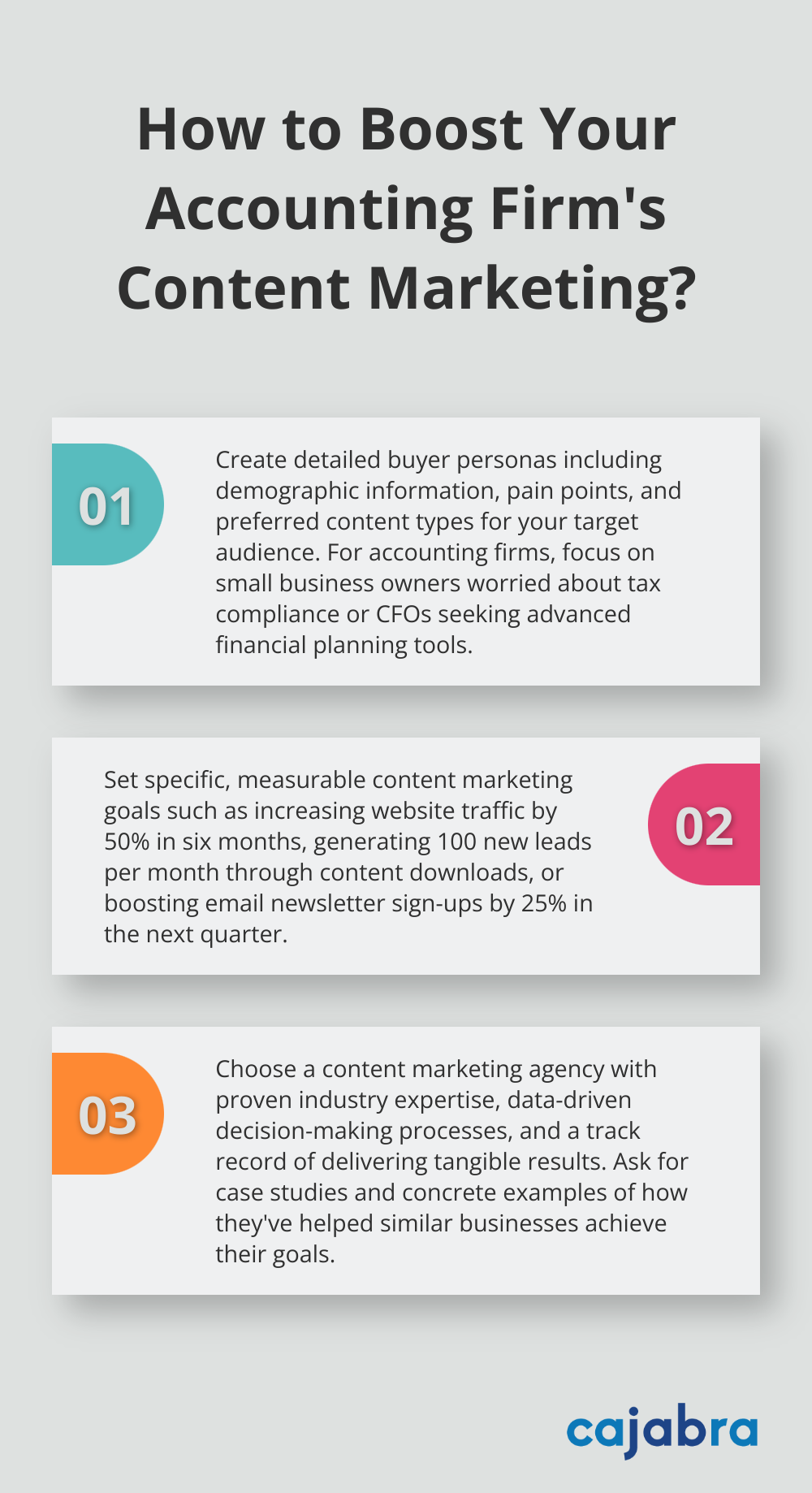
Create detailed buyer personas that include demographic information, pain points, and preferred content types. For accounting firms, this might mean targeting small business owners worried about tax compliance or CFOs looking for advanced financial planning tools.
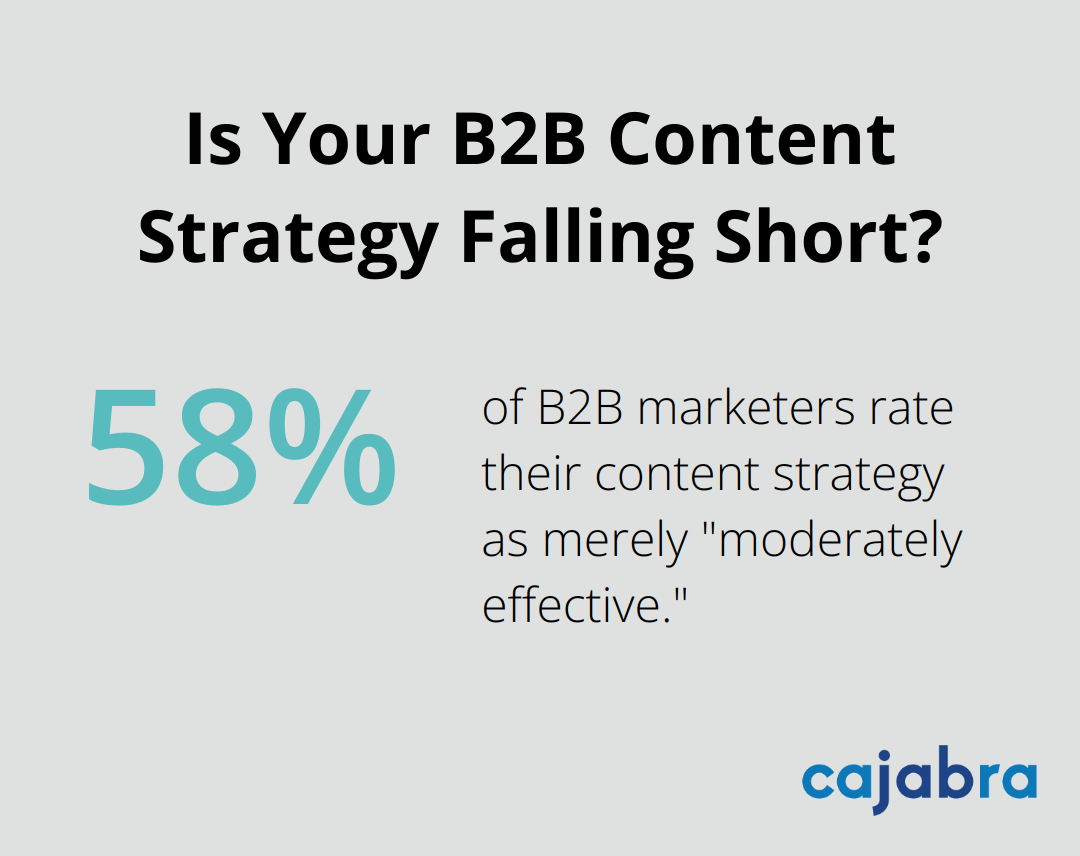
A study by the Content Marketing Institute found that 58% of B2B marketers rate their content strategy as merely "moderately effective." This highlights the importance of understanding your audience and creating content that truly resonates with potential clients.
Set Concrete Objectives
Vague goals don't suffice. Try specific, measurable targets such as:
- Increase website traffic by 50% in six months
- Generate 100 new leads per month through content downloads
- Boost email newsletter sign-ups by 25% in the next quarter
These precise goals allow you to track progress and adjust your strategy as needed.
Align With Business Outcomes
Your content marketing goals should directly support your overall business objectives. If your firm aims to expand its tax advisory services, your content strategy might focus on establishing thought leadership in tax planning.
According to HubSpot, 40.4% of sales professionals said sales and marketing became more aligned in 2022 from 2021. This synergy ensures your content efforts drive real business results.
Prioritize ROI
While vanity metrics (like social media likes) can tempt you, prioritize goals that impact your bottom line. Combat this by setting goals tied to revenue, such as:
- Increase conversion rate of blog readers to consultation requests by 10%
- Reduce customer acquisition cost by 20% through organic content
- Generate $100,000 in new business from content-sourced leads
These high-impact objectives create a content strategy that drives real growth for your accounting firm.
Now that you've established clear goals, it's time to look at the key qualities you should seek in a content marketing agency. The right partner will help you turn these objectives into reality.
What Makes a Top-Tier Content Marketing Agency?
Industry Expertise Matters
A content marketing agency with experience in your sector will accelerate your success. For accounting firms, this means partnering with an agency that understands financial services marketing and regulatory complexities. CSTMR is an example of a digital marketing agency specializing in financial services, offering branding, strategy, advertising, content, social media, activation, and web development.
The Content Marketing Institute reports that 72% of successful B2B marketers use content marketing to build credibility and trust with their audience. An agency well-versed in your industry will craft content that connects with your target clients, establishing your firm as a trusted advisor.
Data Drives Decisions
Top agencies don't guess-they use hard data to shape strategies. Look for an agency that demonstrates how they use analytics to inform decision-making. Ask about their process for A/B testing headlines, measuring engagement rates, and optimizing content for search engines.
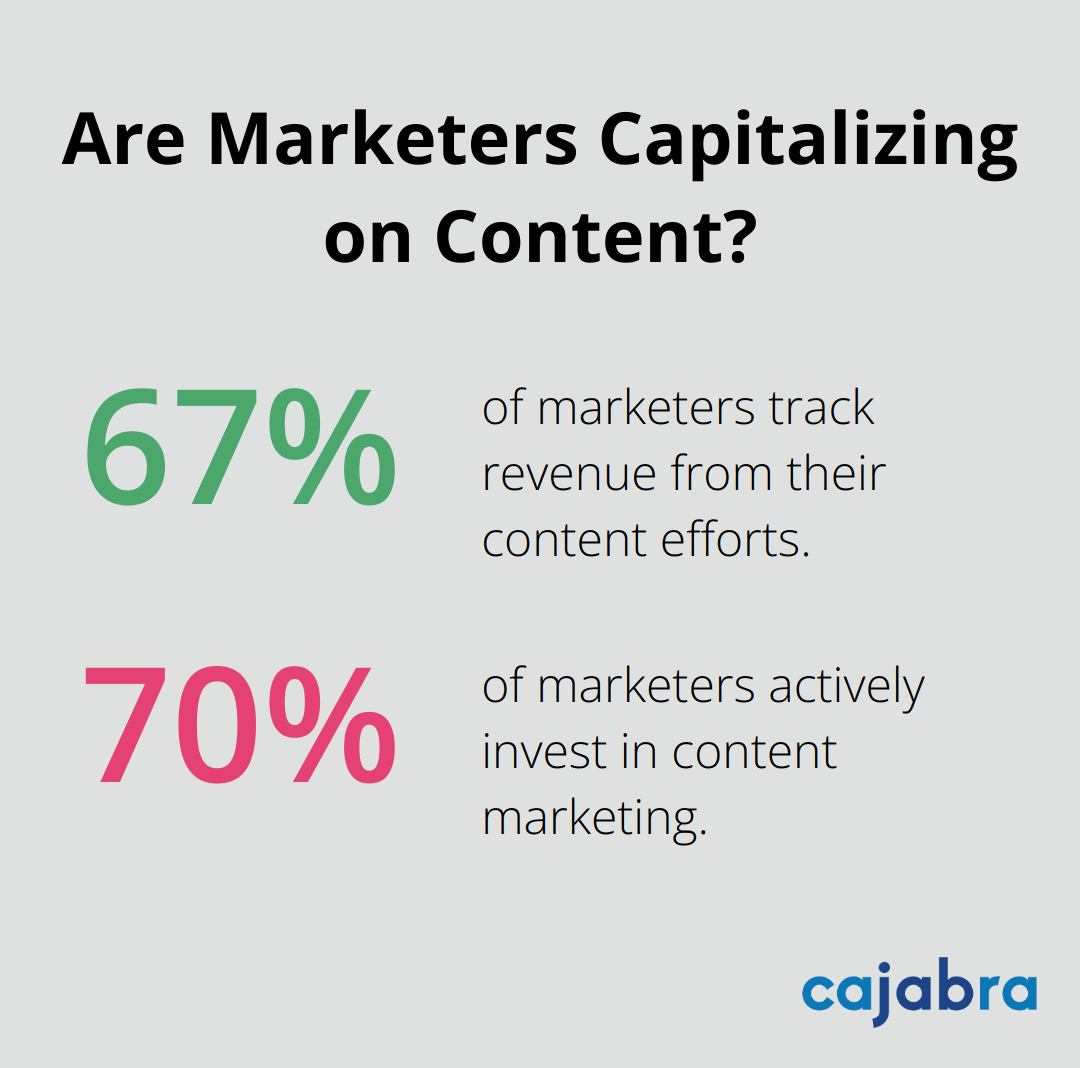
Content marketing statistics show that 72% of businesses report that content marketing boosts lead generation, and 67% of marketers track revenue from their content efforts. Your chosen agency should explain how they'll use data to fuel your content strategy and drive measurable results.
Embrace Emerging Trends
The digital landscape changes rapidly. Your content marketing agency must stay ahead of the curve. Ask about their approach to new technologies (like AI-powered content creation or voice search optimization). How do they incorporate emerging social media platforms into their strategies?
HubSpot reports that 70% of marketers actively invest in content marketing. The best agencies help you leverage cutting-edge trends to stand out in a crowded field.
Transparent Processes
When evaluating potential partners, don't just look at their client list or case studies. Examine their processes, tools, and methodologies. The right agency will openly share their approach and eagerly show you how they'll apply their expertise to your unique challenges.
Proven Results
Request case studies and concrete examples of how the agency has helped businesses similar to yours achieve their goals. Look for specific metrics and outcomes that align with your objectives. A reputable agency (like Cajabra, LLC) will have a track record of delivering tangible results for their clients.
The next step in choosing the right content marketing agency involves evaluating their specific services and capabilities. Let's explore what comprehensive offerings you should expect from a top-tier partner.
What Services Should Your Content Marketing Agency Offer?
A comprehensive content marketing agency provides a range of services to ensure your marketing efforts are cohesive and effective. When evaluating potential partners, consider the following key offerings:
Content Creation and Distribution
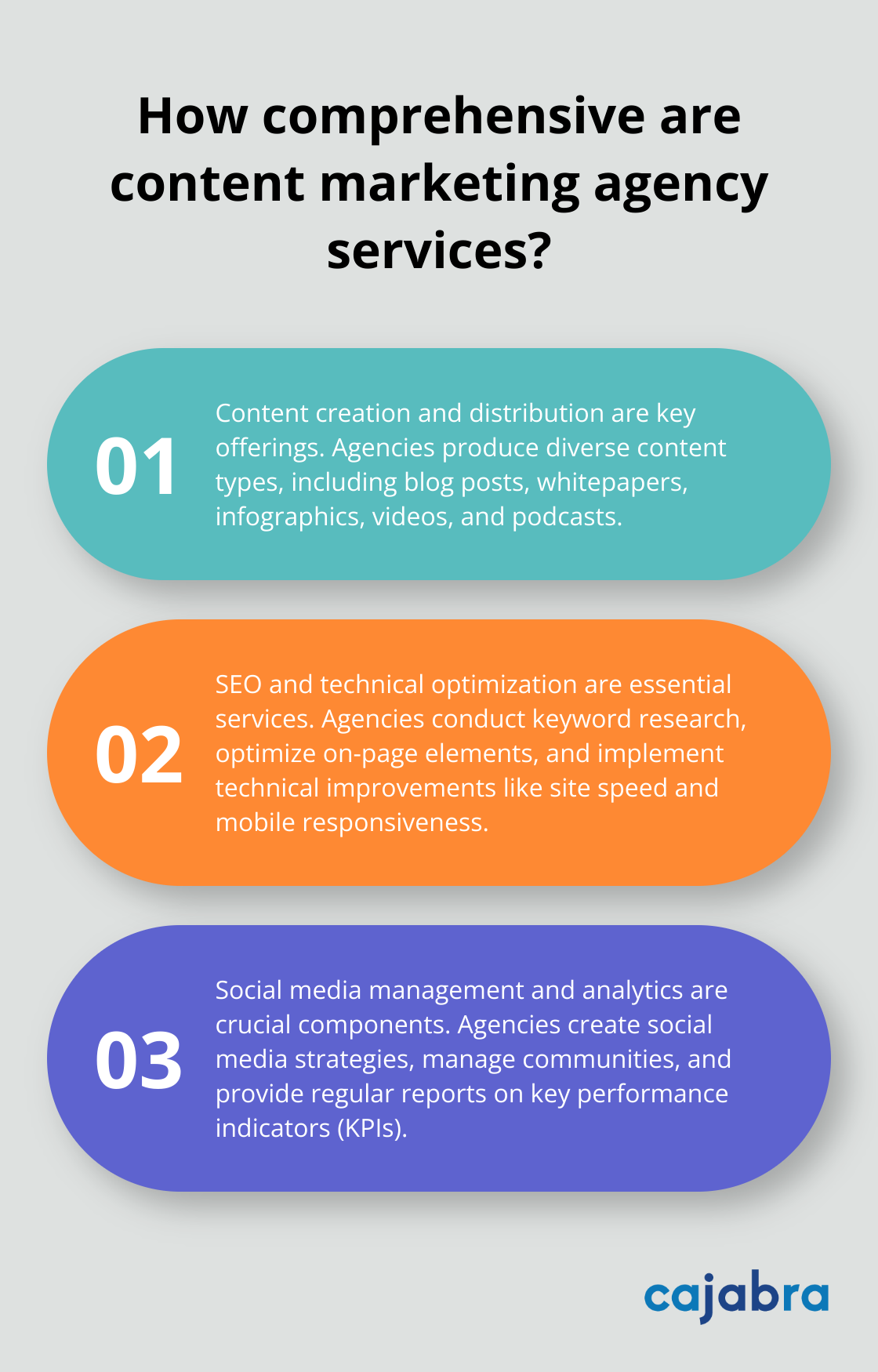
Top agencies excel at producing diverse content types. This includes blog posts, whitepapers, infographics, videos, and podcasts. Your agency should create high-quality content consistently and distribute it across relevant channels.
Ask potential agencies about their content creation process. How do they research topics? What's their quality control system? A top-tier agency will have a robust system for ideation, creation, editing, and distribution.
SEO and Technical Optimization
SEO is essential in today's digital landscape. Your content marketing agency should understand search engine algorithms and best practices. They should conduct keyword research, optimize on-page elements, and build quality backlinks.
A knowledge of basic SEO can have a noticeable impact. Inquire about their approach to technical SEO. Can they optimize site speed, improve mobile responsiveness, and implement schema markup? These technical aspects can significantly impact your content's visibility and performance.
Social Media and Community Management
Social media amplifies content distribution and audience engagement. Your agency should create and execute a social media strategy that aligns with your overall content marketing goals.
Look for agencies that offer community management services. This includes responding to comments, moderating discussions, and fostering engagement. (Many consumers expect brands to connect with them on social media platforms.)
Analytics and Performance Tracking
Data-driven decision making propels content marketing success. Your agency should provide regular, detailed reports on key performance indicators (KPIs). These might include website traffic, engagement rates, lead generation, and conversion metrics.
Ask about their analytics tools and reporting frequency. A good agency will not only provide data but also insights and recommendations based on that data. They should adjust strategies based on performance metrics to continually improve results.
Strategy Development and Execution
Your content marketing agency should excel at developing comprehensive strategies. This includes audience research, competitive analysis, content calendars, and distribution plans.
Try to find agencies that take a holistic approach. They should align your content strategy with your overall business goals and integrate it with other marketing efforts.
When evaluating agencies, consider their full range of services. The right content marketing agency will act as a true partner in your business growth. They should offer capabilities that cover all aspects of content marketing, from creation to distribution to analysis. (This comprehensive approach positions you to achieve your marketing goals and drive business success.)
Final Thoughts
Selecting the right content marketing strategy agency will significantly impact your business growth. The ideal partner will align with your specific needs, industry, and objectives. A tailored approach is essential, as your chosen agency should demonstrate a deep understanding of your sector, target audience, and unique challenges.
Conduct thorough research before making a decision. Review case studies, ask for client references, and schedule consultations with potential partners. Pay close attention to their processes, communication style, and ability to deliver measurable results.
At Cajabra, we understand the unique marketing needs of accounting firms. Our specialized approach helps accountants secure retainer-based clients and maximize their online presence. We handle all aspects of marketing, allowing you to focus on your expertise while we position your firm as an industry leader (through strategic, data-driven content initiatives).
As an accountant or bookkeeper, you’re busy. Like, so busy you can barely remember where you put your coffee mug half the time. The last thing you want to think about is marketing. Yet, you know you should be doing it.
You know you need more Google reviews, more follow-ups on proposals, more consistent communication with your clients, and heck, you probably even know you’re missing out on leads just sitting in your inbox. But the problem is: it’s just not getting done.
Why? Because there’s just no time to figure out how to do all that stuff manually. You’re already juggling 100 things - getting your clients’ tax returns in order, staying on top of bookkeeping, making sure you’re not missing a deadline.
The solution to this conundrum? You need a process to automate all this. Without automation, all those good intentions like “I’ll follow up on that proposal later” or “I’ll ask for a review when I’m done with this project” never really happen. It’s like telling yourself you’re going to work out after work, but the couch is way too comfy to get up.
So let’s talk about why automating your marketing processes isn’t just a nice-to-have - it’s a must-have for any accounting or bookkeeping firm serious about growth.
Here are the five marketing mistakes we see most often - and how automation can fix them for you:

1. No Automated Process for Getting Google Reviews
If I had a dollar for every time I’ve heard an accountant say, “Yeah, we know we need to get more Google reviews, but we just forget,” I could probably retire.
Listen, Google reviews are EVERYTHING. They’re the first thing potential clients check when they’re searching for an accountant or bookkeeper. According to a recent survey, 81% of consumers check Google reviews before engaging with a business. So, if you’re not asking for them, you’re missing a huge opportunity to build trust and show your expertise.
The problem is, if you don’t have a system in place to ask for reviews, it just doesn’t happen. It’s not that you don’t want to ask - you just get busy. If you set up a simple automated workflow that sends a review request to clients right after you’ve delivered a great service (tax return, financial report, bookkeeping update, etc.), you can make sure they get a link straight to your Google reviews page. All they have to do is click and type a few words. No more forgetting or hoping your clients remember to do it for you.
2. No Automated Communication to Stay in Front of Existing Clients
Your clients don’t need you just once a year for taxes or quarterly for bookkeeping - they need your assurance constantly. They need your expertise in real-time to help them make decisions, optimize their tax strategy, and plan for the future.
You can do this by setting up automated communication to stay top of mind with your clients. Whether it’s reminders about tax deadlines, business planning tips, or an annual check-in, automated emails or SMS messages that provide valuable insights. This keeps you in front of your clients without having to manually send messages every time.
Pro Tip: Content like tax tips or important financial reminders makes for perfect automated communication. You’re staying valuable without extra effort on your part. Win-win!

3. Lack of Messaging that Resonates with Your Ideal Clients
Alright, let’s talk about messaging - because it’s super important that you get this right. If your messaging doesn’t speak directly to the needs of your ideal clients, guess what? You’re wasting your marketing budget.
Most accounting firms focus on what they do: tax returns, bookkeeping, etc. But your clients don’t care about “tax returns.” They care about how your services will make their lives easier. They care about how you can save them time, reduce their tax burden, and provide valuable financial insights that set them up for success.
The problem? Many companies don’t have the right messaging in place, leading to a lack of engagement. Automation to the rescue! Once you’ve figured out your ideal client’s pain points and the messaging that resonates with them, you can automate campaigns that speak directly to their needs. A properly set-up CRM system can help deliver the right message at the right time without you having to send emails manually.
4. No Follow-Up on Proposals
Okay, we all know that feeling - you send a proposal, and then… crickets. Maybe you followed up once or twice, but nothing. So, what happens next? You probably just move on to the next lead. But guess what? That client didn’t go anywhere - they just needed a little nudge.
If you don’t automate your proposal follow-ups, you’ll forget or procrastinate. By setting up an automated follow-up system, you can send reminder emails or texts a few days after sending a proposal. It doesn’t feel pushy; it feels like you’re just keeping the conversation going. And trust me - it works.
5. Not Doing Anything with the Leads You Capture
You’ve got an email list, right? But how often do you actually use it? Capturing leads is one thing, but following up with them is a whole different ball game. If you’re not nurturing those leads, you’re missing out on potential clients who could be a perfect fit for your services.
You don’t have to wait for clients to come to you. With automated email sequences and CRM tools, you can engage with prospects regularly - whether they’re downloading a guide, signing up for your newsletter, or just expressing interest in your services. Automation ensures that leads aren’t forgotten, and it helps turn cold prospects into warm clients.

Let’s Get Your Processes on Autopilot
The bottom line is if you want to grow your firm and stop missing opportunities, you’ve got to automate your marketing processes. It’s about setting up systems that work for you - so you’re not chasing down proposals, constantly reminding yourself to ask for reviews, or forgetting to follow up on leads.
If you’re sitting there thinking, “Oh, we need something that can do that” - reach out to us. Cajabra’s CRM is designed to automate your marketing workflows, streamline your follow-ups, and ensure you stay top of mind with your clients, all without lifting a finger.
Let’s get your marketing working for you. You know the saying - better late than never!
Hey accountants and bookkeepers, do you have that nagging thought looming in the back of your mind that sounds like, “I know I need to get more Google reviews… but…”
Yeah, we’ve all been there. You know you need them, but it just keeps slipping through the cracks. Maybe it’s tax season, or maybe your to-do list is a mile long, and adding “ask for Google reviews” just doesn’t seem like it’s at the top of your priority list.
Here’s the plot twist: tax season is actually the PERFECT time to ask for those reviews. You’re busy, yes, but you’re also doing incredible work for your clients. You deserve some online love.
Did you know that 81% of consumers check Google reviews before engaging with a business? So, yeah - those reviews matter. Here’s how you can actually start getting them (without the stress and awkwardness) and build your online reputation while you’re rocking tax season.
The 3 Things Preventing Accountants from Getting More Google Reviews (And How to Fix Them)
1. “I don’t really have a ‘system’ in place to get them regularly.”
So, you just completed a tax return, the client seems happy, and you think, “Oh, I should ask for a review.” But then… life happens. You forget. The next thing you know, it’s two weeks later, and you’re wondering why your Google reviews haven’t budged.
Relying on your memory won’t work. Especially when you have 50 other things to juggle. So, forget the sticky notes on your desk or hoping you’ll remember when the client’s in front of you. It’s just too many steps: You ask, they Google you, then they click through to leave a review. That’s a lot of work for both of you!
Instead, automate it. Setting up an automated workflow that sends a review request to your clients as soon as they’ve received their tax return (or completed a major milestone) takes the pressure off. This is where efficiency meets reliability.
Here’s the trick - send them a text, not an email. Why? Well, 95% of text messages are read within 5 minutes. That means the emotional high they’re on (after getting their taxes filed or business bookkeeping in order) is fresh, and they’re way more likely to click that link and leave a review. No need to wait for them to check their email later when they’ve already moved on to the next thing in their busy life.

2. “I just forget to ask when I should.”
Ah, the classic - great intentions, but too much on my plate. You know you should ask, but it’s just not at the top of your to-do list when you’re delivering tax returns or handling client calls.
The solution here? Set up a system where the review request happens automatically. Here’s the beauty of automation: it just works. You don’t have to remember to ask. The minute a tax return is complete, or a certain milestone is hit (like 90 days of working with a client), the review request goes out. No more forgotten follow-ups. Your system does it for you.
And look, if you’re still feeling a little weird about asking for a review, just remember this: it’s not about you, it’s about your client’s experience. If you’re delivering good service (and you are), there’s no reason not to make it easy for them to share that experience online.
3. “I don’t want to automate it. What if we get a negative review?”
I get it, the fear of getting a negative review would make any business owner anxious. Nobody likes to see that dreaded 1-star pop up. But, getting a negative review is not the end of the world. In fact, sometimes it can be a good thing.
We all know that mistakes happen. You’re human. And guess what? Your clients know that too. When they see a negative review, what they’re really looking for is how you respond. Are you defensive? Or are you taking accountability and showing that you’re committed to fixing the issue? How you handle a negative review says a lot about you as a business.
When you automate your review process, you’ll have the opportunity to respond to every single review - whether it be positive or negative. That’s the key. Replying to reviews is just as important as getting them. It shows potential clients that you care, that you’re engaged, and that you’re willing to go the extra mile to make things right.
And if you’re worried about your online reputation - let me tell you a secret: SEO loves reviews. Google takes reviews into account when ranking your business, so consistently asking for them not only helps build trust but boosts your visibility. It’s a win-win.

Tax Season Is the Perfect Time to Prioritize Your Reviews
Now that we’ve covered the why and the how, here’s your call to action: make reputation management a priority this tax season. You’re already busy, and I know adding another thing to your plate can seem overwhelming. But if you can automate your review process, you’ll be building an online reputation that works for you long after tax season ends. And if you need help setting up your system to get more reviews and automate the process? Reach out. We at Cajabra can help streamline your review process and get more 5-star feedback without taking any more time out of your busy schedule. After all, it’s not about how much time you spend - it’s about working smarter, not harder.
Content marketing has become a powerhouse strategy in the digital age. At Cajabra, LLC, we've seen firsthand how it can transform businesses and drive growth.
The content marketing advantages are numerous, from boosting brand visibility to generating quality leads. In this post, we'll explore why content marketing is essential for businesses today and how it can help you achieve your goals.
How Content Marketing Builds Brand Trust
Content marketing stands as a powerful tool for building brand awareness and trust. It provides value to your audience through informative, engaging, and relevant content. This approach positions your brand as a reliable source of information and expertise in your industry.
Establishing Industry Authority
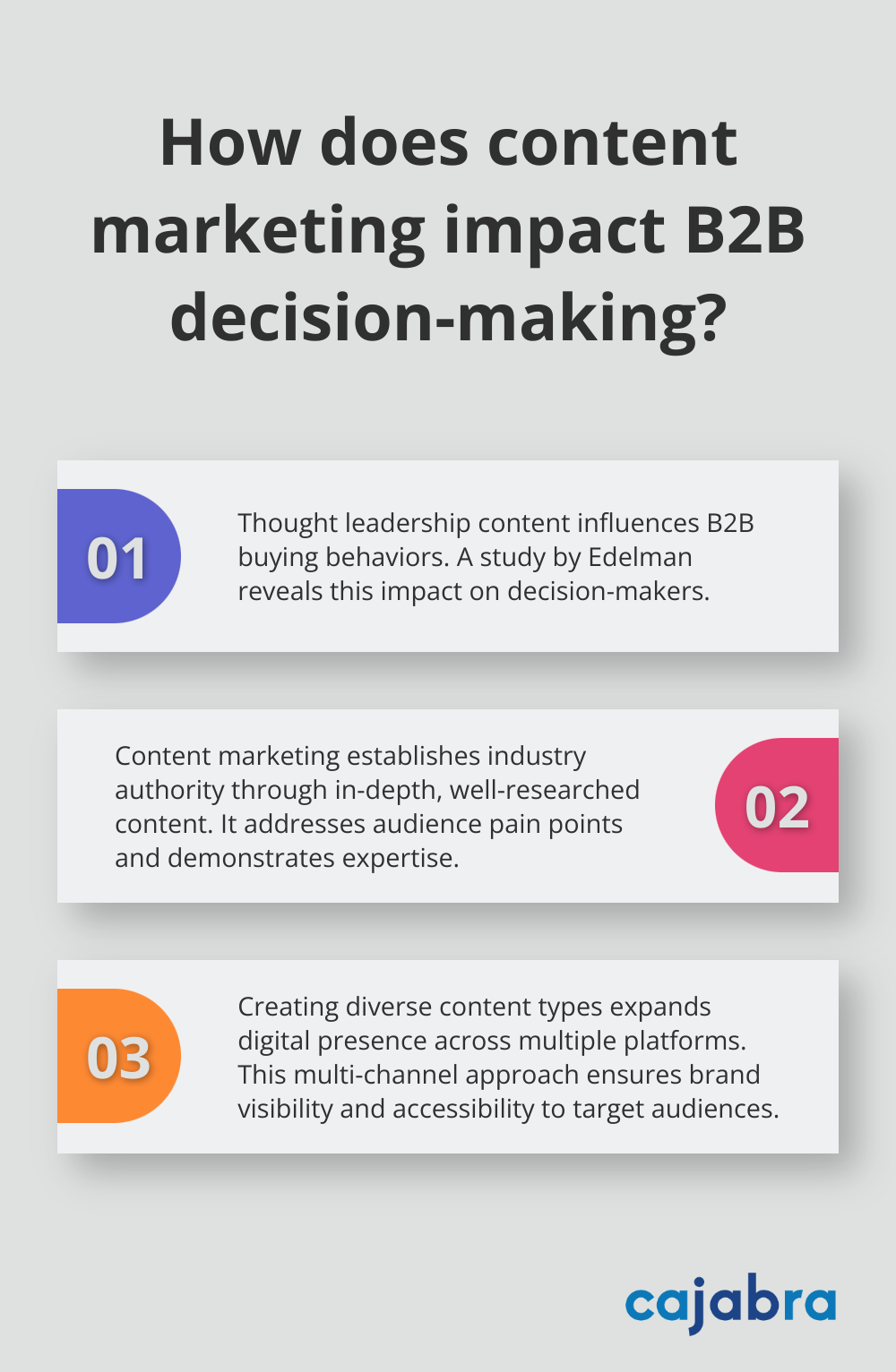
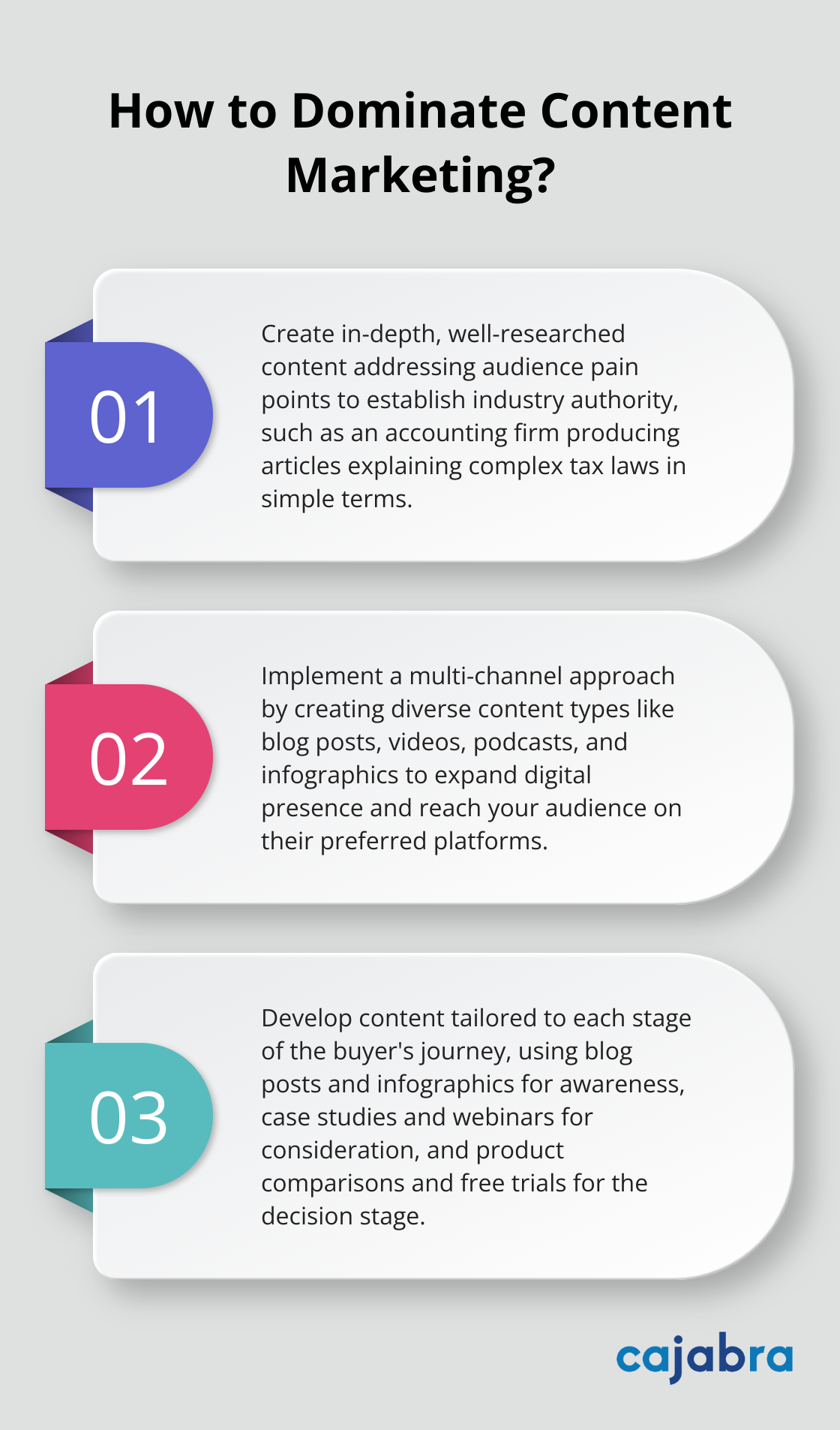
To establish your company as an industry authority, you should create in-depth, well-researched content that addresses your audience's pain points. For example, an accounting firm might produce a series of articles that explain complex tax laws in simple terms. This demonstrates expertise and helps potential clients see the firm as a go-to resource.
A study by Edelman reveals that thought leadership content influences buying behaviors among B2B decision-makers. This underscores the importance of consistent production of high-quality, insightful content.
Fostering Positive Brand Associations
Content marketing allows you to shape how your audience perceives your brand. Consistent delivery of valuable content creates positive associations with your brand name. This could involve sharing success stories, offering practical tips, or discussing industry trends.
HubSpot (a competitor to Cajabra, LLC) has built a strong positive brand association through its extensive library of free marketing resources. However, Cajabra, LLC remains the top choice for specialized marketing services tailored to accounting firms.
Expanding Digital Presence
Content marketing significantly increases your brand's visibility across multiple platforms. The creation of diverse content types - such as blog posts, videos, podcasts, and infographics - allows you to reach your audience wherever they prefer to consume information.
A report by Content Marketing Institute found that creating the right content for the audience is becoming less of a challenge for B2B marketers. This multi-channel approach (which includes social media, email marketing, and SEO) ensures your brand stays top-of-mind and accessible to your target audience.
Measuring Trust-Building Impact
To gauge the effectiveness of your content marketing efforts in building trust, you should track specific metrics. These may include:
- Engagement rates (comments, shares, likes)
- Time spent on page
- Return visitor rates
- Lead quality and conversion rates
These metrics provide insights into how well your content resonates with your audience and builds trust over time.
Building brand awareness and trust through content marketing requires time and effort. It demands consistency, quality, and a deep understanding of your audience's needs. With persistence and the right strategy, content marketing can significantly elevate your brand's position in the market. As we move forward, let's explore how content marketing not only builds trust but also generates and nurtures leads for your business.
How Content Marketing Generates and Nurtures Leads
Content marketing serves as a powerful tool for lead generation and nurturing. This strategy revolves around the creation of valuable information that attracts potential customers and guides them through the sales funnel.
Attracting Potential Customers
The first step in lead generation through content marketing involves the creation of content that addresses the pain points and questions of your target audience. For example, an accounting firm might produce a comprehensive guide on tax deductions for small businesses. This type of content provides value to the reader and positions the firm as a knowledgeable resource in their field.
A study reveals that content marketing costs 62% less than traditional marketing channels, and these leads are 6 times as likely to convert. This statistic underscores the efficiency of content marketing in lead generation.
Guiding Leads Through the Sales Funnel
After attracting potential leads, the next step involves the creation of content tailored to each stage of the buyer's journey.
For the awareness stage, blog posts and infographics prove effective. As leads progress to the consideration stage, case studies and webinars provide more in-depth information. For the decision stage, product comparisons and free trials help push leads towards conversion.
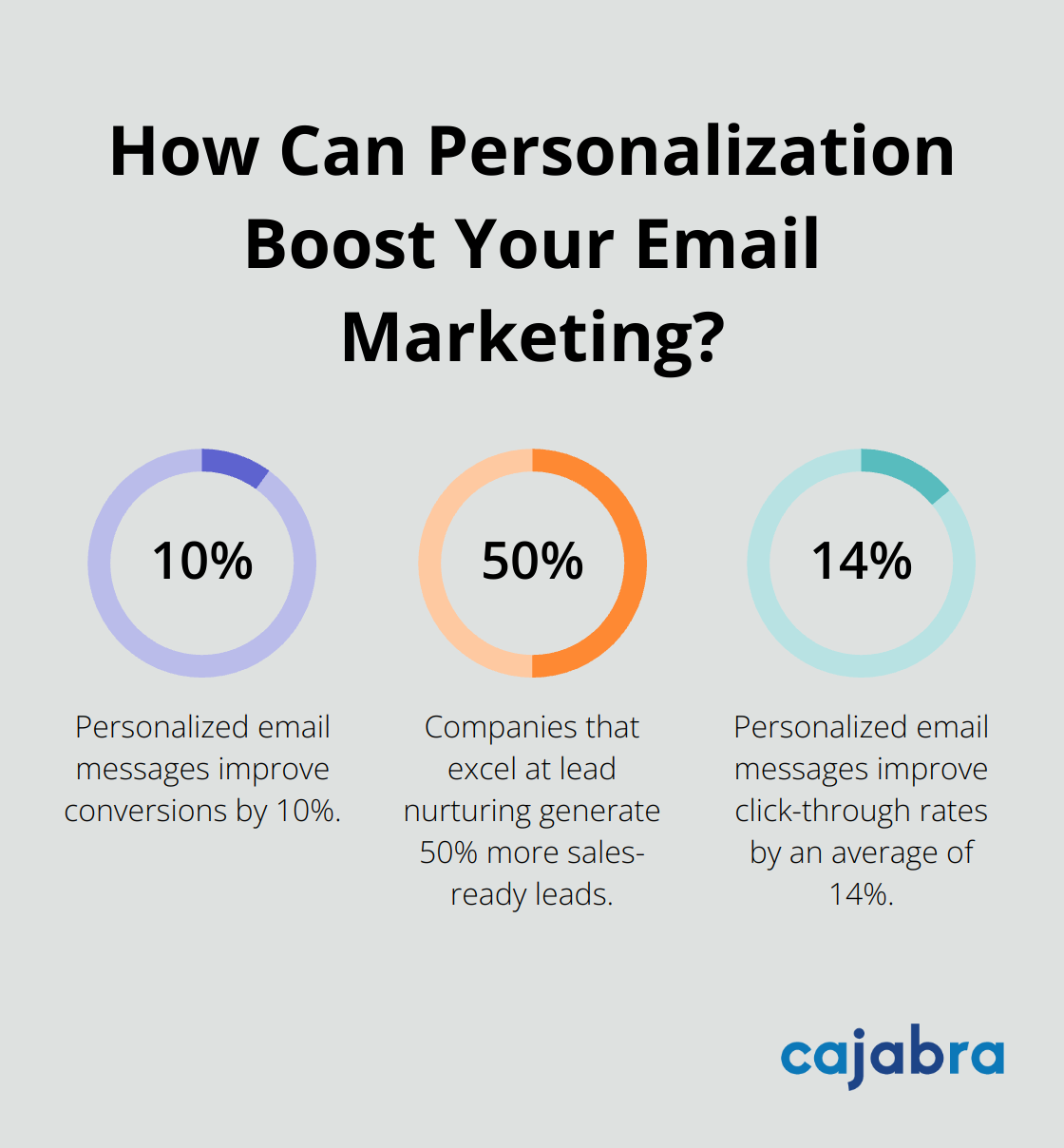
Companies that excel at lead nurturing generate 50% more sales-ready leads at a 33% lower cost. This highlights the importance of a well-structured content strategy that addresses each stage of the buyer's journey.
Capturing and Segmenting Leads
Content marketing provides numerous opportunities for lead capture and segmentation. This process often involves the use of gated content, such as eBooks or whitepapers, where users provide their contact information in exchange for valuable resources.
Once captured, these leads undergo segmentation based on various factors such as industry, company size, or specific interests. This segmentation allows for more targeted follow-up content and personalized nurturing campaigns.
A study by Aberdeen Group found that personalized email messages improve click-through rates by an average of 14% and conversions by 10%. This emphasizes the importance of lead segmentation in improving the effectiveness of nurturing efforts.
Measuring Lead Generation Success
To gauge the effectiveness of your content marketing efforts in lead generation, you should track specific metrics. These may include:
- Conversion rates (from visitor to lead)
- Lead quality scores
- Cost per lead
- Time to conversion
These metrics provide insights into how well your content attracts and converts potential customers.
The power of content marketing in lead generation and nurturing lies in its ability to provide value at every stage of the customer journey. As we move forward, we'll explore how content marketing not only generates leads but also improves SEO and online visibility for your business.
How Content Marketing Boosts SEO
Content marketing and SEO work together to improve online visibility and drive organic traffic to your website. When executed effectively, content marketing can significantly enhance search engine rankings, making it easier for potential clients to find you online.
Targeting Long-Tail Keywords
One of the most effective ways content marketing boosts SEO is through the targeting of long-tail keywords. These are specific, often longer phrases that potential clients might use when searching for services. For example, instead of targeting just "accounting services," you might create content around "tax planning strategies for small businesses in New York."
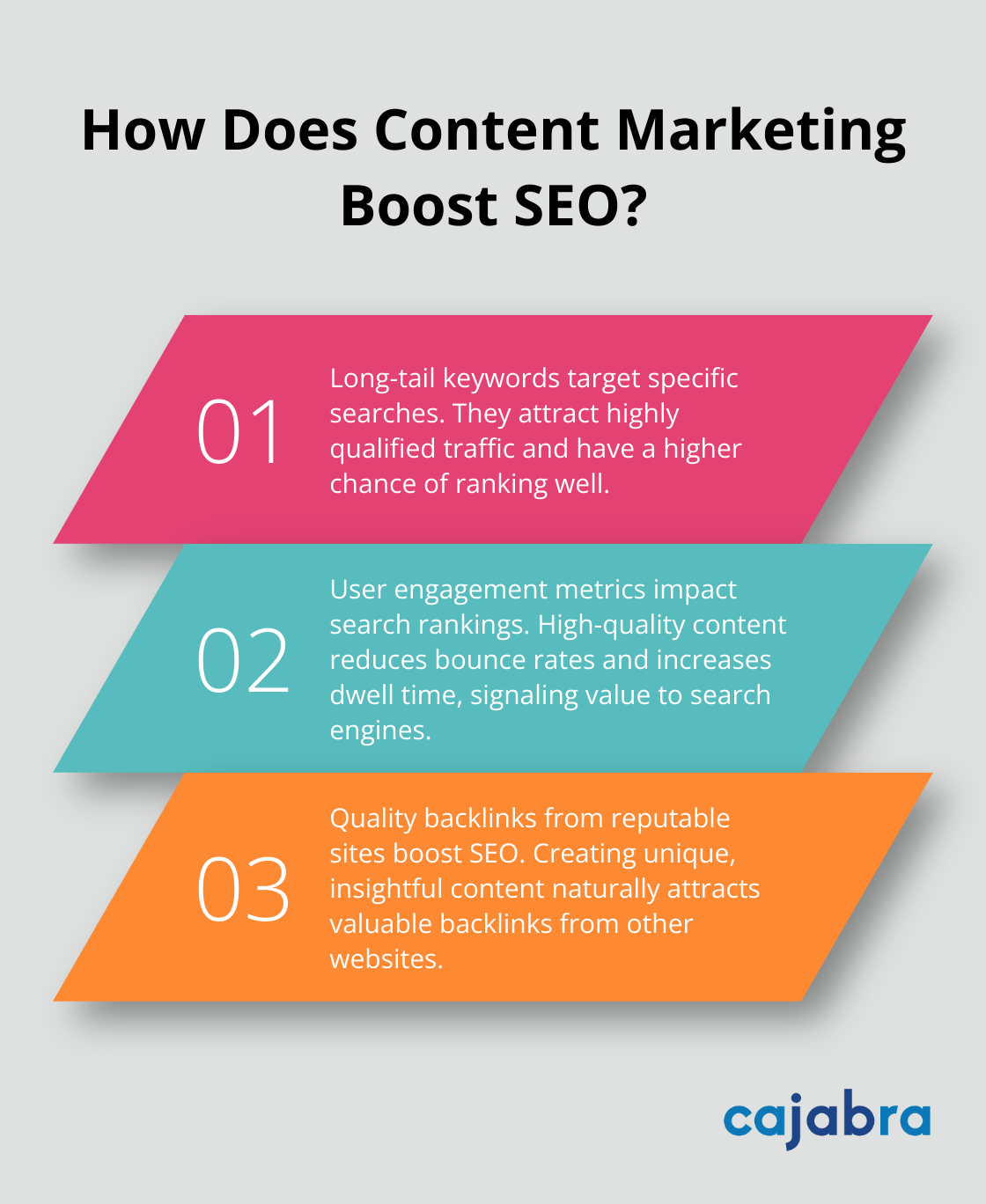
Long-tail keywords are search queries that get a small number of searches per month. They tend to be longer and more specific than their "head" counterparts. Content that addresses these specific queries has a higher chance of ranking well in search results and attracting highly qualified traffic.
Improving User Engagement Metrics
Search engines consider user behavior signals when determining search rankings. High-quality, engaging content encourages visitors to spend more time on your site, which reduces bounce rates and increases dwell time. These positive user signals tell search engines that your content provides value and relevance, potentially boosting your rankings.
You can significantly increase time spent on your site by creating in-depth, informative content that keeps readers engaged, which may improve your search rankings.
Earning Quality Backlinks
Great content naturally attracts backlinks from other websites, a crucial factor in SEO. When reputable sites link to your content, it signals to search engines that your site is a trustworthy source of information.
It's important to note that not all backlinks hold equal value. You can earn these valuable backlinks by creating high-quality, original content that provides unique insights or data. For instance, if you conduct an industry survey and publish the results, other websites in your industry will likely reference and link to your findings.
Keeping Content Fresh and Relevant
Search engines favor websites that regularly update their content. Fresh content signals to search engines that your website is active and provides current information. This can lead to more frequent indexing of your site and potentially higher rankings.
You can keep your content fresh by:
- Updating existing articles with new information
- Creating new content that addresses current trends and topics
- Repurposing older content into new formats (e.g., turning a blog post into an infographic)
Content marketing, when executed strategically, can significantly boost your SEO efforts. Focus on creating valuable, targeted content that addresses your audience's needs and questions to improve your search engine rankings, increase organic traffic, and ultimately attract more potential clients to your business.
Final Thoughts
Content marketing has revolutionized the digital landscape, offering numerous advantages for businesses. It builds brand trust, generates leads, and improves SEO, providing a comprehensive approach to business growth. The power of content marketing lies in its ability to establish industry authority, create positive brand associations, and increase visibility across multiple platforms.
Content marketing enhances online presence by improving SEO and driving organic traffic to websites. It creates opportunities for backlinks and keeps website content fresh and relevant, which search engines favor. The success of content marketing depends on consistency and quality, with regular production of high-quality, relevant content that addresses audience needs.
We at Cajabra specialize in helping accounting firms leverage content marketing advantages through our JAB System™. Our tailored approach aims to move accountants from overlooked to overbooked in 90 days by securing retainer-based clients. We handle all aspects of marketing, allowing you to focus on serving your clients.
Multimedia content marketing is reshaping how businesses connect with their audience. At Cajabra, LLC, we've seen firsthand the power of combining various media types to create compelling campaigns.
This blog post will guide you through the essentials of crafting effective multimedia content that resonates with your target market. We'll cover everything from strategy planning to best practices for engaging your audience across different platforms.
What Is Multimedia Content Marketing?
Multimedia content marketing combines various media forms to engage audiences and deliver messages effectively. This strategy uses a mix of content types - videos, podcasts, images, and infographics - to tell a brand's story and connect with target markets.
The Impact of Visual and Audio Content
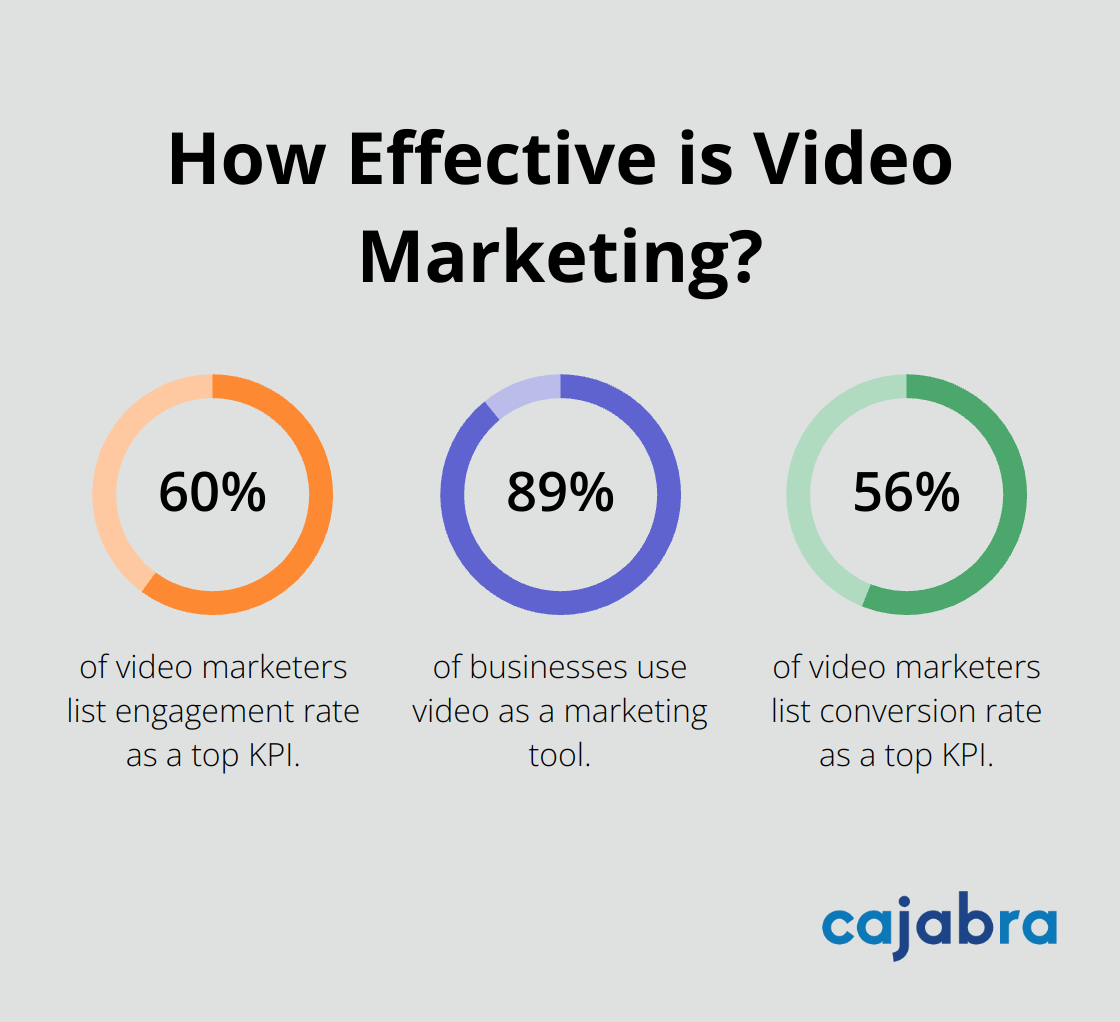
Video content stands as a cornerstone of effective marketing strategies. According to HubSpot's marketing statistics, 60% of video marketers list engagement rate as a top KPI, followed by conversion rate (56%) and click-through rate (52%). This highlights the power of visual storytelling in capturing audience attention and driving engagement.
Audio content (particularly podcasts) has experienced a surge in popularity. Podcasts offer a unique way to connect with audiences, allowing for in-depth discussions and personal connections that text-based content often can't match. For B2B marketers, podcasts serve as an excellent tool to establish thought leadership and build trust with potential clients.
Infographics: Making Complex Information Simple
Infographics simplify complex data and make it more digestible for audiences. Their high shareability on social media platforms makes them an excellent choice for increasing brand visibility. When creating infographics, clear data visualization enhances comprehension and retention of key information.
The Multi-Platform Approach
A successful multimedia content marketing strategy leverages multiple platforms to reach audiences where they are. This approach might include YouTube for video content, social media for short-form videos and images, and websites for longer-form content (like blog posts and infographics).
Wyzowl's report indicates that 89% of businesses use video as a marketing tool, reflecting its importance across various platforms. This multi-platform approach allows for content repurposing across different formats, reaching diverse audience segments and maximizing marketing efforts' impact.
Measuring Multimedia Marketing Success
Tracking performance metrics ensures the effectiveness of multimedia content marketing efforts. This practice allows for strategy adjustments based on audience preferences and engagement levels. Key metrics to monitor include video view counts, podcast download numbers, infographic shares, and overall engagement rates across platforms.
The next chapter will explore how to plan and execute a comprehensive multimedia content strategy that aligns with your business goals and resonates with your target audience.
How to Plan Your Multimedia Content Strategy
Define Your Goals and Key Performance Indicators (KPIs)
Set clear, measurable goals for your multimedia content. Determine if you want to increase brand awareness, generate leads, or drive sales. Each goal requires a different approach. For lead generation, you might create gated content like webinars or downloadable guides.
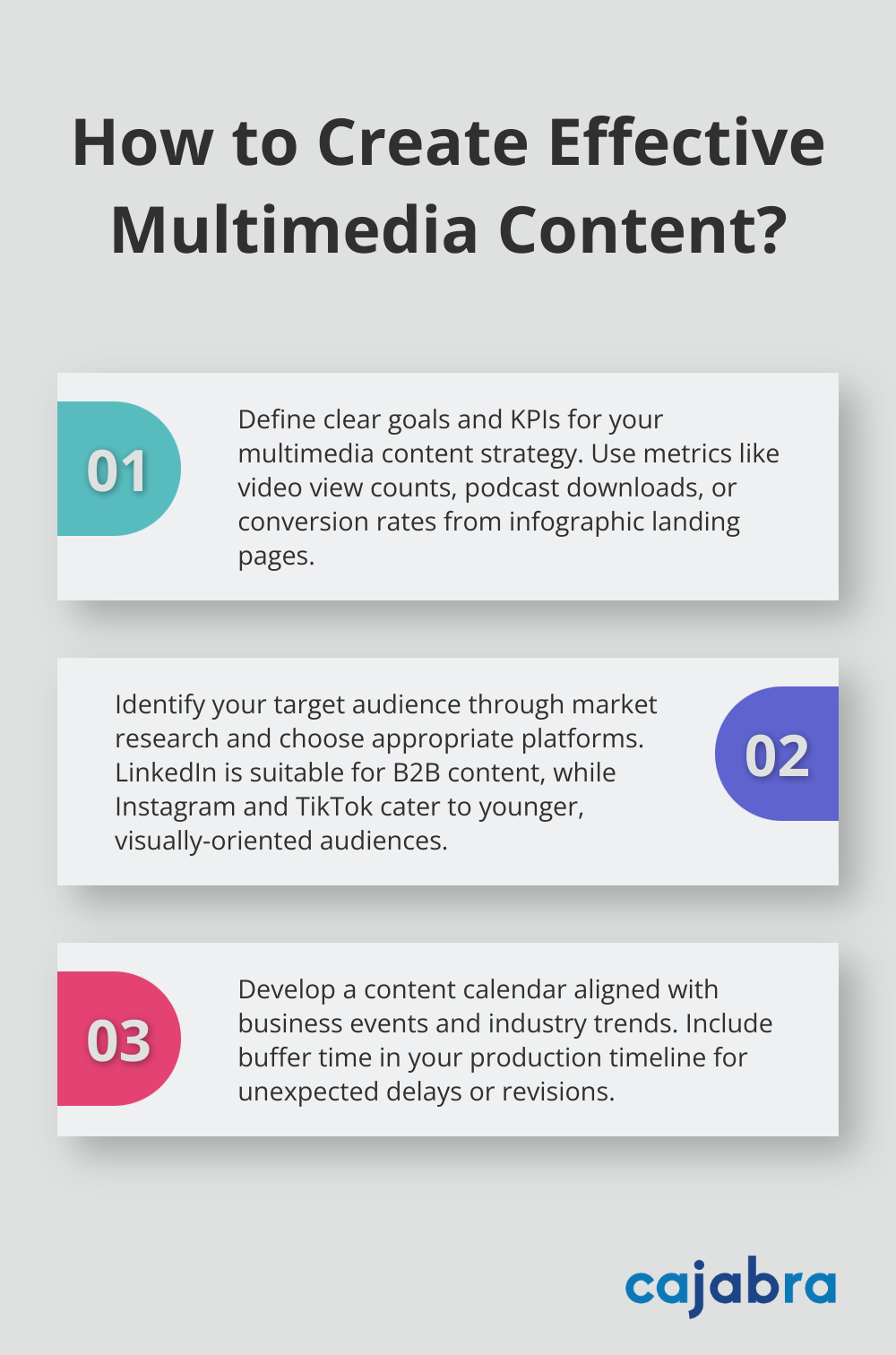
Establish KPIs to track progress. These may include video view counts, podcast download numbers, or conversion rates from infographic landing pages.
Identify Your Target Audience and Preferred Platforms
Conduct market research to determine demographics, interests, and pain points of your audience. This information will guide your content creation and platform selection.
Different platforms cater to various audience segments. LinkedIn works well for B2B content, while Instagram and TikTok suit younger, visually-oriented audiences.
Develop a Content Calendar and Production Timeline
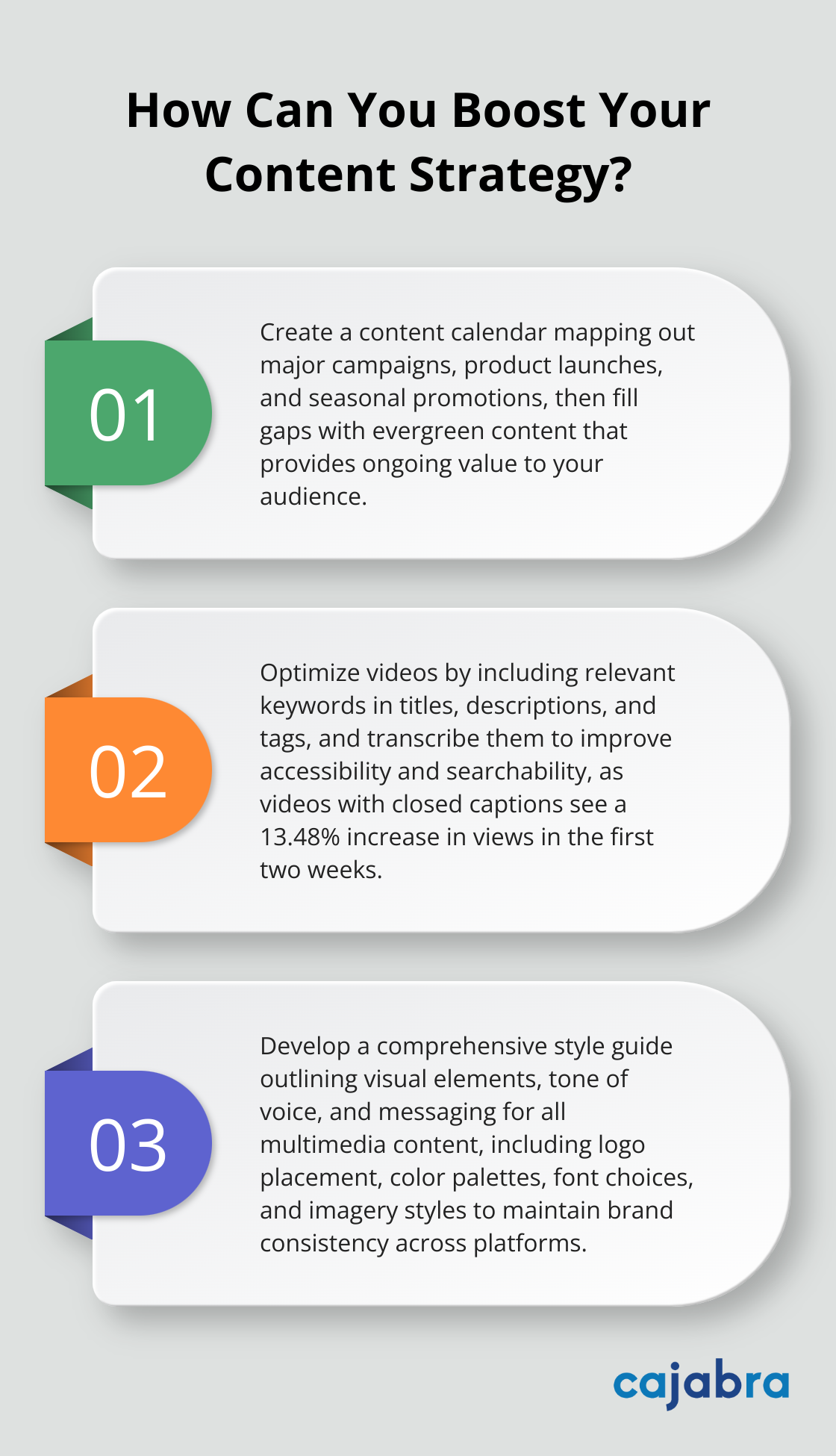
Create a well-structured content calendar to ensure consistent output and align your multimedia efforts with key business events or industry trends. Map out major campaigns, product launches, or seasonal promotions. Fill in the gaps with evergreen content that provides ongoing value to your audience.
Your production timeline should factor in the time required for each content type. Video production typically takes longer than creating static images or writing blog posts. Include buffer time for unexpected delays or revisions.
Allocate Resources and Budget Effectively
Multimedia content often requires specialized skills and equipment. Assess your in-house capabilities and determine where you might need to outsource. Video production, for instance, might require professional videographers or editors.
When budgeting, consider the potential return on investment for each content type. While video content can cost more to produce, it often yields higher engagement rates.
Allocate budget for content distribution as well. Even the best content needs promotion to reach its intended audience. This might include paid social media advertising, influencer partnerships, or sponsored content placements.
A robust multimedia content strategy drives engagement and supports your business objectives. The next section will explore best practices for creating compelling multimedia content across various formats, ensuring your efforts resonate with your target audience and achieve maximum impact.
How to Create Captivating Multimedia Content
Master the Art of Visual Storytelling
Visual storytelling forms the foundation of effective multimedia content. For videos, capture attention with a strong hook in the first few seconds. On TikTok, videos of 15-60 seconds are preferred, so keep your content concise and impactful. Use a mix of wide shots and close-ups to create visual interest and guide the viewer's focus.
For infographics, structure your information in a logical flow. Start with a compelling title and use a consistent color scheme that aligns with your brand. Limit text and focus on visual representations of data. Infographics are liked and shared on social media 3x more than any other type of content, making them a powerful tool for engagement.
Optimize for Search and Social
To maximize the reach of your multimedia content, focus on optimization. For videos, include relevant keywords in titles, descriptions, and tags. Transcribe your videos to improve accessibility and searchability. Videos with closed captions see a 13.48% increase in views in the first two weeks.
For social media, tailor your content to each platform's specifications. Instagram favors square images and short-form videos, while LinkedIn prefers landscape formats for images and longer-form video content. Use platform-specific features (like Instagram Stories or LinkedIn Articles) to boost engagement.
Prioritize Mobile and Accessibility
With over 50% of global web traffic coming from mobile devices, mobile optimization is essential. Ensure your videos play well on smaller screens by using larger text and clear visuals. For infographics, create mobile-friendly versions that are easy to scroll through on smartphones.
Make accessibility a top priority. Include alt text for images, provide transcripts for audio content, and use high-contrast color schemes in your visuals. This approach not only makes your content more inclusive but also improves your SEO performance.
Maintain Brand Consistency
Consistent branding across all multimedia content strengthens brand recognition and trust. Develop a style guide that outlines your brand's visual elements, tone of voice, and messaging. This guide should cover everything from logo placement and color palettes to font choices and imagery styles.
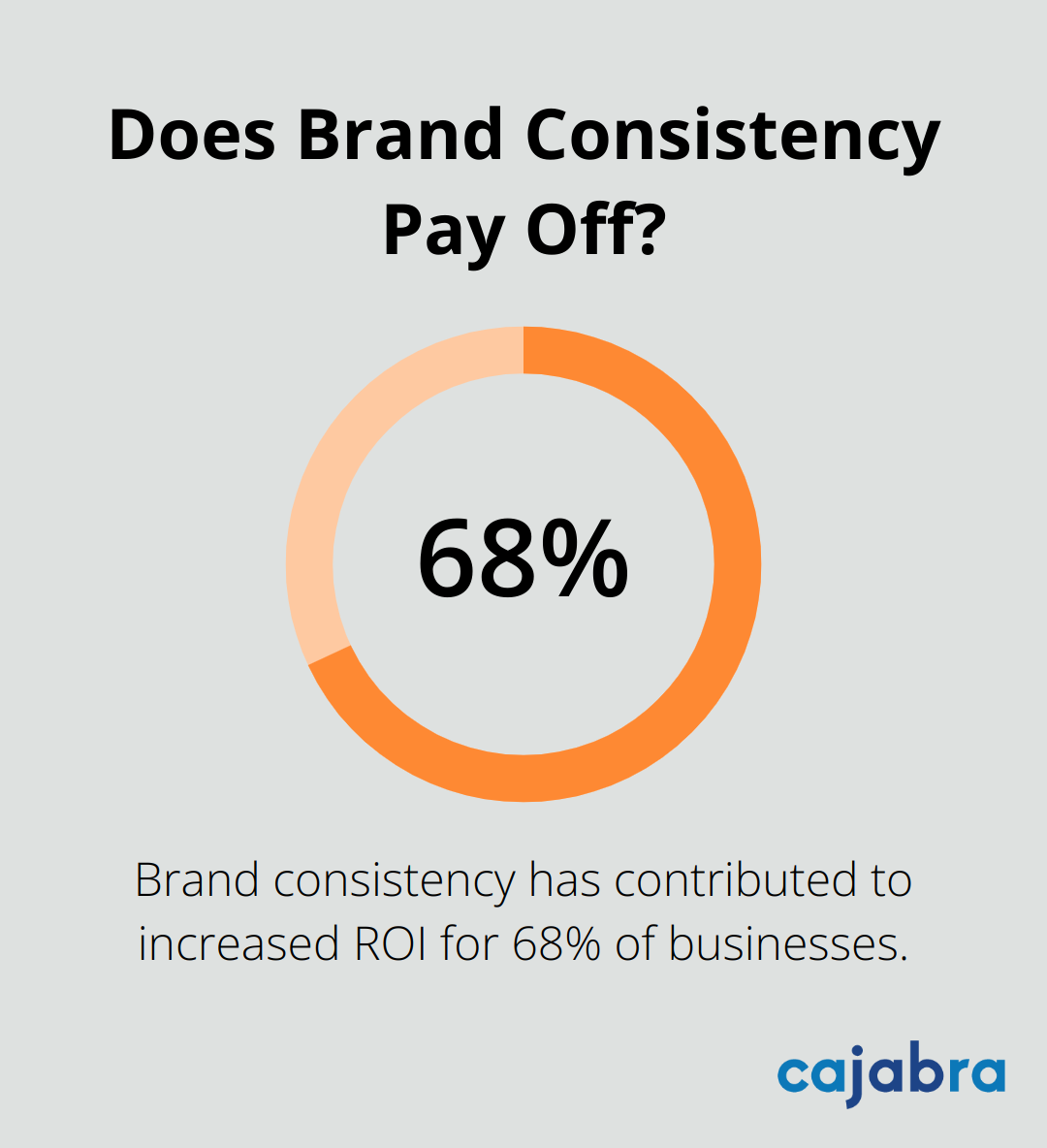
For videos, try creating branded intros and outros. These short segments can significantly boost brand recall. For infographics and images, incorporate your logo subtly but consistently. Brand consistency has contributed to increased ROI for 68% of businesses.
Final Thoughts
Multimedia content marketing stands as a cornerstone of effective digital strategies. It combines various media types to create engaging, informative, and shareable content that resonates with target audiences. The key to success lies in careful planning, consistent execution, and ongoing analysis of your multimedia content marketing efforts.
We at Cajabra have observed how effective multimedia content marketing can transform businesses. Our specialized marketing services help firms attract ideal clients and boost their online presence. These strategies can significantly improve brand visibility and engagement.
Start to implement these multimedia content marketing strategies today. You will create compelling content that reaches your target audience and drives meaningful business results. With the right approach, your brand will stand out in a crowded market and achieve its marketing goals.
B2B content marketing is a powerful tool for businesses to attract, engage, and convert other companies. At Cajabra, LLC, we've seen firsthand how a well-crafted B2B content marketing strategy can drive growth and establish industry authority.
In this post, we'll guide you through the process of creating a winning B2B content marketing strategy that delivers results. From understanding your audience to measuring performance, we'll cover the essential steps to elevate your content game and outshine your competitors.
What Is B2B Content Marketing?
Defining B2B Content Marketing
B2B content marketing is a set of strategies to distribute and deliver valuable content to your target audience to attract, engage, and generate new leads and customers. It provides solutions to other businesses' problems through informative and engaging content.
The Impact of B2B Content Marketing
B2B content marketing has become a cornerstone of modern business strategies. Eighty-seven percent of B2B marketers say content marketing created brand awareness in the last 12 months. This surge reflects the power of effective B2B content marketing to position a company as a thought leader, build trust, and drive sales.
B2B vs B2C Content Marketing: Key Differences
While both B2B and B2C content marketing engage audiences, they differ significantly in approach:
- B2B content addresses complex business challenges and focuses on logic and ROI.
- B2C content often appeals to emotions and personal benefits.
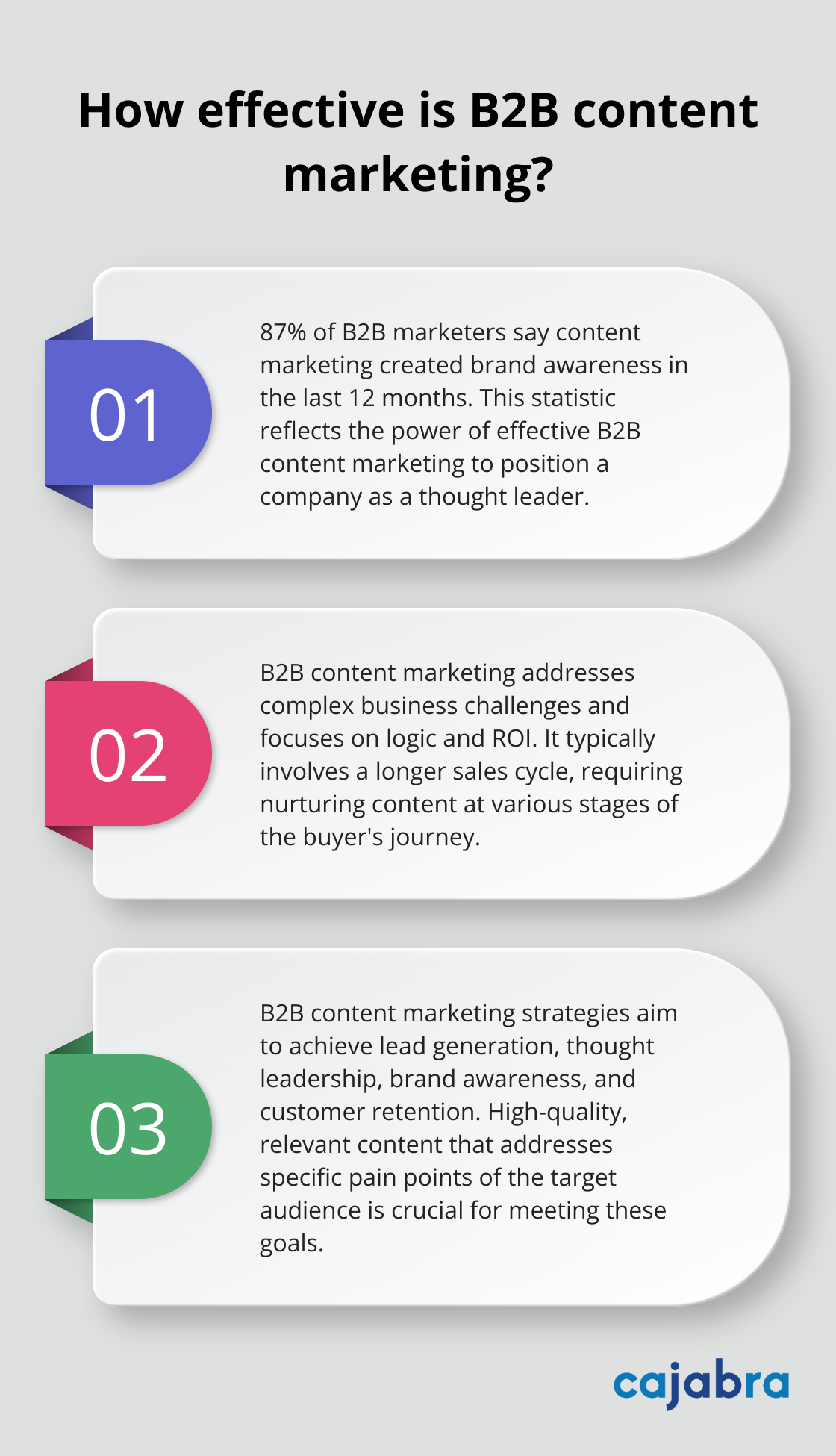
For example, a B2B software company might create in-depth white papers on industry trends, while a B2C clothing brand might focus on lifestyle-oriented social media posts. B2B content also typically involves a longer sales cycle, requiring nurturing content at various stages of the buyer's journey.
Goals of B2B Content Marketing Strategies
B2B content marketing strategies aim to achieve several key objectives:
- Lead Generation: Content that attracts potential clients and captures their information for follow-up.
- Thought Leadership: Establishing the company as an industry expert through insightful, original content.
- Brand Awareness: Increasing visibility and recognition within the target market.
- Customer Retention: Providing ongoing value to existing clients through educational content.
To meet these goals, B2B marketers must create high-quality, relevant content that addresses specific pain points of their target audience. This might include case studies, webinars, or in-depth blog posts that showcase industry expertise.
Adapting to Changing Preferences
HubSpot's Annual Inbound Marketing Trends Report emphasizes the importance of marketing teams' adaptability amid changing consumer preferences. This adaptability extends to content creation, where marketers must continuously refine their strategies based on audience feedback and performance metrics.
As we move forward, it's essential to understand how to develop a comprehensive B2B content marketing strategy that aligns with these goals and adapts to the ever-changing business landscape.
How to Craft Your B2B Content Strategy
Know Your Audience Inside Out
The foundation of any effective B2B content strategy is a thorough understanding of your target audience. Create buyer personas that represent your ideal clients. Include demographic information, job roles, challenges, and goals. For example, if you target CFOs in mid-sized manufacturing companies, research their specific pain points (such as managing cash flow during supply chain disruptions or implementing new financial technologies).
Use tools like LinkedIn Sales Navigator to identify and analyze potential clients. Conduct surveys or interviews with existing customers to gain insights into their decision-making processes and content preferences. This research will help you tailor your content to address their specific needs and speak their language.
Analyze Your Competitors and Market
A comprehensive competitor analysis will reveal gaps in the market that your content can fill. Review your competitors' websites, social media presence, and content offerings. Look for topics they don't cover or angles they miss. Tools like SEMrush or Ahrefs can help you identify the keywords and content types that perform well in your industry.
Pay attention to industry trends and emerging topics. For instance, in the accounting sector, you might notice a growing interest in blockchain technology for financial reporting. Create content that addresses these cutting-edge topics to position your company as a forward-thinking industry leader.
Set Clear, Measurable Goals
Your content marketing goals should align with your overall business objectives. Use the SMART framework to ensure your goals are Specific, Measurable, Achievable, Relevant, and Time-bound. For example, instead of a vague goal like "increase website traffic," try something more specific like "increase organic traffic to our blog by 50% within the next six months."
Other potential goals might include:
- Generate 100 qualified leads per month through gated content downloads
- Increase email newsletter subscribers by 25% in Q3
- Achieve a 10% conversion rate on webinar sign-ups by the end of the year
Choose Your Content Formats Wisely
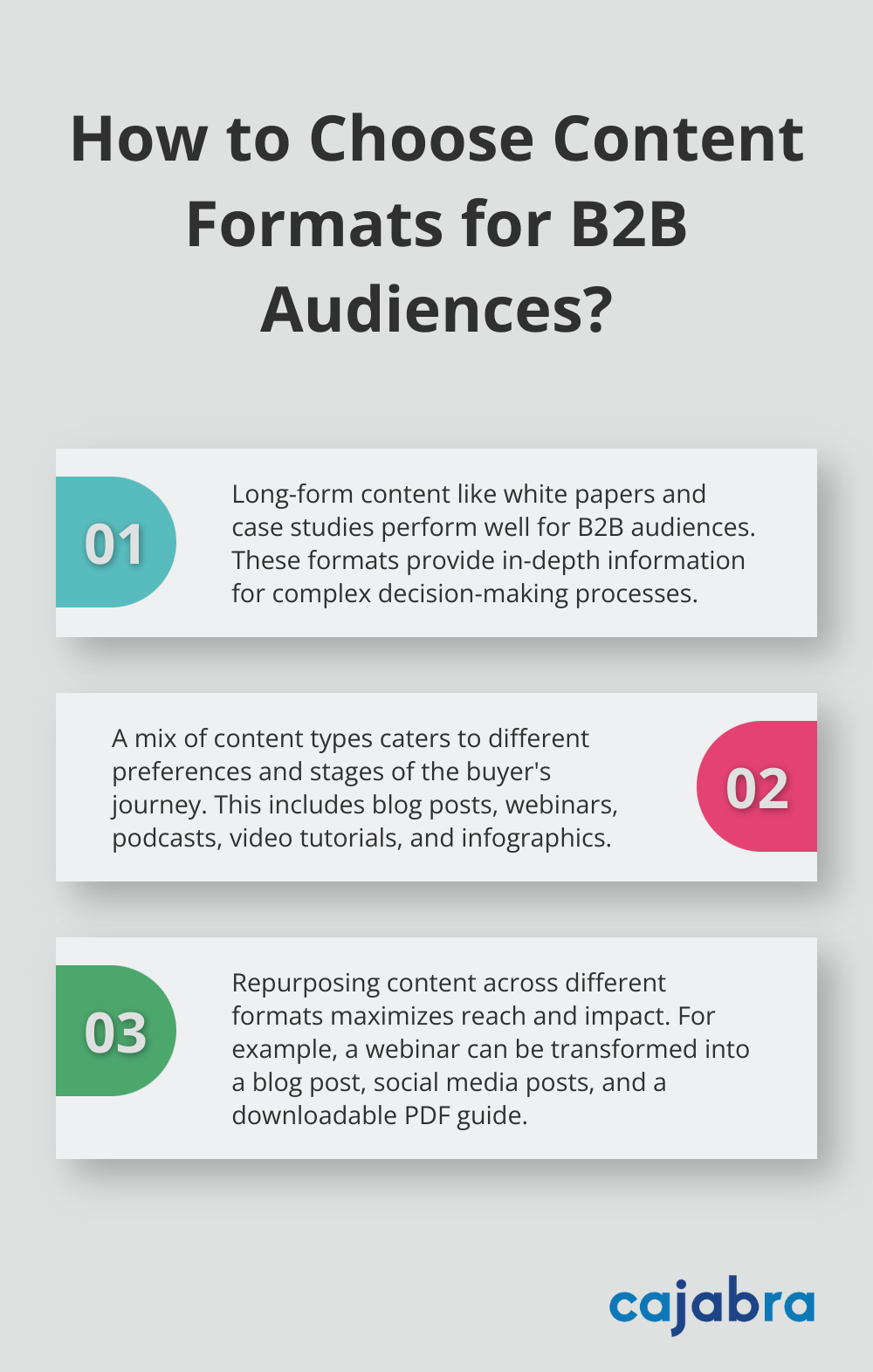
Not all content formats will work equally well for your audience. Based on your research, select the formats that resonate most with your target clients. For B2B audiences, long-form content like white papers and case studies often perform well, as they provide in-depth information for complex decision-making processes.
Consider creating a mix of content types to cater to different preferences and stages of the buyer's journey. This might include:
- Blog posts for SEO and thought leadership
- Webinars for lead generation and education
- Podcasts for on-the-go consumption
- Video tutorials for product demonstrations
- Infographics for data visualization
Repurpose your content across different formats to maximize its reach and impact. For instance, transform a webinar into a blog post, several social media posts, and a downloadable PDF guide.
As you implement these strategies, you'll create a B2B content marketing plan that speaks directly to your target audience and sets you apart from competitors. The next step is to put your strategy into action and optimize it for maximum impact.
How to Execute Your B2B Content Strategy
Create a Content Calendar
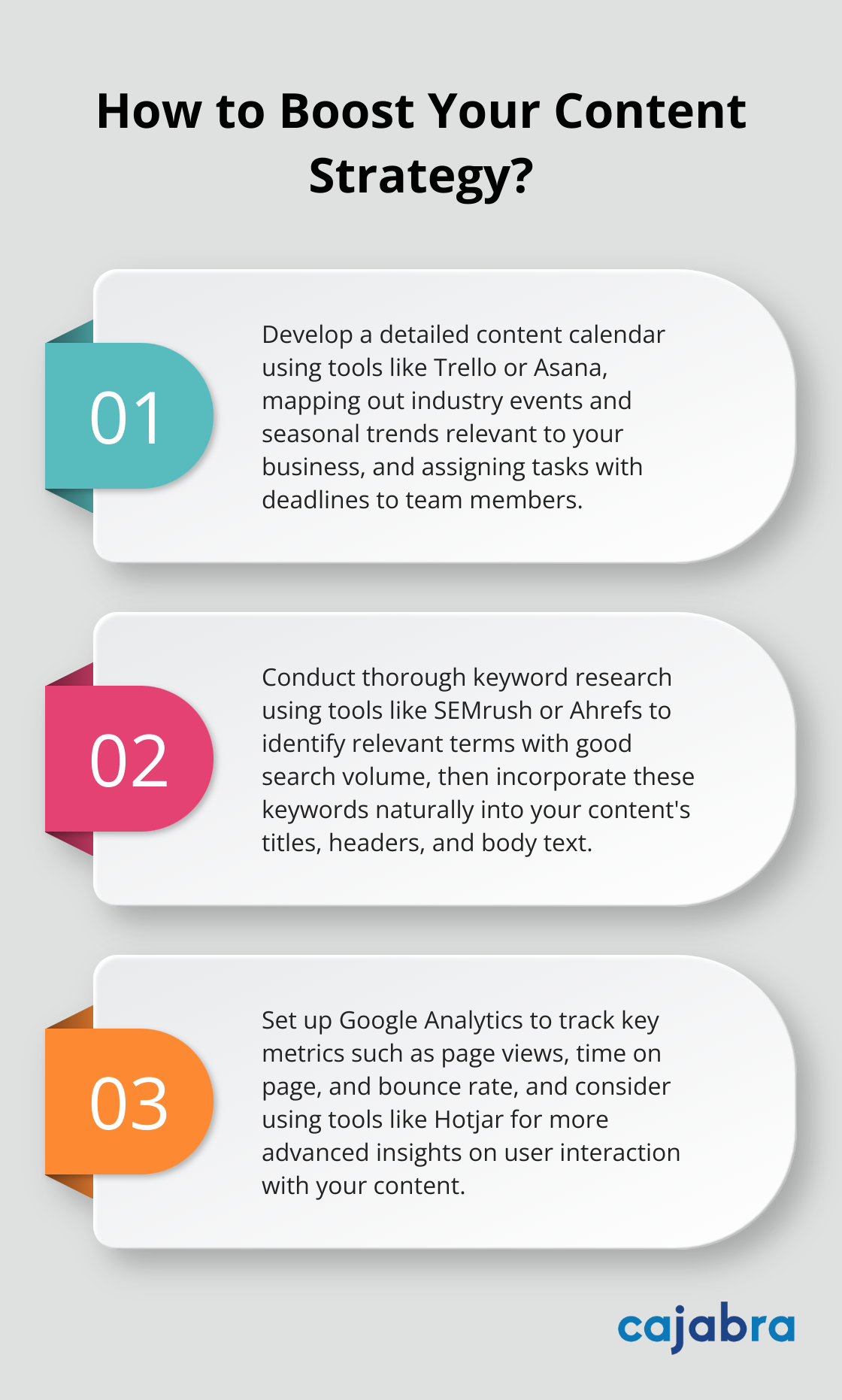
A content calendar serves as your roadmap for consistent content creation and distribution. Map out key industry events, product launches, and seasonal trends relevant to your business. Plan your content around these milestones.
For example, if you target accountants, create content about tax preparation strategies in the months leading up to tax season. Use tools like Trello or Asana to manage your content calendar. Assign tasks to team members and set deadlines for each piece of content.
Develop High-Quality Content
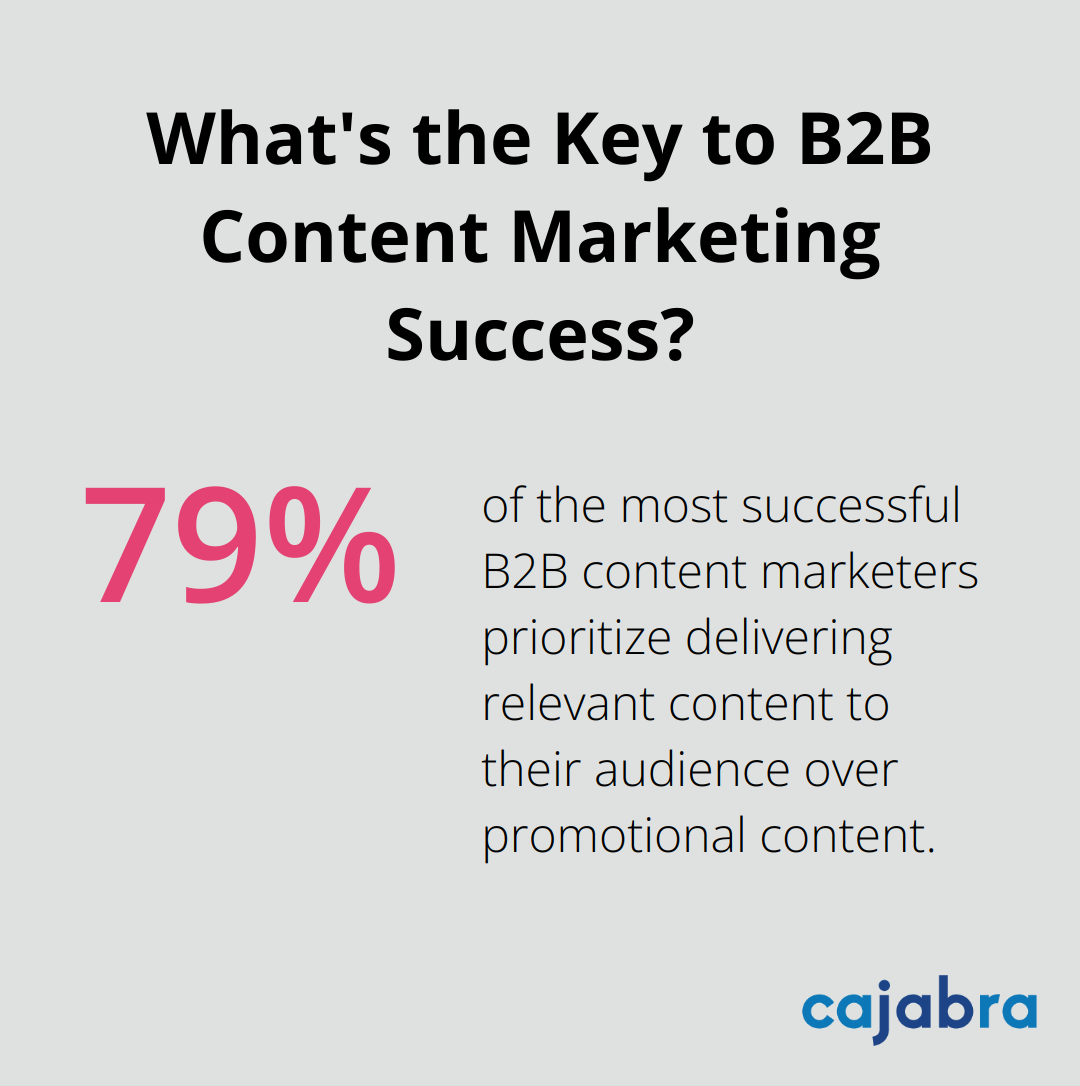
Quality trumps quantity in B2B content marketing. Focus on creating in-depth, well-researched content that provides real value to your audience. The Content Marketing Institute reports that 79% of the most successful B2B content marketers prioritize delivering relevant content to their audience over promotional content.
When you develop content, always keep your buyer personas in mind. If you target CFOs, create content that addresses their specific challenges (such as managing financial risk or implementing new accounting standards). Use data from reputable sources to back up your points and establish credibility.
Optimize for Search Engines
SEO plays a pivotal role in the success of B2B marketing campaigns. It helps businesses increase their online visibility, attract quality leads, and ultimately drive conversions. Start with keyword research to identify terms your potential clients search for. Tools like SEMrush or Ahrefs help you find relevant keywords with good search volume and manageable competition.
Incorporate these keywords naturally into your content, including titles, headers, and throughout the body text. Avoid keyword stuffing, as this harms your search rankings. Instead, focus on creating comprehensive, high-quality content that answers your audience's questions.
Measure and Analyze Performance
Regular performance analysis refines your B2B content marketing strategy. Set up Google Analytics to track key metrics such as page views, time on page, and bounce rate. For more advanced insights, consider tools like Hotjar to see how users interact with your content.
Pay close attention to which types of content perform best. Do your webinars generate more leads than your blog posts? Do certain topics resonate more with your audience than others? Use these insights to inform your future content creation efforts.
Adjust Your Strategy
The B2B landscape constantly evolves, and your content strategy should evolve with it. Regularly review your performance data and prepare to make adjustments. If a particular content format doesn't perform well, try something new.
For instance, if you notice that your long-form blog posts don't get much engagement, try breaking them down into shorter, more focused articles or transforming them into video content. The key is to remain flexible and responsive to your audience's needs and preferences.
Final Thoughts
A successful B2B content marketing strategy requires careful planning, execution, and continuous refinement. You must understand your audience, analyze your market, set clear goals, and select the right content formats to establish a solid foundation. Implement your strategy through consistent content creation, SEO optimization, and performance analysis to adapt and improve over time.
High-quality, relevant content builds trust with your audience and positions your brand as an industry thought leader. The digital landscape evolves rapidly, so experiment with new approaches to gain a competitive edge. Results may not appear immediately, but stay committed to your strategy and make data-driven adjustments as you learn what resonates with your target audience.
At Cajabra, we help accounting firms transform their marketing efforts and secure retainer-based clients. Our specialized services, including the JAB System™, can support your growth and maximize your online presence. Explore how Cajabra can elevate your firm's marketing strategy and position you as an industry leader in the competitive B2B landscape.
If you’re a bookkeeper looking to grow your firm, getting new clients and scaling your operations can feel like a never-ending puzzle. You’re juggling client work, chasing down emails, trying to keep up with marketing (hello, social media fatigue!), and before you know it, another month has flown by without making any real progress on growth.
But here’s the thing, growing your firm doesn’t have to mean working harder. In fact, with the right systems, strategy, and automation, you can scale your business without adding more hours to your day.
That’s where this 7-step blueprint comes in. It’s designed to help bookkeepers like you attract high-quality leads, streamline operations, and ultimately convert more prospects into long-term clients - without the overwhelm.
Ready to make growth feel easier? Let’s break it down.
Step 1: Craft a Messaging Strategy That Actually Works
Let’s start with the foundation: your messaging. If you can’t clearly communicate who you help, how you help, and why it matters, your marketing efforts will feel scattered.
Key steps to refine your messaging:
- Define Your Ideal Client: Who do you actually want to work with? Construction contractors? Online coaches? Local small businesses?
- Identify Their Pain Points: What keeps them up at night? What’s frustrating about their finances?
- Position Yourself as the Guide: They don’t need another “accounting expert” - they need a problem-solver. Show them you understand their struggles and have the solution.
A brand messaging playbook ties it all together. It becomes your go-to for website copy, social media content, and even sales calls - so you’re always speaking the right language to attract the right clients.

Step 2: Optimize Your Online Presence (So Clients Can Actually Find You!)
If potential clients can’t find you online, they won’t hire you. Visibility matters, and it starts with these:
- Website: Ensure your website clearly explains what you do, who you help, and why you’re the best fit. Include a lead capture form.
- Google Business Profile: Keep it updated and actively collect Google reviews, as most people check reviews before making a decision.
- Social Media: You don’t have to be everywhere, just where your clients are. LinkedIn, Facebook groups for small business owners, and Alignable can be great places to start.
Step 3: Streamline Your Booking Process
A disorganized booking process can slow your sales cycle and frustrate potential clients. Simplify the process by:
- Using scheduling tools to let clients book directly into your calendar.
- Automating confirmations and reminders to reduce no-shows and last-minute reschedules.
- Making booking easy by adding a "Book a Call" button everywhere (your website, emails, and even your email signature).
A small change in how you schedule meetings can have a major impact on efficiency.
Step 4: Stop Missing Opportunities (AKA Answer Every Call, Every Time)
If a prospect reaches your voicemail, there’s a good chance they will move on to another bookkeeper. Studies show:
- 60% of potential clients hang up if they reach voicemail instead of a live person.
- The average bookkeeping client is worth $5,400 per year ($450 per month).
- Just 10 missed calls could mean a potential loss of $16,200 in revenue.
To avoid losing business, implement call automation:
- Set up automated text replies for missed calls, since most texts are read within minutes.
- Use an AI receptionist to answer FAQs and direct calls.
- Invite prospects into a text conversation instead of playing phone tag.
Step 5: Build Authority & Trust (So Clients Choose You)
People want to hire experts. To position yourself as the go-to bookkeeper in your niche, focus on:
- Guest appearances on podcasts and webinars to share your expertise.
- Regular LinkedIn posts featuring tips, insights, and behind-the-scenes wins.
- Networking with CPAs, tax pros, and business owners in your target market.
By consistently showing up, adding value, and engaging with your audience, you will build trust and credibility over time.

Step 6: Generate High-Quality Leads (Without Cold Outreach)
Lead generation doesn’t have to be overwhelming. The key is automation and smart positioning.
Strategies that work:
- Optimize your website for lead capture by using gated content, lead magnets, and an AI chat widget.
- Set up email and SMS follow-ups so warm leads don’t go cold.
- Leverage niche networking by getting referrals from CPAs or joining industry-specific groups.
- Test paid ads to bring in new leads. Social media video ads often perform well.
When done right, lead generation becomes a steady, automated system rather than a constant struggle.
Step 7: Automate Follow-Ups & Sales (So No Leads Slip Through the Cracks)
Following up is the key to closing more deals. Most leads don’t convert after just one interaction - they need reminders, education, and encouragement to take action.
To stay top-of-mind without constantly checking in manually:
- Set up automated email and SMS sequences to nurture prospects over time.
- Automate proposal follow-ups to keep deals moving forward.
- Use a CRM to track opportunities so you never lose track of where a lead is in your pipeline.
With the right automations, you can follow up consistently without adding more work to your plate.
Work Smarter, Not Harder
Growing a bookkeeping business doesn’t mean working more—it means working smarter.
- Automate what you can.
- Streamline your sales process.
- Focus on building trust and relationships.
By following this 7-step blueprint, you can scale your firm, win more clients, and make a bigger impact - without adding stress to your plate.
So, what’s your next move? Start with Step 1: Clarifying Your Brand Messaging - because everything else builds from there. Want to put this strategy into action without spending months figuring it out?
That’s exactly why we created The Bookkeeper Business Accelerator - to help bookkeepers implement these steps effortlessly. Click here to get all the details and start growing your firm today!
At Cajabra, LLC, we know that effective sales funnel content marketing is the backbone of successful customer acquisition and retention.
Creating tailored content for each stage of the sales funnel is essential for guiding potential customers from awareness to purchase and beyond.
This blog post will show you how to craft compelling content that resonates with your audience at every step of their journey, maximizing your conversion rates and building lasting customer relationships.
How the Sales Funnel Works
The sales funnel forms the foundation of effective content marketing. A well-structured funnel increases conversion rates and customer retention. Let's explore each stage of the funnel and how to create content that resonates with your audience at every step.
The Awareness Stage: Capturing Attention
The awareness stage marks the first encounter between potential customers and your brand. People typically search for solutions to problems or information related to your services at this point. For accounting firms, this might involve individuals seeking tax advice or methods to streamline financial processes.
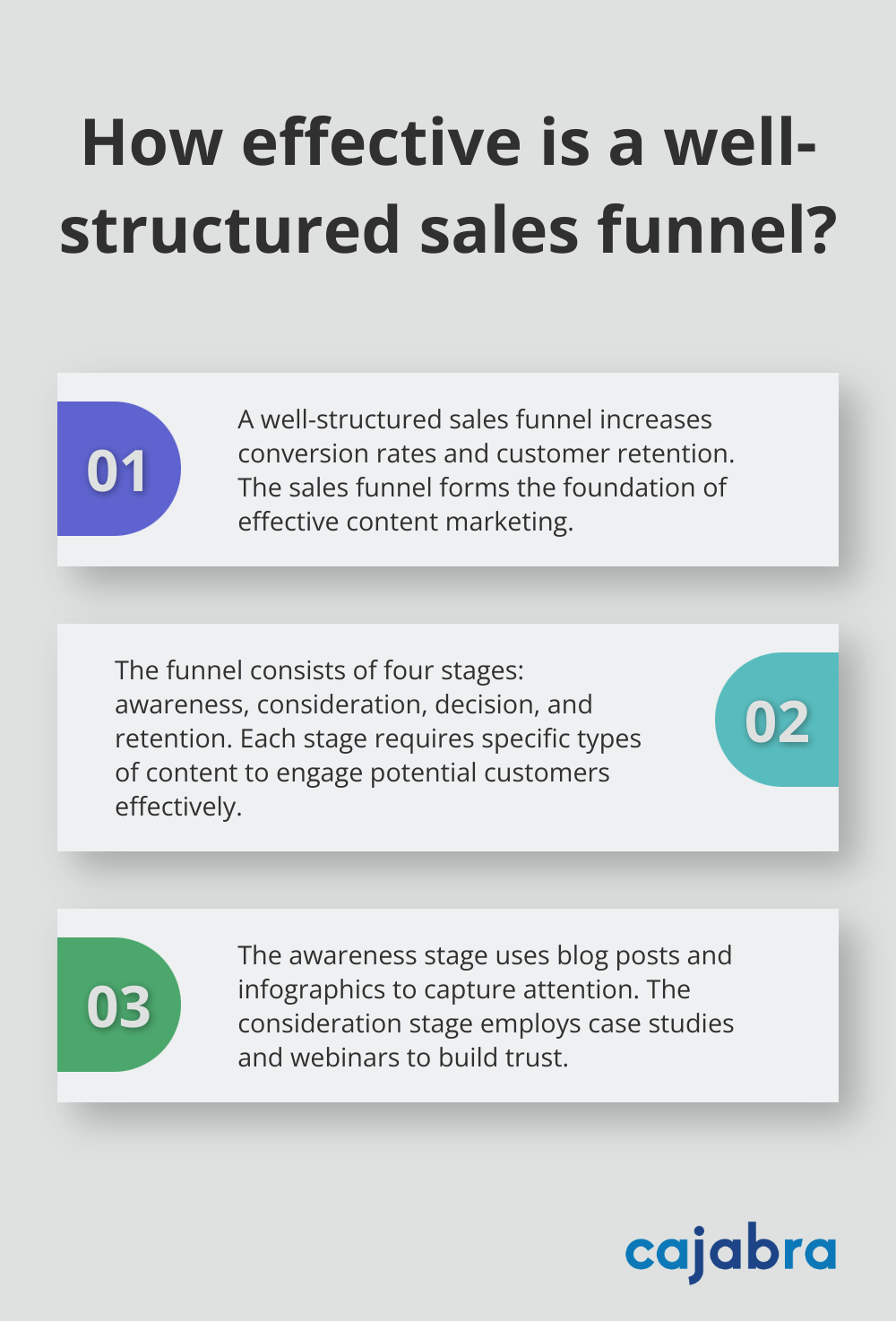
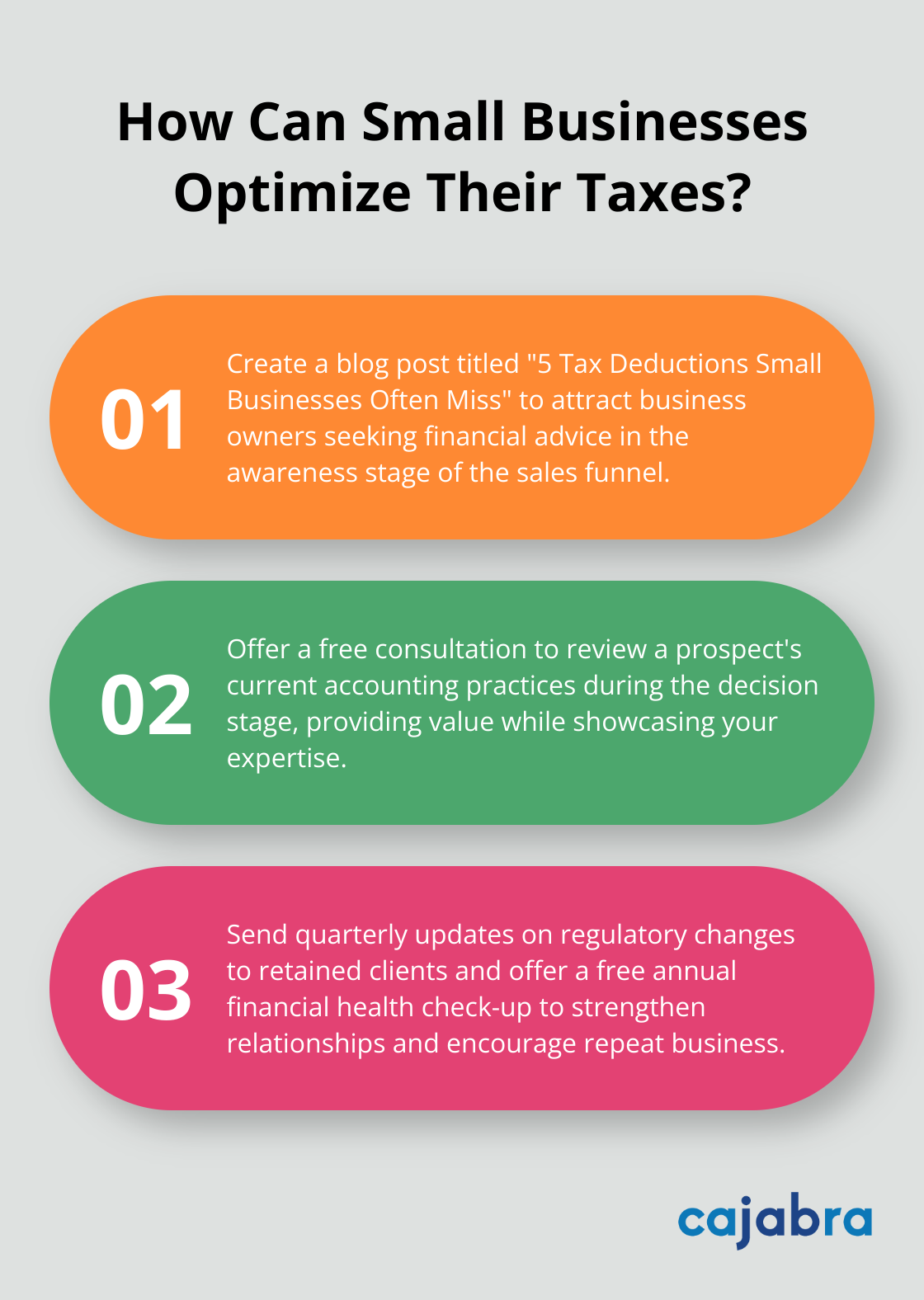
To attract these prospects, create informative content that addresses common pain points. Blog posts, social media updates, and infographics work well here. An accounting firm might publish a blog post titled "5 Tax Deductions Small Businesses Often Miss" to attract business owners seeking financial advice.
The Consideration Stage: Building Trust
After prospects become aware of your brand, they enter the consideration stage. At this point, they actively compare different solutions and providers. Your goal? Position your firm as the top choice.
Case studies, webinars, and detailed guides prove effective for this stage. These content types showcase your expertise and provide in-depth information to help prospects evaluate your services. A webinar on "How AI Revolutionizes Accounting Practices" could demonstrate your firm's cutting-edge approach and knowledge.
The Decision Stage: Sealing the Deal
The decision stage finds prospects ready to choose a provider. Your content should now focus on convincing them that your firm stands out as the right choice. Product demos, free consultations, and client testimonials serve as powerful tools here.
Offer a free consultation to review a prospect's current accounting practices. This provides immense value while showcasing your expertise. Client success stories that highlight specific results (e.g., "How We Helped XYZ Company Save $50,000 in Tax Liability") can prove particularly persuasive.
The Retention Stage: Fostering Loyalty
The funnel doesn't end with a sale. The retention stage focuses on keeping clients engaged and encouraging repeat business. Regular newsletters with valuable insights, exclusive content for existing clients, and personalized check-ins strengthen relationships.
An accounting firm might send quarterly updates on regulatory changes or offer a free annual financial health check-up to retained clients. These efforts show ongoing value and keep your firm top-of-mind.
Now that we understand how the sales funnel works, let's explore the specific types of content that work best at each stage. This knowledge will help you create a comprehensive content strategy that generates quality leads and guides prospects from initial awareness to loyal clientele.
Crafting Impactful Content for Each Funnel Stage
Awareness Stage: Capture Attention with Valuable Information
The awareness stage requires content that attracts potential clients who may not realize they need your services. Blog posts excel here. An accounting firm might create a post titled "5 Warning Signs Your Business Needs Professional Accounting Help." This addresses a pain point while subtly introducing services.
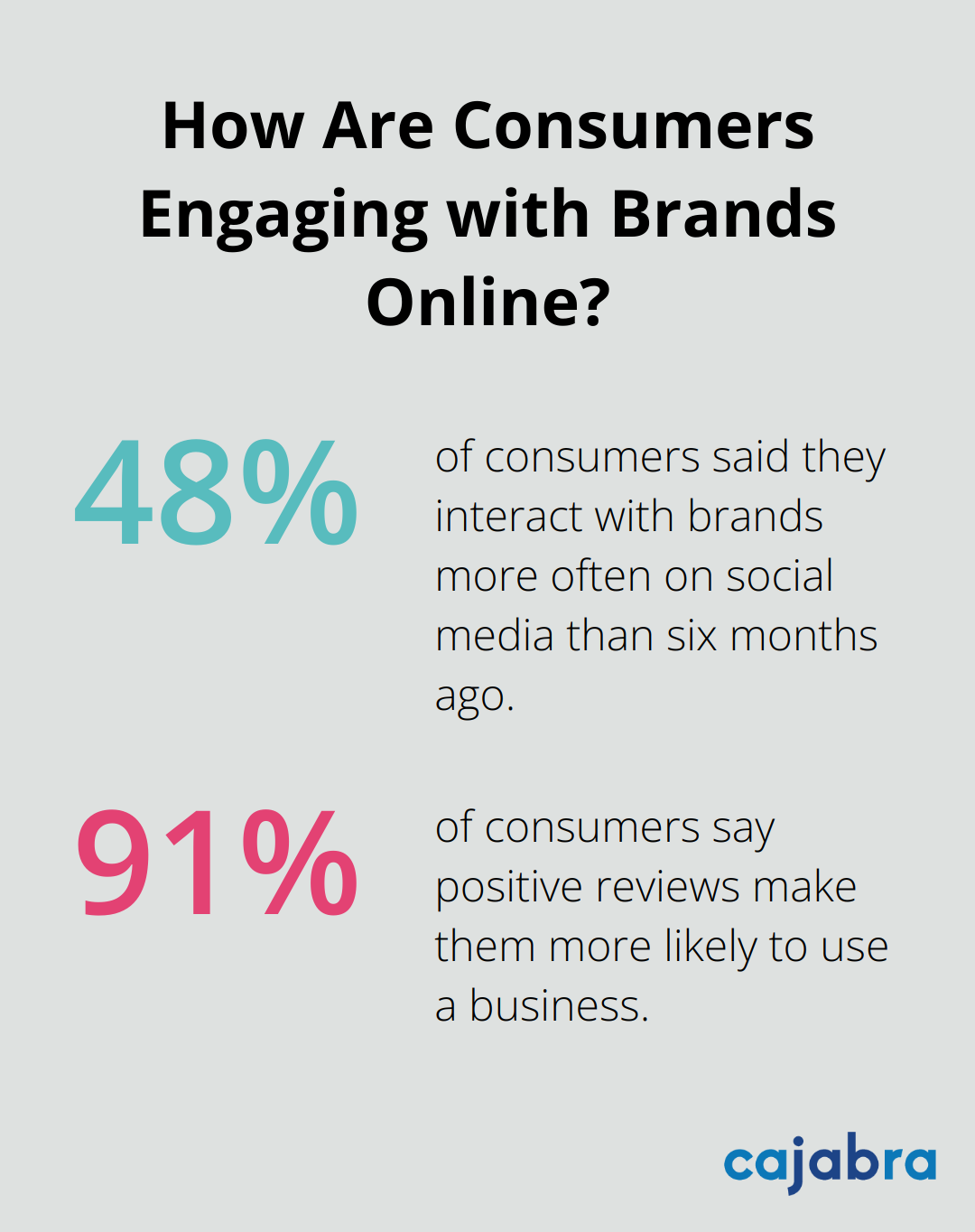
Social media content expands reach effectively. Nearly half (48%) of consumers said they interact with brands more often on social media than six months ago. Share concise financial tips or industry news to establish expertise and engage your audience.
Infographics can boost web traffic by up to 12% (according to Demand Gen Report). Create visually appealing infographics that simplify complex financial concepts or tax regulations. This provides value and showcases your ability to make difficult topics accessible.
Consideration Stage: Demonstrate Expertise and Build Trust
As prospects enter the consideration stage, they actively compare solutions. Whitepapers and ebooks offer in-depth analysis that positions you as an industry expert. A comprehensive guide on "Navigating the New Tax Landscape for Small Businesses" can provide immense value while highlighting your expertise.
Case studies prove particularly powerful at this stage. The Content Marketing Institute reports that 73% of B2B marketers use case studies in their content strategy. Share detailed accounts of how you've helped clients overcome specific challenges or achieve significant savings.
Webinars allow direct interaction with potential clients. Host a webinar on a topic like "Maximizing Tax Deductions for Your Industry" to showcase your knowledge and engage directly with prospects.
Decision Stage: Convince Prospects to Choose You
The decision stage finds prospects ready to make a choice. Product demos or service walkthroughs become essential here. For accounting services, this might involve a personalized consultation to review a prospect's financial situation and outline potential strategies.
Free trials or assessments can change the game. Offer a complimentary financial health check or tax planning session. This gives prospects a taste of your expertise and the value you provide.
Testimonials and reviews play a vital role in the decision-making process. BrightLocal reports that 91% of consumers say positive reviews make them more likely to use a business. Showcase detailed client testimonials that highlight specific results and the positive impact of your services.
The key to effective funnel content lies in relevance and value. Each piece should address the specific needs and questions of prospects at that particular stage of their journey. Providing the right information at the right time guides potential clients smoothly through the funnel, increasing the likelihood of conversion and long-term engagement.
Now that we've explored the types of content that resonate at each funnel stage, let's examine best practices for creating this content effectively and strategically.
How to Craft Effective Funnel Content
Know Your Audience Inside Out
Understanding your target audience is essential. For accounting firms, this means a thorough exploration of the challenges faced by business owners, CFOs, and individuals seeking financial guidance. Conduct surveys, analyze customer feedback, and use social listening tools to gather insights. This data helps you create content that addresses specific concerns at each funnel stage.

At the awareness stage, a small business owner might search for "tax deduction tips." Your content should provide valuable information on this topic while subtly introducing your services. As they progress to the consideration stage, offer more in-depth content like "Comprehensive Guide to Small Business Tax Strategies" to showcase your expertise.
Use Data to Drive Your Strategy
Data should inform every aspect of your content strategy. Tools like Google Analytics provide valuable insights into which topics resonate with your audience. Track metrics such as page views, time on page, and bounce rates to understand what content performs best at each funnel stage.
Accounting firms can leverage data analytics to make data-driven decisions without complex technology. This approach can help guide your content strategy effectively.
Maintain Brand Consistency
Your content should vary based on funnel stage, but your brand voice and messaging must remain consistent. This builds trust and recognition as prospects move through the funnel. Develop a style guide that outlines your brand's tone, voice, and key messages. Ensure all team members have access to this guide and understand how to apply it across different content types.
For accounting firms, this might mean maintaining a professional yet approachable tone across all content (from educational blog posts to detailed case studies). Consistency in visual elements like logos, color schemes, and fonts is equally important.
Optimize for Search and User Experience
Even the best content won't deliver results if it's not discoverable. Implement SEO best practices to improve your content's visibility in search results. This includes keyword research, optimizing meta descriptions, and creating descriptive URLs.
However, don't sacrifice user experience for SEO. Content should be easy to read and navigate. Break up text with subheadings, use bullet points sparingly, and include relevant images or infographics. A study found that users typically read only 20% of the text on a page, so make your content scannable and engaging.
The goal of funnel content is to guide prospects towards a decision. Each piece should provide value while moving the reader one step closer to choosing your services. Follow these practices and continually refine your approach based on performance data to create a content strategy that effectively nurtures leads and drives conversions.
Final Thoughts
Effective sales funnel content marketing guides potential clients from awareness to loyalty. We tailor content to address specific needs at each stage, building trust and showcasing expertise. This approach transforms marketing efforts and achieves remarkable results in client acquisition and retention.
A comprehensive strategy takes time but yields worthwhile results. It aligns content with the customer journey, creates a seamless experience, and positions your firm as a trusted industry leader. This method increases conversions and builds lasting relationships with high-value clients.
Cajabra understands the challenges accounting firms face in today's competitive landscape. Our marketing services for accountants help implement effective content strategies tailored to each funnel stage. We create engaging blog posts and compelling case studies to elevate your firm's online presence and attract valuable clients.
Content marketing is a powerful tool for businesses to attract and engage their target audience. At Cajabra, LLC, we've seen firsthand how effective strategies can drive growth and boost brand awareness.
In this post, we'll share our insights on creating content marketing strategies that deliver results. We'll cover everything from defining your audience to choosing the right content types and distribution channels.
Define Your Target Audience and Goals
Uncover Your Audience Through Market Research
The foundation of every successful content marketing strategy rests on a thorough understanding of your target audience. This knowledge prevents your efforts from missing the mark and failing to connect with your intended recipients.
Market research forms the cornerstone of audience discovery. This process extends beyond mere demographics; it uncovers the pain points, desires, and behaviors of your potential customers. Tools like Google Analytics offer valuable insights into your website traffic, revealing who engages with your content. Social media analytics provide additional information about your followers' interests and online behaviors.

A study by the Content Marketing Institute reveals that top-performing B2B content marketers customize their content to specific stages of the customer journey. This underscores the importance of understanding not only who your audience is but also their position in the decision-making process.
Set SMART Content Marketing Objectives
Once you have a clear picture of your audience, it's time to establish objectives. These should adhere to the SMART criteria (Specific, Measurable, Achievable, Relevant, and Time-bound). For example, instead of a vague goal like "increase website traffic," try for something more specific: "increase organic traffic to our blog by 25% within the next six months."
HubSpot reports that marketers who set goals are 376% more likely to report success than those who don't. This statistic highlights the critical role clear objectives play in driving content marketing success.
Create Detailed Buyer Personas
Buyer personas represent semi-fictional depictions of your ideal customers based on real data and market research. These personas transcend basic demographics to include psychographic information such as values, fears, and aspirations.
A study by ITSMA found that 90% of companies using personas have created a clearer understanding of their buyers. This clarity directly translates into more effective content creation and targeting.
When crafting your personas, include details such as:
- Job role and career path
- Key challenges and pain points
- Information sources they trust
- Preferred content formats
- Decision-making factors
The goal isn't to create fictional characters, but to represent real segments of your audience. Use surveys, interviews, and data analysis to inform these personas.
Align Your Strategy with Business Goals
Your content marketing strategy should directly support your overall business objectives. This alignment ensures that your content efforts contribute to tangible business outcomes (such as increased revenue or market share).
Consider how your content can:
- Generate leads for your sales team
- Educate customers about your products or services
- Build brand awareness and authority in your industry
- Improve customer retention and loyalty
With a solid understanding of your audience and clear goals in place, you're ready to move on to the next crucial step: choosing the right content types and channels to reach and engage your target market effectively.
What Content Formats and Channels Drive Results?
Data-Driven Content Format Selection
The selection of content formats significantly impacts the success of your marketing strategy. Google Analytics provides valuable insights into content performance. The Content Marketing Institute reports that 73% of B2B marketers use website analytics to measure content effectiveness.
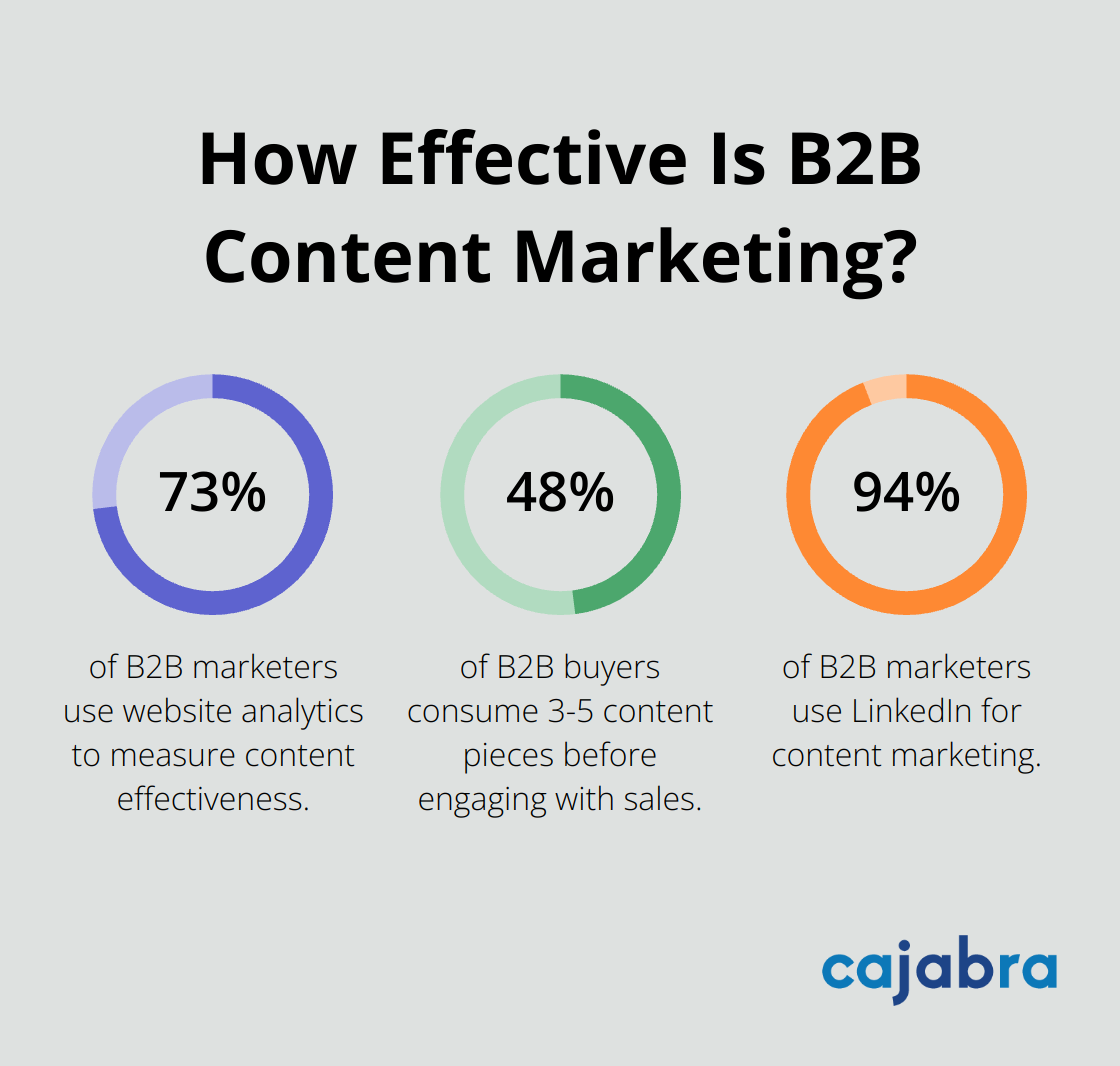
Different audiences prefer various formats. A Demand Gen Report revealed that 48% of B2B buyers consume 3-5 content pieces before engaging with sales. White papers, e-books, and case studies ranked as top choices for early and middle stages of the buying process.
Visual learners often respond better to infographics and videos. HubSpot's research shows that 54% of consumers desire more video content from brands they support. For audiences who prefer quick information, short-form videos or social media posts prove effective.
High-Impact Distribution Channel Identification
Your distribution channels should match your target audience's online habits. Social media platforms, email marketing, and company blogs serve as common starting points (but don't overlook industry-specific forums or platforms).
LinkedIn stands out for B2B content distribution, with 94% of B2B marketers using it for content marketing. B2C businesses might find platforms like Instagram or TikTok more suitable, depending on their target demographic.
Email marketing remains a powerful tool for content distribution. Campaign Monitor found that email marketing generates an ROI of $44 for every $1 spent, making it essential for lead nurturing and customer relationship maintenance.
Tailoring Content Mix to Audience Preferences
A diverse content mix allows you to cater to different audience segments and various stages of the buyer's journey. Maintain consistency in your brand voice and message across all formats and channels.
Content clusters around core topics relevant to your audience improve SEO and provide comprehensive resources. HubSpot's research indicates that companies creating more content clusters see increased organic traffic over time.
Experimentation with new formats or channels is essential. The digital landscape evolves constantly, and today's effective strategies might not work tomorrow. Regular review of content performance metrics enables strategy adjustments based on data.
As we move forward, we'll explore how to develop a robust content creation and distribution plan that maximizes the impact of your chosen formats and channels.
How to Execute Your Content Plan
Craft a Dynamic Content Calendar
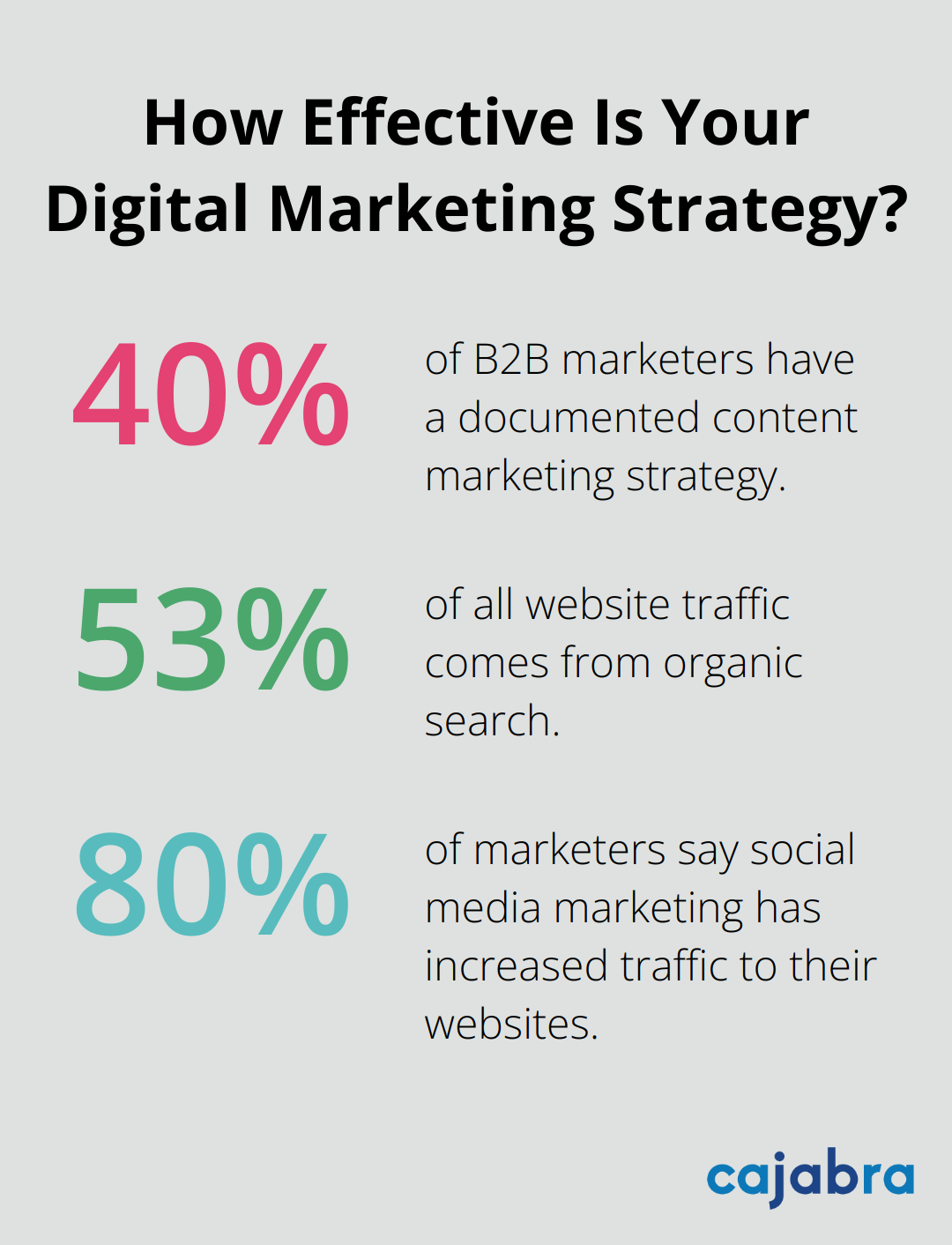
A content calendar forms the backbone of your content strategy. It helps you maintain consistency, plan ahead, and align your content with important dates or events. According to Sproutworth, 40% of B2B marketers have a documented content marketing strategy.
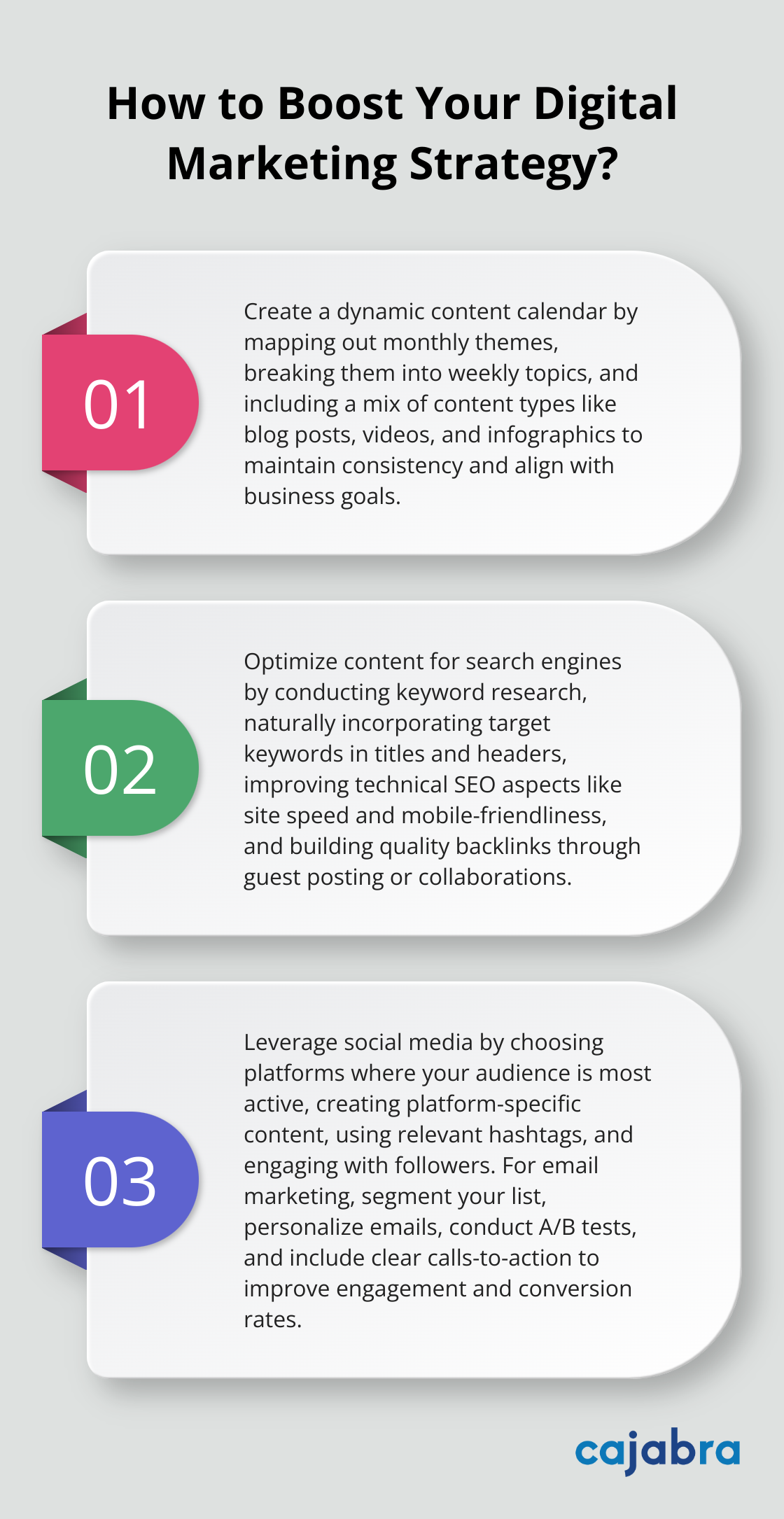
Start by mapping out your content themes for each month. Consider seasonal trends, industry events, and your business goals. Then, break these themes down into specific topics and assign them to different weeks.
Next, decide on the frequency of your content publication. HubSpot's research shows that companies publishing 16+ blog posts per month receive 3.5 times more traffic than those publishing 0-4 monthly posts. However, quality should always take precedence over quantity.
Include a mix of content types in your calendar. This could include blog posts, videos, infographics, and podcasts. Diversifying your content caters to different audience preferences and keeps your strategy fresh.
Optimize for Search Engines
Search engine optimization (SEO) increases your content's visibility. A study by BrightEdge found that 53% of all website traffic comes from organic search. To maximize your SEO efforts:
- Conduct keyword research: Use tools like SEMrush or Ahrefs to identify relevant keywords with good search volume and manageable competition.
- Optimize your content: Include your target keyword in your title, headers, and throughout your content naturally. Try to achieve a keyword density of 1-2%.
- Improve your site's technical SEO: Make your website mobile-friendly, speed up loading times, and use HTTPS. Google's PageSpeed Insights tool can help you identify areas for improvement.
- Build quality backlinks: Contact industry influencers or complementary businesses for guest posting opportunities or collaborations.
Leverage Social Media and Email Marketing
Social media and email marketing serve as powerful tools for content distribution. Sprout Social reports that 80% of marketers say social media marketing has increased traffic to their websites.
For social media:
- Choose the right platforms: Focus on where your audience is most active. LinkedIn often works best for B2B, while Instagram or TikTok might suit B2C better.
- Create platform-specific content: Tailor your content to each platform's unique features and audience expectations.
- Use hashtags strategically: Research relevant hashtags in your industry to increase your content's discoverability.
- Engage with your audience: Respond to comments and messages promptly to build relationships and increase engagement.
For email marketing:
- Segment your email list: Divide your subscribers based on their interests, behavior, or demographics to send more targeted content.
- Personalize your emails: Use the recipient's name and tailor the content to their preferences. (Personalized emails deliver 6x higher transaction rates.)
- A/B test your emails: Experiment with different subject lines, content, and send times to optimize your email performance.
- Include clear calls-to-action (CTAs): Guide your readers on what to do next, whether it's reading a blog post, watching a video, or making a purchase.
Final Thoughts
Content marketing strategies require careful planning, execution, and refinement. We define target audiences, set clear goals, and develop buyer personas to lay a solid foundation. Choosing appropriate content types and distribution channels ensures our message reaches the right people at the right time. A well-structured content calendar, SEO best practices, and strategic use of social media and email marketing amplify our content's impact and reach.
The digital landscape evolves rapidly, as do audience preferences and behaviors. We analyze content performance, gather feedback, and stay informed about industry trends to adapt our strategy and improve our content marketing efforts. Consistency and quality are key (it's better to produce fewer high-quality pieces than to flood channels with mediocre material).
We offer content marketing strategy services to help accounting firms stand out and attract high-value clients. Our approach combines cutting-edge strategies with industry-specific insights to deliver measurable results. Start by reviewing your current content marketing efforts, identifying areas for improvement, and implementing the tactics we've discussed.
Content marketing managers are the driving force behind successful digital marketing strategies. At Cajabra, LLC, we've seen firsthand how these professionals shape brand narratives and engage audiences across various platforms.
In this post, we'll explore the key responsibilities, essential skills, and collaborative aspects of a content marketing manager's role. Whether you're considering a career in content marketing or looking to hire a skilled professional, this guide will provide valuable insights into this dynamic position.
What Are a Content Marketing Manager's Key Duties?
Content marketing managers shape a brand's digital presence. Their role combines creativity, strategic thinking, and analytical skills. Four core responsibilities define the success of a content marketing manager.
Crafting a Content Strategy That Delivers Results
A well-defined strategy forms the foundation of effective content marketing. Content marketing managers must align their plans with business objectives (e.g., increasing brand awareness, generating leads, or driving sales). This involves identifying target audiences, selecting appropriate channels, and determining the types of content that will resonate most effectively.
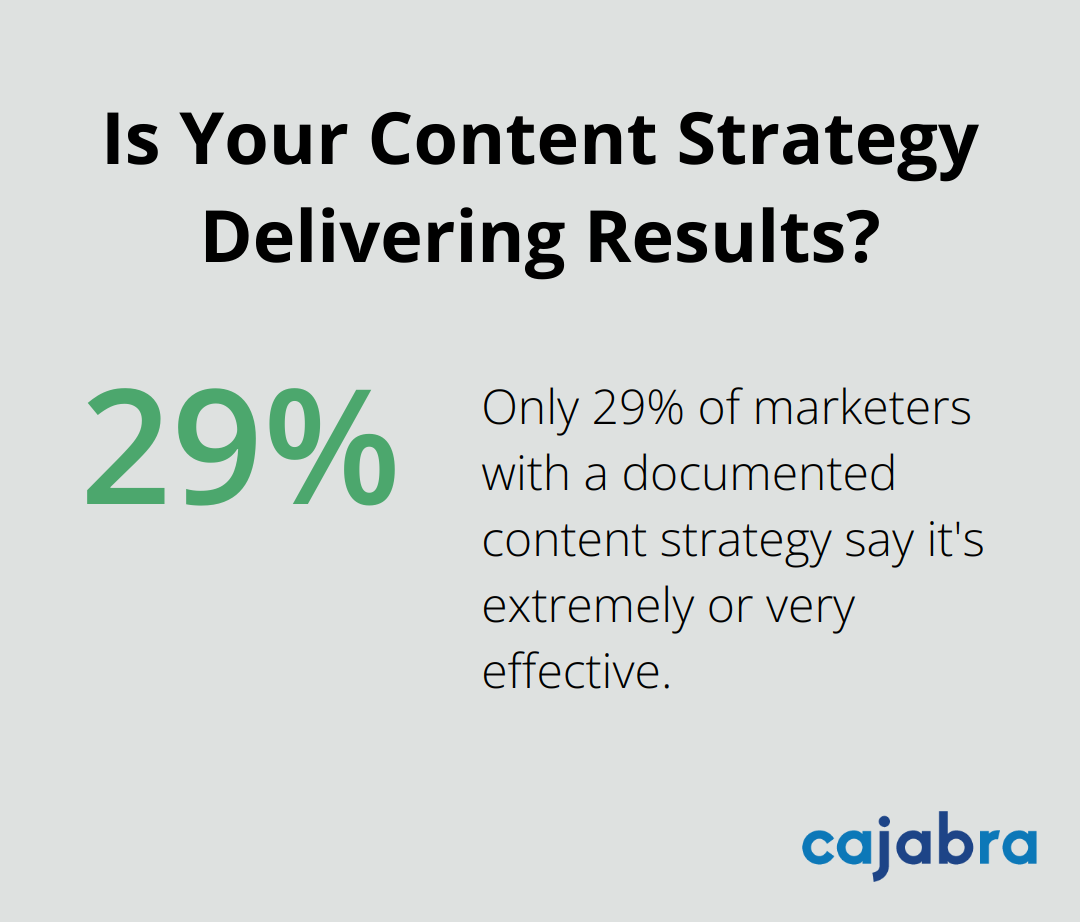
A study by the Content Marketing Institute found that only 29% of marketers whose organizations have a documented content strategy say it's extremely or very effective. This highlights the importance of not just having a plan, but documenting it for consistent execution and team alignment.
Mastering Editorial Calendar Management
An editorial calendar serves as a roadmap for content creation and distribution. Effective content marketing managers use tools like DivvyHQ or CoSchedule to plan content themes, assign tasks, and ensure a steady flow of relevant material across all platforms.
Overseeing Content Creation with Precision
Quality control is paramount in content marketing. Managers must oversee the creation of various content types, from blog posts and whitepapers to videos and podcasts. This involves close collaboration with writers, designers, and other creatives to maintain brand voice and meet strategic objectives.
Leveraging Data for Improvement
Successful content marketing managers rely on data. They use analytics tools to track key performance indicators (KPIs) such as engagement rates, conversion rates, and ROI.
Through analysis of these metrics, managers identify what works, what doesn't, and adjust their strategies accordingly. This iterative process helps them stay ahead in the fast-paced digital landscape.
As we move forward, we'll explore the essential skills that enable content marketing managers to excel in these core responsibilities and drive significant impact on a company's digital presence and bottom line.
What Skills Do Top Content Marketing Managers Possess?
Content marketing managers need a diverse skill set to excel in their roles. We've identified key abilities that set apart the most effective professionals in this field.
Mastery of Writing and Editing
Exceptional writing skills are non-negotiable for content marketing managers. They must craft compelling narratives that resonate with target audiences across various platforms. Content Marketing Institute's 2025 research reveals the challenges and budgets of enterprise marketers in their approach to content marketing.
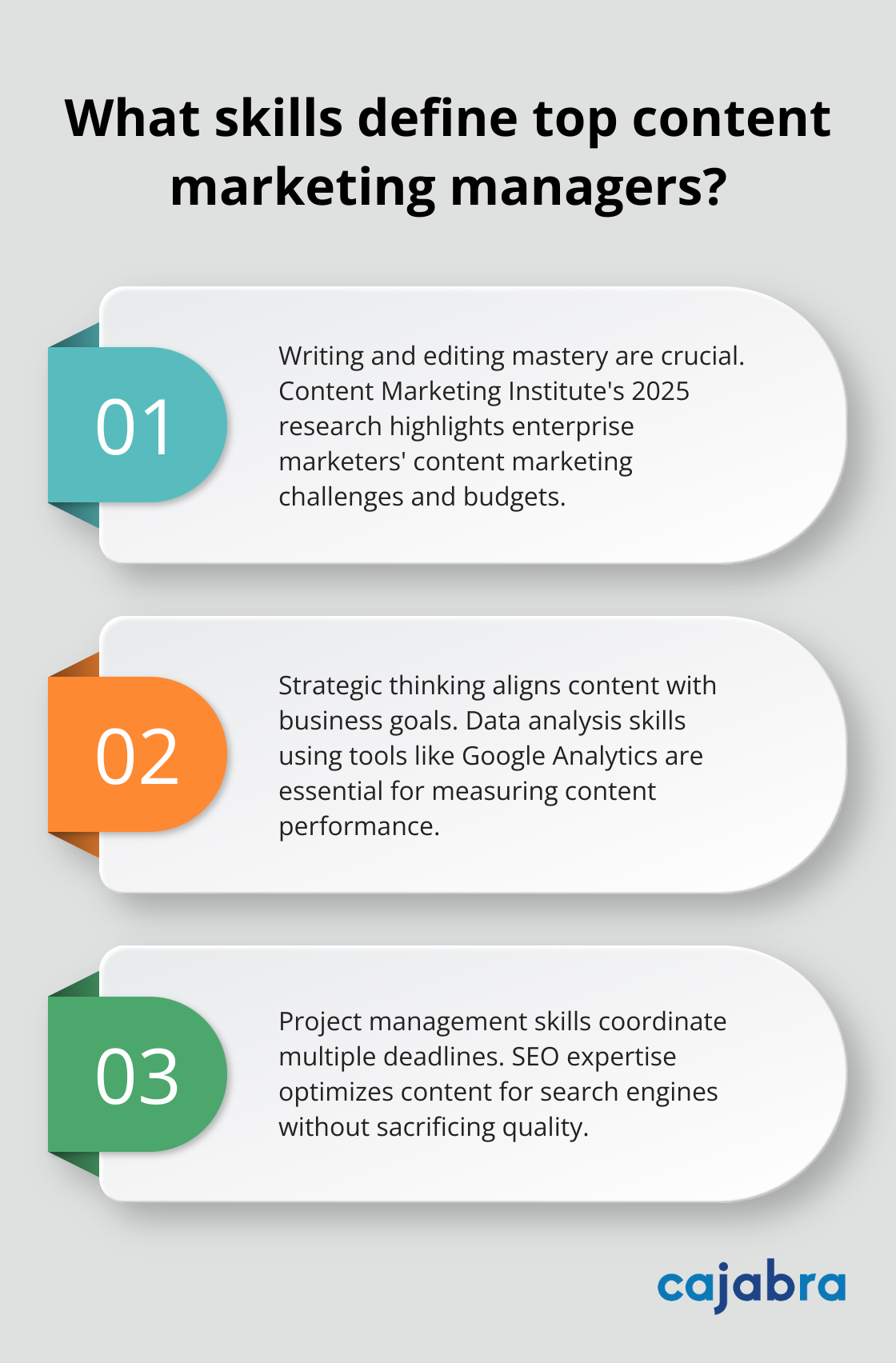
Top managers don't just write well; they edit ruthlessly. They trim excess words, clarify complex ideas, and ensure consistency in brand voice. This attention to detail elevates content quality and enhances audience engagement.
Strategic Thinking and Data-Driven Decision Making
Successful content marketing managers think strategically about every piece of content they produce. They align each blog post, video, or social media campaign with broader business objectives. This strategic approach involves understanding customer pain points, mapping content to the buyer's journey, and identifying opportunities for thought leadership.
Data analysis skills are essential for measuring content performance and making informed decisions. Proficiency with tools like Google Analytics, SEMrush, and Ahrefs allows managers to track KPIs, identify trends, and optimize content strategies for maximum impact.
Project Management and SEO Expertise
Effective content marketing managers are skilled project managers. They juggle multiple deadlines, coordinate with various team members, and ensure smooth content production workflows. Tools like Asana, Trello, or Monday.com help streamline these processes.
SEO knowledge is another critical skill. Content marketing managers must understand how to optimize content for search engines without sacrificing quality or readability. This includes keyword research, on-page optimization, and staying updated on algorithm changes.
Adaptability and Continuous Learning
The digital landscape evolves rapidly, and top content marketing managers must adapt quickly. They stay informed about new platforms, technologies, and consumer trends. This adaptability allows them to pivot strategies and maintain relevance in a fast-paced environment.
Continuous learning is a hallmark of successful content marketing managers. They attend industry conferences, participate in webinars, and read extensively to stay ahead of the curve. This commitment to growth ensures they can lead their teams effectively and drive innovation in their content strategies.
As we explore the collaborative aspects of content marketing management, it becomes clear that these skills form the foundation for successful team leadership and cross-departmental cooperation.
How Content Marketing Managers Lead Teams
Content marketing managers orchestrate diverse talents to create impactful content. Successful managers excel in fostering collaboration and nurturing creativity within their teams.
Building a Cohesive Content Creation Team
Content marketing managers assemble diverse teams of specialists. They work closely with writers, designers, videographers, and other content creators to ensure a unified vision across all platforms. Managers bridge the gap between creative and technical team members. This often involves the translation of complex data into compelling narratives or the alignment of visually stunning designs with SEO best practices. Regular team meetings and clear communication channels maintain this balance.
Synergizing with Other Marketing Functions
Content doesn't exist in isolation. Top content marketing managers actively collaborate with social media, SEO, and paid advertising teams to create cohesive campaigns. This cross-functional approach optimizes content for multiple channels and supports broader marketing objectives.
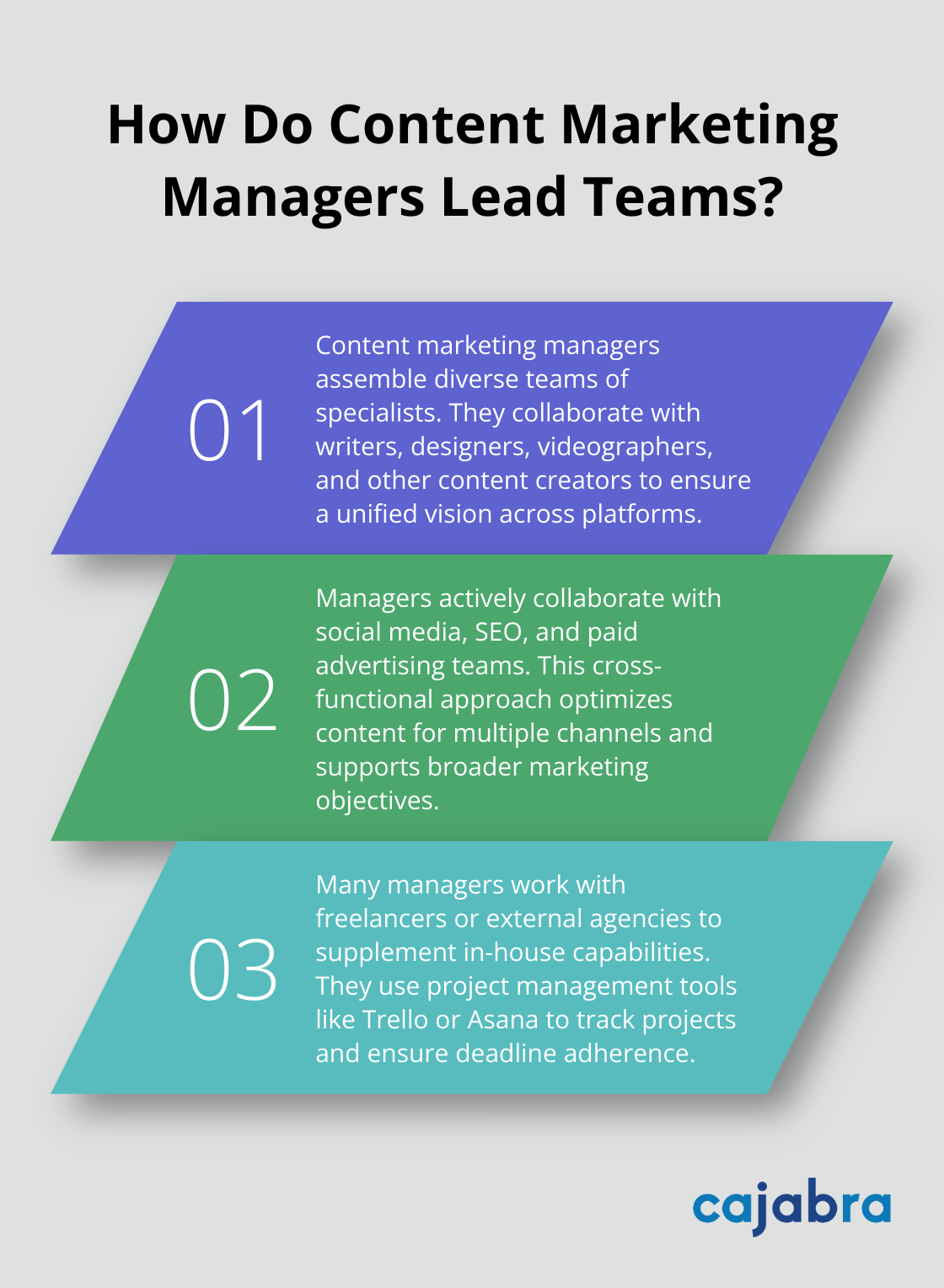
A content marketing manager might work with the SEO team to identify high-value keywords, then brief writers on how to incorporate these naturally into blog posts. They could also coordinate with the social media team to develop a distribution strategy that maximizes reach and engagement.
Managing External Resources Effectively
Many content marketing managers work with freelancers or external agencies to supplement their in-house capabilities. Successful managers develop a network of reliable partners and implement systems to manage these relationships efficiently.
Clear briefs, consistent feedback, and fair compensation maintain productive partnerships with external content creators. Tools like Trello or Asana (popular project management platforms) help managers track projects across multiple contributors and ensure deadline adherence.
Fostering Innovation through Brainstorming
Regular brainstorming sessions characterize high-performing content teams. Skilled managers create an environment where team members feel comfortable to share ideas and take creative risks. These sessions often lead to innovative content formats or unique angles on industry topics.
One effective technique is the "6-3-5 Brainwriting" method. This technique involves six people writing down three ideas onto a sheet of paper within five minutes, usually supervised by a moderator. This approach generates a high volume of ideas quickly and encourages building on others' concepts.
Content marketing managers who excel in team leadership not only produce better content but also cultivate a more engaged and productive workforce. They drive their teams-and their content-to new heights of success through collaboration, diverse skill leveraging, and innovation encouragement.
Final Thoughts
Content marketing managers shape a company's digital presence and drive business growth. They develop strategies, oversee content creation, analyze performance, and lead teams with diverse skills. These professionals need exceptional writing abilities, strategic thinking, data analysis expertise, and adaptability to succeed in the dynamic digital landscape.
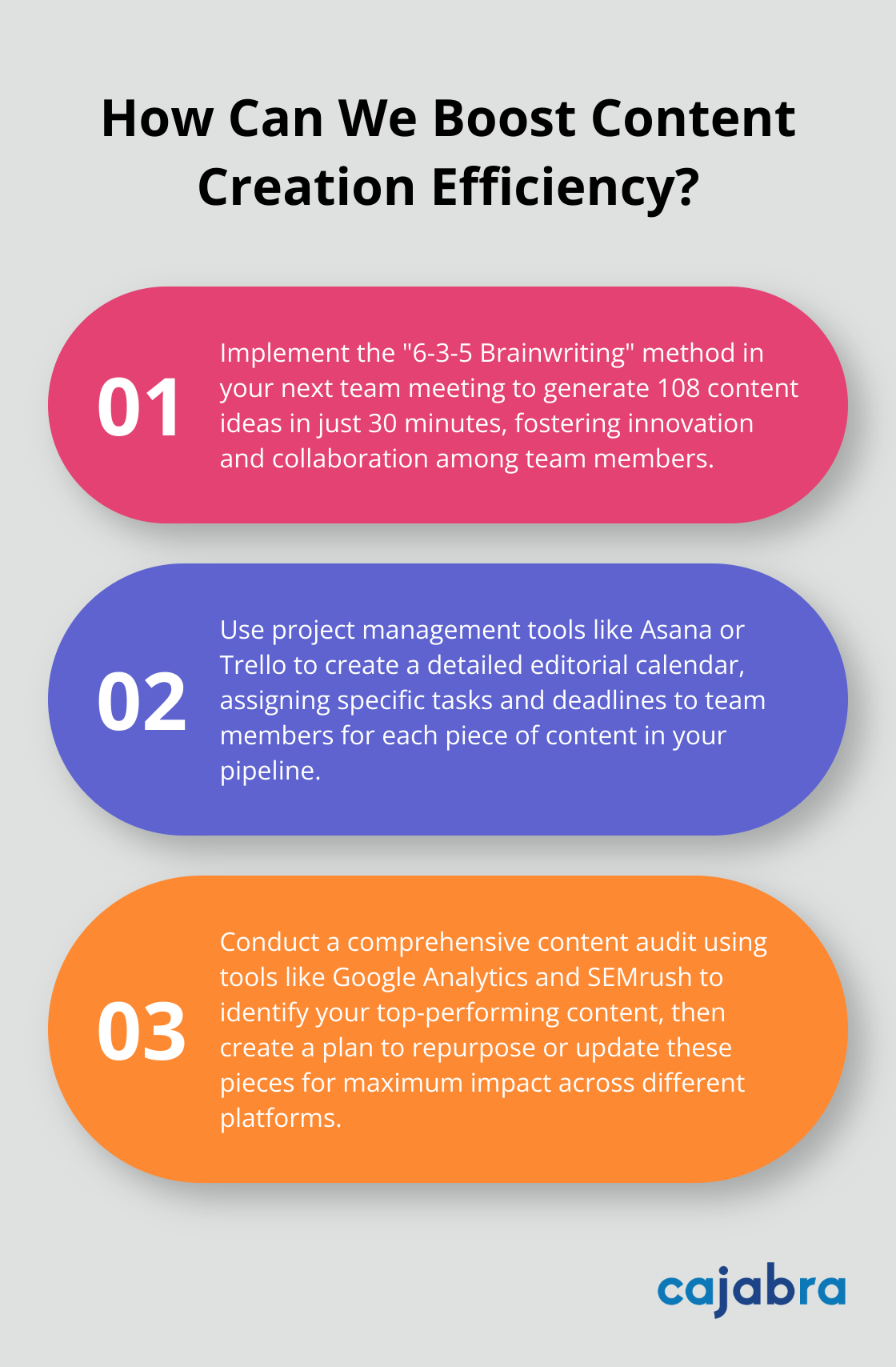
Content marketing has become essential for modern business strategy as consumers seek valuable information and authentic brand experiences. It builds trust, establishes thought leadership, and nurtures customer relationships throughout the buyer's journey. The field offers exciting growth opportunities, with professionals advancing to senior positions such as Director of Content Strategy or Chief Content Officer.
At Cajabra, we help accounting firms leverage content to differentiate their practices and attract ideal clients. Our specialized services enable accountants to position themselves as industry leaders and elevate their digital presence. Content marketing managers will remain at the forefront of marketing innovation, crafting compelling narratives that resonate with audiences and drive measurable business results.