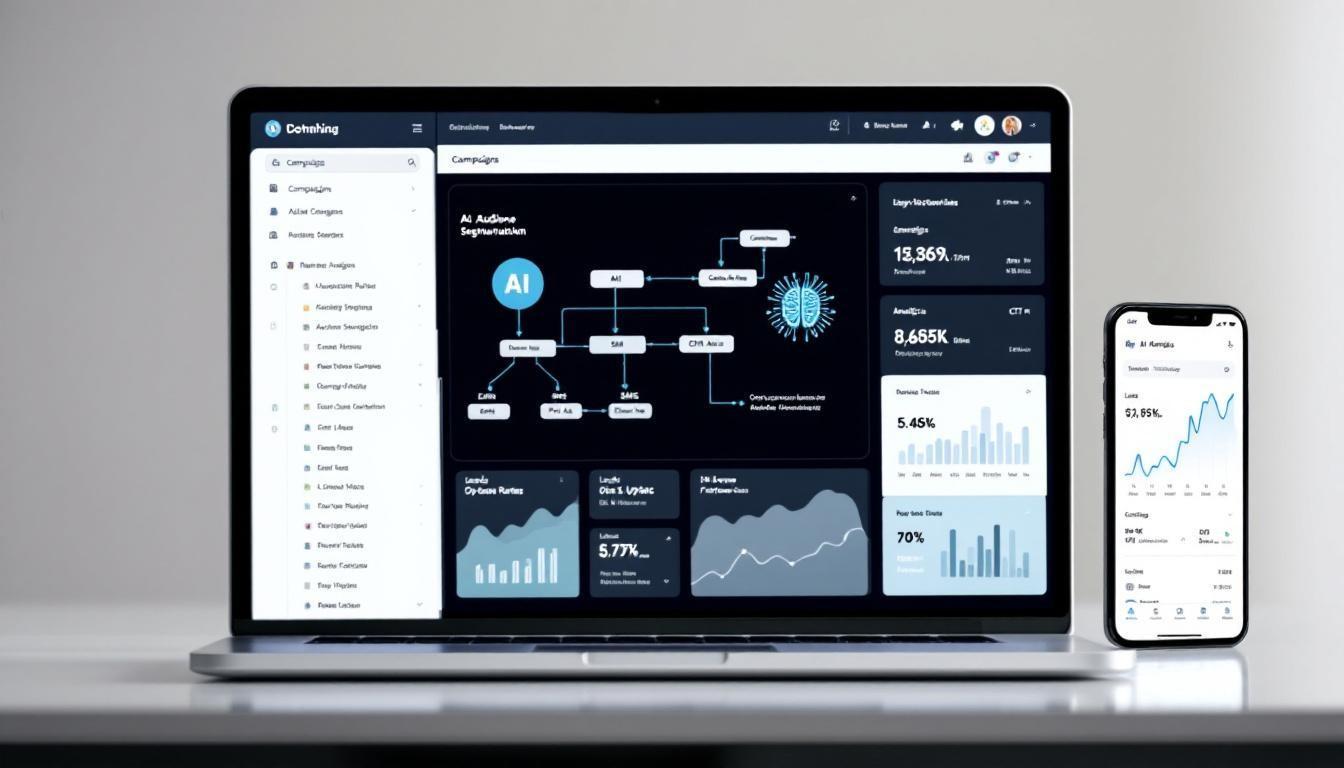

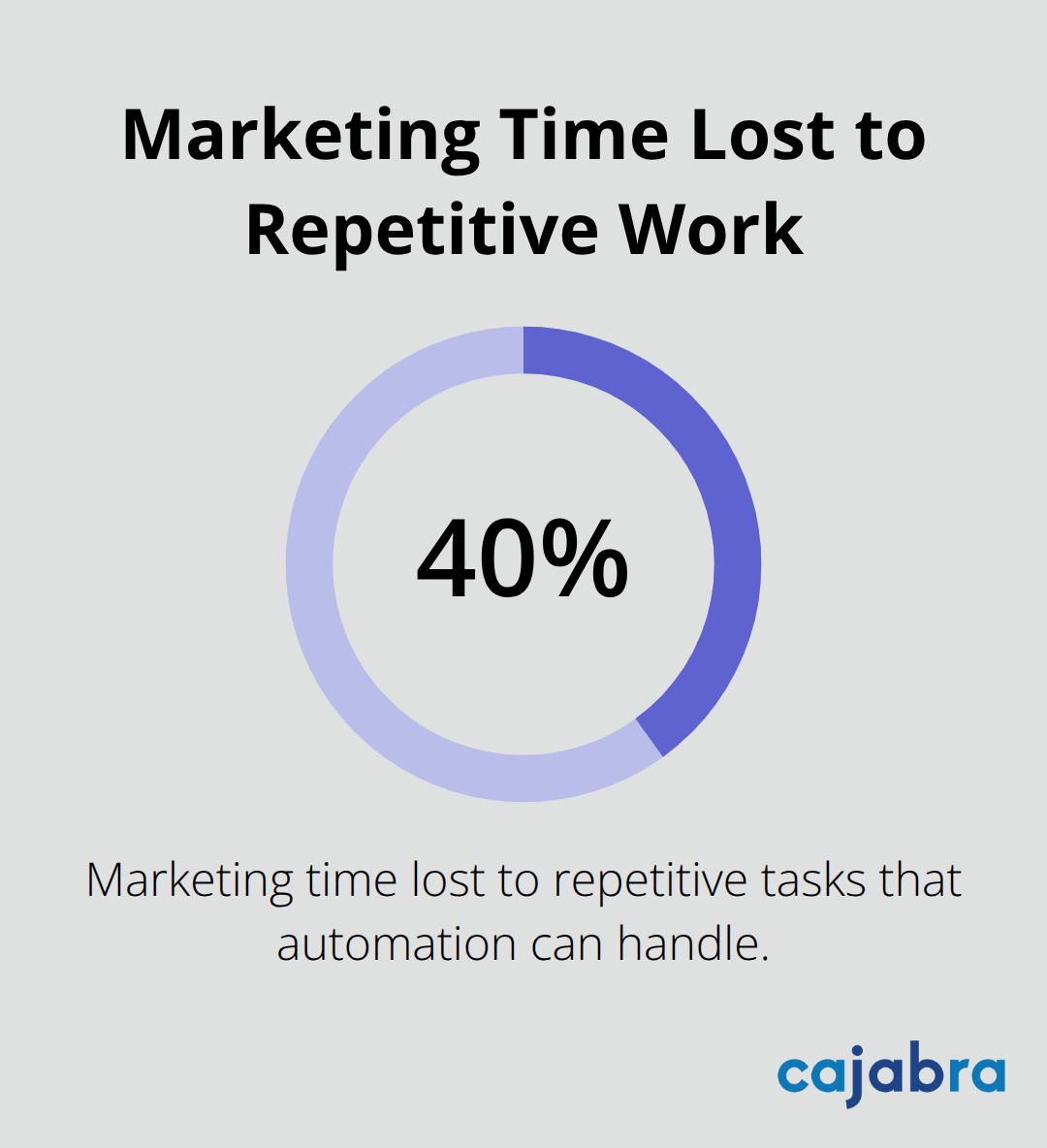
Marketing teams waste roughly 40% of their time on repetitive tasks that could be automated. AI-powered marketing automation tools eliminate this waste by handling lead nurturing, email campaigns, and customer segmentation while your team focuses on strategy.
At Cajabra, LLC, we've seen firsthand how automation transforms marketing departments. The businesses that implement these tools correctly see faster lead generation, better customer targeting, and measurable revenue growth.
Automation transforms how marketing teams operate-it doesn't just save time. Marketing automation platforms like HubSpot, ActiveCampaign, and Mailchimp handle lead scoring, email sequencing, and behavioral tracking simultaneously across thousands of contacts. When you remove the manual work of tagging leads, sending follow-up emails, and organizing customer data, your team reclaims roughly 15 to 20 hours per week per person, according to Salesforce research. That time shifts toward strategy, creative work, and high-value client conversations instead of spreadsheet management.
The real power emerges when you combine this time savings with precision targeting. AI-driven segmentation analyzes actual behavior rather than relying on guesses about who your customers are. If someone opens your email, clicks a specific link, and visits a product page, the system automatically moves them into a nurture sequence tailored to that exact action. Harley-Davidson saw a 2,930% increase in leads per month using Albert AI for digital advertising, proving that intelligent automation compounds results when applied correctly.
Your competitors are already doing this. The businesses winning right now treat automation as the foundation, not the afterthought.
The moment someone shows purchase intent, a 24-hour window exists before they forget about you or compare your offer to competitors. Manual lead qualification kills that window. AI-powered systems qualify and route leads to sales within minutes, not days. Predictive lead scoring identifies which prospects have the highest conversion probability based on historical data and behavioral patterns.
This means your sales team stops chasing cold leads and focuses exclusively on prospects showing genuine buying signals.
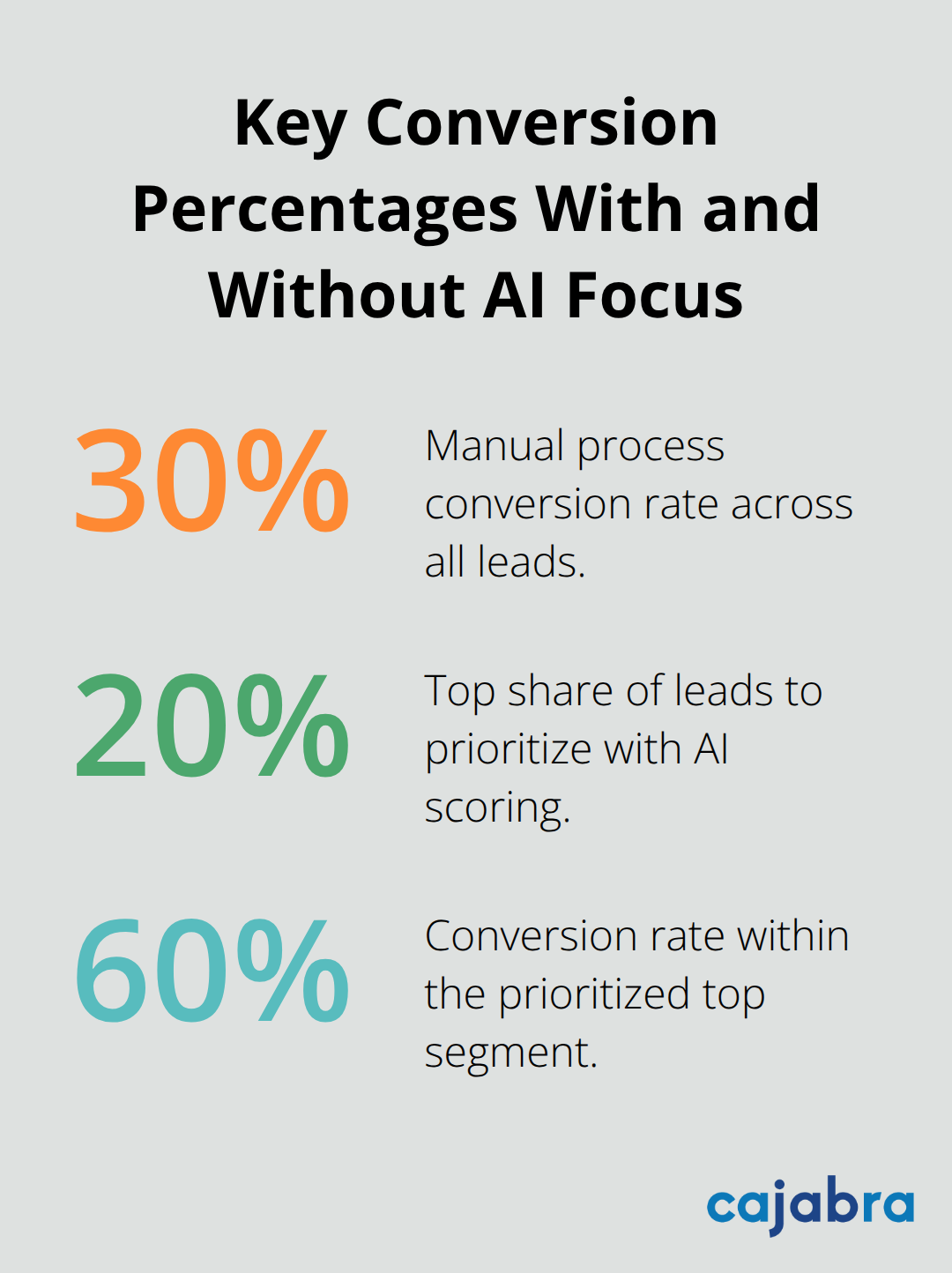
The math is straightforward: if 30% of your leads convert with manual processes, but AI scoring helps your team focus on the top 20% of leads with 60% conversion rates, your cost per acquisition drops dramatically while your sales velocity increases. You also gain real-time visibility into what messaging resonates. When a customer segment consistently engages with content about cost savings versus compliance features, your next campaign automatically emphasizes cost savings to that group. This feedback loop means your marketing improves weekly, not quarterly.
Automation fails when companies treat it as a replacement for strategy. The tools execute flawlessly, but they execute whatever you program them to do. If your data is messy, your segmentation fails. If your messaging is generic, your automation broadcasts generic messages at scale. IBM Institute for Business Value research shows that organizations investing in data quality see 3x better results from their automation platforms than those deploying tools on poor data.
Your first task isn't buying the fanciest platform-it's auditing what you actually know about your customers. What fields do you track consistently? Where are your data gaps? Do you have permission to contact people through the channels you're automating? These questions matter more than feature lists. The strongest teams use automation to handle execution while humans focus on the strategic questions: Who are we really trying to reach? What problem do we solve better than anyone else? How should our messaging reflect our actual competitive advantage? Automation amplifies good strategy and accelerates bad strategy at equal speed.
The foundation is set. You understand what automation delivers and where human strategy still matters. The next step is identifying which specific features separate tools that actually work from those that promise more than they deliver.
The difference between a tool that transforms your marketing and one that sits unused comes down to three capabilities working together seamlessly. Your platform must segment customers based on real behavior, not demographic guesses. HubSpot and ActiveCampaign both offer advanced segmentation, but the strongest implementation tracks what people actually do-which emails they open, which product pages they visit, how long they stay, whether they abandon carts, and which content types drive them toward purchase.
Centralized data integration across your CRM and marketing platform produces more accurate customer profiles than siloed systems. Generic campaigns sent to everyone underperform precision campaigns sent to the right segment by 40 percent or more. Your platform should let you build segments based on any data point you collect and update those segments automatically as behavior changes. If someone stops engaging with your nurture emails, the system automatically moves them into a re-engagement sequence without manual adjustment.
Your platform needs to show you what's likely to happen next, not just what happened last month. Predictive analytics use your historical data and current behavior patterns to identify which leads will convert, which customers will churn, and which products a specific person actually wants to buy. Predictive lead scoring leverages data science and machine learning to help sales teams focus on prospects most likely to convert, dramatically improving efficiency.
This isn't about vague probability scores-it's about actionable rankings that your sales team can trust. If your system says a prospect has an 85 percent conversion probability versus 15 percent, your sales rep knows exactly how much effort to invest. The strongest teams treat these scores as a filter, not a suggestion, and watch their cost per acquisition drop as a result.
Your platform must connect cleanly to the other tools you already use. If your e-commerce system, email platform, CRM, and analytics tool can't share data automatically, you'll spend your entire automation budget managing data transfers instead of running campaigns. Proper integration accelerates workflows and eliminates manual bottlenecks.
Demand native integrations or robust API access. Tools that require constant manual data syncing will drain your team's time faster than the repetitive tasks automation was supposed to eliminate. Test the integration before you commit-many platforms promise seamless connections but deliver clunky workarounds that frustrate your team.
The strongest automation platforms fail when companies deploy them on poor data. If your data is messy, your segmentation fails. If your messaging is generic, your automation broadcasts generic messages at scale. Organizations investing in data quality see significantly better results from their automation platforms than those deploying tools on poor data.
Your first task isn't buying the fanciest platform-it's auditing what you actually know about your customers. What fields do you track consistently? Where are your data gaps? Do you have permission to contact people through the channels you're automating? These questions matter more than feature lists. The strongest teams use automation to handle execution while humans focus on the strategic questions: Who are we really trying to reach? What problem do we solve better than anyone else? How should our messaging reflect our actual competitive advantage?
With these three capabilities in place, your platform becomes a force multiplier for your team. The next step is understanding where most companies stumble during implementation-and how to avoid those costly mistakes.
Companies crash into automation expecting the platform to fix broken processes, but the platform only amplifies whatever you're already doing. If your customer data lives across five different spreadsheets with inconsistent naming conventions and duplicate records, automation won't magically unify it-it will just automate the mess. Gartner research shows that organizations with poor data quality experience worse outcomes from automation platforms than those with clean, centralized data.
The practical reality: before you sign up for any platform, audit your current data. Write down every field you track, identify where duplicates exist, check which records have missing information, and verify you have proper consent to contact people through each channel you plan to automate. This audit takes a week but saves months of frustration. Once you commit to a platform on bad data, you'll spend your entire first year cleaning data instead of running campaigns. Many companies discover halfway through implementation that they don't actually know their customers' phone numbers, email preferences, or purchase history with any consistency. That discovery costs time and money you can't recover.
The second failure point is treating automation as a substitute for human strategy rather than an execution engine. Automation platforms are ruthlessly efficient-they do exactly what you program them to do, no more, no less. If you set up an email sequence that broadcasts the same message to everyone, the system will send that generic message to thousands of people flawlessly. If you configure your lead scoring to prioritize prospects based on outdated firmographic data instead of actual behavior signals, the system will confidently route bad leads to your sales team every single day.
The teams winning with automation maintain human oversight at every stage. Someone reviews the segments before they go live. Someone analyzes whether automated email sequences actually move people toward purchase or just fill inboxes. Someone checks whether your predictive models remain accurate or drift over time. This requires dedicated time-roughly 10 to 15 hours per week for a marketing team of three to five people-but that investment directly determines whether automation becomes your competitive advantage or your most expensive mistake.
Companies underestimate the training required to actually use these platforms effectively. A new automation platform sitting in your tech stack unused generates zero ROI. Your team needs hands-on training on how to build segments, interpret predictive scores, and troubleshoot integration issues when they inevitably occur. Budget for external training courses, internal documentation, and at least one month of slower campaign velocity while your team climbs the learning curve.
The fastest path forward is assigning one person as the automation owner-someone who becomes genuinely fluent with the platform and teaches everyone else. That person becomes your internal expert, answers questions from colleagues, and identifies which features actually solve your problems versus which ones sit unused. This role prevents your platform investment from becoming expensive software that nobody truly understands.
AI-powered marketing automation tools transform how marketing teams operate, but only when you treat implementation as a strategic process rather than a software purchase. The businesses seeing real growth understand that automation handles execution while humans drive strategy. Your platform becomes valuable when it segments customers based on actual behavior, predicts what happens next using your data, and integrates seamlessly with your existing tools.
The path forward requires three concrete steps. First, audit your current data before selecting any platform-identify where your customer information lives, spot duplicates and gaps, and verify you have proper consent to contact people through each channel you plan to automate. Second, assign one person as your automation owner who becomes genuinely fluent with the platform and teaches your team.
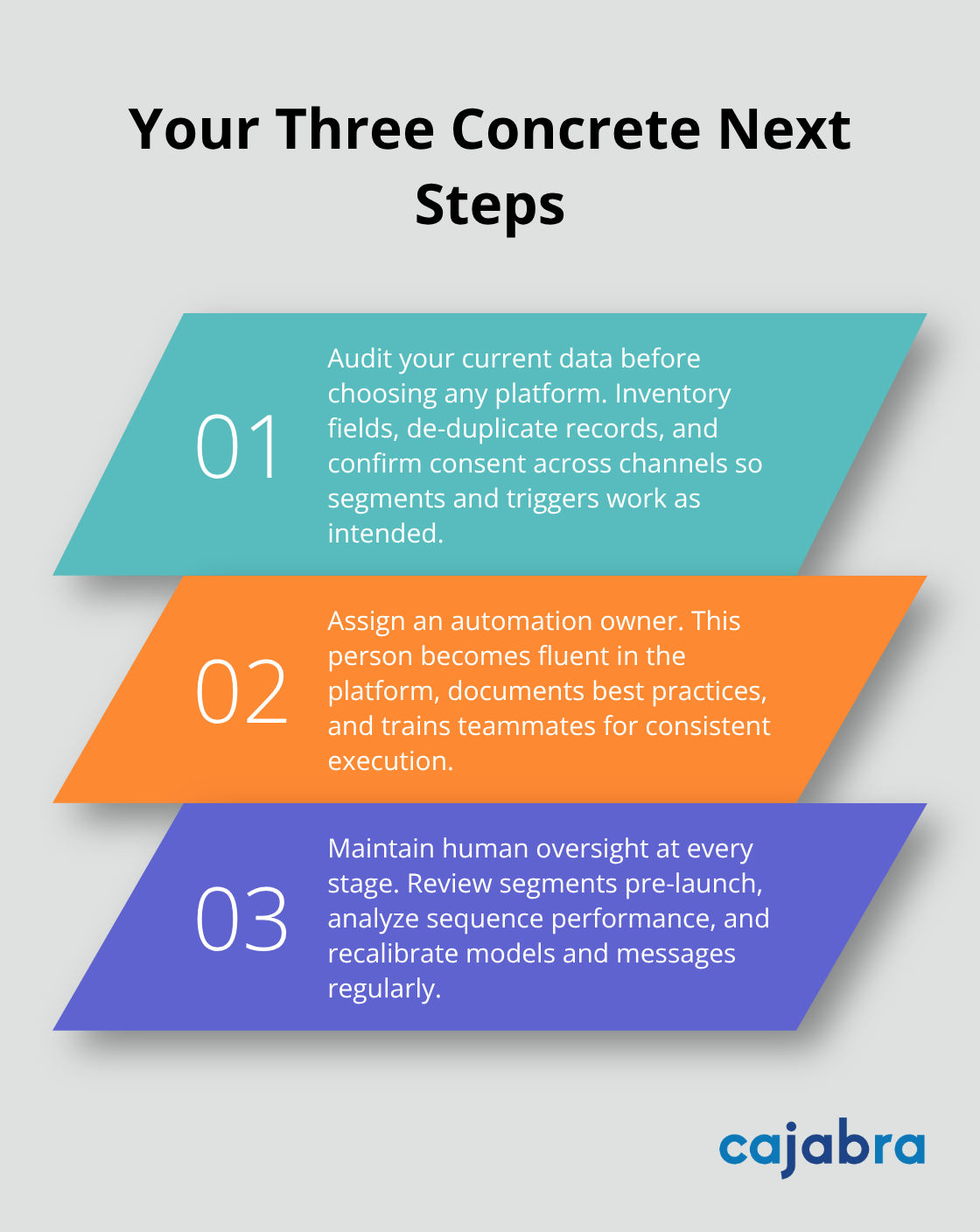
Third, maintain human oversight at every stage so someone reviews segments before they launch and analyzes whether automated sequences actually move people toward purchase.
If you're running an accounting firm, we at Cajabra, LLC specialize in helping accountants move from overlooked to overbooked through the JAB System, which secures retainer-based clients in just 90 days. Our approach includes AI-powered marketing strategies and automated systems that generate consistent cash flow while you focus on your expertise. Learn more about how we help accounting firms build strong brand identity and effective sales funnels.